


Strainer Zepto
In the landscape of industrial fluid handling, the requirement for precision often dictates the success of a process. The term "strainer zepto" represents an evolution in the design and application of high-precision filtration components, specifically focusing on ultra-fine particle retention within robust industrial frameworks. As manufacturing processes in the chemical, pharmaceutical, and food and beverage sectors become more sophisticated, the demand for Strainers & Baskets that can operate at micro-scale levels—approaching the precision suggested by the "zepto" nomenclature—has increased significantly.
Industrial strainers are essentially the first line of defense for downstream equipment such as pumps, valves, and heat exchangers. When standard coarse filtration is insufficient, engineers turn to precision-engineered components that combine the mechanical strength of traditional baskets with the fine-tuned aperture control of advanced wire mesh. This guide explores the technical parameters, engineering considerations, and selection criteria for high-precision strainer solutions.
Engineering Precision: The Mechanics of Micro-Scale Strainers
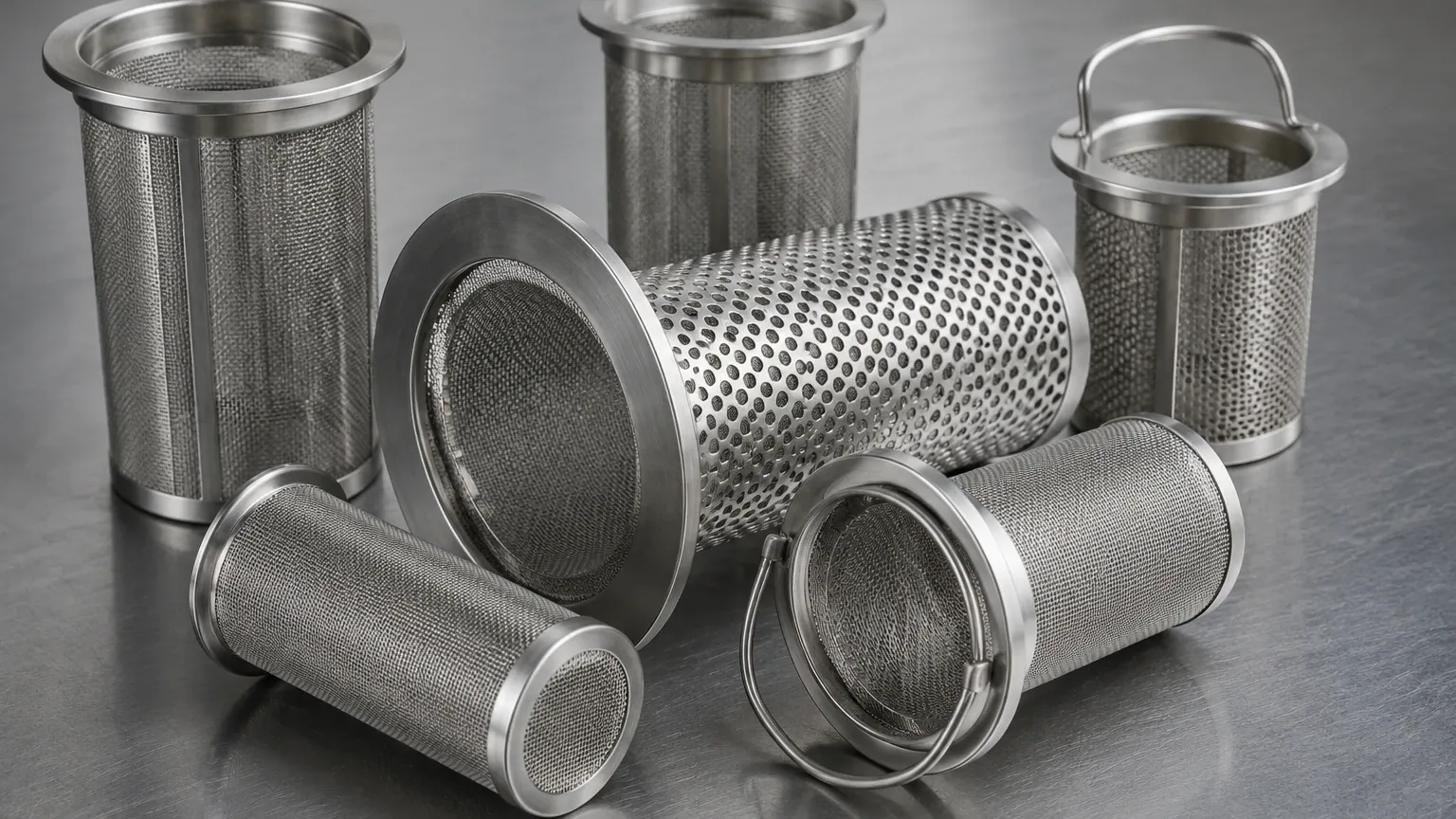
The effectiveness of a strainer zepto application is fundamentally rooted in the geometry of the filtration media. Unlike standard perforated plates used in heavy-duty industrial strainers, precision baskets often utilize multi-layered stainless steel wire mesh or sintered metal fibers to achieve micron-level accuracy.
To achieve the precision required for ultra-fine straining, manufacturers employ specialized weaving techniques. Plain square weaves are common for general purposes, but for "zepto" level precision, Dutch weaves (Plain Dutch or Twilled Dutch) are frequently utilized. These weaves allow for a much higher density of wires, creating a tortuous path that captures smaller particles while maintaining structural integrity. In many high-performance applications, a single layer of fine mesh is insufficient due to the pressure differentials involved. In these cases, the mesh is sintered—a process of diffusion bonding multiple layers of mesh together—to create a porous metal plate that is both incredibly strong and precisely calibrated for specific micron ratings.
Engineering these components requires a deep understanding of the relationship between wire diameter, aperture size, and open area. A higher mesh count typically results in a smaller open area, which increases the pressure drop across the filter. Balancing these factors is critical to ensuring that the strainer does not become a bottleneck in the production line.
Material Selection for Advanced Filtration Environments
When dealing with precision filtration, material selection is not merely about durability; it is about chemical compatibility and preventing contamination. For most industrial strainer zepto applications, stainless steel is the gold standard, specifically grades 304, 316, and 316L.
1. Stainless Steel 304: Suitable for general industrial applications where corrosion resistance is required but the environment is not overly aggressive. It provides excellent mechanical strength and is cost-effective for water treatment or basic oil filtration.
2. Stainless Steel 316/316L: The addition of molybdenum enhances corrosion resistance, particularly against chlorides and acidic environments. 316L (low carbon) is preferred for welded components to prevent carbide precipitation, ensuring the integrity of the strainer basket's joints in pharmaceutical or chemical processing.
3. Specialty Alloys: In extreme cases involving high temperatures or highly corrosive chemicals, alloys like Hastelloy, Monel, or Inconel may be specified. These materials ensure that the precision apertures of the strainer do not degrade over time, which would otherwise lead to "bypass"—where unfiltered fluid escapes through enlarged holes.
For engineers, the choice of material must also account for the thermal expansion coefficients. In high-temperature steam or thermal oil applications, the strainer basket must maintain its shape and seal within the housing to prevent bypass. A precision-engineered basket that warps under heat loses its functional "zepto" precision immediately.
Design Considerations for Strainer Zepto Applications
Designing a high-precision strainer involves more than just selecting a mesh size. The physical architecture of the basket determines its service life and ease of maintenance. When specifying Strainers & Baskets for precision applications, several design factors must be addressed:
Basket Geometry and Support Structures
Fine mesh is inherently delicate. To withstand the force of high-velocity fluid flow, a strainer zepto basket usually requires a perforated metal backup or a heavy-duty support frame. This "skeleton" provides the mechanical rigidity needed to prevent the mesh from collapsing or tearing under pressure. The alignment between the mesh and the support structure must be seamless to avoid stagnant zones where bacteria could grow (in food/pharma) or where solids could permanently lodge.
Sealing Mechanisms
A precision strainer is only as good as its seal. If fluid can bypass the basket through the gap between the basket flange and the housing, the micron rating of the mesh becomes irrelevant. High-precision designs often incorporate machined flanges with O-ring seals or precision-ground metal-to-metal seats to ensure 100% of the fluid passes through the filtration media.
Dirt Holding Capacity
Because precision strainers capture much smaller particles, they tend to clog faster than coarse strainers. Increasing the surface area is the primary method for extending the interval between cleanings. This is often achieved through pleated designs or multi-basket configurations within a single housing. A pleated strainer zepto basket can offer three to five times the surface area of a standard cylindrical basket, significantly reducing the frequency of maintenance shutdowns.
Performance Metrics: Flow Rate vs. Filtration Accuracy
One of the most complex challenges in industrial filtration is managing the trade-off between filtration fineness and the resulting pressure drop ($ΔP$). In a strainer zepto context, where apertures are extremely small, the resistance to flow is naturally higher.
Engineers must calculate the "Clean Pressure Drop" to ensure the system's pump can handle the initial resistance. More importantly, they must predict the "Terminal Pressure Drop"—the point at which the strainer is considered full and must be cleaned. In precision applications, the transition from clean to clogged can happen rapidly because the fine apertures are easily bridged by particles.
To optimize performance, the following metrics are monitored:
* Flux Rate: The volume of fluid passing through a unit area of the mesh per unit of time. Keeping the flux rate low by increasing the strainer's surface area helps in maintaining a lower $ΔP$ and extending the life of the mesh.
* Beta Ratio: While more common in liquid filters than strainers, the beta ratio (the ratio of particles upstream vs. downstream) is increasingly used to define the efficiency of precision baskets.
* Percentage of Open Area: A critical design stat. A higher open area reduces turbulence and pressure loss but may compromise the structural strength of the basket.
Maintenance and Longevity of High-Precision Baskets
The lifespan of a strainer zepto component depends heavily on the maintenance protocol. Unlike coarse strainers that can be hosed down, precision wire mesh requires careful cleaning to avoid damaging the delicate wires.
Cleaning Protocols
1. Ultrasonic Cleaning: For micro-fine mesh, ultrasonic baths are the most effective way to dislodge deeply embedded particles without mechanical abrasion. The high-frequency sound waves create cavitation bubbles that scrub the mesh at a microscopic level.
2. Backwashing: In automated systems, a reverse flow of clean fluid or compressed air can be used to blow particles off the surface of the mesh. This is effective for surface-loading contaminants but less so for depth-loading materials.
3. Chemical Cleaning: In industries like food processing or polymer production, chemical solvents or caustic washes may be used to dissolve organic buildups. It is vital that the basket material (e.g., 316L stainless steel) is fully compatible with these cleaning agents.
Inspection Cycles
Regular inspection for "blinding" (permanent clogging) and mechanical fatigue is essential. Over time, the repeated pressure cycles of a system can cause work-hardening in the wire mesh, eventually leading to cracks. Engineers should establish a replacement cycle based on the number of cleaning cycles or a specific increase in the baseline pressure drop that cannot be resolved by standard cleaning.
Custom OEM Solutions for Industrial Filtration
In many industrial settings, a "catalog" strainer is insufficient. Unique flow rates, specific chemical exposures, or space constraints in existing piping systems often necessitate custom-engineered Strainers & Baskets.
An OEM manufacturer like Kaifil works with engineering teams to develop bespoke filtration components. This process typically involves:
* Application Analysis: Determining the exact nature of the solids to be removed (deformable vs. hard particles, concentration levels).
* Prototype Development: Creating a sample basket to test in the actual process environment to verify flow rates and filtration efficiency.
* Scalable Production: Once the design is validated, moving to full-scale production while maintaining strict quality control over mesh tension, weld integrity, and dimensional tolerances.
Customization also extends to the integration of sensors. Modern "smart" strainers may include differential pressure transducers that alert operators to the exact moment a strainer zepto basket requires attention, preventing both unnecessary downtime and the risk of basket failure due to over-pressurization.
Conclusion: Selecting the Right Precision Strainer
Selecting a strainer for precision applications requires a holistic view of the industrial process. It is not enough to simply choose a micron rating; one must consider the mechanical stresses, the chemical environment, and the long-term maintenance costs. The concept of the strainer zepto emphasizes that in modern industry, the smallest details—down to the micron—can have the largest impact on system reliability and product quality.
When evaluating options for your facility, prioritize manufacturers who offer technical transparency regarding their mesh specifications and structural designs. By focusing on high-quality materials and precision engineering, you ensure that your filtration system provides consistent protection for your downstream assets, ultimately reducing the total cost of ownership and maximizing process uptime.
