


Strainer 2 Inch Pvc
In industrial fluid handling, the selection of filtration components is driven by a balance of chemical compatibility, pressure requirements, and cost-efficiency. The strainer 2 inch pvc is a ubiquitous component in many low-to-medium pressure systems, particularly where corrosion resistance is a primary concern. However, for engineers and procurement teams, understanding the technical limitations and the critical role of internal components—specifically the baskets—is essential for ensuring long-term system reliability.
This guide examines the technical specifications of 2-inch PVC strainers, their engineering considerations, and the importance of selecting high-performance internal Strainers & Baskets to maintain system integrity.
Technical Characteristics of PVC Strainers
Polyvinyl Chloride (PVC) is favored in piping systems for its inertness to a wide range of acids, bases, and salt solutions. A 2-inch nominal pipe size (NPS) strainer is typically utilized in flow rates ranging from 30 to 100 gallons per minute (GPM), depending on the fluid's viscosity and the allowable pressure drop.
Material Grades and Pressure Ratings
Most industrial-grade 2-inch PVC strainers are manufactured using Schedule 80 PVC. This provides a thicker wall than standard Schedule 40, allowing for higher pressure ratings. Typically, a 2-inch PVC basket strainer will have a pressure rating of approximately 150 PSI at 73°F (23°C). It is critical to note that as the operating temperature increases, the pressure-bearing capacity of PVC deforms and decreases significantly. For instance, at 140°F (60°C)—the typical maximum operating temperature for PVC—the pressure rating may drop to less than 30% of its room-temperature value.
Connection Types
For a 2-inch system, three primary connection types are common:
1. Socket (Solvent Weld): Provides a permanent, leak-proof joint but complicates maintenance if the entire housing needs replacement.
2. Threaded (NPT): Allows for easier removal but requires careful sealing to prevent leaks, especially in plastic-to-metal transitions.
3. Flanged: The preferred choice for industrial environments, allowing for easy removal and integration into complex piping manifolds.
Engineering Considerations: Flow and Pressure Drop
When specifying a strainer 2 inch pvc, engineers must calculate the clean pressure drop (ΔP). The pressure drop is influenced by the fluid velocity, the internal geometry of the strainer housing, and the open area of the filter element.
The Importance of the Open Area Ratio
The performance of a strainer is largely determined by its Open Area Ratio (OAR). The OAR is the ratio of the total open area of the basket to the cross-sectional area of the inlet pipe. For a 2-inch pipe (approximate internal area of 3.35 square inches), a well-designed strainer should ideally provide an OAR of at least 6:1. This ensures that the strainer can accumulate a significant amount of debris before the pressure drop becomes critical, thereby extending the intervals between cleaning cycles.
Viscosity and Velocity
Velocity in a 2-inch PVC line should generally be maintained between 5 and 8 feet per second (fps). Exceeding these velocities can lead to water hammer issues and accelerated erosion of the PVC housing. Furthermore, if the fluid viscosity exceeds 100 centipoise (cP), the pressure drop across the internal basket increases exponentially, necessitating a larger mesh size or a larger strainer body to maintain flow efficiency.
The Role of Internal Strainers & Baskets
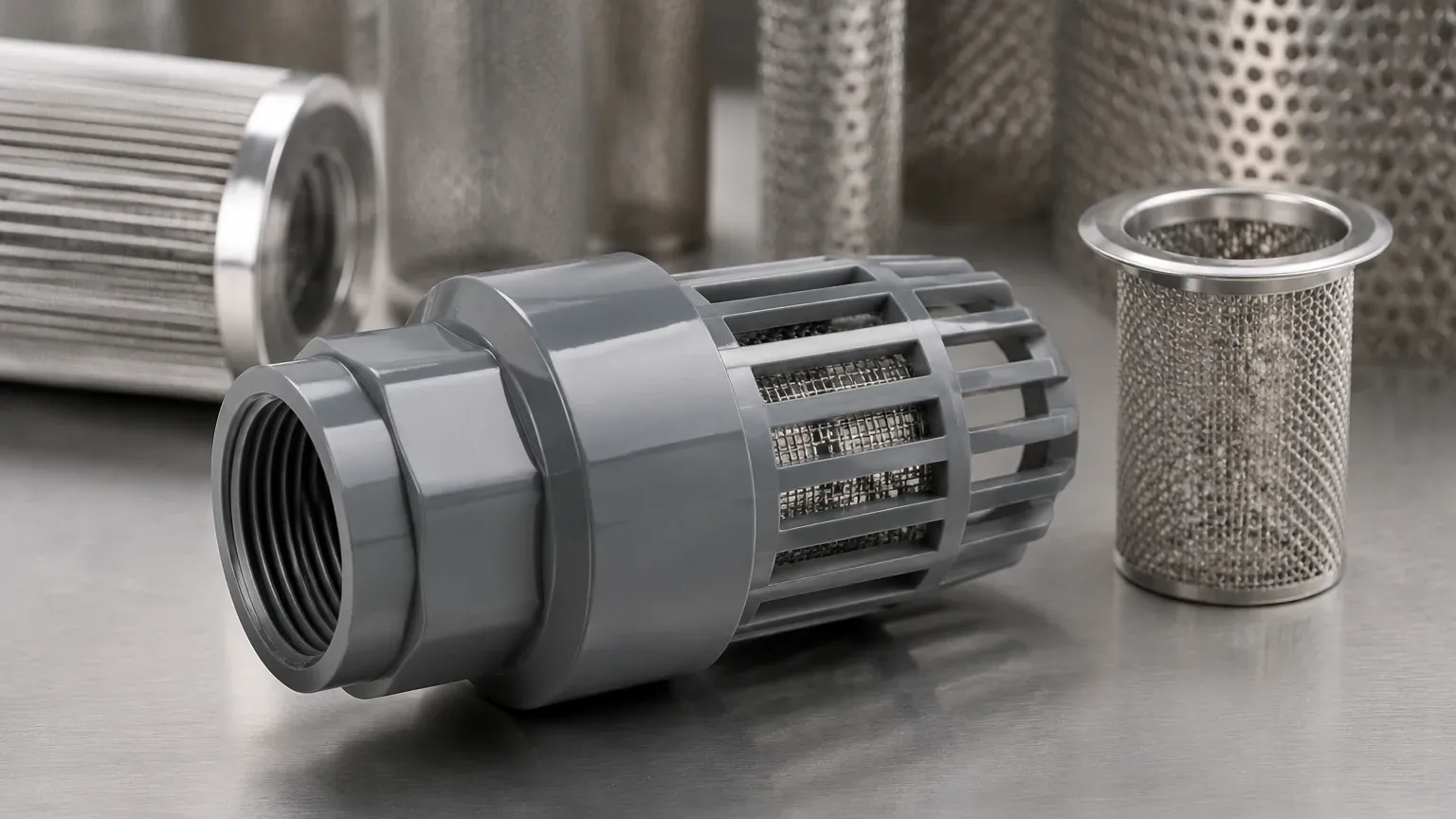
While the housing of a strainer 2 inch pvc provides the structural containment, the internal basket is the component responsible for the actual filtration. In many industrial applications, standard plastic baskets provided with PVC housings may lack the structural integrity or the precision required for fine filtration.
Stainless Steel vs. Plastic Baskets
Many engineers opt to retrofit PVC housings with stainless steel baskets (such as those made from 304 or 316L stainless steel). Stainless steel offers several advantages over plastic internals:
* Structural Strength: Under high differential pressure, plastic baskets can collapse or bypass. Stainless steel baskets maintain their shape and seal integrity.
* Filtration Precision: Stainless steel wire mesh can be manufactured to much finer micron ratings (down to 5 microns) compared to perforated plastic.
* Thermal Stability: Metal baskets are unaffected by the temperature fluctuations that might cause plastic elements to soften or warp.
When selecting Strainers & Baskets, it is essential to ensure that the basket flange provides a positive seal against the housing to prevent "bypass," where unfiltered fluid escapes around the edges of the filter element.
Chemical Compatibility and Seal Selection
While PVC is resistant to many chemicals, it is vulnerable to certain organic solvents, esters, and ketones. Engineers must also consider the O-ring or gasket material used to seal the strainer cap. Common options include:
* EPDM: Excellent for water, dilute acids, and alkalis.
* FKM (Viton): Required for systems involving oils, fuels, or more aggressive chemical concentrations.
* PTFE Encapsulated: Used when universal chemical resistance is required, though these seals are less resilient and require more torque to achieve a leak-free seal.
Maintenance and Operational Safety
A primary advantage of the basket-style strainer 2 inch pvc is the ease of maintenance. Unlike Y-strainers, basket strainers typically feature a top-loading design that allows for the removal of the basket without draining the entire piping system (provided the line is isolated).
Monitoring Pressure Drop
To optimize the replacement cycle, differential pressure gauges should be installed upstream and downstream of the strainer. A common rule of thumb is to clean or replace the basket when the pressure drop reaches 5-10 PSI above the clean baseline. Waiting too long can result in the "blinding" of the mesh, which can cause the basket to burst or the pump to cavitate.
Cleaning Procedures
In PVC systems, mechanical stress during maintenance is a common cause of failure. When removing the strainer cap, technicians should use appropriate wrenches to avoid over-torquing the plastic threads. The internal basket should be cleaned with a soft brush or ultrasonic bath, especially if it is a fine stainless steel mesh, to avoid damaging the filtration media.
Customization and OEM Solutions
In many specialized industrial processes, a standard off-the-shelf strainer 2 inch pvc may not meet specific performance criteria. Customization options often include:
* Magnetic Inserts: Added to the basket to capture fine ferrous particles that might pass through a standard mesh.
* Reinforced Baskets: For high-pressure applications where the differential pressure might exceed 20 PSI.
* Custom Mesh Sizes: Tailoring the filtration accuracy to protect specific downstream equipment like spray nozzles or high-precision valves.
Manufacturers like Kaifil specialize in engineering these precision internal components, ensuring that even when a PVC housing is used for its chemical properties, the filtration performance remains at an industrial standard through high-quality metal internals.
Summary of Selection Criteria
Before purchasing or specifying a 2-inch PVC filtration solution, technical teams should confirm the following data points:
1. Maximum Operating Pressure: Ensure it accounts for the temperature derating of PVC.
2. Fluid Compatibility: Verify both the PVC housing and the internal seal material.
3. Required Micron Rating: Determine if a standard perforated plastic basket is sufficient or if a precision stainless steel mesh basket is required.
4. Flow Rate and Allowable ΔP: Calculate the OAR to ensure the maintenance frequency is acceptable for the application.
5. Installation Space: Basket strainers require vertical clearance for basket removal, which must be accounted for in the piping layout.
By focusing on the technical synergy between the housing material and the quality of the Strainers & Baskets, engineers can implement a filtration system that provides both the corrosion resistance of PVC and the reliable performance of precision-engineered metal filtration media.
