


Smith Root Edna Filter Packs
In the field of environmental monitoring and aquatic biology, the precision of filtration components is paramount. Environmental DNA (eDNA) sampling has revolutionized how scientists detect and monitor species in various water bodies. At the heart of this technology are specialized filtration units, such as the smith root edna filter packs, which are designed to capture genetic material from water samples with high efficiency and minimal risk of contamination. For engineers and procurement specialists in the industrial and environmental sectors, understanding the technical specifications, material science, and manufacturing standards of these filter packs is essential for ensuring data integrity and operational success.
Understanding the Technical Requirements of eDNA Filtration
Environmental DNA refers to the genetic material shed by organisms into their surroundings. In aquatic environments, this DNA is often suspended in the water column, attached to small particles, or contained within cellular debris. Capturing this material requires a filtration system that can handle significant volumes of water while retaining microscopic biological fragments.
Filter packs used in these applications must meet rigorous engineering standards. Unlike standard industrial filtration, where the goal might be to protect downstream equipment from debris, eDNA filtration is focused on the retention of specific biological analytes. This requires a precise micron rating and a high effective filtration area (EFA). The smith root edna filter packs are engineered to facilitate this process, providing a self-preserving environment for the captured DNA, which is critical for field operations where immediate laboratory processing is not possible.
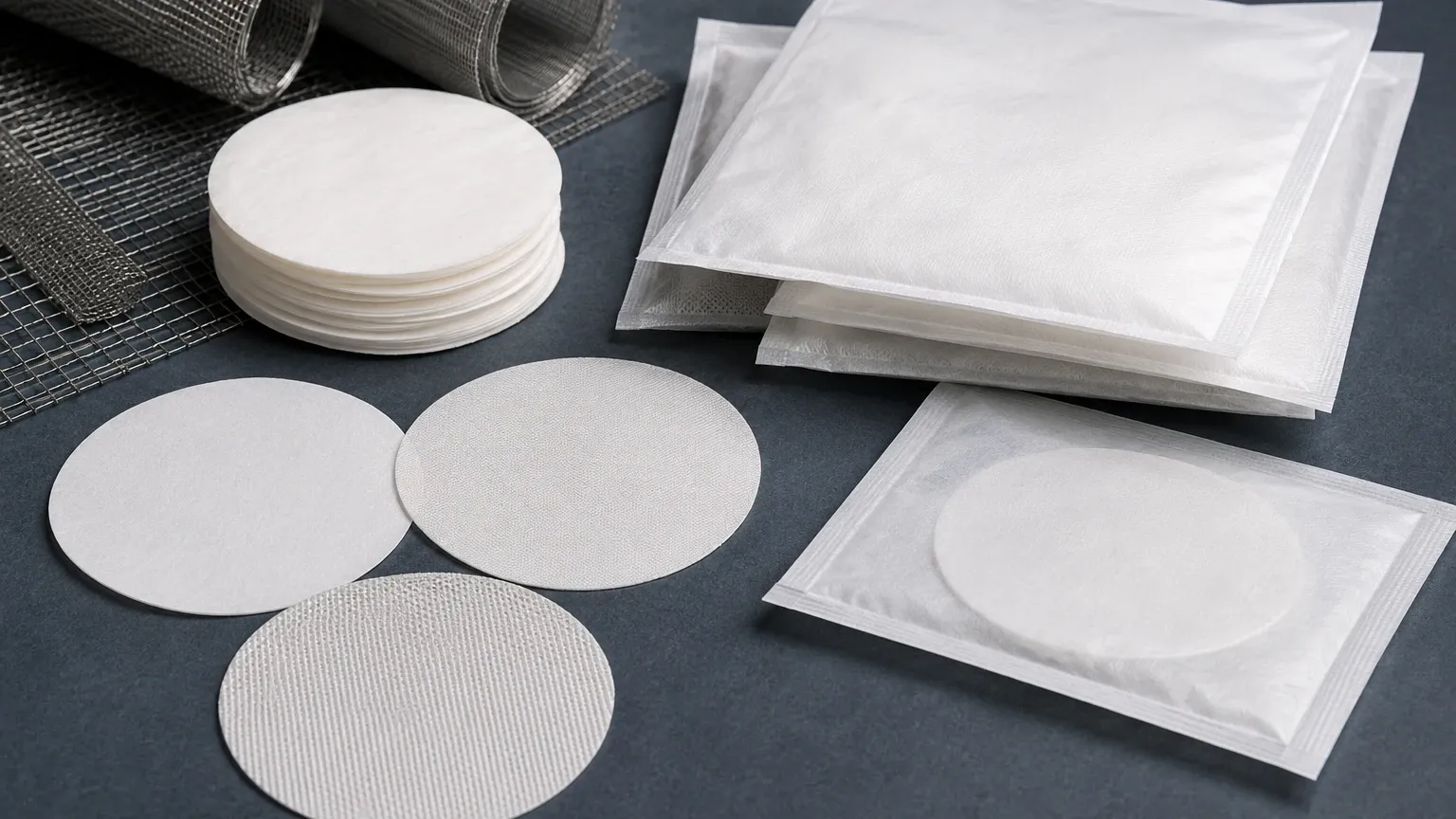
From an engineering perspective, the design of Filter Discs & Packs for such sensitive applications involves balancing flow rate with retention efficiency. If the pore size is too large, critical genetic data is lost; if it is too small, the filter may clog prematurely, limiting the sample volume and the statistical power of the analysis.
Material Selection and Chemical Compatibility
The choice of material for filter discs and packs is a critical factor in their performance. In industrial filtration, stainless steel (typically 304 or 316L) is the gold standard due to its corrosion resistance and mechanical strength. In the context of eDNA sampling, materials must also be inert to ensure they do not interfere with the PCR (Polymerase Chain Reaction) process used in later analysis.
While many eDNA filters utilize specialized membranes, the structural components—such as the support mesh and the outer housing—often rely on the same principles found in high-end industrial Filter Discs & Packs. For instance, 316L stainless steel is frequently used in custom filtration solutions because it can withstand harsh environmental conditions, including saltwater exposure and chemical cleaning agents, without leaching ions that could degrade the DNA samples.
When evaluating smith root edna filter packs or similar high-precision components, engineers must confirm that the materials used are compatible with the specific preservatives employed in the field. Many eDNA systems use long-term storage buffers that are designed to stabilize DNA at room temperature, and the filter assembly must maintain its integrity when in contact with these chemicals for extended periods.
Engineering Design of Filter Discs & Packs for Sampling
The architecture of a filter pack determines its durability and performance under pressure. In industrial applications, filter packs often consist of multiple layers of wire mesh, each serving a specific purpose:
1. Filtration Layer: The primary layer with the specified micron rating designed to capture the target particles.
2. Support Layer: A coarser mesh that provides mechanical strength to the filtration layer, preventing it from deforming under high differential pressure.
3. Drainage Layer: Ensures a uniform flow of fluid across the entire surface of the filter, maximizing the use of the available area.
For specialized tools like the smith root edna filter packs, the design is often optimized for a single-use, high-integrity sampling event. The integration of the filter within a sealed capsule or pack is a key design feature that prevents cross-contamination between sites—a critical requirement for environmental DNA studies.
Custom manufacturers like Kaifil specialize in the production of Filter Discs & Packs that can be tailored to these specific geometries. Whether the application requires a circular disc, a rectangular pack, or a complex multi-layered assembly, the precision of the edge sealing (via ultrasonic welding, stamping, or resin bonding) is vital to ensure that no fluid bypasses the filtration media.
Performance Evaluation: Flow Rate vs. Retention
Engineers must evaluate the performance of filtration components based on several key metrics. In the context of smith root edna filter packs, the relationship between flow rate and particle retention is the most critical. A high flow rate allows for larger volumes of water to be sampled in less time, which is essential for detecting rare species in large water bodies.
However, as the flow rate increases, the pressure drop across the filter also increases. This is known as differential pressure ($ΔP$). If the $ΔP$ becomes too high, it can lead to several issues:
* Filter Breakthrough: Particles that should be retained are forced through the pores due to high pressure.
* Cell Lysis: Biological cells may be ruptured by the mechanical stress of the flow, potentially complicating the DNA extraction process.
* Structural Failure: The filter media or its housing may fail, leading to a lost sample.
Reliable Filter Discs & Packs are tested to determine their maximum operating pressure and their "bubble point," which is a standard test used to verify the pore size and integrity of the filter. By understanding these technical boundaries, field technicians can operate sampling pumps within the safe and effective limits of the filter pack.
Customization and OEM Solutions for Specialized Filtration
Many environmental and industrial applications require filtration solutions that are not available off-the-shelf. The development of smith root edna filter packs is an example of how specialized equipment manufacturers create bespoke solutions for niche markets. For organizations looking to develop their own sampling or processing equipment, partnering with an OEM manufacturer of Filter Discs & Packs is often the most efficient path to market.
Customization options typically include:
* Micron Ratings: Ranging from sub-micron levels up to several hundred microns, depending on the target analyte.
* Layer Configuration: Sintered or bonded layers that combine different mesh counts for optimal strength and flow.
* Shape and Dimension: Precision-cut components designed to fit into proprietary housings or sampling manifolds.
* Cleaning and Sterilization: Filters can be provided in a pre-sterilized state or designed to withstand autoclaving and other sterilization methods.
By leveraging advanced manufacturing capabilities, such as those provided by Kaifil, engineers can ensure that their custom filtration components meet the exact specifications required for high-stakes environmental monitoring or precision industrial processing.
Best Practices for Filter Replacement and Maintenance
In any filtration-based system, the replacement cycle is a major component of the total cost of ownership. For eDNA sampling using smith root edna filter packs, the filters are generally treated as consumables to eliminate the risk of DNA carryover between samples. In industrial settings, however, Filter Discs & Packs may be designed for reuse.
If the application allows for reusable filters, a strict cleaning and validation protocol must be established. This often involves:
1. Backflushing: Reversing the flow to dislodge accumulated particles.
2. Chemical Cleaning: Using acids, bases, or specialized detergents to remove organic or inorganic fouling.
3. Integrity Testing: Performing a bubble point or pressure decay test to ensure the filter has not been damaged during cleaning.
For most high-precision sampling tasks, the use of high-quality, single-use filter packs is the industry standard. This approach minimizes the labor costs associated with cleaning and validation while providing the highest level of confidence in the resulting data.
Conclusion: Selecting the Right Filtration Partner
The success of environmental DNA monitoring and other precision filtration tasks depends on the quality of the components used. Whether you are utilizing standardized smith root edna filter packs for field research or developing a new industrial process that requires custom Filter Discs & Packs, understanding the engineering principles behind these products is essential.
When selecting a filtration partner, engineers should look for manufacturers with a deep understanding of material science, precision manufacturing, and the specific demands of the application. By focusing on technical expertise and quality assurance, organizations can achieve efficient, durable, and cost-effective filtration performance that stands up to the most demanding industrial and environmental challenges.
