


G3 Pre Filter
In industrial filtration systems, the efficiency and longevity of high-precision downstream components depend heavily on the effectiveness of initial separation stages. The G3 pre filter serves as a primary line of defense, designed to capture coarse particulate matter before it can reach and potentially clog more sensitive, expensive secondary filters. Understanding the technical specifications, material options, and engineering roles of G3-grade media is essential for technical professionals managing fluid or air processing systems.
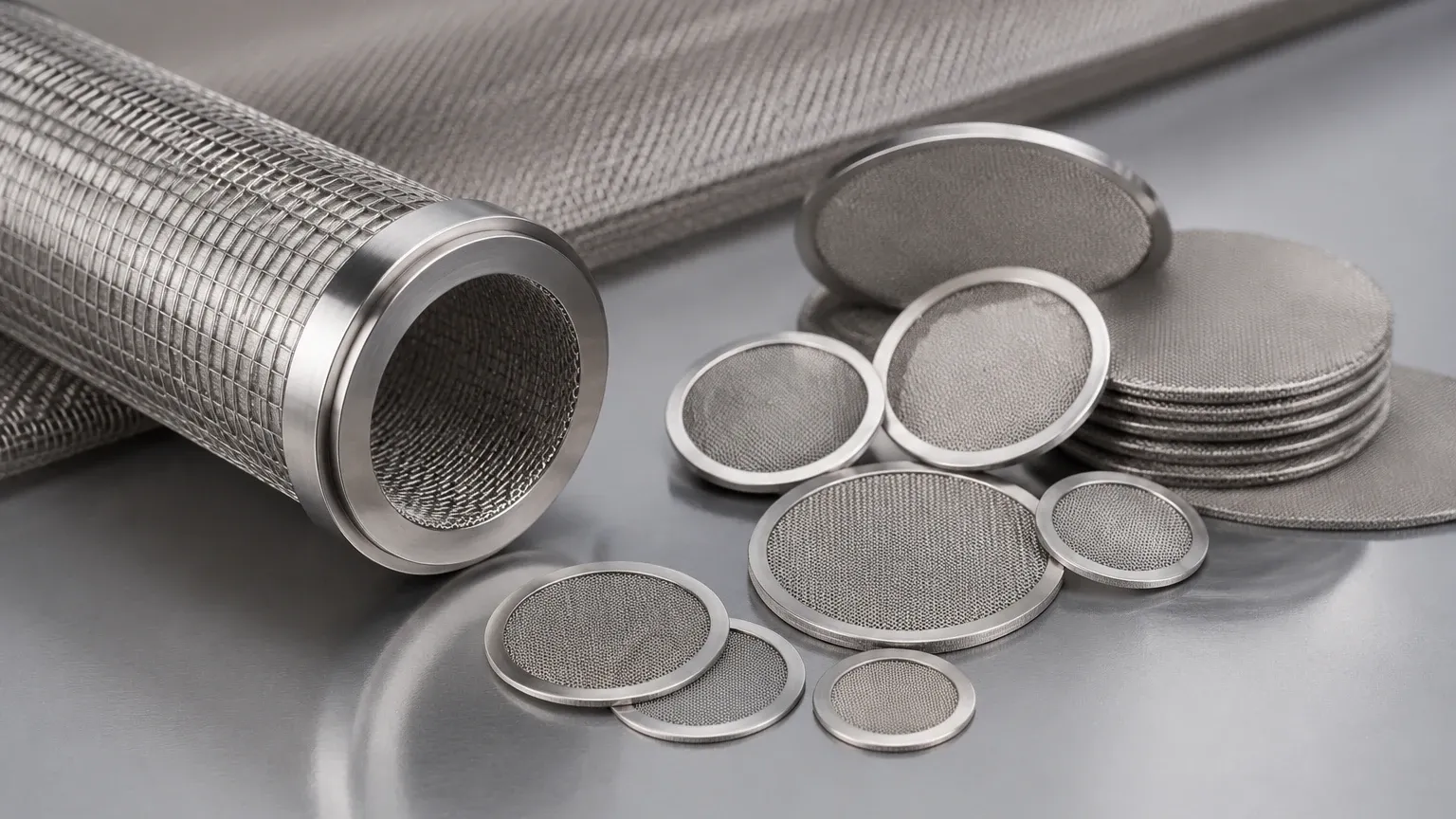
For many industrial applications, particularly those involving high temperatures, corrosive chemicals, or high-pressure fluids, standard synthetic G3 media may be insufficient. In these environments, stainless steel wire mesh often provides the necessary durability and precision. When integrated into specialized Filter Discs & Packs, G3-grade mesh layers offer a robust solution for pre-filtration that can withstand demanding operational conditions.
Understanding G3 Filtration Standards and Performance
The "G3" classification originates from the EN 779:2012 standard, which categorized air filters based on their average arrestance of synthetic dust. While this standard has been largely superseded by ISO 16890, the G3 designation remains a common industry shorthand for "coarse" filtration. Under the newer ISO 16890 framework, a G3 pre filter typically aligns with the "ISO Coarse" category, specifically achieving an arrestance of approximately 80% to 90% of coarse dust particles.
In liquid filtration or polymer processing, the concept of a G3-grade pre-filter is often translated into specific micron ratings. Typically, a G3 equivalent in metal mesh might range from 40 to 100 microns, depending on the specific particle size distribution of the contaminant. The primary goal is not absolute purification but the removal of the bulk of large-diameter contaminants to stabilize the pressure drop across the entire filtration assembly.
Engineers must distinguish between nominal and absolute ratings when selecting pre-filter media. A G3-grade mesh is generally considered a nominal filter, meaning it will stop a significant percentage of particles at its rated size but may allow some spherical particles or elongated fibers to pass through. This is acceptable for a pre-filter, as its function is to reduce the "dirt load" on subsequent stages.
The Role of G3 Media in Industrial Filter Discs & Packs
In many industrial processes, such as plastic extrusion, oil refining, and chemical synthesis, filtration is rarely a single-stage event. Instead, multi-layer filter packs are utilized to achieve graduated filtration. The G3 pre filter layer is almost always the first point of contact for the process medium.
Multi-Layer Integration
In a typical multi-layer pack, the G3 coarse mesh is placed on the upstream side. This is followed by progressively finer layers, such as a G4 or F7 equivalent, and finally the main filtration layer which might be a fine Dutch weave or sintered metal fiber felt. The G3 layer acts as a "trash screen," capturing large debris, scale, or un-melted particulates that would otherwise cause an immediate pressure spike in the fine mesh layers.
Structural Support
Beyond particle capture, coarse G3-grade stainless steel mesh often serves a dual purpose as a support structure. Because G3 mesh uses relatively thick wire diameters, it provides mechanical rigidity to the filter pack. This prevents the finer, more delicate mesh layers from deforming or rupturing under high differential pressures. In the design of custom filter discs, the G3 layer is frequently spot-welded or rim-bound with the rest of the pack to ensure structural integrity during high-flow operations.
Material Selection for G3 Pre-Filtration
While G3 filters in HVAC systems often use synthetic fibers or glass wool, industrial B2B applications—especially those involving hydraulics, chemicals, or food processing—require metallic solutions. Stainless steel is the industry standard for these applications due to several engineering advantages.
Stainless Steel 304 vs. 316L
For most general industrial pre-filtration, Grade 304 stainless steel is sufficient. It offers good corrosion resistance and mechanical strength. However, in environments involving chlorides, high acidity, or pharmaceutical-grade requirements, Grade 316L is preferred. 316L contains molybdenum, which significantly enhances resistance to pitting and crevice corrosion. For a G3 pre filter intended for marine environments or aggressive chemical processing, 316L is the baseline requirement.
Wire Mesh Weave Types
For G3-grade performance, plain weave or twilled weave patterns are most common.
* Plain Weave: Each shute wire passes over and under each warp wire. This provides a consistent pore size and is easy to clean.
* Twilled Weave: Each shute wire passes over and under two warp wires. This allows for the use of heavier wires in a given mesh count, increasing the durability and life span of the pre-filter layer.
Engineering Considerations for System Design
When specifying a G3 pre filter for an industrial system, engineers must look beyond simple filtration efficiency. Several mechanical and fluid dynamic factors influence the total performance of the filtration unit.
Pressure Drop ($\\Delta P$)
Every filter adds resistance to the flow. A G3 pre-filter is designed to have a very low initial pressure drop. However, as it captures coarse debris, the $\Delta P$ will rise. Engineers must calculate the "terminal pressure drop"—the point at which the filter must be cleaned or replaced to prevent system failure or pump cavitation. Because G3 media has a high open area (often 30% to 50%), it allows for high flow rates with minimal energy loss.
Dust Holding Capacity (DHC)
The DHC refers to the amount of contaminant the filter can retain before reaching its terminal pressure drop. A well-designed G3 pre-filter utilizes its depth (if using a multi-layer pack) or its surface area to maximize DHC. In systems with high contaminant loads, increasing the surface area through pleated designs or larger disc diameters can significantly extend the service interval.
Sealing and Bypass Prevention
A pre-filter is only effective if the fluid actually passes through it. In the assembly of Filter Discs & Packs, the edges must be properly sealed. This is often achieved through aluminum, stainless steel, or copper rim binding. Without a proper seal, "bypass" occurs, where contaminated fluid flows around the edges of the filter, rendering the G3 stage useless and endangering the downstream components.
Applications and Industry Use Cases
G3-grade pre-filtration is utilized across a wide spectrum of industrial sectors, each with unique environmental challenges.
Polymer and Plastic Extrusion
In the production of films, fibers, and resins, un-melted polymer "gels" or degraded carbon particles can ruin the final product. G3 pre-filter discs are used in screen changers to remove these large contaminants. The metallic construction is vital here, as process temperatures often exceed 200°C and pressures can reach several hundred bars.
Hydraulic and Lubrication Systems
Large industrial gearboxes and hydraulic power units use G3-grade suction strainers or pre-filters to protect pumps from large metallic chips or environmental dust. By removing these particles early, the G3 filter prevents abrasive wear on pump vanes and valves.
Food and Beverage Processing
In the filtration of syrups, oils, or juices, a G3 stainless steel pre-filter removes seeds, skins, or large pulp fragments. Stainless steel is chosen here for its "clean-in-place" (CIP) capabilities and compliance with food safety regulations regarding material migration.
Maintenance, Replacement Cycles, and Total Cost of Ownership
One of the primary benefits of using stainless steel G3 pre-filters over disposable synthetic versions is the ability to clean and reuse the media. This significantly impacts the total cost of ownership (TCO).
Cleaning Methods
Stainless steel G3 media can be cleaned using several industrial methods:
* Ultrasonic Cleaning: High-frequency sound waves create cavitation bubbles that dislodge particles from deep within the mesh.
* Backwashing: Reversing the flow of the fluid to push contaminants out of the mesh pores.
* Chemical Cleaning: Using solvents or acids to dissolve organic or inorganic deposits (provided the mesh material is compatible).
* Burn-off / Pyrolysis: For polymer applications, heating the filter to high temperatures in a controlled environment to carbonize and remove plastic residues.
Determining Replacement Cycles
While metallic G3 filters are durable, they are not infinite. Repeated cleaning cycles can eventually lead to "wire fraying" or permanent deformation of the pore structure. Maintenance teams should monitor the "clean pressure drop" after each cleaning. If the initial pressure drop after cleaning is significantly higher than it was when the filter was new, it indicates that internal blinding has occurred, and the filter pack should be replaced.
Technical Confirmation Before Procurement
Before finalizing a purchase or custom design for a G3 pre filter, purchasing teams and engineers should confirm the following technical data points with the manufacturer:
1. Exact Micron Requirement: Does the application require a specific micron rating (e.g., 80 microns) or a standard mesh count (e.g., 200 mesh)?
2. Operating Environment: What is the maximum operating temperature and the chemical composition of the fluid? This dictates the choice between 304 and 316L stainless steel.
3. Physical Dimensions: For filter discs, what are the outer and inner diameter tolerances? For packs, what is the required total thickness?
4. Flow Rate and Pressure: What is the maximum expected flow rate, and what is the maximum allowable differential pressure before the mesh might deform?
5. Customization Needs: Does the application require specialized edge binding, spot welding, or a specific layering sequence in a multi-stage pack?
By addressing these factors, industrial operators can ensure that their G3 pre-filtration stage provides the necessary protection for their downstream processes, optimizing both performance and cost-efficiency.
