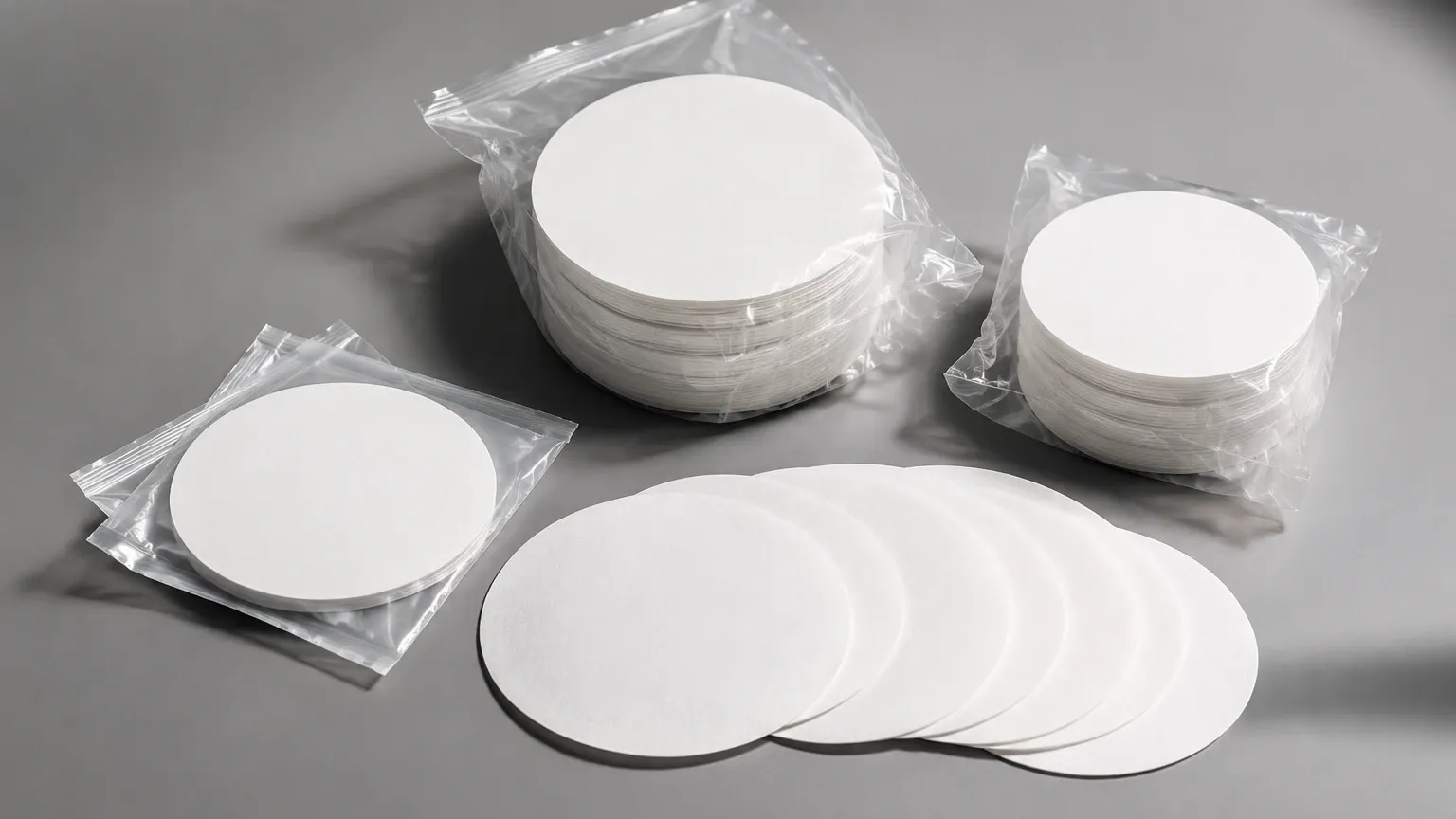
Filter Paper Pack
In the landscape of industrial filtration, the term "filter paper pack" often serves as a foundational concept for both laboratory-scale separation and high-volume industrial processing. While the term may suggest a simple stack of cellulose-based media, the engineering reality in modern manufacturing—particularly in the chemical, polymer, and pharmaceutical sectors—involves complex, multi-layered assemblies designed to withstand extreme pressures and temperatures. For engineers and procurement specialists, understanding the transition from basic paper media to high-performance Filter Discs & Packs is essential for optimizing production uptime and ensuring product purity.
Understanding the Role of Filter Paper Packs in Industrial Processes
A filter paper pack is essentially a structured arrangement of filtration media designed to remove particulate matter from a fluid or gas stream. In laboratory settings, these packs are often used for gravity-fed or vacuum-assisted separation. However, in B2B industrial applications, the "pack" refers to a sophisticated component integrated into machinery such as extruders, hydraulic systems, or chemical reactors.
Industrial filtration requirements differ significantly from benchtop applications. Where a laboratory filter paper pack focuses on chemical compatibility and ash content, an industrial pack must address mechanical integrity, flow resistance (pressure drop), and dirt-holding capacity. In processes like polymer extrusion, the filter pack is the final line of defense against contaminants that could cause fiber breakage or surface defects in the end product. Consequently, the selection of the pack—whether it utilizes specialized paper, non-woven fibers, or stainless steel wire mesh—is a critical engineering decision.
Material Engineering: From Cellulose to Stainless Steel Mesh
The choice of material within a filter paper pack determines its operational limits. Traditional cellulose-based paper packs are excellent for low-temperature, low-pressure applications where the media is considered a consumable. However, as industrial demands increase, the limitations of paper—such as low mechanical strength and limited chemical resistance—become apparent.
To address these limitations, many industrial "packs" have evolved into metal-based assemblies. Stainless steel, particularly grades 304, 316, and 316L, has become the industry standard for demanding environments.
1. Stainless Steel 304: Offers good corrosion resistance and is suitable for most food-grade and general industrial applications.
2. Stainless Steel 316/316L: Contains molybdenum, which provides superior resistance to chlorides and acidic environments. The "L" (low carbon) version is preferred for welded assemblies to prevent intergranular corrosion.
3. Specialty Alloys: For highly corrosive chemical processing, materials like Monel or Hastelloy may be incorporated into the pack structure.
When transitioning from a standard filter paper pack to a metal disc pack, engineers gain the ability to clean and reuse the media, significantly reducing the total cost of ownership over the equipment's lifecycle.
Structural Design of Multi-Layer Filter Discs & Packs
An effective industrial filter pack is rarely a single sheet of material. Instead, it is a precision-engineered stack of multiple layers, each serving a specific function. A typical high-performance assembly might include:
* The Filtration Layer: This is the core of the pack, featuring the specific micron rating required for the process. It can be made of fine wire mesh, sintered metal fiber, or specialized high-density paper.
* The Support Layers: Placed on either side of the filtration layer, these coarser meshes provide mechanical stability. They prevent the fine filtration media from deforming or "migrating" under high differential pressure.
* The Drainage Layer: In thick packs, drainage layers ensure that the fluid is distributed evenly across the entire surface area of the filtration media, preventing localized clogging and extending the service life.
These layers are often bound together using two primary methods: spot welding or rimming. Spot-welded packs are cost-effective and suitable for applications where the pack is held securely in a housing. Rimming involves encasing the edges of the stack in a metal border—typically aluminum, copper, or stainless steel. Rimming provides a superior seal, preventing fluid bypass and making the pack easier to handle during installation and replacement.
Key Performance Indicators for Filter Selection
When evaluating a filter paper pack or its metal equivalent, engineers must focus on several technical parameters to ensure the component meets application requirements:
1. Micron Rating (Absolute vs. Nominal)
The micron rating defines the size of particles the pack can capture. A nominal rating indicates the ability to retain a major percentage of particles of a certain size, while an absolute rating indicates that 99.9% of particles above that size will be captured. For precision industries like pharmaceuticals, absolute ratings are mandatory.
2. Permeability and Pressure Drop
Every filter pack introduces resistance to the flow. A high-quality pack maximizes the open area to ensure high flow rates with minimal pressure drop. If the initial pressure drop is too high, the system will reach its terminal pressure (the point where the filter must be changed) much faster, leading to frequent downtime.
3. Dirt-Holding Capacity
This refers to the total volume of contaminants the pack can retain before the pressure drop becomes unacceptable. Multi-layer designs often feature "gradient filtration," where coarser layers capture large particles before they reach the fine filtration layer, significantly increasing the pack's capacity.
4. Temperature and Chemical Compatibility
In chemical processing, the filter paper pack must withstand the solvent or acid being filtered. While paper may degrade, stainless steel packs remain inert in most industrial solvents and can operate at temperatures exceeding 500°C.
Applications in High-Pressure and High-Temperature Environments
The utility of advanced filter packs is most visible in heavy industrial sectors. In the Polymer and Plastic Extrusion industry, filter packs (often called screen packs) are placed before the die to remove "gels" and un-melted resin. These packs must withstand pressures that can exceed 5,000 PSI.
In the Oil and Gas sector, filter packs are used in sand control and hydraulic fluid filtration. Here, the durability of the metal mesh is paramount, as the fluid often contains abrasive particulates that would quickly shred a standard paper-based pack.
Chemical and Pharmaceutical applications often require the high purity of sintered metal fiber packs. These packs provide the depth-filtration characteristics of a filter paper pack but with the sterilized, non-shedding properties of stainless steel. This is crucial for maintaining the integrity of active pharmaceutical ingredients (APIs).
Maintenance, Cleaning, and Replacement Cycles
One of the primary considerations for procurement teams is the maintenance cycle. A disposable filter paper pack is inexpensive upfront but requires frequent replacement and disposal, which adds to labor costs and environmental impact.
In contrast, stainless steel filter packs are designed for longevity. Depending on the contaminant, these packs can be cleaned using several methods:
* Ultrasonic Cleaning: High-frequency sound waves create cavitation bubbles that dislodge particles from deep within the mesh layers.
* Chemical Cleaning: Solvents or acids are used to dissolve organic or inorganic build-up.
* Burn-off (Thermal Cleaning): For polymer applications, the packs are placed in a vacuum oven to carbonize the plastic, which is then blown out with compressed air or removed via ultrasonics.
Establishing a clear replacement protocol based on differential pressure (ΔP) is vital. Operating a pack beyond its rated pressure limit can lead to "media migration," where the filter itself begins to break apart, or "channeling," where the fluid forces a hole through the media, rendering the filtration useless.
Customization and OEM Considerations for Industrial Filtration
Because every industrial system has unique flow characteristics and housing dimensions, customization is often a necessity rather than a luxury. When sourcing a filter paper pack or metal disc assembly, working with a manufacturer that offers OEM capabilities is essential.
Customization options typically include:
* Variable Geometry: While circular discs are standard, packs can be manufactured in oval, rectangular, or ring shapes to fit specific machinery.
* Layer Configuration: Adjusting the sequence and mesh count of the layers to balance filtration fineness with mechanical strength.
* Edge Treatments: Choosing the right rim material to ensure compatibility with the housing's gaskets and sealing surfaces.
For engineers, the goal is to find a balance between filtration efficiency and operational cost. By specifying the exact micron requirements and environmental conditions, they can procure a Filter Discs & Packs solution that minimizes waste and maximizes throughput. Whether the application calls for the simplicity of a paper pack or the ruggedness of a multi-layer stainless steel assembly, the focus remains on precision, durability, and reliable performance in the field.