


Filter Six Pack
In the demanding world of industrial extrusion and polymer processing, the efficiency of a filtration system is often determined by the precision and durability of its screen components. Among the various configurations used to ensure melt purity and protect downstream equipment, the multi-layer screen pack—often referred to in specific industrial contexts as a filter six pack—represents a critical engineering solution. These assemblies are not merely stacked layers of mesh; they are carefully engineered systems designed to manage pressure, capture contaminants, and maintain flow consistency under extreme conditions.
For engineers and procurement professionals, understanding the technical nuances of Filter Discs & Packs is essential for optimizing production uptime and product quality. Whether used in plastic recycling, fiber spinning, or fine chemical processing, the selection of the right filter pack configuration can mean the difference between a high-yield operation and frequent, costly shutdowns.
The Role of Multi-Layer Configurations in Industrial Filtration
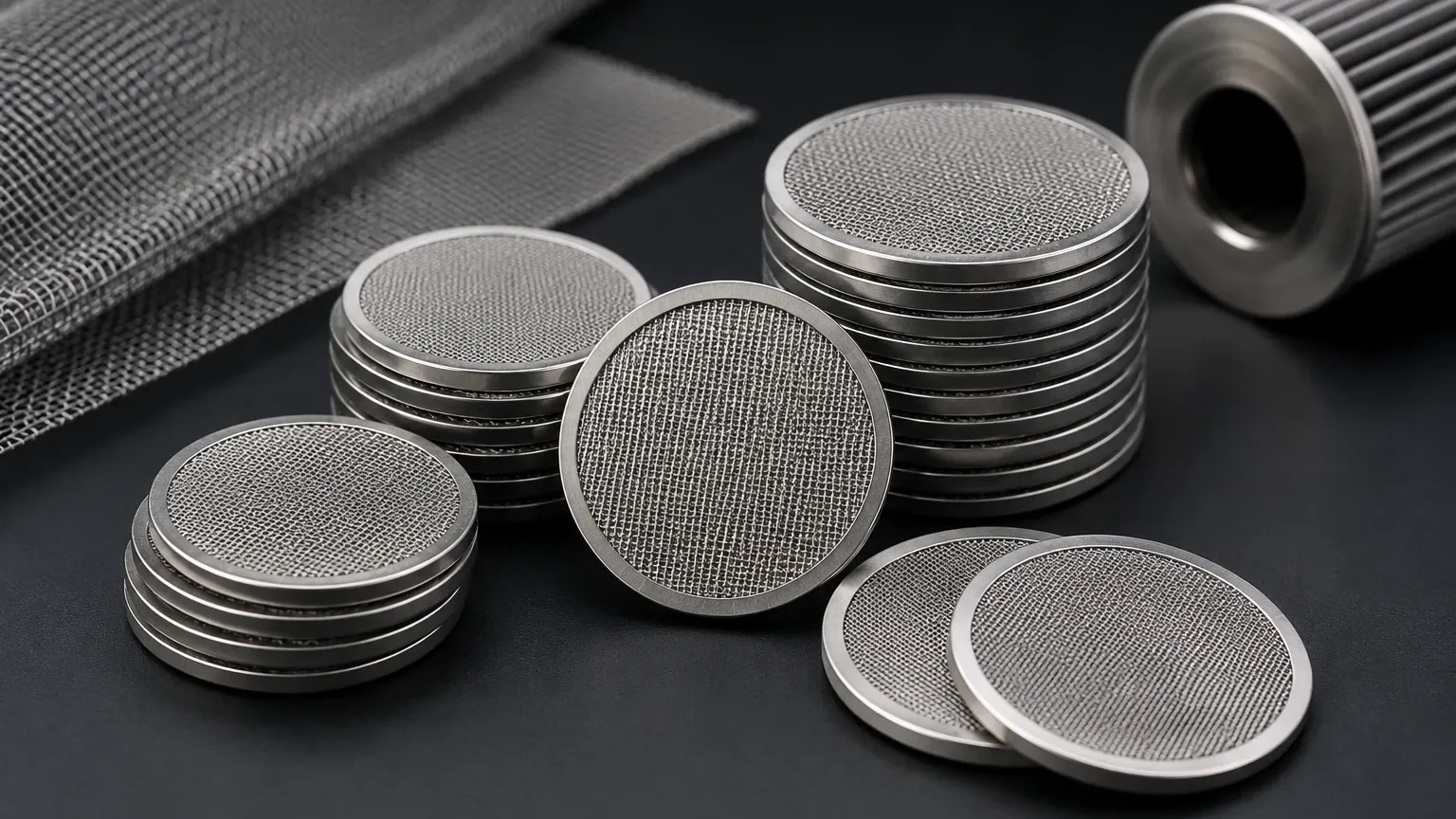
Single-layer filter discs often lack the mechanical strength or the graduated filtration capabilities required for high-pressure industrial applications. This is where the concept of the multi-layer pack becomes vital. A filter six pack typically refers to a six-layer assembly of stainless steel wire mesh, though the term is sometimes used more broadly to describe specific bundled sets used in continuous screen changers.
The primary objective of a multi-layer configuration is to provide depth filtration and mechanical support simultaneously. In a typical six-layer setup, the layers are arranged symmetrically or in a graduated sequence to achieve specific performance goals:
1. Outer Support Layers: Coarse mesh layers (e.g., 20 mesh) provide structural rigidity and protect the finer internal layers from mechanical damage during installation or high-pressure surges.
2. Intermediate Drainage Layers: These layers (e.g., 40 to 60 mesh) help distribute the fluid flow evenly across the surface of the fine filtration media, preventing localized clogging.
3. Core Filtration Layers: The center of the pack contains the finest mesh (the target micron rating), which performs the actual separation of contaminants from the process stream.
By utilizing a six-layer structure, manufacturers like Kaifil can balance the conflicting requirements of high filtration fineness and low pressure drop.
Engineering Considerations for a Filter Six Pack
When specifying a filter six pack for a production line, engineers must look beyond simple mesh counts. Several technical factors influence the performance and longevity of the filter assembly.
Pressure Drop (Delta P)
Every layer added to a filter pack increases the resistance to flow. An incorrectly designed six-layer pack can lead to an excessive pressure drop, which forces the extruder motor to work harder, increases melt temperature, and may lead to polymer degradation. Engineers must calculate the effective open area of the combined layers to ensure that the "Filter Six Pack" provides the necessary cleanliness without compromising throughput.
Mechanical Integrity and Binding
In high-pressure environments, individual mesh layers can shift or distort, leading to "bypass"—where contaminants leak around the edges of the filter. To prevent this, professional-grade filter packs are often spot-welded or bound with an aluminum or stainless steel rim. Spot welding ensures that the layers remain in the correct sequence and orientation, while a compressed rim provides a superior seal within the screen changer housing.
Symmetrical vs. Asymmetrical Stacking
In many extrusion processes, a symmetrical stack (e.g., 20/60/100/100/60/20) is preferred. This design allows the pack to be installed in either direction, eliminating the risk of operator error. However, in specific high-load applications, an asymmetrical stack might be engineered to provide a larger "dirt-holding capacity" by using progressively finer layers to trap particles of different sizes throughout the depth of the pack.
Material Science: Stainless Steel Alloys and Performance
The performance of a filter six pack is heavily dependent on the metallurgy of the wire mesh. At Kaifil, the focus is on high-grade stainless steel alloys that can withstand both the thermal and chemical rigors of industrial processing.
* SS304 Stainless Steel: The industry standard for most applications. It offers excellent strength and good corrosion resistance at a cost-effective price point. It is suitable for most plastics and general industrial fluids.
* SS316L Stainless Steel: For applications involving corrosive chemicals, high-salinity environments, or pharmaceutical-grade requirements, SS316L is the preferred choice. The addition of molybdenum provides enhanced resistance to pitting and crevice corrosion, while the "L" (low carbon) designation prevents carbide precipitation during welding.
* Specialty Alloys: In extreme cases involving highly acidic melts or temperatures exceeding 400°C, alloys like Inconel or Monel may be required, though these are typically reserved for specialized chemical processing rather than standard polymer extrusion.
Manufacturing Precision and Quality Control
Producing a reliable filter six pack requires more than just cutting mesh. Precision manufacturing is critical to ensure that the filtration rating is consistent across the entire surface of the disc. Kaifil utilizes advanced manufacturing capabilities to ensure that every component meets strict industrial standards.
Ultrasonic Cleaning
During the weaving and cutting process, wire mesh can accumulate lubricants and microscopic metal debris. For industries like food and beverage or pharmaceuticals, these contaminants are unacceptable. High-quality filter packs undergo ultrasonic cleaning to ensure they are "process-ready" upon delivery.
Precision Die-Cutting
Inconsistent disc diameters can lead to gaps in the screen changer, resulting in catastrophic bypass. Utilizing precision dies ensures that each layer in the six-pack assembly is identical in size, allowing for a tight fit and reliable sealing.
Mesh Weave Types
The choice of weave—Plain, Twill, or Dutch—affects how the filter six pack handles particles. Plain weave is common for support layers, while Dutch weave (Plain or Twill) is often used for the fine filtration layers because it offers a higher density of wires and a more tortuous path for contaminants, leading to better separation efficiency.
Operational Challenges: When to Replace Your Filter Packs
For a maintenance team, identifying the optimal replacement cycle for a filter six pack is essential for cost management. Replacing filters too early increases consumable costs and downtime, while replacing them too late risks equipment damage or product contamination.
Indicators of Clogging
The most reliable indicator is the pressure differential across the screen changer. As the fine layers of the pack capture contaminants, the pressure upstream will rise. Most modern extrusion lines are equipped with pressure transducers that trigger an alarm when the Delta P reaches a predetermined limit.
Structural Failure
In rare cases, if a filter pack is poorly constructed or subjected to pressures beyond its design limit, the mesh may "blow out." This is why the support layers in a six-layer configuration are so critical. If metal fragments are found in the final product, it is a sign of structural failure, often caused by using inferior materials or incorrect layer stacking.
Customization: Tailoring the Filter Six Pack to Your Process
No two industrial processes are identical. A filter six pack used for recycling post-consumer plastic will have vastly different requirements than one used for spinning fine synthetic fibers. Kaifil works closely with global customers to develop customized Filter Discs & Packs that meet specific application requirements.
Customization options include:
* Layer Count and Sequence: Adjusting the number of layers and their micron ratings to optimize the balance between filtration fineness and service life.
* Shape and Dimensions: While circular discs are standard, many screen changers require oval, rectangular, or kidney-shaped packs.
* Rim Materials: Selecting between aluminum, copper, or stainless steel bindings based on the operating temperature and the sealing requirements of the machine.
Conclusion: Making Informed Purchasing Decisions
Selecting a filter six pack is a technical decision that impacts the entire production chain. Engineers must evaluate the material grade, the mesh weave, the structural integrity of the assembly, and the reputation of the manufacturer. By choosing a partner like Kaifil, which combines manufacturing expertise with a deep understanding of industrial filtration principles, purchasing teams can ensure they receive components that offer reliable, durable, and cost-effective performance.
When evaluating suppliers, always confirm the specific alloy grades used, the precision of the cutting process, and the methods used to secure the layers. A well-engineered filter pack is an investment in the stability and quality of your industrial process.
