


Sam’s Club Coffee Filter Packs
In the realm of commercial beverage service and office management, the search for efficiency often leads procurement specialists to bulk solutions like Sam's Club coffee filter packs. These pre-measured, disposable units are designed for high-volume brewing, offering a standardized approach to extraction and sediment control. However, as industrial processes scale and technical requirements become more stringent—particularly in the food and beverage, chemical, and pharmaceutical sectors—the limitations of cellulose-based filtration become apparent. For engineers and facility managers, understanding the transition from consumer-grade disposables to precision-engineered Filter Discs & Packs is essential for optimizing production efficiency and ensuring product purity.
While paper filter packs serve a vital role in low-pressure, hospitality-focused applications, industrial filtration demands materials that can withstand high temperatures, corrosive environments, and significant pressure differentials. This article explores the technical nuances of filter packs, comparing bulk commercial options with industrial stainless steel solutions, and providing a framework for selecting the appropriate filtration media for professional applications.
Understanding the Utility of Commercial Filter Packs
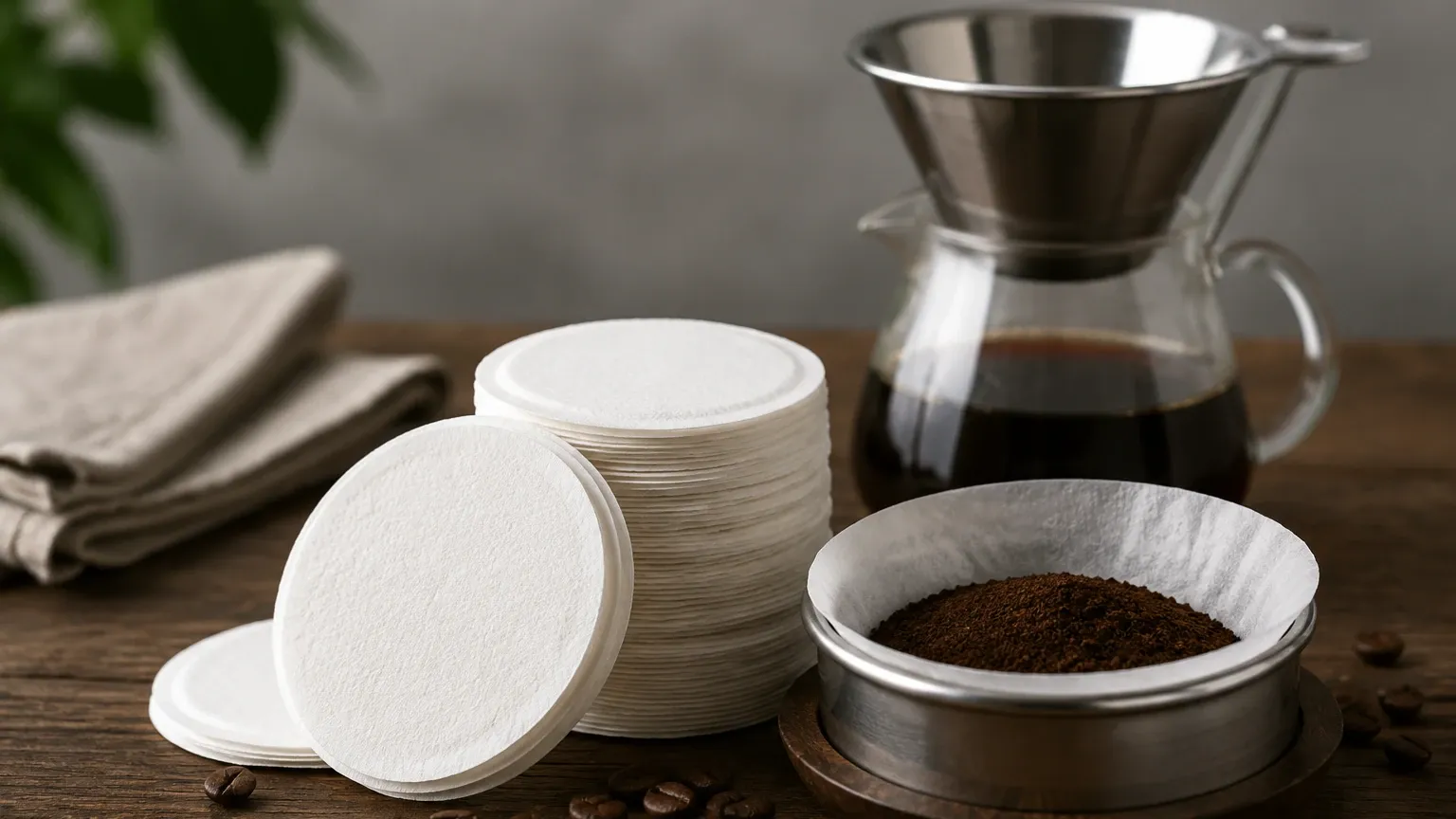
Commercial filter packs, such as those found at wholesale clubs, are primarily constructed from high-quality, oxygen-whitened paper or cellulose fibers. Their design is centered on convenience; the coffee grounds are often pre-enclosed within the filter, or the filter is shaped to fit specific high-volume brewers.
In a commercial kitchen or office environment, the primary goals are consistency and speed. Paper filters are excellent at trapping fine sediments and oils (diterpenes), resulting in a clear, bright flavor profile. However, from an engineering perspective, these filters have a low burst strength and are susceptible to tearing under increased flow rates. They are also single-use, which introduces a continuous waste stream and recurring operational costs.
For small-scale applications, the low unit price of Sam's Club coffee filter packs is attractive. But as we move into industrial processing—such as large-scale cold brew production, botanical extraction, or liquid clarification—the mechanical properties of the filter media become the bottleneck. This is where stainless steel wire mesh components provide a necessary upgrade in performance and durability.
Industrial vs. Consumer Filtration: Material Science and Durability
The fundamental difference between a standard coffee filter pack and an industrial filter disc lies in the material science. Industrial filters are typically fabricated from 304 or 316L stainless steel, alloys chosen for their exceptional resistance to oxidation and chemical degradation.
Mechanical Strength and Pressure Resistance
Paper filters are gravity-fed or operate under very low pressure. In contrast, industrial Filter Discs & Packs are often integrated into hydraulic systems, extruders, or high-pressure pipelines. Stainless steel mesh can withstand pressure differentials that would instantly rupture a cellulose pack. This allows for faster throughput and the ability to process high-viscosity liquids that paper cannot handle.
Temperature Stability
Standard coffee brewing occurs between 195°F and 205°F. While paper can handle these temperatures, many industrial processes require filtration at much higher ranges. Stainless steel maintains its structural integrity at temperatures exceeding 800°F, making it suitable for hot gas filtration or high-temperature chemical reactions where a paper filter would char or disintegrate.
Reusability and Sustainability
A significant driver for switching from disposable packs to metal filter discs is the total cost of ownership (TCO). While the initial investment in a stainless steel filter is higher, its ability to be cleaned (via ultrasonic baths or backwashing) and reused hundreds of times significantly reduces long-term costs and environmental impact. For facilities looking to achieve ISO 14001 certification or reduce their carbon footprint, moving away from single-use cellulose is a strategic move.
Engineering Considerations for Filter Discs & Packs
When specifying filter components for industrial use, engineers must look beyond the simple "pack" designation and evaluate specific technical parameters. Kaifil specializes in manufacturing these precision components to meet exact tolerances.
Micron Rating and Filtration Accuracy
In commercial coffee brewing, filtration is relatively coarse, usually ranging from 10 to 20 microns. In industrial applications, the required micron rating can vary from 1 micron for fine clarification to 500 microns for coarse straining. Stainless steel wire mesh allows for precise control over the aperture size, ensuring that the filter captures specific particle sizes without clogging prematurely.
Weave Types and Their Impact
The performance of a filter disc is largely determined by the weave of the wire mesh:
* Plain Weave: The most common type, offering a straightforward over-under pattern. It provides high flow rates and is easy to clean.
* Dutch Weave: This utilizes thicker warp wires and finer weft wires, creating a dense, strong mesh capable of very fine filtration and high-pressure resistance.
* Twill Weave: Allows for a heavier wire diameter in a given mesh count, increasing the overall strength of the disc.
Multi-Layer Sintered Packs
For the most demanding applications, individual mesh layers are often combined into a multi-layer pack. These layers can be spot-welded or sintered together. Sintering involves heating the layers in a vacuum furnace until they bond at the molecular level. This creates a monolithic structure that combines a fine filtration layer with several support layers, providing unmatched mechanical stability.
Applications of Precision Filter Packs in Industrial Processing
While Sam's Club coffee filter packs are restricted to the breakroom, industrial metal filter packs are foundational to several critical sectors. Understanding these applications helps technical professionals identify where a transition to metal media is warranted.
Food and Beverage Manufacturing
Beyond brewing coffee, industrial filters are used in the production of juices, syrups, and edible oils. In these environments, the filter must be food-grade and easy to sanitize. Stainless steel discs prevent the migration of fibers into the product—a common risk with paper filters—and can be cleaned in place (CIP).
Chemical and Petrochemical Processing
In chemical plants, filters must resist aggressive solvents and acids. 316L stainless steel is the industry standard here. Filter packs are used in polymer melt filtration to remove impurities before the plastic is extruded into fibers or films. The high pressure required for extrusion makes metal filters the only viable option.
Pharmaceutical and Biotechnology
Precision is paramount in pharmaceutical manufacturing. Filter discs are used to clarify active pharmaceutical ingredients (APIs) and ensure that injectable liquids are free of particulate matter. The ability to sterilize stainless steel filters via autoclaving is a critical advantage over disposable cellulose options.
Selection Criteria: When to Move Beyond Disposable Solutions
Determining whether to stick with commercial-grade disposables or invest in custom industrial Filter Discs & Packs involves a multi-factor analysis. Purchasing teams should consider the following:
1. Flow Rate Requirements: If your process requires high-velocity liquid or gas flow, paper packs will likely fail or cause significant pressure drops. Metal mesh offers a higher open-area percentage for better flow efficiency.
2. Chemical Compatibility: Evaluate the pH and chemical composition of the fluid. Paper is sensitive to high acidity and alkalinity, whereas stainless steel can be passivated to resist a wide range of chemicals.
3. Filtration Depth vs. Surface Filtration: Paper filters act as depth filters, trapping particles within the fiber matrix. This can lead to "blinding" or permanent clogging. Metal mesh acts primarily as a surface filter, where particles are stopped at the plane of the mesh, making them much easier to remove during cleaning cycles.
4. Regulatory Compliance: In industries governed by the FDA or EMA, the traceability and material certification of stainless steel components provide a level of quality assurance that bulk consumer products cannot match.
Customization and OEM Solutions for Specialized Filtration
One of the primary advantages of working with a manufacturer like Kaifil is the ability to customize the filter geometry. While Sam's Club coffee filter packs come in standard sizes (such as 12-cup or commercial urn sizes), industrial processes often require non-standard shapes.
Kaifil provides OEM services to create filter discs in various configurations:
* Rimmed Discs: Adding a metal or rubber rim to the disc ensures a leak-proof seal within the filter housing.
* Cylindrical Packs: For applications requiring a larger surface area in a compact footprint.
* Custom Diameters: Precision laser cutting allows for the production of discs ranging from a few millimeters to several meters in diameter.
By collaborating with a dedicated filtration manufacturer, engineers can specify the exact mesh count, wire diameter, and layering sequence required for their specific fluid dynamics. This level of customization ensures that the filtration system operates at peak efficiency, reducing downtime and preventing downstream equipment damage.
Conclusion: Making the Informed Choice
In conclusion, while Sam's Club coffee filter packs are an excellent, cost-effective solution for their intended use in commercial coffee preparation, they represent only the most basic tier of filtration technology. For industrial professionals, the shift to stainless steel Filter Discs & Packs is an investment in process reliability, product quality, and long-term operational economy.
When evaluating your filtration needs, consider the mechanical stresses, thermal requirements, and chemical environment of your application. By moving from disposable cellulose to precision-engineered metal mesh, you gain control over filtration accuracy and significantly enhance the durability of your production line. Whether you are refining chemicals, processing food, or managing a high-pressure hydraulic system, selecting the right filter media is a critical engineering decision that impacts the entire lifecycle of your equipment.
