


Filter Pack 2010
In the landscape of industrial filtration, precision and structural integrity are the primary benchmarks for operational success. Among the various configurations utilized in high-pressure and high-temperature environments, the filter pack 2010 represents a specific category of multi-layer filtration components designed to meet rigorous engineering standards. These assemblies are critical in industries ranging from polymer extrusion and chemical processing to hydraulic system management, where the removal of microscopic contaminants is essential for protecting downstream equipment and ensuring product purity.
For engineers and procurement professionals, selecting the correct Filter Discs & Packs involves a deep understanding of material science, fluid dynamics, and mechanical construction. A filter pack is rarely a single piece of mesh; rather, it is a sophisticated composite of multiple layers of wire cloth, each serving a distinct functional purpose. The "2010" designation often refers to specific dimensional standards or layer configurations required by specialized industrial machinery, necessitating a precise match between the component's specifications and the application's demands.
Technical Specifications of the Filter Pack 2010 Configuration
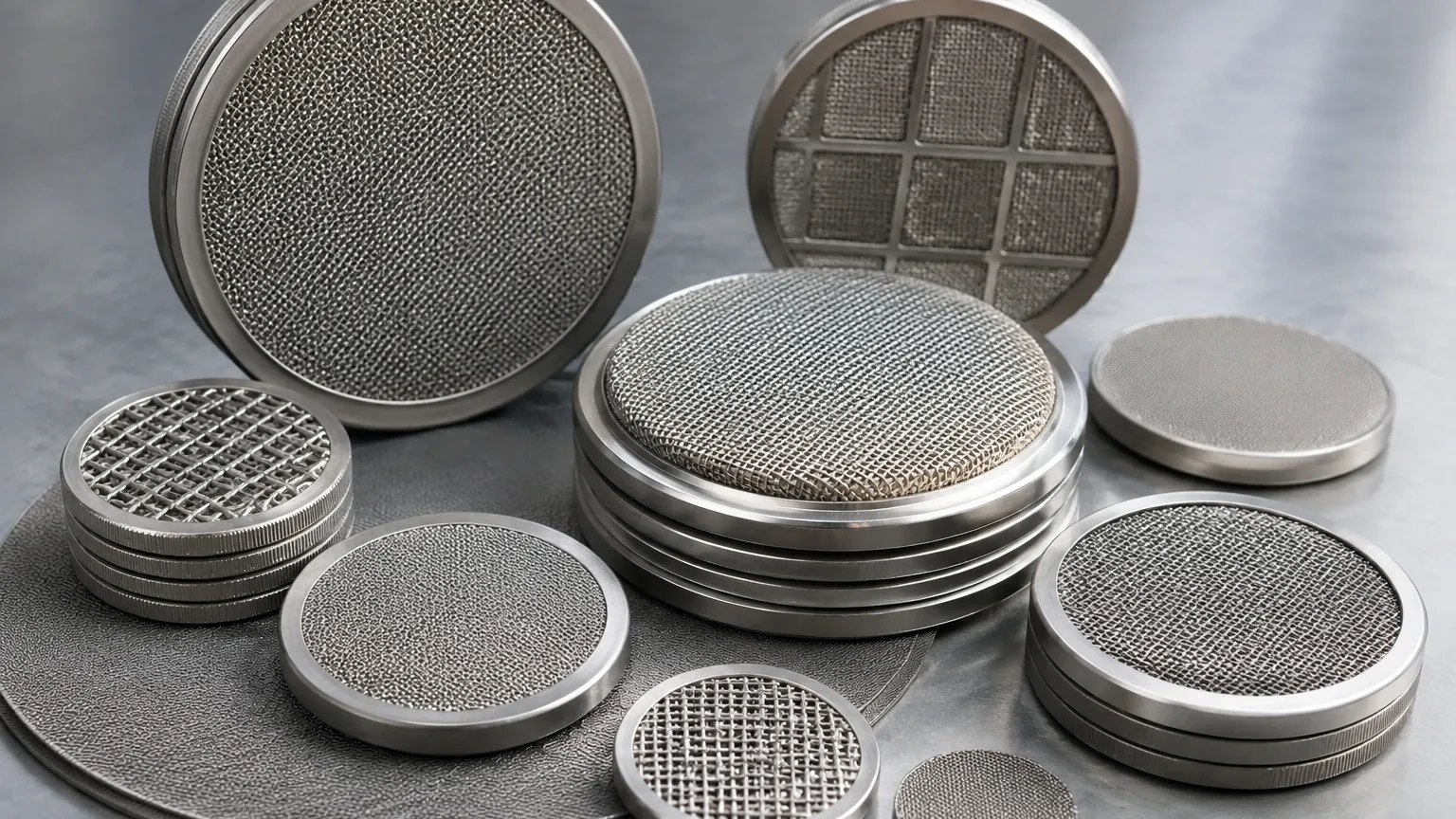
The architecture of a filter pack 2010 is defined by its layered construction. Unlike simple filter discs, these packs are engineered to provide graduated filtration, which enhances dirt-holding capacity and extends the service life of the component. A typical multi-layer pack consists of three primary zones:
1. The Filtration Layer: This is the core of the pack, featuring a fine wire mesh with a specific micron rating. In a 2010 configuration, this layer is selected based on the particle size that must be intercepted. Common weaves include plain weave for general purposes or Dutch weaves for higher precision and strength.
2. The Support Layers: To prevent the fine filtration mesh from deforming under high differential pressure, coarser mesh layers are placed on one or both sides. These provide the necessary mechanical rigidity to maintain the pack's shape during operation.
3. The Drainage/Protective Layers: Outermost layers often consist of heavy-duty mesh that protects the internal structure from mechanical damage during installation and helps distribute the fluid flow evenly across the filtration surface.
By combining these layers, the filter pack 2010 achieves a balance between high filtration accuracy and the physical robustness required to withstand the stresses of industrial fluid processing.
Material Engineering: Stainless Steel and Alloy Selection
The performance of Filter Discs & Packs is heavily dependent on the metallurgy of the wire mesh. Stainless steel is the industry standard due to its combination of corrosion resistance, thermal stability, and mechanical strength. However, the specific grade of stainless steel must be chosen based on the chemical environment of the application.
* AISI 304 Stainless Steel: This is the most common material used for general industrial applications. It offers good corrosion resistance and is cost-effective for environments where high acidity or extreme chloride exposure is not a concern.
* AISI 316 and 316L Stainless Steel: For more demanding applications, such as pharmaceutical processing or marine environments, 316-grade steel is preferred. The addition of molybdenum enhances resistance to pitting and crevice corrosion. The "L" (low carbon) version is particularly important if the filter pack components require welding, as it prevents carbide precipitation that could lead to intergranular corrosion.
* Specialty Alloys: In cases involving extreme temperatures or highly aggressive chemical solvents, alloys like Hastelloy or Inconel may be utilized. These materials ensure that the filter pack 2010 maintains its structural integrity even when exposed to conditions that would cause standard stainless steel to fail.
Structural Integrity: Welding and Edging Techniques
A critical aspect of the filter pack 2010 is how the individual layers are held together. In industrial environments, mesh migration—where individual wires break loose and enter the fluid stream—is a significant risk. To prevent this, manufacturers employ several binding techniques:
Spot Welding
Multiple layers of mesh are fused at specific points using resistance welding. This is a common and cost-effective method for keeping layers aligned during handling and installation. It is particularly suitable for packs used in enclosed housings where the edges are compressed by the machinery itself.
Aluminum or Stainless Steel Rimming
The edges of the filter pack are enclosed in a metal rim (often aluminum or stainless steel). This "rimmed" or "bound" design provides several advantages: it encapsulates all loose wire ends, provides a superior sealing surface, and adds significant hoop strength to the disc. For high-pressure polymer extrusion, rimmed packs are often mandatory to ensure that the mesh does not distort under the force of the melt flow.
Sintering
In some high-end versions of the filter pack 2010, the layers are sintered together. This process involves heating the multi-layer stack in a vacuum furnace until the contact points of the wires fuse together without melting. Sintered packs offer the highest level of structural integrity and are virtually immune to mesh migration, making them ideal for high-purity pharmaceutical or aerospace applications.
Evaluating Filtration Efficiency and Micron Ratings
When specifying a filter pack 2010, engineers must distinguish between nominal and absolute micron ratings. A nominal rating refers to the ability of the filter to retain a major percentage (usually 60% to 90%) of particles of a certain size. In contrast, an absolute rating indicates the pore size at which no particle larger than the specified micron can pass through.
For the filter pack 2010, the efficiency is also influenced by the weave type of the wire cloth:
* Plain Weave: Offers a high open area and low pressure drop, suitable for high-flow applications with relatively coarse contaminants.
* Twill Weave: Allows for a heavier wire diameter in a given mesh count, providing increased strength.
* Dutch Weave (Plain and Twill): These weaves feature a higher density of wires, creating a tortuous path for contaminants. They are the preferred choice for fine filtration in the 5-micron to 100-micron range, as they offer superior strength and precision.
Understanding the relationship between the mesh weave and the resulting pressure drop (Delta P) is essential. A pack that is too restrictive will lead to frequent system shutdowns for cleaning, while one that is too open will fail to protect downstream components.
Common Risks and Failure Modes in Industrial Filtration
Implementing the filter pack 2010 in a production line requires an awareness of potential failure modes that can compromise system efficiency. The most common issues include:
* Pressure Surges: If a system experiences a sudden spike in pressure, a poorly constructed filter pack may experience "dishing" or deformation. This can create bypass gaps around the edges of the filter, allowing unfiltered fluid to pass.
* Chemical Incompatibility: Using 304 stainless steel in a high-chloride environment can lead to rapid stress corrosion cracking. It is vital to confirm the chemical composition of the process fluid before selecting the filter material.
* Clogging and Blinding: When particles become wedged in the mesh openings, the effective filtration area decreases, leading to an exponential rise in pressure. Utilizing a multi-layer filter pack 2010 with a graduated density helps mitigate this by trapping larger particles in the outer layers before they reach the fine filtration mesh.
* Improper Installation: If a pack is installed backwards (in configurations where the support layers are asymmetrical), the fine mesh may lack the support it needs to withstand the flow, leading to premature failure.
Maintenance and Replacement Cycles
Determining the optimal replacement cycle for Filter Discs & Packs is a balance between operational cost and equipment protection. In many continuous processes, such as plastic recycling or chemical synthesis, the filter pack 2010 is considered a consumable item.
Monitoring the differential pressure across the filter is the most reliable method for determining when a replacement is necessary. Once the pressure reaches a predetermined threshold, the pack must be removed. While some stainless steel packs can be cleaned using ultrasonic baths or chemical solvents, many high-precision applications require the installation of a new, certified pack to ensure consistent performance. For OEM operations, maintaining a consistent supply of high-quality packs is essential to avoid unplanned downtime.
Customization for OEM and Specialized Applications
Because industrial machinery varies significantly between manufacturers, the filter pack 2010 often requires customization to fit specific housings. Manufacturers like Kaifil provide OEM services to tailor these components to exact specifications. Customization options include:
* Dimensional Accuracy: Precise outer and inner diameters to ensure a perfect fit in the filter changer or manifold.
* Layer Sequencing: Adjusting the number and order of mesh layers to handle specific viscosities or contaminant loads.
* Edge Treatments: Choosing between spot welding, copper binding, or aluminum rimming based on the sealing requirements of the machine.
* Shape Variations: While discs are most common, packs can also be produced in oval, rectangular, or kidney shapes to match specialized equipment designs.
By working closely with a manufacturer that understands the technical nuances of wire mesh, engineering teams can optimize their filtration processes for maximum throughput and minimal waste.
Conclusion: Selecting the Right Solution
The filter pack 2010 is more than just a piece of wire mesh; it is a critical engineering component that ensures the reliability of industrial systems. Whether used in the extrusion of high-grade polymers or the filtration of hydraulic fluids, the choice of material, weave, and construction method directly impacts the bottom line. By prioritizing structural integrity and precise micron control, facilities can protect their equipment, reduce maintenance costs, and maintain the highest standards of product quality. When sourcing these components, verifying the technical specifications and material certifications is the final, essential step in ensuring long-term operational success.
