


Filter Cartridge 10 X 4.5
In industrial filtration, the 10 x 4.5-inch format—commonly referred to in the industry as the "Big Blue" or large-diameter standard—represents a critical component for high-flow applications. While this size is ubiquitous in residential and light commercial water treatment, its application in heavy industrial sectors such as chemical processing, food and beverage production, and pharmaceutical manufacturing requires a shift from disposable polymer media to high-performance stainless steel.
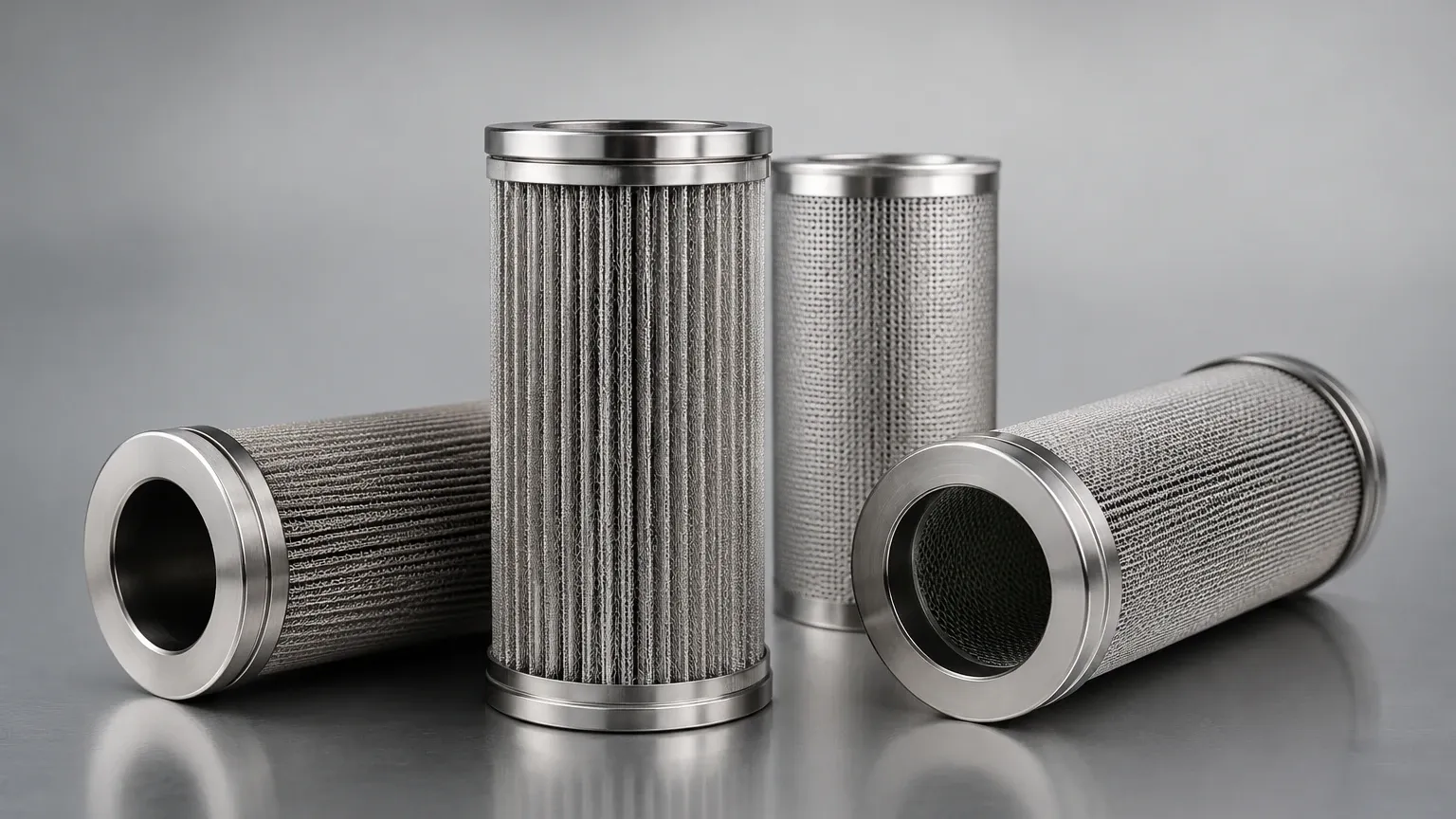
A filter cartridge 10 x 4.5 made from stainless steel wire mesh or sintered metal offers structural integrity and thermal resistance that synthetic materials cannot match. For engineers and procurement teams, understanding the technical nuances of this specific geometry is essential for optimizing process efficiency and reducing long-term operational costs.
Understanding the 10 x 4.5 Filter Cartridge Standard
The 10 x 4.5-inch designation refers to the nominal length and outer diameter of the cartridge. This larger diameter (4.5 inches compared to the standard 2.5 inches) provides a significantly higher surface area, which translates directly into higher flow rates and a greater dirt-holding capacity. In an industrial context, this means fewer housing units are required to achieve the desired throughput, saving both floor space and installation costs.
When specifying Filter Cartridges in this size, it is important to distinguish between the nominal dimensions and the actual physical tolerances required for a secure fit within a filter housing. Industrial housings often utilize a Double Open End (DOE) configuration or specific code-based end caps (such as Code 7 or 222/226) to ensure a bypass-free seal. For stainless steel variants, the precision of the end-cap welding and the quality of the gasket material are the primary factors in maintaining filtration integrity under high-pressure conditions.
Material Engineering: Stainless Steel vs. Synthetic Media
While polypropylene and pleated paper cartridges are common in the 10 x 4.5 format, they are often unsuitable for demanding industrial environments. Kaifil specializes in the manufacture of stainless steel filtration solutions that address the limitations of synthetic media.
Thermal and Chemical Resistance
Stainless steel 304 and 316L are the preferred materials for industrial 10 x 4.5 cartridges. These alloys allow the filters to operate at temperatures exceeding 250°C (482°F), far beyond the melting point of most plastics. Furthermore, in chemical processing where solvents, aggressive acids, or caustic cleaning agents are used, stainless steel maintains its structural form without leaching contaminants into the process stream.
Structural Integrity
Under high differential pressure, synthetic cartridges can compress or "unload" trapped contaminants back into the filtrate. A stainless steel filter cartridge 10 x 4.5 features a rigid internal core and a robust outer mesh layer, ensuring that the pore structure remains stable even as the pressure drop increases. This rigidity is vital for hydraulic systems and high-viscosity fluid filtration where mechanical stress is constant.
Technical Performance Metrics: Micron Ratings and Flow Dynamics
Selecting the correct filtration accuracy is a balance between fluid clarity and system throughput. Industrial 10 x 4.5 cartridges are available in a wide range of micron ratings, typically from 1 micron up to 500 microns or more.
Absolute vs. Nominal Filtration
In critical applications, such as pharmaceutical or fine chemical production, an absolute micron rating is required. This ensures that 99.9% of particles at the specified size are captured. For pre-filtration or coarser industrial tasks, a nominal rating may suffice. Stainless steel wire mesh provides highly predictable pore sizes, which allows for precise control over the filtration efficiency compared to the irregular fiber distribution found in melt-blown or string-wound cartridges.
Pressure Drop (ΔP) Considerations
The 4.5-inch diameter is specifically designed to minimize the initial pressure drop. By spreading the fluid across a larger surface area, the face velocity is reduced. This is particularly beneficial when filtering shear-sensitive fluids or when the pump capacity is a limiting factor in the system design. Engineers must calculate the "clean pressure drop" and establish a "terminal pressure drop" at which the cartridge must be cleaned or replaced.
Industrial Applications for 10 x 4.5 Filter Cartridges
The versatility of the 10 x 4.5 format allows it to serve as a workhorse across various sectors. Its high-flow capability makes it an ideal choice for both point-of-entry (POE) systems and specific process-line filtration.
Chemical and Petrochemical Processing
In these environments, cartridges are used to remove catalysts, scale, and particulate matter from aggressive fluids. The use of 316L stainless steel ensures that the filter cartridge 10 x 4.5 can withstand the corrosive nature of the chemicals while maintaining the purity of the end product.
Food and Beverage Production
Stainless steel filters are essential for applications involving culinary steam, high-temperature oils, and syrups. Because stainless steel is non-shedding and can be sterilized, it meets the stringent hygiene requirements of the food industry. The 10 x 4.5 size is frequently used for the filtration of bottled water, beer, and wine, where high flow rates must be maintained without compromising clarity.
Pharmaceutical and Biotechnology
In the pharmaceutical sector, these cartridges often serve as pre-filters for expensive membrane filters. By removing larger particulates, the stainless steel 10 x 4.5 cartridge extends the life of downstream components, significantly reducing the total cost of the filtration process. They are also used in the recovery of active pharmaceutical ingredients (APIs) from solvents.
Design Variations: Pleated vs. Wire Mesh Structures
The internal architecture of a 10 x 4.5 cartridge can be customized based on the nature of the contaminants and the required cleaning cycle.
* Pleated Stainless Steel Mesh: This design maximizes the effective filtration area. By folding the mesh into a star-shaped pattern around the central core, the surface area can be increased by 2 to 3 times compared to a cylindrical design. This is ideal for applications with a high concentration of fine particles where long service intervals are a priority.
* Cylindrical (Wrapped) Wire Mesh: This design consists of one or more layers of wire cloth wrapped around a perforated support core. While it has less surface area than a pleated version, it is much easier to clean, making it suitable for filtering sticky or gelatinous substances that might clog the deep recesses of a pleated filter.
* Sintered Metal Felt: For ultra-fine filtration requirements, sintered metal fibers provide a high-porosity depth filtration medium. This structure offers excellent dirt-holding capacity and can be integrated into the 10 x 4.5 format for specialized gas or liquid applications.
Maintenance, Cleaning, and Total Cost of Ownership (TCO)
One of the primary advantages of a stainless steel filter cartridge 10 x 4.5 is that it is a permanent or semi-permanent asset rather than a consumable. While the initial purchase price is higher than a disposable plastic filter, the TCO is often significantly lower over the lifespan of the equipment.
Cleaning Methods
Stainless steel cartridges can be cleaned and reused multiple times. Common industrial cleaning methods include:
* Backwashing: Reversing the flow of the fluid to dislodge particles from the surface of the mesh.
* Ultrasonic Cleaning: Using high-frequency sound waves in a cleaning solution to remove fine particles trapped deep within the mesh pores.
* Chemical Cleaning: Using compatible solvents or acids to dissolve organic or inorganic scaling.
* Burn-off/Pyrolysis: For polymer-based contaminants, the cartridge can be heated in a controlled environment to carbonize the debris, which is then removed via ultrasonic cleaning.
Environmental Impact
By switching to cleanable stainless steel cartridges, industrial facilities can drastically reduce their solid waste output. This aligns with modern sustainability goals and reduces the logistical burden of storing and disposing of thousands of used plastic cartridges annually.
Selection Criteria for Engineering and Procurement
When ordering a filter cartridge 10 x 4.5 for a specific industrial application, the following technical details should be confirmed with the manufacturer:
1. Micron Rating: Specify whether the requirement is for absolute or nominal filtration.
2. Operating Temperature: Ensure the gasket materials (Viton, EPDM, Silicone, or PTFE) are compatible with the process temperature.
3. Differential Pressure: Determine the maximum pressure the cartridge will encounter during a surge or at the end of its cycle.
4. End-Cap Configuration: Confirm the housing compatibility (e.g., DOE, 222 with Fin, 226 with Flat Cap).
5. Fluid Compatibility: Verify the grade of stainless steel (304 vs. 316L) against the chemical composition of the fluid.
Kaifil provides comprehensive OEM and customization services to ensure that every cartridge meets these exact specifications. By focusing on precision engineering and high-quality material selection, Kaifil helps industrial operators achieve reliable, long-term filtration performance in the most demanding environments. For those looking to upgrade their current systems or design new filtration stages, the 10 x 4.5 stainless steel cartridge remains a versatile and cost-effective solution.
