


Filter Cartridge 40 5 Micron
In industrial filtration, the efficiency of a process often hinges on the strategic selection of micron ratings. When engineers discuss a "filter cartridge 40 5 micron" configuration, they are typically referring to a multi-stage filtration strategy designed to balance high flow rates with high-precision particle removal. This approach utilizes a 40-micron filter as a primary stage to capture larger debris, followed by a 5-micron filter to achieve fine clarification.
Selecting the right Filter Cartridges requires a deep understanding of fluid dynamics, material compatibility, and the specific contaminants present in the process stream. For industries such as chemical processing, food and beverage, and hydraulic systems, the transition from 40 microns down to 5 microns represents a critical jump from coarse protection to fine component safeguarding.
The Role of Micron Ratings in Industrial Filtration
A micron rating is a measure of the pore size in the filter media, determining the size of particles that the filter can effectively trap. However, the distinction between nominal and absolute ratings is vital for engineering specifications.
40-Micron Filtration: The First Line of Defense
A 40-micron rating is generally considered a coarse or "pre-filtration" level. Particles of this size are roughly half the width of a human hair. In industrial settings, a 40-micron stainless steel wire mesh filter is used to remove sand, scale, large precipitates, and other heavy solids. By removing these larger particles early, the system prevents the downstream fine filters from blinding (clogging) prematurely.
5-Micron Filtration: Precision Clarification
A 5-micron rating enters the realm of fine filtration. This level is essential for protecting sensitive equipment like high-pressure nozzles, fuel injectors, and precision hydraulic valves. At 5 microns, the filter is capturing microscopic silt and carbon fines that could cause abrasive wear on moving parts or compromise the purity of a chemical batch.
Multi-Stage Systems: Why Pair 40 Micron and 5 Micron Cartridges?
Using a single 5-micron filter to process a fluid with a high load of large solids is inefficient. The 5-micron pores would quickly fill with 40-micron-sized particles, leading to a rapid increase in differential pressure and frequent downtime for filter replacement.
Extending Service Life
By implementing a staged approach—using a 40-micron pre-filter followed by a 5-micron finishing filter—the total dirt-holding capacity of the system is significantly increased. The 40-micron stage handles the bulk of the contaminant mass, while the 5-micron stage focuses on the remaining fine particulates. This results in a much longer service life for the more expensive fine-filtration elements.
Protecting Downstream Equipment
In hydraulic and lubrication systems, the 40-micron stage protects the pump from catastrophic failure due to large debris, while the 5-micron stage ensures that the fluid meets the ISO cleanliness codes required for high-performance servo valves. This dual-rating approach is a standard best practice for maintaining system reliability and reducing the Total Cost of Ownership (TCO).
Material Engineering: Stainless Steel vs. Synthetic Media
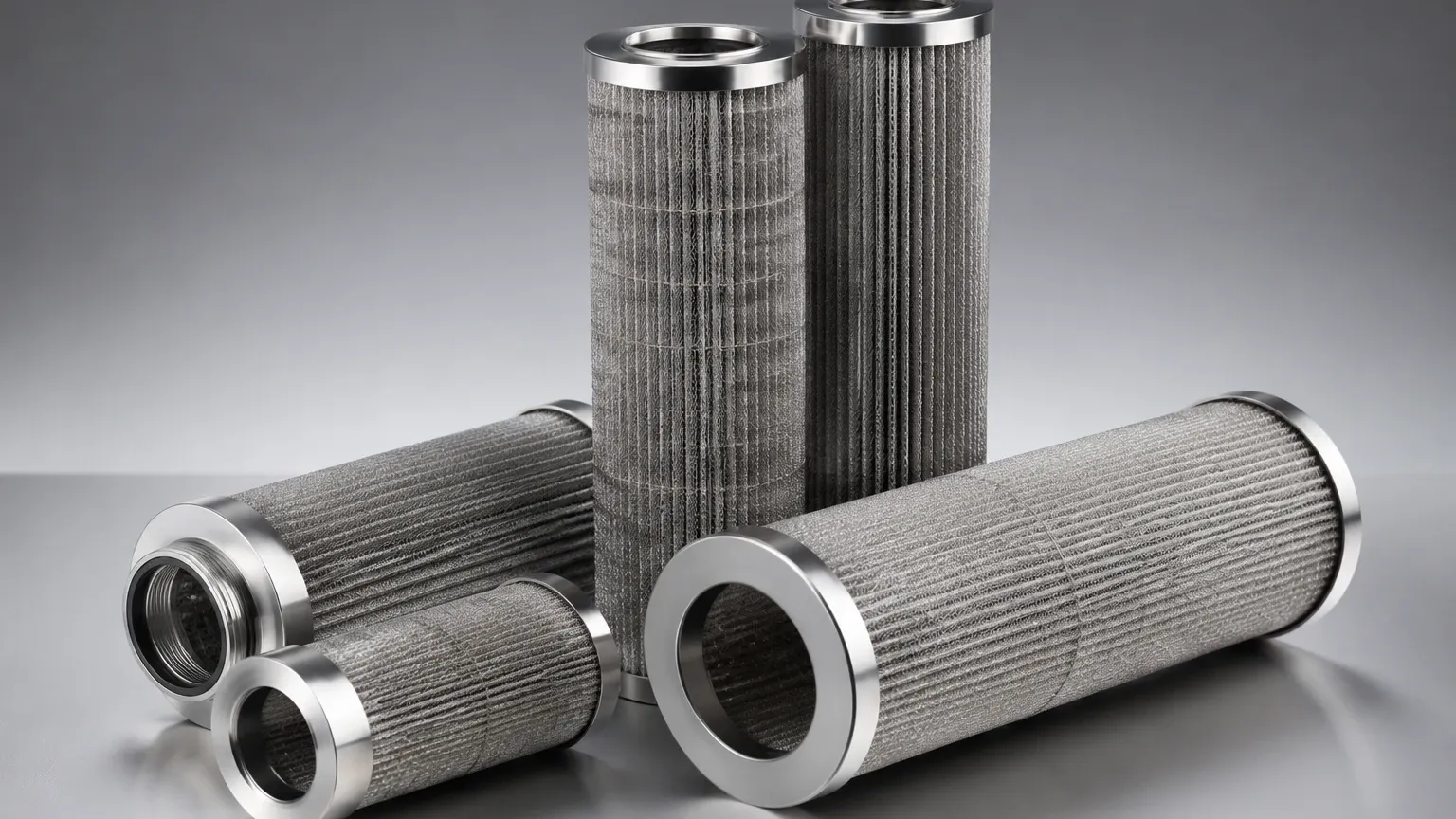
When specifying a filter cartridge 40 5 micron solution, the material of construction is as important as the micron rating. While polymer-based filters (like polypropylene) are common in water treatment, industrial applications often demand the durability of stainless steel.
The Advantages of Stainless Steel Mesh
Kaifil specializes in stainless steel filtration solutions, utilizing 304 and 316L grades. Stainless steel offers several advantages over synthetic media:
* Temperature Resistance: Stainless steel cartridges can operate in environments exceeding 250°C, where polymers would melt or degrade.
* Chemical Compatibility: For aggressive solvents, acids, and alkalis used in chemical processing, 316L stainless steel provides superior corrosion resistance.
* Cleanability: Unlike disposable depth filters, stainless steel wire mesh and sintered metal cartridges can be cleaned via backwashing, ultrasonic cleaning, or chemical baths, allowing for multiple reuse cycles.
* Structural Integrity: Metal filters maintain their pore structure under high differential pressure, preventing "unloading" where trapped particles are forced through the media as the filter fills.
Sintered Metal vs. Wire Mesh
For a 40-micron application, a multi-layer wire mesh is often sufficient. However, for a 5-micron requirement, sintered metal fiber or multi-layer sintered mesh is often preferred. Sintering bonds the metal strands together at their contact points, creating a rigid, fixed-pore structure that ensures consistent filtration accuracy even under fluctuating pressure conditions.
Performance Metrics: Flow Rate and Pressure Drop
Engineers must calculate the "Delta P" (differential pressure) across both the 40-micron and 5-micron stages to ensure the system pump can handle the resistance.
Understanding Pressure Drop
Every filter introduces resistance to flow. A 5-micron filter naturally has a higher clean pressure drop than a 40-micron filter because the smaller pores restrict fluid movement more significantly. When designing a system, it is crucial to size the housing so that the initial pressure drop is minimized, typically staying below 2-5 PSI for liquid applications.
Viscosity Considerations
The relationship between micron rating and flow rate is heavily influenced by fluid viscosity. A 5-micron filter processing heavy oil will have a much higher pressure drop than one processing water. In high-viscosity applications, engineers often increase the surface area of the filter—using pleated designs—to maintain the desired flow rate without exceeding the pressure limits of the system.
Application-Specific Selection
The choice of a filter cartridge 40 5 micron setup varies significantly across different industrial sectors.
Chemical and Petrochemical Processing
In these environments, filters must withstand aggressive fluids and high pressures. A 40-micron pre-filter might be used to remove catalyst fines, while a 5-micron filter ensures the final product meets purity standards before packaging or further reaction.
Food and Beverage Industry
Filtration in this sector requires materials that are FDA-compliant. Stainless steel is the gold standard here due to its non-leaching properties and ability to withstand Steam-In-Place (SIP) sterilization. A 40-micron stage may remove pulp or large organic solids, while the 5-micron stage clarifies the liquid, such as in syrup or edible oil processing.
Hydraulic and Cooling Systems
Industrial machinery relies on clean oil and coolant to prevent mechanical wear. A 40-micron suction filter protects the pump, while a 5-micron return-line filter captures the fine wear particles generated by the machinery's operation, keeping the fluid within the required ISO 4406 cleanliness levels.
Maintenance and Longevity: Maximizing Filter Life
One of the primary questions engineers face is when to clean or replace a filter cartridge. Monitoring the differential pressure is the most reliable method.
Monitoring Differential Pressure
Most industrial filter housings are equipped with pressure gauges upstream and downstream of the cartridge. As the 40-micron or 5-micron media traps particles, the upstream pressure rises. A pre-defined "terminal pressure drop" (often 15-25 PSI depending on the system) indicates that the filter has reached its dirt-holding capacity and requires attention.
Cleaning Procedures for Metal Filters
One of the major benefits of Kaifil's stainless steel cartridges is their reusability. For a 40-micron mesh filter, high-pressure water spraying or backflushing is often enough to dislodge contaminants. For 5-micron sintered media, ultrasonic cleaning is highly effective at vibrating trapped particles out of the deep pore structure, restoring the filter to near-original flow conditions.
Customization and OEM Solutions for Precision Filtration
Standard off-the-shelf filters do not always meet the unique spatial or performance requirements of specialized industrial equipment. This is where custom manufacturing becomes essential.
Engineering for Specific Envelopes
In many OEM applications, the filter must fit into a pre-existing manifold or housing with strict dimensional constraints. Custom lengths, diameters, and end-cap configurations (such as DOE, SOE, or threaded connections) ensure that the 40-micron or 5-micron element integrates seamlessly into the machine design.
Tailored Media Selection
Depending on the nature of the contaminant—whether it is deformable, abrasive, or fibrous—the construction of the filter media can be adjusted. For example, a pleated 5-micron cartridge provides a massive surface area for high-flow applications, while a cylindrical sintered fiber felt might be chosen for its exceptional dirt-holding capacity in high-solids environments.
Conclusion: Selecting the Right Filtration Partner
Successfully implementing a filter cartridge 40 5 micron system requires more than just picking numbers from a catalog. It involves an analysis of the fluid's chemical properties, the thermal environment, and the specific cleanliness goals of the operation. By understanding the technical nuances of 40-micron and 5-micron filtration, engineering teams can design systems that protect expensive equipment and ensure product quality while minimizing maintenance costs.
Kaifil provides the technical expertise and manufacturing precision needed to develop these high-performance components. Whether you require standard stainless steel mesh or a highly customized sintered metal solution, our focus is on delivering durability and filtration accuracy for the most demanding industrial applications.
For more detailed technical specifications and to explore our range of precision metal filtration components, you can Review product options and application support to find the ideal solution for your specific industrial requirements.
