


Filter Cartridge and Housing
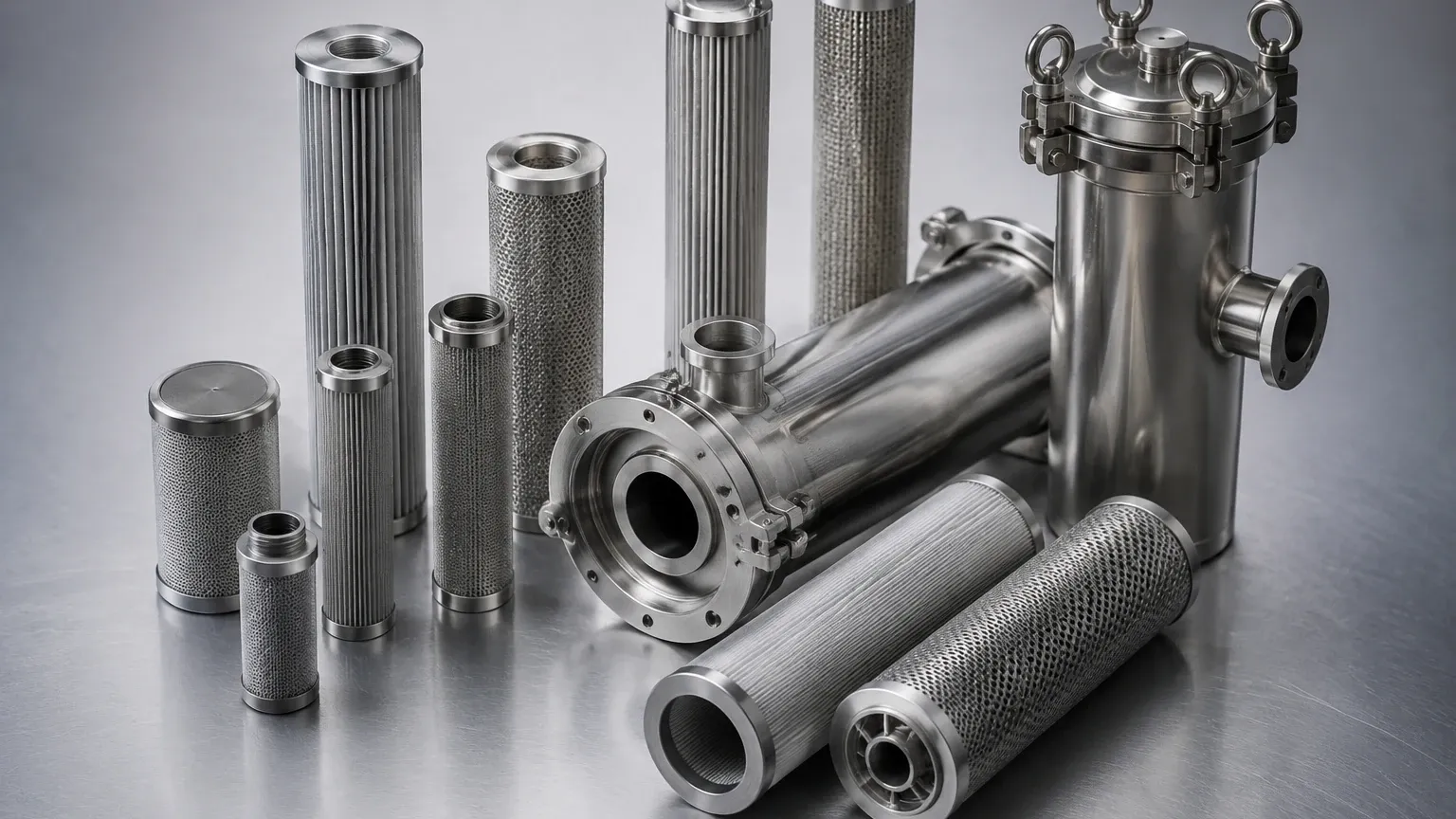
In industrial filtration, the performance of a system is defined by the synergy between the filter media and its containment vessel. The relationship between a filter cartridge and housing is fundamental to ensuring process integrity, protecting downstream equipment, and achieving specific purity standards. For engineers and procurement professionals, understanding how these two components interact—mechanically, chemically, and hydraulically—is essential for optimizing filtration efficiency and minimizing the total cost of ownership.
Industrial filtration systems are rarely "one size fits all." The selection of Filter Cartridges must be matched with a housing that can withstand the operating pressure, temperature, and chemical nature of the fluid while providing a leak-proof seal. This guide explores the technical considerations required to specify and maintain an effective filter cartridge and housing assembly.
The Mechanical Synergy of Cartridge and Housing
The primary function of a filter housing is to direct the fluid flow through the filter cartridge without allowing for bypass. Bypass occurs when fluid finds a path around the filter media rather than through it, rendering the filtration process ineffective. This is prevented through precise mechanical interfaces and sealing mechanisms.
Sealing Configurations
There are several standard sealing methods used to secure a cartridge within its housing:
* Double Open End (DOE): These cartridges are flat at both ends and rely on gaskets (often made of EPDM, Viton, or PTFE) and a spring-loaded knife-edge seal within the housing. While common, DOE configurations carry a higher risk of bypass if the housing is not perfectly aligned or if the spring tension is insufficient.
* Single Open End (SOE): These cartridges typically feature an O-ring seal at one end (such as the 222 or 226 configurations) and a closed end or fin at the other. The 226 configuration includes a locking tab that ensures the cartridge remains seated even under high flow or pressure surges. This is the preferred choice for critical applications in the pharmaceutical and chemical industries.
Flow Dynamics
The housing design dictates the flow path—usually from the outside of the cartridge toward the center (outside-in). The internal volume of the housing must be calculated to ensure that the fluid velocity does not exceed the structural limits of the cartridge media, which could lead to media migration or premature clogging.
Material Selection for Demanding Environments
When specifying a filter cartridge and housing, material compatibility is the first line of defense against system failure. While the cartridge media performs the separation, the housing must serve as a durable pressure vessel.
Stainless Steel vs. Polymers
In heavy industrial, chemical, and high-temperature applications, stainless steel (specifically 304 or 316L) is the standard. Stainless steel housings offer superior pressure ratings and are resistant to a wide range of corrosive agents. Furthermore, they can be polished to specific Ra (Roughness Average) levels to meet sanitary requirements in food and beverage or pharmaceutical processing.
Chemical Compatibility
Engineers must verify that both the housing material and the cartridge seals are compatible with the process fluid. For example, while a 316L stainless steel housing is highly resistant to corrosion, the O-rings (Viton, Silicone, or EPDM) might degrade if exposed to certain solvents or extreme pH levels. A mismatch here can lead to seal failure, resulting in fluid leaks or process contamination.
Engineering Considerations for Housing Design
A filter housing is more than just a metal cylinder; it is a precision-engineered component that must comply with safety standards and operational requirements.
Pressure Ratings and Compliance
Most industrial housings are designed to meet ASME (American Society of Mechanical Engineers) Section VIII standards. This ensures the vessel can safely handle the maximum allowable working pressure (MAWP). For high-pressure hydraulic or gas applications, the wall thickness and closure mechanism of the housing are critical safety factors.
Closure Types
The method used to open and close the housing impacts maintenance downtime:
* Swing Bolt Closures: Ideal for high-pressure applications and systems requiring frequent cartridge changes. They provide a robust, secure seal.
* V-Band Clamps: Often used in lower-pressure or smaller-scale systems. They allow for quick access but have lower pressure thresholds than bolted designs.
* Threaded Caps: Typically found in single-cartridge housings for point-of-use filtration.
Multi-Round vs. Single-Round Housings
The required flow rate determines whether a single-round (holding one cartridge) or multi-round housing is necessary. Multi-round housings allow for higher flow capacities and longer service intervals by distributing the contaminant load across multiple Filter Cartridges.
Performance Metrics: Micron Ratings and Flow Rates
Selecting the correct filter cartridge and housing requires a balance between filtration fineness and hydraulic performance.
Absolute vs. Nominal Filtration
* Nominal Rating: An approximate value indicating that the filter will retain a majority of particles at a certain micron size. This is suitable for pre-filtration.
* Absolute Rating: A value derived from rigorous testing (such as the Beta Ratio test) indicating that the filter will retain 99.9% or more of particles at the specified micron size. This is essential for final filtration stages where product purity is non-negotiable.
Differential Pressure ($ΔP$)
Differential pressure is the difference in pressure between the inlet and the outlet of the filter housing. A clean system starts with a low "clean $ΔP$." As the cartridge captures contaminants, the $ΔP$ increases. Engineers must specify a housing size that allows for a low initial pressure drop to maximize the "dirt-holding capacity" of the cartridge before it reaches the terminal $ΔP$ (the point at which the cartridge must be replaced or cleaned).
Maintenance, Cleaning, and Replacement Cycles
The longevity of a filtration system depends heavily on maintenance protocols. A well-designed filter cartridge and housing system should include features that simplify this process, such as vent and drain ports.
When to Replace or Clean
Most industrial processes use a pressure gauge to monitor $ΔP$. A common rule of thumb is to replace disposable cartridges when the $ΔP$ reaches 15-25 psi (1.0-1.7 bar). For permanent stainless steel wire mesh cartridges, this is the signal to initiate a cleaning cycle (backwashing, ultrasonic cleaning, or chemical soaking).
Total Cost of Ownership (TCO)
While disposable polymer cartridges have a lower initial purchase price, the cost of frequent replacements, labor, and disposal can exceed the cost of a high-quality stainless steel cartridge over time. In high-temperature or high-viscosity applications, stainless steel elements often provide a better TCO due to their cleanability and durability.
Safety During Maintenance
Before opening a housing, it must be fully depressurized and drained. Housings equipped with safety interlocks or bleed valves prevent accidental opening under pressure, which is a critical safety consideration for steam or high-pressure liquid lines.
Customization and OEM Solutions
Standard off-the-shelf solutions may not always meet the unique constraints of a specific industrial site. Customization of the filter cartridge and housing can address several challenges:
1. Space Constraints: Custom inlet/outlet orientations (e.g., side-in, bottom-out) can help fit filtration systems into existing piping layouts.
2. Specialized Materials: For highly aggressive chemicals, housings can be fabricated from exotic alloys like Hastelloy or Monel.
3. Integrated Systems: Combining multiple stages of filtration (e.g., a coarse strainer followed by a fine cartridge) into a single skid-mounted system can streamline operations.
4. OEM Branding: For equipment manufacturers, custom-branded housings and proprietary cartridge end-caps can ensure that end-users utilize the correct replacement parts, maintaining the integrity of the original equipment.
Conclusion
Selecting the right filter cartridge and housing is a technical decision that impacts the efficiency, safety, and profitability of industrial operations. By focusing on mechanical sealing, material compatibility, and hydraulic performance, engineers can ensure that their filtration systems provide reliable service even in the most demanding environments. Whether the goal is protecting sensitive downstream membranes or ensuring the purity of a final chemical product, the integration of high-performance Filter Cartridges with a robust housing is the foundation of successful industrial filtration.
Before finalizing a specification, it is recommended to confirm the fluid's chemical properties, the expected solids loading, and the peak flow rates to ensure the chosen assembly is fit for purpose.
