


Filter Cartridge Big Blue
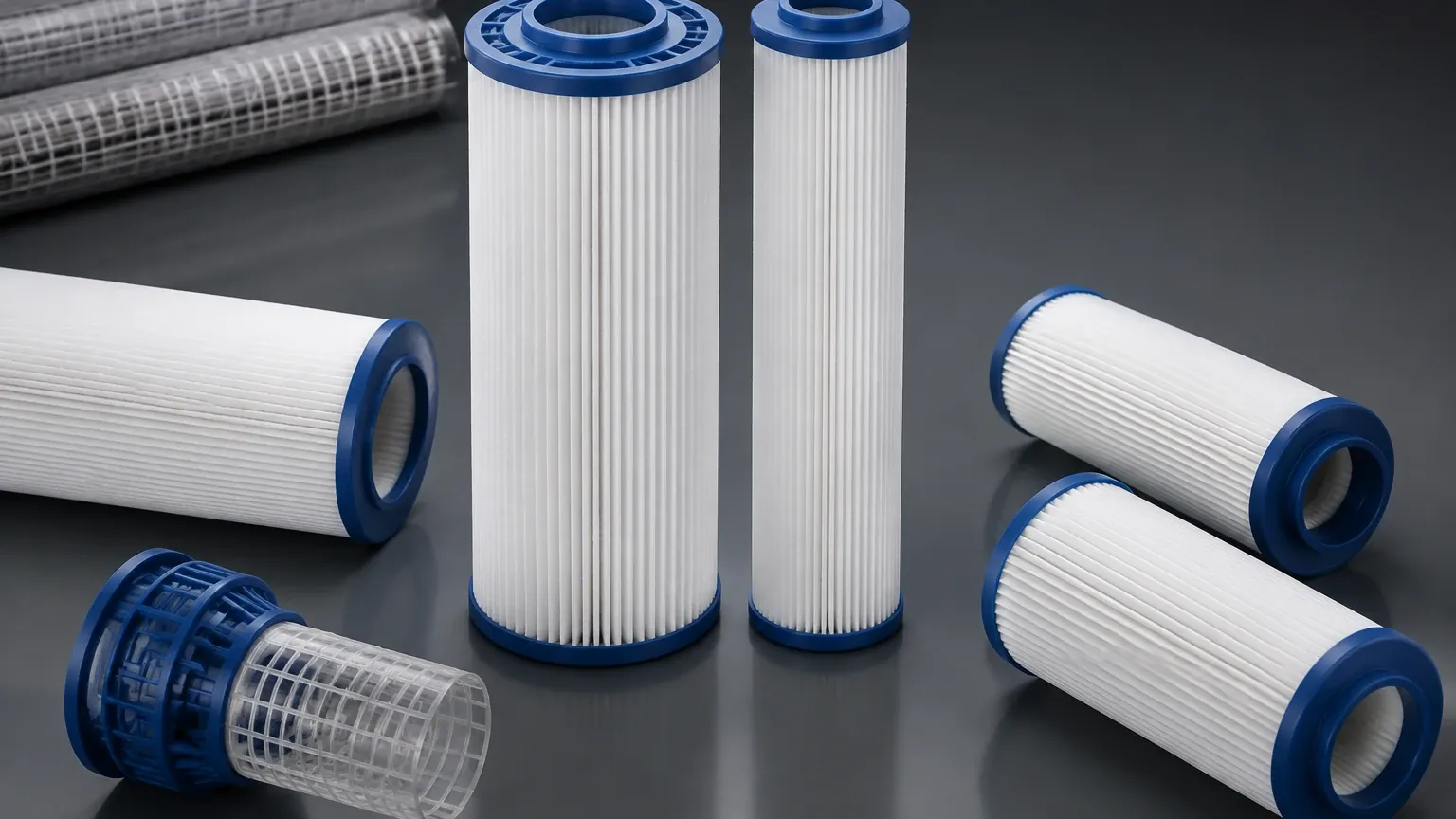
In the landscape of industrial fluid processing, the term "Big Blue" has evolved from a specific brand designation into a widely recognized industry standard for high-flow filtration housings and their corresponding cartridges. A filter cartridge big blue typically refers to a large-diameter filter—standardized at approximately 4.5 inches—designed to handle significantly higher flow rates than traditional 2.5-inch "slim line" filters. For engineers and procurement specialists in sectors such as chemical processing, food and beverage, and water treatment, selecting the correct Filter Cartridges within this format is critical for maintaining system efficiency and protecting downstream equipment.
While many commercial applications utilize disposable polypropylene or pleated paper media, industrial environments often require more robust materials. Stainless steel variants of the Big Blue size cartridge offer distinct advantages in terms of temperature resistance, chemical compatibility, and structural integrity. This guide examines the technical specifications, material considerations, and engineering factors involved in selecting high-performance filtration components for Big Blue systems.
Understanding the Big Blue Standard Dimensions
The primary characteristic of the Big Blue format is its physical footprint. By increasing the surface area of the filter media, these cartridges allow for higher throughput without a proportional increase in pressure drop. The standard dimensions are as follows:
* Diameter: Nominally 4.5 inches (approx. 114 mm).
* Length: Standard industrial lengths are 10 inches and 20 inches.
* Configuration: Most are designed as Double Open End (DOE), though specific industrial housings may require specialized end caps with O-ring seals to prevent bypass.
From an engineering perspective, the larger diameter is not merely about volume; it is about the "flux rate"—the volume of fluid passing through a specific area of filter media over time. By utilizing a 4.5-inch diameter instead of a 2.5-inch diameter, the surface area is roughly doubled for the same length, which can lead to a fourfold increase in dirt-holding capacity and a significant reduction in the frequency of maintenance intervals.
Material Selection: Stainless Steel vs. Synthetic Media
Choosing the right material for a filter cartridge big blue depends entirely on the fluid characteristics and the operating environment. While synthetic materials like melt-blown polypropylene are cost-effective for single-use water filtration, they often fail in demanding industrial applications.
Stainless Steel Wire Mesh
For applications involving high temperatures or aggressive chemicals, stainless steel (typically 304 or 316L) is the preferred material. Stainless steel wire mesh cartridges provide precise pore sizes and are inherently resistant to corrosion. Unlike synthetic fibers, metal mesh does not migrate into the filtrate, ensuring high purity in pharmaceutical or food-grade processes.
Sintered Metal Fiber and Mesh
In high-pressure environments where structural rigidity is paramount, sintered metal media is utilized. Sintering bonds the metal contact points, creating a fixed pore structure that cannot shift under pressure surges. This is particularly important in hydraulic systems or high-viscosity chemical filtration where a "soft" filter might deform or allow particles to bypass the media.
Chemical and Thermal Compatibility
One of the primary reasons engineers specify stainless steel Filter Cartridges for Big Blue housings is thermal stability. Synthetic filters are generally limited to temperatures below 60°C (140°F). In contrast, stainless steel components can operate at temperatures exceeding 250°C, depending on the seal material (such as Viton or PTFE). This makes them indispensable for steam filtration and hot oil processing.
Technical Performance Metrics
When evaluating a filter cartridge big blue for an industrial system, several performance metrics must be analyzed to ensure the component meets the application's requirements.
Micron Rating: Absolute vs. Nominal
It is vital to distinguish between nominal and absolute filtration ratings. A nominal rating is an internal manufacturer's value indicating that the filter will trap a certain percentage of particles of a given size. An absolute rating, common in high-precision stainless steel filters, implies a 99.9% (Beta 1000) efficiency at the specified micron size. For critical downstream protection, such as protecting spray nozzles or high-pressure pumps, absolute-rated cartridges are the industry standard.
Clean Pressure Drop (Delta P)
The initial pressure drop across a clean filter cartridge is a function of the media density, fluid viscosity, and flow rate. A well-engineered Big Blue cartridge should minimize this initial Delta P to maximize the available pressure for the rest of the process. Stainless steel pleated designs are particularly effective here, as they provide maximum surface area within the 4.5-inch diameter envelope, reducing the velocity of the fluid as it passes through the mesh.
Dirt Holding Capacity (DHC)
DHC determines the service life of the cartridge. In high-solids applications, a cartridge that reaches its terminal pressure drop too quickly increases the Total Cost of Ownership (TCO) through labor costs and downtime. Large-diameter cartridges inherently offer superior DHC compared to standard sizes, but the internal geometry (pleated vs. cylindrical) further influences this capacity.
Engineering Considerations for Installation and Integration
Integrating a filter cartridge big blue into an existing industrial line requires attention to the housing interface and sealing mechanism. Even the highest quality filter media is rendered ineffective if fluid can bypass the seals.
1. Seal Integrity: For DOE (Double Open End) cartridges, the seal is created by the compression of the cartridge between the housing base and the cap. In stainless steel variants, integrated gaskets made of EPDM, Buna-N, or Silicone are used to ensure a leak-proof fit. Engineers must verify that the gasket material is compatible with the process fluid.
2. Flow Direction: Most Big Blue systems operate on an outside-to-inside flow path. The outer surface of the cartridge acts as the primary catchment area. When using stainless steel mesh, the support core must be robust enough to withstand the collapse pressure if the filter becomes heavily fouled.
3. Housing Compatibility: While the "Big Blue" name implies a plastic housing, many industrial versions utilize stainless steel housings that accept the same 4.5-inch diameter cartridges. It is essential to confirm that the internal length (e.g., exactly 9.75", 10", or 20") matches the housing's internal dimensions to ensure proper compression.
Maintenance and Reusability in Industrial Cycles
A significant advantage of stainless steel Filter Cartridges over disposable alternatives is their cleanability. In many B2B applications, the ability to regenerate the filter media provides a substantial return on investment.
Cleaning Methods
* Backwashing: Reversing the flow of clean fluid through the cartridge to dislodge surface-level contaminants.
* Ultrasonic Cleaning: Using high-frequency sound waves in a solvent bath to remove fine particles embedded deep within the wire mesh or sintered layers.
* Chemical Cleaning: Using specialized surfactants or acids to dissolve organic or mineral scaling, provided the metal alloy is resistant to the cleaning agent.
Replacement Cycles
Even with cleanable filters, there is a finite lifespan determined by the structural fatigue of the metal or the gradual accumulation of non-removable foulants. Monitoring the rate of pressure increase after each cleaning cycle allows maintenance teams to predict the end-of-life for the component. Typically, if a cleaned cartridge returns to a baseline Delta P that is 20-30% higher than a brand-new unit, replacement should be scheduled.
Customization Options for Specialized Applications
Because industrial processes vary widely, standard off-the-shelf Big Blue cartridges may not always suffice. Customization allows for optimization of the filtration system based on specific variables:
* Reinforced Cores: For high-viscosity fluids or high-pressure differentials, a heavy-duty perforated inner core can be added to prevent structural failure.
* Layered Media: Combining different mesh counts (e.g., a coarse outer layer for pre-filtration and a fine inner layer for final polishing) can significantly extend the service life of a single cartridge.
* Specific End-Caps: Custom-machined end caps can be welded to the stainless steel media to fit non-standard housings or to include specialized handles for easier extraction during maintenance.
Total Cost of Ownership (TCO) Analysis
When specifying a filter cartridge big blue, purchasing departments often focus on the initial unit price. However, a technical TCO analysis frequently favors high-quality stainless steel options for industrial use. The calculation should include:
1. Purchase Price: The upfront cost of the cartridge.
2. Disposal Costs: Synthetic filters often require specialized disposal if they have filtered hazardous chemicals; stainless steel is recyclable and has a much lower disposal volume due to its reusability.
3. Downtime Costs: The labor and lost production time associated with frequent filter changes.
4. Energy Consumption: A filter with a lower average pressure drop requires less pump energy to maintain the required flow rate.
By selecting a robust, high-surface-area metal cartridge, facilities can often reduce their annual filtration spend despite the higher initial investment in stainless steel hardware.
Conclusion
The filter cartridge big blue remains a cornerstone of high-flow filtration due to its standardized dimensions and proven performance. For industrial applications where reliability is non-negotiable, moving beyond standard synthetic media to engineered stainless steel solutions provides the durability, thermal resistance, and precision required for modern manufacturing. Whether the application involves chemical refinement, food processing, or industrial water treatment, understanding the nuances of material selection, micron ratings, and structural integrity ensures that the filtration system operates at peak efficiency with minimal environmental impact.
