


Filter Cartridge Large
In industrial filtration, the transition from standard-sized components to a filter cartridge large format is often driven by the need for higher flow rates, reduced system footprints, and lower maintenance frequency. For engineers and facility managers, selecting the correct large-scale filtration component involves more than just scaling up dimensions; it requires a deep understanding of fluid dynamics, material structural integrity, and the specific demands of the process environment.
Large-scale Filter Cartridges are engineered to handle significant volumes of liquid or gas while maintaining precise micron ratings. When dealing with high-capacity systems in chemical processing, water treatment, or food and beverage production, the choice of filter media and housing configuration becomes critical to preventing bypass, minimizing pressure drops, and ensuring long-term operational stability.
The Engineering Logic Behind Large-Format Filtration
The primary advantage of a filter cartridge large design is the increased surface area. In filtration physics, the relationship between surface area and flow resistance is inverse; by increasing the area available for the fluid to pass through, the face velocity (the speed at which the fluid hits the filter media) is reduced. This reduction in velocity is vital for several reasons:
1. Extended Service Life: Lower velocity allows particles to settle more uniformly across the media, preventing premature clogging of the pore structure and extending the interval between cleaning or replacement cycles.
2. Improved Efficiency: Many contaminants are more effectively captured at lower velocities, where mechanical entrapment and adsorption mechanisms are not bypassed by high-pressure surges.
3. Reduced Energy Consumption: A larger surface area results in a lower initial differential pressure (ΔP). Since pumps do not have to work as hard to overcome resistance, the total energy expenditure of the filtration system is significantly decreased.
For industrial applications, "large" typically refers to cartridges with diameters exceeding 6 inches or lengths reaching up to 40 or 60 inches. These dimensions allow a single large cartridge to replace multiple standard 2.5-inch diameter cartridges, simplifying housing design and reducing the number of seals that could potentially fail.
Material Integrity in Large-Scale Stainless Steel Filters
While polymer-based filters are common in light-duty applications, heavy industrial processes often require the durability of stainless steel. A filter cartridge large manufactured from stainless steel (typically 304 or 316L) offers mechanical strength that plastic cannot match, especially under high-temperature or high-pressure conditions.
Structural Reinforcement
As the size of the cartridge increases, the structural load placed on the filter media also grows. Large cartridges must be designed with robust internal support cores and, in some cases, external cages. These components prevent the media from collapsing or deforming under high differential pressure. In vacuum or backwash applications, the structural integrity of the core is the primary factor preventing catastrophic failure of the filtration element.
Corrosion and Chemical Compatibility
In sectors like chemical processing or pharmaceutical manufacturing, the filter must withstand aggressive solvents, acids, or bases. Stainless steel 316L is frequently specified for these environments due to its superior resistance to pitting and crevice corrosion. When selecting a large-format filter, engineers must confirm that the gaskets and O-rings (Viton, EPDM, or PTFE) are equally compatible with the process fluid to ensure a leak-proof seal.
Design Variations: Pleated vs. Cylindrical Large Cartridges
The internal geometry of a filter cartridge large determines its dirt-holding capacity and flow characteristics. There are two primary configurations used in industrial metal filtration:
Pleated Metal Mesh
Pleating is the process of folding the filter media to maximize the surface area within a fixed cylindrical volume. For a large cartridge, pleating can increase the effective filtration area by 3 to 10 times compared to a standard cylindrical wrap. This is the preferred design for high-flow applications where space is limited but high dirt-holding capacity is required. Pleated stainless steel mesh is particularly effective for capturing rigid, non-deformable particles.
Sintered Fiber and Multi-Layer Mesh
For applications requiring extreme precision, large cartridges may utilize sintered metal fibers or multiple layers of wire mesh bonded together through a high-temperature sintering process. This creates a migration-free filter medium with high porosity and excellent permeability. Sintered large cartridges are often used in polymer filtration, steam filtration, and high-viscosity fluid processing where uniform pore distribution is essential.
Performance Evaluation: Micron Ratings and Flow Rates
When specifying a filter cartridge large, understanding the distinction between nominal and absolute micron ratings is fundamental.
* Nominal Rating: An indicative value representing the ability of the filter to retain a majority of particles at a specific size (e.g., 90% of 10-micron particles). This is often sufficient for pre-filtration stages.
* Absolute Rating: A strictly controlled value indicating that 99.9% or more of particles at the specified size will be retained. In critical applications like pharmaceutical sterile filtration or fine chemical polishing, absolute-rated large cartridges are mandatory.
Calculating Flow Capacity
Engineers must calculate the Clean Pressure Drop (CPD) to ensure the system pump is correctly sized. For a large-format cartridge, the flow rate is usually measured in Gallons Per Minute (GPM) or Cubic Meters Per Hour (m³/h). Factors influencing this include the viscosity of the fluid, the density of the contaminant load, and the specific permeability of the wire mesh or sintered media used.
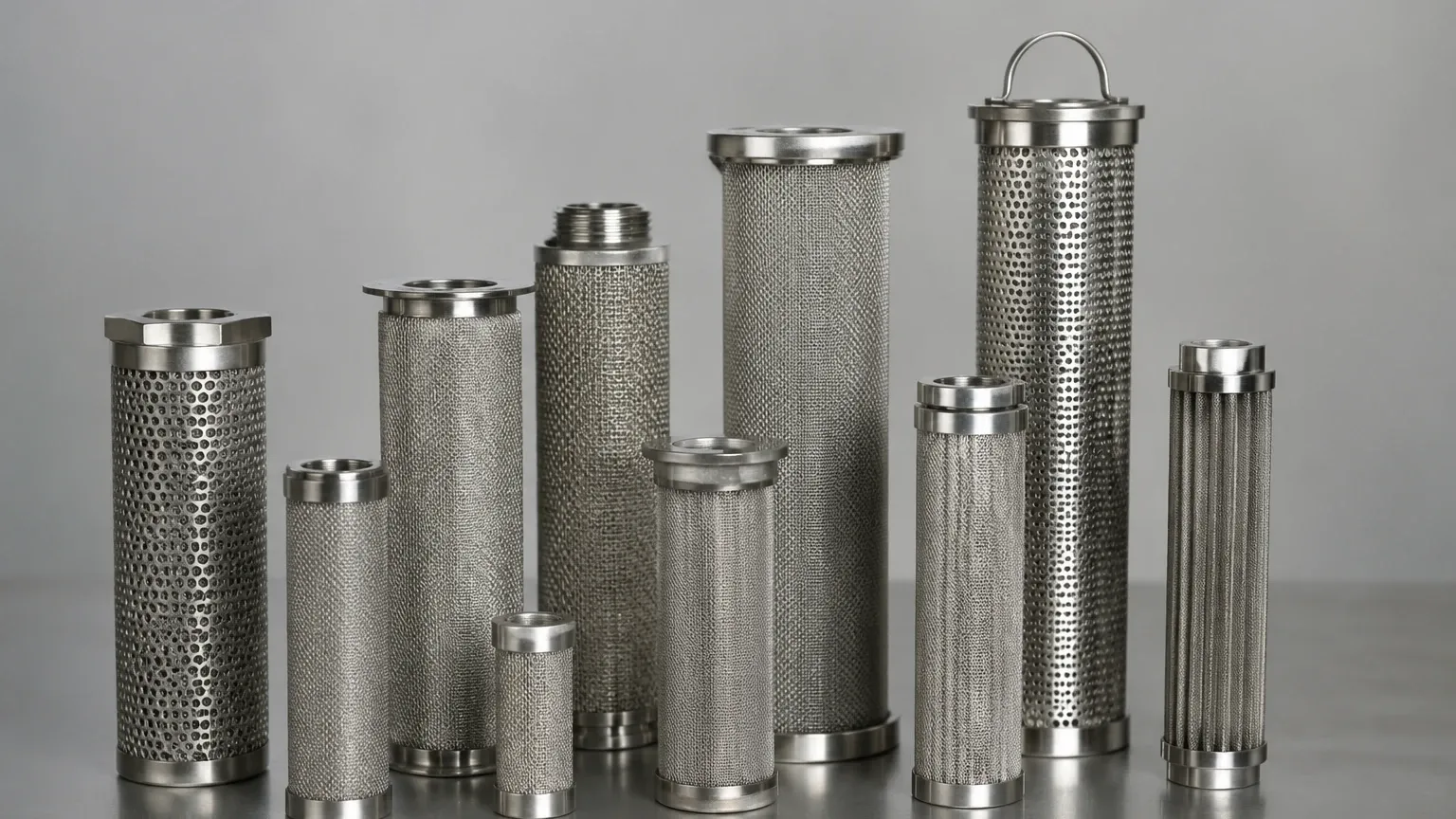
Customization Options for Specialized Industrial Needs
One of the primary reasons for choosing a professional manufacturer for a filter cartridge large is the ability to customize the hardware to fit existing housings or unique process requirements. Customization often involves:
* End Cap Configurations: Large cartridges can be fitted with various end caps, including Double Open End (DOE), Code 7 (226 O-ring with locking tabs), or NPT/Flanged connections for direct piping integration.
* Length and Diameter Adjustments: While standard sizes exist, custom lengths can be manufactured to optimize the use of vertical space in large filtration vessels.
* Reinforcement Rings: For high-pressure pulse cleaning or back-pulsing, additional reinforcement rings can be added to the exterior of the cartridge to maintain pleat geometry.
Maintenance, Cleaning, and Total Cost of Ownership
The long-term value of a stainless steel filter cartridge large lies in its cleanability. Unlike disposable depth filters, metal cartridges can be cleaned and reused multiple times, which significantly reduces the total cost of ownership (TCO) and environmental impact.
Cleaning Methodologies
Depending on the contaminant, large stainless steel cartridges can be cleaned using:
* Ultrasonic Cleaning: High-frequency sound waves create cavitation bubbles that dislodge fine particles from deep within the mesh or sintered structure.
* Chemical Cleaning: Soaking in caustic or acidic solutions to dissolve organic or inorganic scaling.
* Back-pulsing: Using a reverse flow of clean fluid or gas to push contaminants out of the media during operation.
Replacement Indicators
The primary indicator for maintenance or replacement is the differential pressure. Most industrial systems are designed with a "terminal pressure drop" limit. Once the ΔP reaches this threshold (commonly 15-25 psi depending on the application), the cartridge must be cleaned. If the baseline pressure drop after cleaning continues to rise over time, it indicates that the media is permanently fouled or blinded, and the cartridge should be replaced to maintain system efficiency.
Application Focus: Where Large Cartridges Excel
Water Treatment and Desalination
In large-scale water treatment, large-diameter cartridges are used as pre-filters for Reverse Osmosis (RO) membranes. They protect sensitive membranes from silt, sand, and biological matter. The high flow capacity of a filter cartridge large allows for the processing of millions of gallons per day with a manageable number of filter elements.
Chemical and Petrochemical Processing
Large cartridges handle aggressive catalysts and high-temperature polymers. The ability of stainless steel to maintain its pore structure at temperatures exceeding 500°F makes it indispensable in refinery operations and resin production.
Food and Beverage
From beer polishing to syrup filtration, large cartridges provide the necessary throughput to meet high-speed bottling line requirements. Stainless steel construction ensures compliance with food safety standards and allows for Steam-In-Place (SIP) sterilization.
Conclusion: Selecting the Right Solution
Specifying a filter cartridge large requires a balance between initial capital expenditure and long-term operational efficiency. By focusing on high-quality stainless steel construction, optimized surface area through pleating, and precise micron ratings, industrial facilities can achieve reliable filtration performance even in the most demanding environments.
Before finalizing a purchase, engineers should confirm the chemical compatibility of all components, the maximum expected differential pressure, and the cleaning protocols available at their facility. Working with a manufacturer that offers customized engineering support ensures that the filtration solution is perfectly matched to the specific flow dynamics and contaminant profiles of the application.
For more technical details on specific configurations and material options, you can explore the range of industrial Filter Cartridges designed for high-performance applications.
