


Filter Cartridge Lid
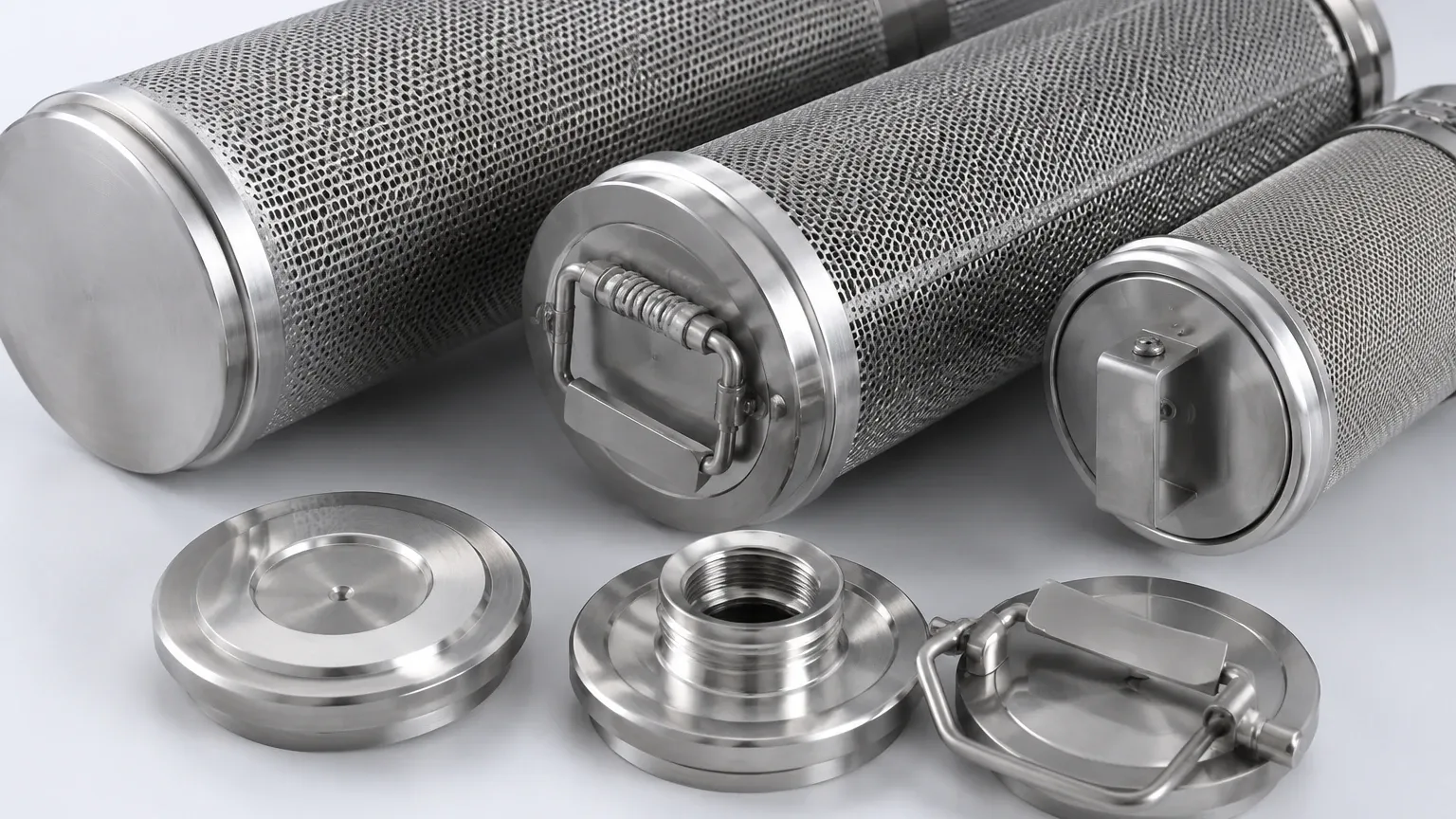
In industrial filtration, the efficiency of a system is often judged by the micron rating of the media or the surface area of the element. However, from an engineering perspective, the structural integrity of the housing-to-element interface is equally critical. The filter cartridge lid, often referred to as the end cap or adapter, serves as the primary sealing boundary between the upstream (contaminated) and downstream (clean) sides of a process stream. Without a precision-engineered lid, even the highest-quality Filter Cartridges are susceptible to fluid bypass, which compromises the entire filtration objective.
For engineers and procurement specialists, understanding the nuances of filter cartridge lid design, material compatibility, and mechanical interface standards is essential for ensuring long-term operational reliability. This guide explores the technical specifications and selection criteria for these critical components within industrial environments.
The Functional Significance of the Filter Cartridge Lid
The primary function of a filter cartridge lid is to provide a secure, leak-proof connection within the filter housing. In high-pressure or high-temperature applications, the lid must withstand mechanical stresses that could otherwise lead to deformation or seal failure.
Bypass Prevention
Fluid bypass occurs when the process liquid or gas finds a path of least resistance around the filter media rather than through it. This usually happens at the junction where the cartridge meets the housing tube sheet or manifold. A robust filter cartridge lid ensures that the sealing mechanism—whether it be a gasket or an O-ring—remains under constant, even compression. In critical sectors like pharmaceutical manufacturing or fine chemical processing, even a fractional percentage of bypass can lead to batch contamination and significant financial loss.
Structural Support
Industrial filter cartridges are often subjected to significant differential pressures ($ΔP$). As the filter media captures contaminants, the resistance to flow increases. The lid acts as a structural anchor, preventing the filter core from collapsing or shifting under the weight of the accumulated solids and the force of the fluid flow. In stainless steel filtration systems, the lid is typically TIG-welded to the central core and the outer mesh, creating a monolithic structure capable of enduring rigorous backwashing cycles.
Common Interface Configurations and Adapter Standards
Filter cartridge lids are manufactured in various configurations to match specific housing designs. Selecting the correct adapter is the first step in ensuring system compatibility.
Double Open End (DOE)
DOE lids are perhaps the most common in standard industrial water treatment and low-pressure applications. These cartridges have a flat lid on both the top and bottom, usually featuring a grommet or flat gasket. The seal is achieved by the mechanical compression provided by the housing’s internal spring or tie-rod. While cost-effective, DOE configurations are more prone to bypass if the cartridge is not perfectly centered or if the gaskets degrade over time.
Single Open End (SOE) with Specialized Adapters
In high-purity or high-pressure systems, SOE configurations are preferred. One end is permanently sealed with a solid filter cartridge lid (often featuring a "fin" or "spear" for alignment), while the other end features a specialized adapter. Common standards include:
* Code 7 (226 O-ring/Bayonet): This design features two locking tabs (bayonets) and two 226-size O-rings. The bayonet lock ensures that the cartridge cannot be unseated by backpressure or vibration, making it a standard in the food and beverage and pharmaceutical industries.
* Code 3 (222 O-ring/Flat): This uses two 222-size O-rings but lacks the locking bayonets. It relies on the friction of the O-rings and the housing cover to maintain the seal.
* Code 8 (222 O-ring/Fin): Similar to Code 3 at the base, but the top lid features a pointed fin to assist in centering the cartridge within the housing during installation.
Material Engineering: Stainless Steel vs. Polymer Lids
The material of the filter cartridge lid must be compatible with both the process fluid and the operating temperature. While polymer lids (such as Polypropylene or PVDF) are common in disposable depth filters, industrial metal filters require more robust materials.
Stainless Steel 304 and 316L
For demanding industrial applications, stainless steel is the material of choice.
* Type 304: Suitable for general-purpose filtration, including water treatment and mild chemical processing. It provides excellent structural strength and moderate corrosion resistance.
* Type 316L: The "L" denotes low carbon, which is essential for components that undergo welding. 316L offers superior resistance to pitting and crevice corrosion, particularly in chloride-rich environments or acidic chemical streams. It is the standard for pharmaceutical and marine applications.
Thermal and Chemical Resistance
Unlike polymer lids, which may soften or creep at temperatures exceeding 80°C, stainless steel lids maintain their dimensional stability up to several hundred degrees Celsius. This is vital for steam-in-place (SIP) sterilization or high-temperature hydraulic oil filtration. Furthermore, metal lids do not leach extractables or surfactants into the process stream, a critical requirement for high-purity applications.
Sealing Technologies and O-Ring Compatibility
The interface between the filter cartridge lid and the housing is only as reliable as the elastomer used for sealing. The choice of O-ring or gasket material must be based on the chemical composition of the fluid and the thermal profile of the process.
1. EPDM: Excellent for hot water and steam, but poor resistance to oils and petroleum-based fluids.
2. Viton (FKM): High temperature and chemical resistance, particularly effective for acids and hydrocarbons.
3. Silicone: Often used in food and beverage due to its inertness, though it has lower mechanical tear strength.
4. PTFE Encapsulated: Provides the chemical inertness of Teflon with the elastomeric properties of a Viton or Silicone core, ideal for the most aggressive solvent applications.
When specifying a filter cartridge lid, engineers must ensure the O-ring groove geometry is precision-machined. If the groove is too shallow, the O-ring may be pinched during installation; if too deep, it will not provide sufficient compression to prevent bypass.
Manufacturing Precision and Structural Integrity
At the manufacturing level, the attachment of the lid to the filter body is a critical quality control point. In stainless steel filtration, there are two primary methods used by manufacturers like Kaifil to ensure a permanent, leak-proof bond.
TIG Welding
Tungsten Inert Gas (TIG) welding is the gold standard for industrial metal filters. It provides a high-strength, clean weld without the use of flux, which could contaminate the filter. A precision TIG weld ensures that the filter cartridge lid is perfectly perpendicular to the filter axis. Any angular deviation can cause the cartridge to sit crookedly in the housing, leading to uneven seal compression.
Plasma Welding
For thinner mesh or precision components, plasma welding offers a more concentrated heat zone, reducing the risk of thermal distortion. This is particularly important when attaching a lid to a high-fineness wire mesh where excessive heat could damage the delicate pore structure of the media.
Troubleshooting and Maintenance of Cartridge Closures
Even a well-designed filter cartridge lid can fail if not maintained or installed correctly. Technical teams should be trained to recognize the following signs of lid-related issues:
* O-Ring Rolling: If an SOE cartridge is difficult to insert, the O-ring may "roll" out of its groove. This often results in a massive bypass. Using a compatible lubricant (if permitted by the process) can prevent this.
* Deformation of the Bayonet: In Code 7 systems, over-torquing the cartridge during installation can bend the bayonet tabs on the lid. This prevents the cartridge from locking securely, potentially allowing it to vibrate loose during operation.
* Bypass Streaks: During a filter change-out, inspection of the clean side of the lid can reveal "streaks" of contaminant. This is a clear indicator that the seal was compromised, either due to the wrong O-ring size or a damaged lid surface.
Replacement Cycles
While stainless steel filter cartridges are often cleanable and reusable, the lids and their sealing surfaces should be inspected after every cleaning cycle. Mechanical wear on the adapter or pitting corrosion on the lid surface necessitates the replacement of the entire element to protect the integrity of the downstream process.
Procurement Considerations for Custom Filtration Components
When sourcing Filter Cartridges for specialized machinery, off-the-shelf lids may not always meet the requirements. Customization is often necessary for OEM applications where housing dimensions are non-standard.
Selection Checklist for Engineers
Before finalizing a specification for a filter cartridge lid, consider the following:
* Maximum Differential Pressure: Does the lid design support the maximum expected $ΔP$ before cleaning?
* Cleaning Compatibility: Can the lid material and its attachment method withstand ultrasonic cleaning or high-pressure backpulsing?
* Regulatory Compliance: For food and pharma, does the lid design eliminate "dead spaces" where bacteria could proliferate?
* Total Cost of Ownership: While a high-grade 316L lid with a bayonet lock has a higher initial cost than a DOE plastic lid, the reduction in bypass risk and the ability to clean and reuse the cartridge often result in a lower total cost over the system's lifecycle.
Kaifil specializes in the production of custom stainless steel filtration solutions, providing the engineering expertise required to design lids that meet the most stringent industrial demands. Whether it is a standard 226 adapter or a bespoke flange design, the focus remains on precision, durability, and absolute sealing integrity.
