


Filter Cartridges Brita
In the world of water purification, the name associated with "filter cartridges brita" is synonymous with household convenience and the removal of chlorine and sediment from drinking water. For many engineers and purchasing managers, this consumer-grade technology is their first point of contact with filtration science. However, when transitioning from domestic applications to industrial environments—such as chemical processing, pharmaceutical manufacturing, or large-scale food and beverage production—the technical requirements for filtration systems undergo a radical shift.
While consumer brands focus on improving the sensory qualities of water, industrial Filter Cartridges are engineered to withstand extreme pressures, corrosive chemicals, and high-temperature sterilization cycles. Understanding the gap between consumer-level filtration and industrial-grade metal filtration is essential for selecting the right components for a facility’s operational success.
Understanding the Engineering Differences Between Consumer and Industrial Filter Cartridges
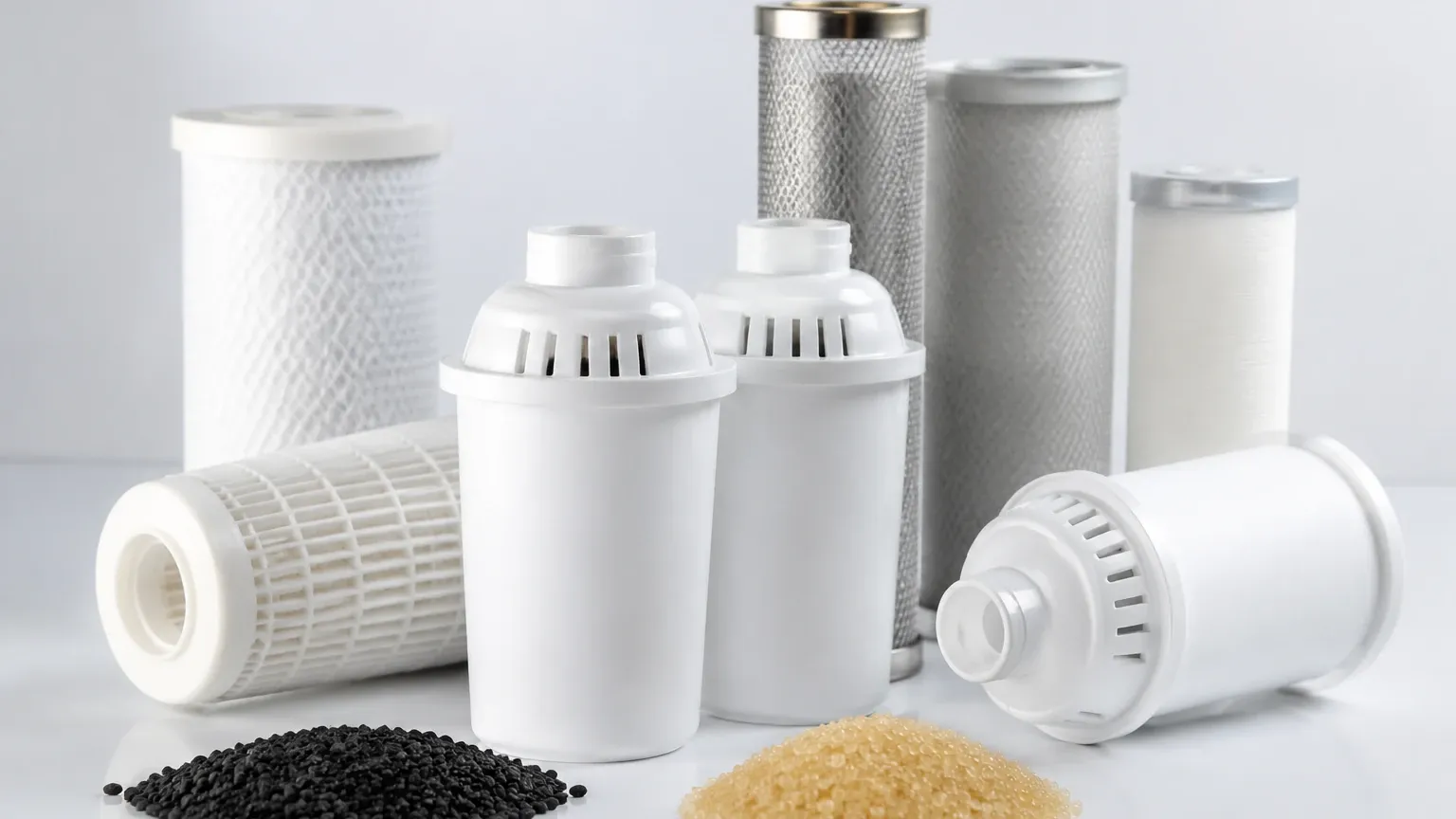
The primary difference between consumer products like filter cartridges brita and industrial stainless steel cartridges lies in the material composition and the intended environment. Consumer cartridges typically utilize a plastic housing containing activated carbon granules and ion-exchange resins. These are designed for gravity-fed or low-pressure municipal water systems where the goal is primarily the reduction of taste-altering chemicals and heavy metals.
In contrast, industrial filtration requires structural integrity that plastic cannot provide. Kaifil specializes in stainless steel filter cartridges made from 304 or 316L alloys. These metal components are designed to operate under high differential pressures and are often subjected to backwashing or ultrasonic cleaning to extend their service life. Where a consumer cartridge is a disposable item meant for a few hundred liters of water, an industrial stainless steel cartridge is a precision-engineered tool designed for years of service in demanding hydraulic or chemical circuits.
Material Selection and Chemical Compatibility in Industrial Filtration
When specifying filter cartridges for industrial use, material selection is the most critical factor in preventing premature failure. While consumer filters are limited to a narrow range of pH levels and temperatures, industrial metal filters must remain inert in the presence of aggressive solvents, acids, and bases.
1. 304 Stainless Steel: Suitable for general industrial applications, including water treatment and some food processing, where corrosion resistance is required but chemical exposure is moderate.
2. 316L Stainless Steel: The standard for pharmaceutical and heavy chemical industries. The addition of molybdenum provides superior resistance to pitting and crevice corrosion in chloride-rich environments.
3. Sintered Metal Fiber: For applications requiring high porosity and excellent dirt-holding capacity, sintered metal fibers offer a depth-filtration effect that is far superior to standard mesh.
In industrial settings, the fluid being filtered might be a high-temperature polymer or a caustic cleaning solution. Unlike the plastic used in consumer filter cartridges brita, stainless steel does not leach phthalates or degrade when exposed to heat, ensuring the purity of the end product remains uncompromised.
Micron Ratings and Filtration Efficiency Standards
One of the most common points of confusion for those moving from consumer to industrial filtration is the definition of filtration efficiency. Consumer filters often cite "reduction percentages" for specific contaminants. In industrial engineering, we focus on micron ratings and Beta ratios.
* Nominal Micron Rating: This indicates the ability of the filter to retain a majority of particles of a specific size (e.g., 90% of 10-micron particles). This is often sufficient for pre-filtration stages.
* Absolute Micron Rating: This is a more stringent standard, typically defined as the particle size at which 99.9% of contaminants are captured. This is critical in pharmaceutical and microelectronics applications where even a single oversized particle can cause batch failure.
Kaifil’s manufacturing process allows for precise control over the pore size of the wire mesh. Whether the application requires a coarse 100-micron screen for protecting pumps or a fine 1-micron sintered cartridge for sterile filtration, the engineering must be exact. This level of precision is rarely found in consumer-grade products, which are optimized for cost rather than absolute performance consistency.
Structural Integrity and Pressure Considerations for Stainless Steel Cartridges
In industrial systems, filter cartridges are often the last line of defense for expensive downstream equipment like high-pressure pumps or spray nozzles. These cartridges must withstand "Delta P" (differential pressure)—the difference in pressure between the upstream and downstream sides of the filter media.
As contaminants build up on the surface of the filter, the differential pressure increases. A consumer filter cartridge would simply clog and stop flow, or potentially crack. An industrial stainless steel cartridge is designed with a reinforced inner core and outer support shroud to prevent collapse under high pressure.
Furthermore, the method of construction is vital. Kaifil utilizes advanced TIG (Tungsten Inert Gas) welding and plasma welding techniques to ensure that the end caps and the filter media form a single, robust unit. This eliminates the need for adhesives or resins, which are common failure points in plastic filters when exposed to high temperatures or chemical solvents. By removing glues from the construction, the risk of bypass—where unfiltered fluid leaks through gaps in the cartridge—is virtually eliminated.
Maintenance, Cleaning, and the Total Cost of Ownership
A significant factor in the B2B decision-making process is the Total Cost of Ownership (TCO). While the initial price of a stainless steel cartridge is higher than a disposable plastic or paper alternative, the long-term economics favor metal filtration in industrial contexts.
Consumer filter cartridges brita are designed to be discarded. In an industrial plant processing thousands of gallons per hour, the waste generated by disposable filters would be environmentally and financially unsustainable. Stainless steel cartridges are cleanable and reusable. Depending on the contaminant, they can be cleaned via:
* Backpulsing/Backwashing: Using a reverse flow of fluid to dislodge particles from the mesh surface.
* Ultrasonic Cleaning: Using high-frequency sound waves in a cleaning solvent to remove fine particulates trapped deep within the mesh or sintered layers.
* Chemical Cleaning: Using acids or bases to dissolve organic or mineral buildup without damaging the stainless steel substrate.
By implementing a cleaning regimen, a single set of stainless steel cartridges can last for several years, significantly reducing the cost per gallon filtered compared to any disposable system.
Customization Options for Demanding Industrial Environments
Industrial filtration is rarely a "one size fits all" scenario. Unlike the standardized shapes of consumer filter cartridges brita, industrial cartridges must be tailored to specific housing designs and flow requirements. Engineers must confirm several variables before finalizing a purchase order:
1. End Cap Configuration: Does the housing require a Double Open End (DOE) gasket, or a specialized code like a 222 or 226 O-ring plug? These fittings ensure a leak-proof seal within the filter vessel.
2. Length and Diameter: Industrial housings come in various sizes, from small 5-inch units to large 40-inch multi-cartridge vessels. Custom lengths are often required for retrofitting older systems.
3. Media Layers: For complex fluids, a multi-layer design might be necessary. A coarse outer layer can act as a pre-filter to protect a fine inner layer, extending the time between cleaning cycles.
Kaifil provides comprehensive OEM services, allowing engineers to specify every dimension and performance characteristic of their filtration components. This level of customization ensures that the filtration system integrates seamlessly into the existing production line, optimizing flow rates and minimizing downtime.
Conclusion: Selecting the Right Industrial Solution
While the familiarity of consumer brands like Brita provides a basic understanding of filtration, the transition to industrial-scale operations requires a deeper technical dive into metallurgy, fluid dynamics, and structural engineering. For professionals tasked with maintaining the integrity of industrial processes, the choice of Filter Cartridges is a decision that impacts equipment longevity, product quality, and operational safety.
When evaluating filtration needs, engineers should prioritize material compatibility, absolute micron ratings, and the ability to clean and reuse the media. By moving away from disposable plastic solutions and toward precision-engineered stainless steel components, industrial facilities can achieve higher efficiency and lower long-term costs. Kaifil remains a dedicated partner in this process, providing the technical expertise and manufacturing precision required to meet the most demanding filtration challenges across the global industrial landscape.
