


Filter Cartridges Bwt
In the landscape of industrial water treatment and process engineering, the selection of filtration components is a critical factor in determining system efficiency, equipment longevity, and operational costs. Systems associated with BWT (Best Water Technology) and similar high-standard water treatment platforms require specific types of filter cartridges to handle sediment removal, chemical stabilization, and microbiological protection. For engineers and procurement professionals, understanding the technical nuances of filter cartridges bwt—ranging from material science to mechanical design—is essential for maintaining the integrity of complex industrial fluid systems.
Industrial filtration is rarely a one-size-fits-all application. Whether a facility is managing boiler feed water, cooling towers, or high-purity process water for the pharmaceutical and food sectors, the filter cartridge serves as the primary defense against particulate contamination. This article examines the engineering considerations, performance metrics, and selection criteria for high-performance Filter Cartridges within industrial and water treatment contexts.
Technical Requirements for Industrial Water Treatment
Industrial water treatment systems are designed to operate under continuous load, often facing fluctuating flow rates and varying levels of Total Suspended Solids (TSS). In applications involving BWT-related technologies, the primary goal is often the prevention of scale, corrosion, and biological fouling. To achieve this, filter cartridges must meet rigorous technical specifications.
Micron Rating and Filtration Efficiency
The micron rating of a filter cartridge defines its ability to capture particles of a specific size. In industrial water treatment, there is a distinction between nominal and absolute ratings. A nominal rating indicates the cartridge's ability to retain a majority of particles (typically 60% to 80%) of a given size, whereas an absolute rating implies a retention efficiency of 99.9% or higher.
For critical stages in water treatment, such as protecting Reverse Osmosis (RO) membranes or UV disinfection units, absolute-rated cartridges are preferred. These components ensure that fine silts and microorganisms do not bypass the filter, which could otherwise lead to membrane fouling or reduced disinfection efficacy. Engineers must evaluate the particle size distribution (PSD) of the influent to select the appropriate micron rating that balances filtration precision with the frequency of replacement.
Flow Rate and Differential Pressure
The relationship between flow rate and differential pressure (ΔP) is a fundamental engineering consideration. As a filter cartridge captures contaminants, the resistance to flow increases, leading to a rise in differential pressure. In BWT systems, maintaining a low initial pressure drop is vital for energy efficiency. A high-quality cartridge design maximizes the effective filtration area—often through pleating—to allow for higher flow rates without exceeding the recommended pressure limits of the housing.
Material Selection: Stainless Steel vs. Polymeric Media
While many standard water treatment applications utilize disposable polymeric cartridges (such as polypropylene or polyethersulfone), industrial environments often demand more robust materials. Stainless steel filtration solutions, such as those manufactured by Kaifil, offer distinct advantages in specific BWT and industrial process scenarios.
Thermal and Chemical Resistance
Polymeric cartridges are limited by temperature and chemical compatibility. In high-temperature water loops or processes involving aggressive cleaning agents (CIP – Clean-In-Place), standard filters may suffer from structural degradation or chemical leaching. Stainless steel (304 or 316L) provides exceptional resistance to high temperatures and a wide range of pH levels. This makes metal filter cartridges ideal for steam filtration, hot water sanitization, and chemical processing where plastic alternatives would fail.
Structural Integrity and High Pressure
In high-pressure hydraulic systems or water systems subject to pressure surges (water hammer), the structural integrity of the filter media is paramount. Stainless steel wire mesh and sintered metal cartridges can withstand significantly higher differential pressures than melt-blown or pleated paper filters. This durability prevents media migration—a phenomenon where the filter material itself breaks down and enters the downstream flow, potentially contaminating the treated water.
Engineering Considerations for High-Precision Cartridges
When specifying filter cartridges bwt for industrial use, engineers must look beyond the basic dimensions. The construction method and the interface between the cartridge and the housing are critical for preventing bypass.
End-Cap Configurations and Sealing
A filter is only as effective as its seal. Common configurations include Double Open End (DOE) and Single Open End (SOE) with various O-ring or gasket designs, such as 222 or 226 fittings. In high-purity water applications, the 226 configuration with a locking tab is often preferred because it ensures the cartridge is securely seated and cannot be dislodged by back-pressure or vibration. The choice of elastomer for the O-rings (EPDM, Viton, or Silicone) must also be verified against the chemical profile of the fluid to prevent seal failure.
Pleated vs. Depth Filtration
Depth filters, such as string-wound or melt-blown cartridges, capture particles throughout the thickness of the media. These are effective for fluids with a broad range of particle sizes but generally have a lower surface area. Pleated cartridges, on the other hand, utilize a folded media structure to provide a much larger surface area within the same footprint. This design results in a lower clean pressure drop and a higher dirt-holding capacity, which is particularly beneficial in high-flow BWT systems where downtime for filter changes must be minimized.
Compatibility and Retrofitting: Upgrading to Durable Solutions
Many industrial facilities currently using standard BWT filter housings seek to upgrade to more durable filtration components to improve reliability or meet new process requirements. Retrofitting existing systems with custom stainless steel filter cartridges can provide a long-term solution to frequent filter failures or high consumable costs.
Customization for Specific Housings
One of the challenges in upgrading filtration systems is ensuring that new cartridges fit existing housings without modification. Custom manufacturers like Kaifil can produce stainless steel cartridges to exact dimensional specifications, including non-standard lengths and specialized end-fittings. This allows engineers to transition from disposable filters to cleanable, permanent metal filters without the capital expense of replacing the entire filter vessel.
Application-Specific Media
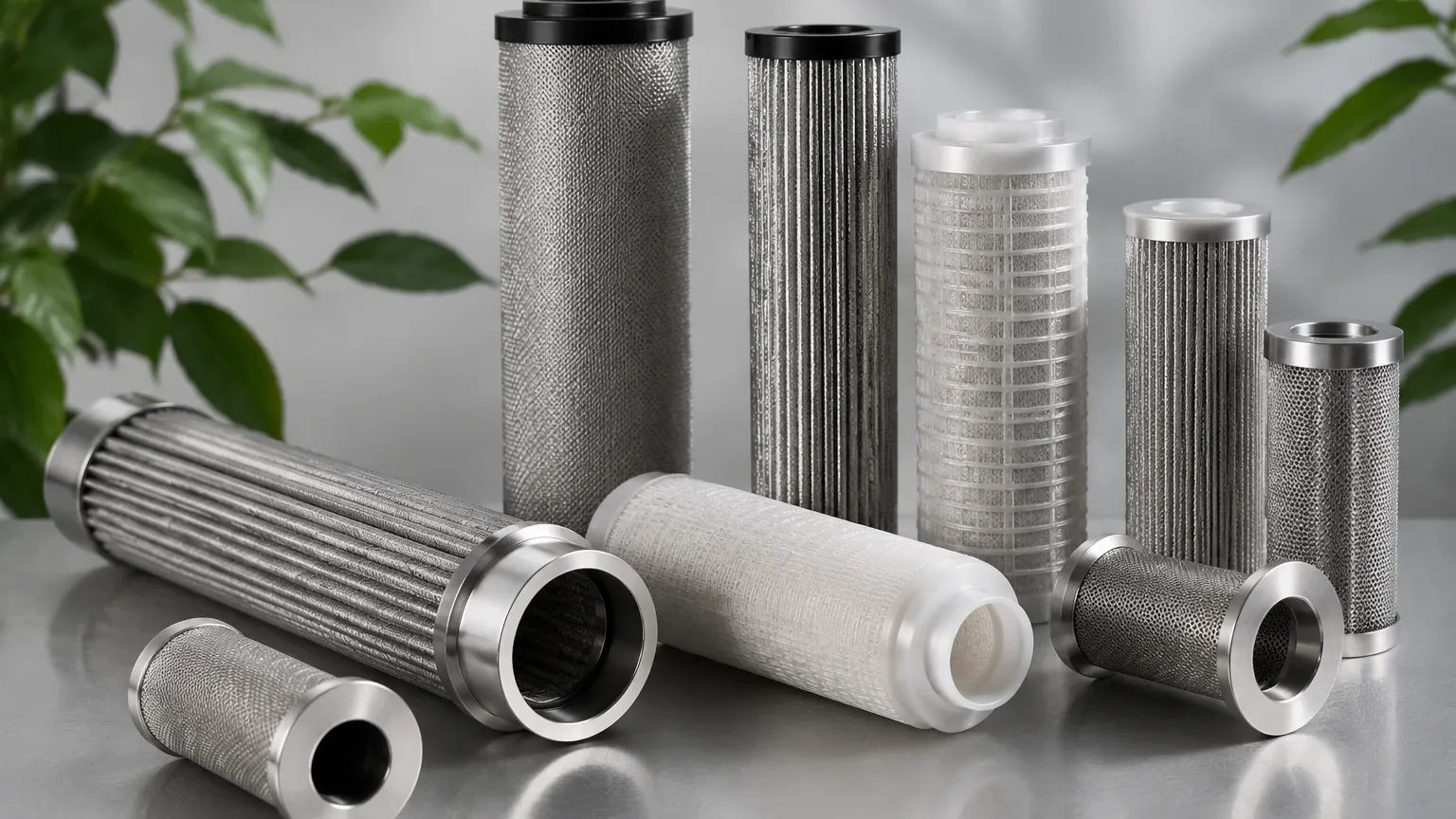
Different stages of water treatment require different media types. For coarse sediment removal, a robust stainless steel wire mesh may be sufficient. For finer particulate removal in the 1-20 micron range, sintered metal fiber or multi-layered mesh laminates provide the necessary precision while maintaining the ability to be cleaned and reused. Identifying the specific contaminants—whether they are hard minerals, soft organic matter, or metallic fines—is the first step in selecting the correct media type for a retrofitted system.
Performance Metrics and Operational Lifespan
Evaluating the performance of filter cartridges bwt involves monitoring several key metrics over time. These metrics provide data-driven insights into when a filter should be cleaned or replaced, and whether the current filtration strategy is cost-effective.
Dirt-Holding Capacity (DHC)
DHC refers to the total mass of contaminants a filter can retain before reaching its terminal differential pressure. A higher DHC means longer intervals between maintenance cycles. In industrial water treatment, maximizing DHC is essential for reducing labor costs and minimizing process interruptions. Stainless steel cartridges, particularly those with pleated designs, often offer superior DHC compared to standard depth filters in applications with high solids loading.
Cleanability and Regeneration
Unlike disposable polymeric filters, stainless steel filter cartridges can be regenerated. Depending on the nature of the contaminants, cleaning can be achieved through backwashing, ultrasonic cleaning, or chemical soaking. This capability is a significant advantage in BWT systems where the cost of specialized disposable cartridges can be high. A well-maintained stainless steel cartridge can last for several years, providing a consistent level of filtration performance throughout its service life.
Total Cost of Ownership (TCO) in Industrial Filtration
When purchasing filter cartridges, procurement teams often focus on the initial unit price. However, for industrial engineers, the Total Cost of Ownership (TCO) is a more accurate measure of value. TCO includes the purchase price, shipping, storage, labor for replacement, disposal costs of used filters, and the cost of potential downtime.
1. Consumable Costs: Disposable filters require constant repurchasing and inventory management. While the unit price is lower, the cumulative cost over five years can be substantial.
2. Disposal and Environmental Impact: In many regions, used industrial filters are classified as regulated waste, incurring high disposal fees. Cleanable stainless steel filters significantly reduce the waste stream, aligning with corporate sustainability goals.
3. Labor and Downtime: Every filter change requires a technician to take the system offline, depressurize the housing, and swap the components. Reducing the frequency of these events through higher-capacity or cleanable filters directly improves plant productivity.
Customization and OEM Support for Specialized Applications
For original equipment manufacturers (OEMs) building water treatment skids or specialized industrial machinery, standard off-the-shelf filter cartridges may not meet the specific performance or branding requirements of the project. Working with a dedicated manufacturer allows for the development of proprietary filtration solutions.
Customization options include:
* Specific Alloy Selection: Using 316L or exotic alloys for high-salinity or corrosive environments.
* Optimized Pleat Geometry: Tailoring the pleat count and depth to the specific viscosity and flow characteristics of the fluid.
* Integrated Support Structures: Adding internal cores or external cages to withstand extreme pressure differentials or mechanical stress.
By collaborating with filtration experts, engineers can ensure that the filter cartridges bwt used in their systems are perfectly matched to the operational demands, resulting in a more reliable and marketable end product.
Conclusion
Selecting the right filter cartridges for BWT and industrial water treatment systems is a complex task that requires a deep understanding of fluid dynamics, material science, and operational requirements. While disposable polymeric filters remain common for light-duty applications, the demands of modern industrial processes often necessitate the durability, precision, and cleanability of stainless steel solutions. By focusing on technical metrics such as absolute micron ratings, differential pressure limits, and total cost of ownership, engineering teams can implement filtration strategies that protect critical infrastructure and optimize process efficiency. For those seeking to enhance their filtration performance, exploring high-quality Filter Cartridges designed for industrial rigors is a necessary step in achieving long-term system stability.
