


4 Disc Filter
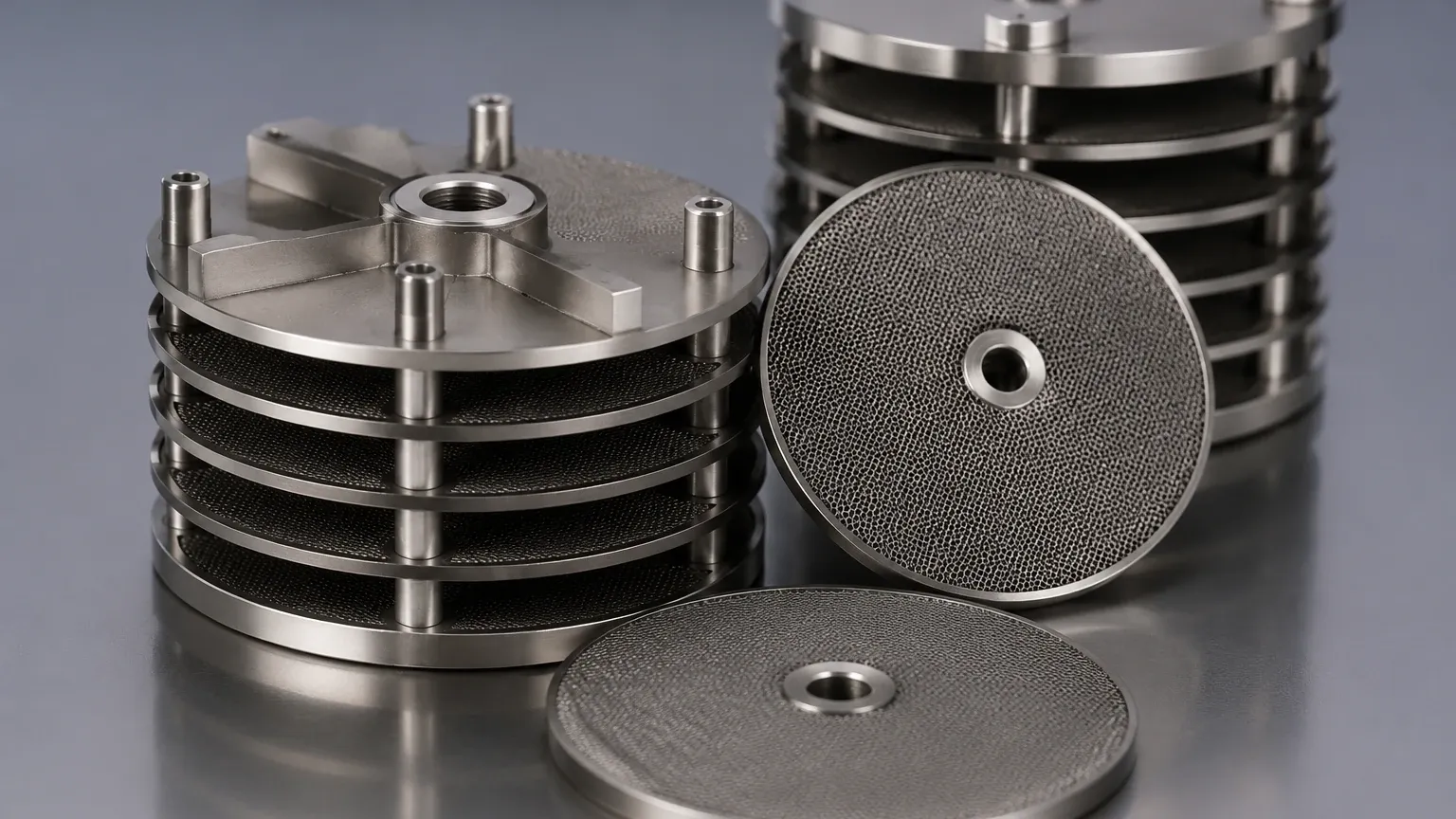
In the landscape of industrial filtration, the efficiency of a process often depends on the precision and durability of the filter media employed. A 4 disc filter, typically referring to a multi-layer assembly of four distinct wire mesh layers, is a critical component used in demanding environments such as polymer extrusion, chemical processing, and hydraulic systems. These assemblies are engineered to provide a balance between fine filtration, structural support, and high flow rates, ensuring that contaminants are removed without compromising the integrity of the system under high pressure.
Selecting the right Filter Discs & Packs requires a deep understanding of mesh geometry, material science, and the specific fluid dynamics of the application. For engineers and procurement teams, the 4 disc filter configuration offers a versatile solution that can be customized to meet exact micron ratings while maintaining the mechanical strength necessary for long-term operation.
Engineering Principles of Multi-Layer Filter Discs
The construction of a 4 disc filter is rarely a simple stack of identical meshes. Instead, it is a strategically engineered composite where each layer serves a specific functional purpose. By layering different mesh counts and weave patterns, manufacturers can optimize the filtration gradient.
1. The Filtration Layer: Usually the finest mesh in the stack, this layer determines the absolute or nominal micron rating of the filter. In a 4-layer configuration, this is often the second or third layer, protected from mechanical impact by coarser meshes.
2. The Support Layer: Coarse wire mesh provides the structural backbone. Under high-pressure conditions, such as those found in plastic melt filtration, the fine filtration mesh would deform or burst without the rigid support of a heavier gauge wire.
3. The Drainage Layer: This layer facilitates the flow of the filtrate away from the filtration medium, reducing the localized pressure drop and ensuring that the entire surface area of the disc is utilized effectively.
4. The Protection Layer: Positioned on the upstream side, this layer captures larger particles before they reach the fine mesh, preventing premature blinding and extending the service life of the pack.
Material Properties and Corrosion Resistance
For industrial applications, the material of the 4 disc filter is as important as its structure. Stainless steel is the industry standard due to its thermal stability and resistance to oxidation.
* SS304: Suitable for general industrial use where moderate corrosion resistance is required. It is cost-effective for applications involving water treatment or basic oil filtration.
* SS316/SS316L: The preferred choice for chemical processing and pharmaceutical applications. The addition of molybdenum enhances resistance to pitting and crevice corrosion, especially in chloride-rich environments. The "L" (low carbon) variant is essential if the filter packs are to be welded, as it prevents carbide precipitation.
* Specialty Alloys: In extreme cases involving high temperatures or highly aggressive chemicals, alloys like Monel, Inconel, or Hastelloy may be used to ensure the 4 disc filter does not degrade prematurely.
The Role of 4 Disc Filters in High-Pressure Extrusion
In the plastics and fiber industries, the 4 disc filter is a staple in screen changers. During polymer extrusion, the melt is forced through the filter at extremely high pressures. A single-layer mesh would likely fail under these conditions. The multi-layer 4 disc configuration provides the necessary "depth" to capture gels and degraded polymer fragments while resisting the compressive forces of the melt stream.
Engineers must consider the "dirt-holding capacity" of the filter. A well-designed 4-layer pack allows for a gradual buildup of contaminants, which can actually improve filtration efficiency over time (a phenomenon known as cake filtration) before the pressure drop reaches a level that necessitates a screen change. This balance is vital for maintaining consistent product quality in film blowing, pipe extrusion, and synthetic fiber spinning.
Customization Options: Rims, Weaves, and Micron Ratings
No two industrial processes are identical, which is why customization is a core aspect of manufacturing Filter Discs & Packs. When specifying a 4 disc filter, several technical variables must be defined:
Edge Treatments
Filter discs can be supplied as "raw" (unrimmed) or with specialized borders. Rimmed discs often use aluminum, stainless steel, or copper frames. These rims serve two purposes: they prevent the fraying of wire ends and provide a superior sealing surface within the filter housing, preventing "bypass" where unfiltered fluid escapes around the edges of the disc.
Weave Types
* Plain Weave: The most common, offering a straight-through flow path and predictable pore sizes.
* Dutch Weave: Known for its high strength and fine filtration capabilities. It features a denser arrangement of wires, making it ideal for high-pressure applications where a 4 disc filter must capture sub-micron particles.
* Twill Weave: Allows for a heavier wire diameter in a given mesh count, increasing the mechanical durability of the filter pack.
Evaluating Filtration Efficiency and Pressure Drop
One of the primary challenges for engineers is calculating the trade-off between filtration fineness and pressure drop (Delta P). A 4 disc filter with a very fine micron rating will naturally create a higher resistance to flow.
To optimize performance, it is necessary to evaluate the "Effective Filtration Area" (EFA). In a 4-layer pack, if the layers are not properly aligned or if the support mesh is too dense, the EFA can be significantly reduced, leading to faster clogging and increased energy consumption by the pumps or extruders. Advanced manufacturing techniques, such as spot welding or sintering the four layers together, ensure that the layers remain in the optimal orientation, maintaining a consistent flow profile throughout the production cycle.
Best Practices for Installation and Maintenance
The longevity of a 4 disc filter is heavily dependent on correct handling and maintenance. Because these components are often precision-engineered to micron-level tolerances, even minor physical damage during installation can lead to filtration failure.
* Directional Flow: Many multi-layer packs are asymmetrical. It is critical to install the disc with the correct side facing the upstream flow. Installing a 4 disc filter backward can lead to the collapse of the fine mesh layer into the support structure, causing immediate failure.
* Cleaning vs. Replacement: While stainless steel filters are often cleanable using ultrasonic baths, burn-off ovens (for polymers), or chemical solvents, the economic viability of cleaning must be weighed against the risk of mesh deformation. For critical applications, such as pharmaceutical grade filtration, single-use replacement is often the standard to ensure absolute purity.
* Monitoring Pressure: Implementing differential pressure sensors across the filter housing is the most reliable way to determine the optimal replacement cycle. Waiting too long to replace a 4 disc filter can result in a "breakthrough," where the pressure forces contaminants through the media or causes the mesh to rupture.
Total Cost of Ownership Considerations
When sourcing a 4 disc filter, procurement teams should look beyond the initial unit price. The total cost of ownership (TCO) includes the frequency of replacement, the labor costs associated with downtime, and the potential cost of downstream equipment damage if a low-quality filter fails.
High-quality Filter Discs & Packs manufactured with precision-grade wire mesh and robust edge sealing provide a more stable process and fewer interruptions. By working closely with a manufacturer that understands the nuances of mesh layering and material compatibility, industrial operators can achieve a filtration solution that maximizes both throughput and product purity.
In conclusion, the 4 disc filter is a sophisticated tool in the industrial filtration arsenal. Whether used in a simple hydraulic line or a complex chemical reactor, its performance is a product of careful engineering, material selection, and manufacturing precision. Understanding these factors allows technical professionals to select the most effective filtration components for their specific operational needs.
