


8 Filter Cartridge
In industrial filtration, the 8 filter cartridge—typically referring to an 8-inch length or diameter filtration component—serves as a critical element in maintaining fluid purity and protecting downstream equipment. Whether utilized in hydraulic systems, chemical processing, or water treatment, these cartridges must withstand rigorous pressure differentials and corrosive environments. Selecting the correct filtration media, such as stainless steel wire mesh or sintered metal, is essential for ensuring long-term operational efficiency and minimizing the total cost of ownership.
For engineers and procurement specialists, understanding the technical nuances of the 8 filter cartridge involves more than just matching dimensions. It requires a deep dive into material compatibility, micron ratings, and the structural integrity of the filter housing interface. This guide explores the engineering considerations, application-specific requirements, and customization options available for high-performance industrial filtration.
Technical Specifications and Material Selection
The performance of an 8 filter cartridge is fundamentally dictated by its materials of construction. Unlike disposable polymer filters, industrial-grade stainless steel cartridges are designed for durability and reusability.
Stainless Steel Alloys
Stainless steel is the industry standard for demanding applications. The two most common alloys used are:
* AISI 304: Suitable for general industrial use, providing good corrosion resistance and mechanical strength at a cost-effective price point.
* AISI 316L: The "L" stands for low carbon, which enhances weldability and resistance to intergranular corrosion. This alloy is preferred in pharmaceutical, food and beverage, and marine environments where exposure to chlorides or acidic cleaning agents is frequent.
Filter Media Types
The internal structure of the 8 filter cartridge can vary based on the required filtration accuracy:
1. Woven Wire Mesh: Available in plain, twill, or dutch weave patterns. It provides precise surface filtration, making it easy to clean via backwashing or ultrasonic baths.
2. Sintered Metal Fiber: Produced by sintering fine stainless steel fibers into a non-woven web. This creates a high-porosity depth media that offers superior dirt-holding capacity and low pressure drop.
3. Perforated Metal: Often used as a support core or an outer protective shroud to ensure the cartridge can withstand high collapse pressures.
Engineering Considerations for Industrial Filtration
When integrating an 8 filter cartridge into a system, engineers must calculate the balance between filtration efficiency and system throughput.
Pressure Drop (Delta P)
Every filter introduces a restriction to flow. The initial pressure drop across a clean 8 filter cartridge should be minimized to allow for a longer service life before the terminal pressure drop is reached. Factors influencing Delta P include the viscosity of the fluid, the flow rate, and the effective filtration area (EFA). Pleating the wire mesh is a common engineering technique used to increase the EFA within the constrained 8-inch footprint, thereby reducing the flux rate through the media and extending the interval between cleanings.
Micron Rating: Absolute vs. Nominal
It is vital to distinguish between nominal and absolute ratings. A nominal rating refers to the ability of the filter to retain a majority of particles of a certain size, whereas an absolute rating (often determined by a bubble point test) indicates the size of the largest spherical particle that can pass through the mesh. For critical applications, such as protecting high-pressure nozzles or sensitive hydraulic valves, an absolute-rated 8 filter cartridge is mandatory.
Comparison: Cartridges vs. Filter Discs & Packs
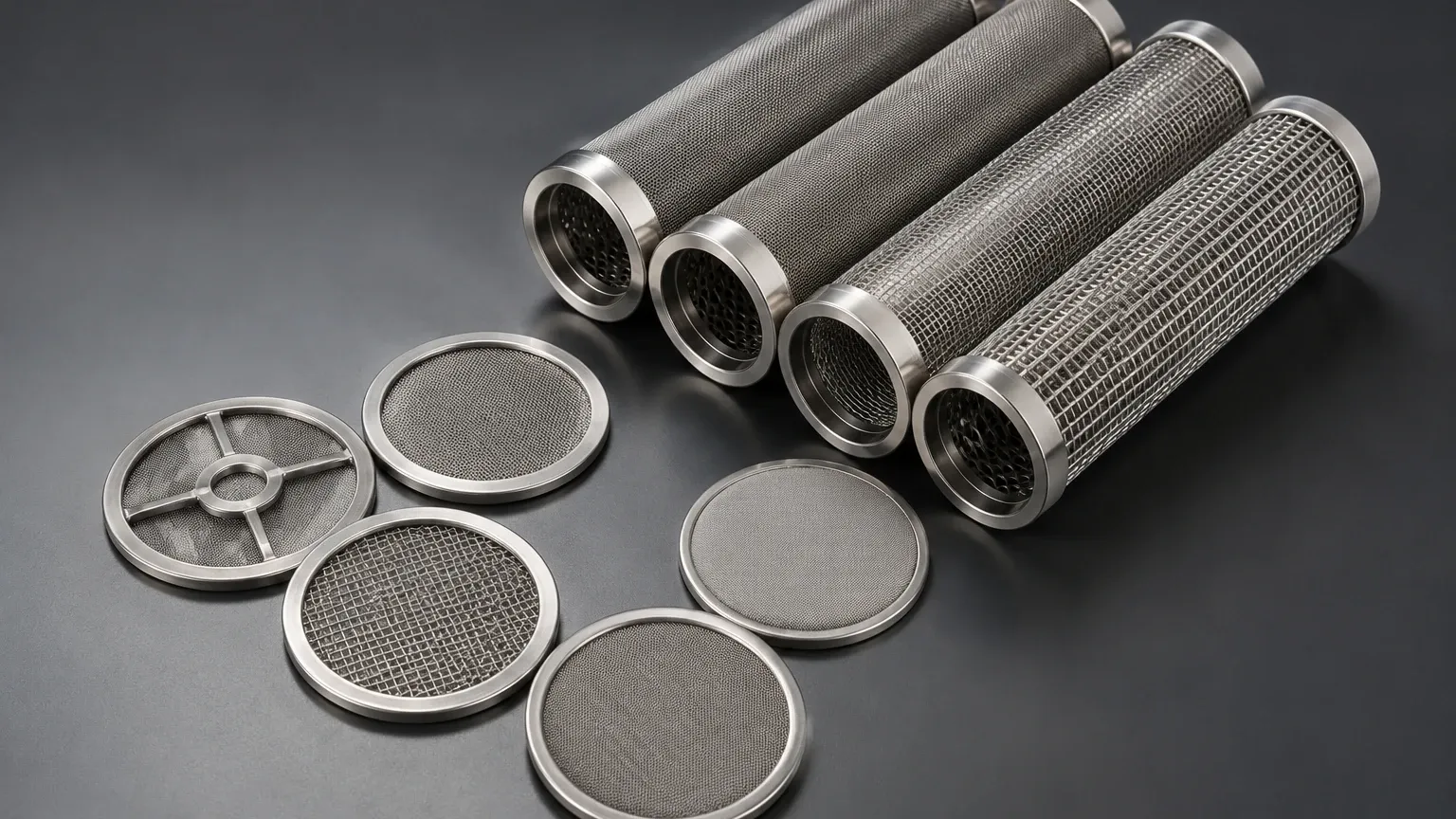
While the 8 filter cartridge is designed for high-volume flow and housing-based installation, it is often used in conjunction with or replaced by other specialized components depending on the machinery. In plastic extrusion or fiber spinning, for example, the filtration requirements are often met by Filter Discs & Packs.
Filter Discs & Packs are typically multi-layered structures where different mesh counts are combined to provide graduated filtration. While a cartridge provides a longitudinal flow path, these discs are used in plate-and-frame setups or screen changers. In some complex industrial systems, an 8 filter cartridge may actually contain internal disc stacks to maximize the surface area for high-viscosity fluids. Understanding when to transition from a standard cartridge to a customized pack is a key aspect of process optimization.
Applications in Demanding Environments
The versatility of the 8 filter cartridge allows it to be deployed across a wide spectrum of industrial sectors, each with unique challenges.
Chemical and Petrochemical Processing
In these environments, filters must resist aggressive solvents and high temperatures. Stainless steel 8 filter cartridges are often used to remove catalysts from process streams or to protect pumps from particulates. The ability to operate at temperatures exceeding 300°C (572°F) gives metal cartridges a distinct advantage over synthetic alternatives.
Food and Beverage Industry
Hygiene is the primary concern here. Cartridges must be designed with "dead-space-free" welding to prevent bacterial growth. 316L stainless steel is typically used to ensure compliance with food safety standards. These cartridges are frequently used for steam filtration (culinary steam) or for the removal of yeast and sediment in beverage production.
Hydraulic and Lubrication Systems
High-pressure hydraulic systems require robust filtration to prevent component wear. An 8 filter cartridge in a hydraulic return line or pressure line must be able to handle rapid flow fluctuations and high bypass pressures without media migration or structural failure.
Customization and OEM Capabilities
Standard off-the-shelf filters often fall short of specific engineering requirements. Customization of the 8 filter cartridge is a core service for manufacturers like Kaifil, allowing for a perfect fit within existing infrastructure.
End Cap Configurations
The interface between the cartridge and the housing is a common point of failure if not specified correctly. Options include:
* Double Open End (DOE): Features flat gaskets on both ends, requiring a tie-rod assembly within the housing.
* Single Open End (SOE): Often utilizes a 222 or 226 O-ring configuration with a locking fin or flat top to ensure a bypass-free seal.
* Threaded Connections: NPT or BSP threaded end caps provide a secure, high-pressure connection for specialized gas filtration.
Reinforced Support
For applications involving high-viscosity fluids or high differential pressures, the 8 filter cartridge can be reinforced with an internal heavy-duty perforated core and an external mesh wrap. This prevents the pleats from bunching or collapsing, ensuring the entire surface area remains active throughout the filtration cycle.
Maintenance, Cleaning, and Replacement Cycles
One of the most significant advantages of a stainless steel 8 filter cartridge is its cleanability. Unlike disposable filters that contribute to industrial waste and recurring procurement costs, metal cartridges offer a sustainable long-term solution.
Cleaning Methods
* Ultrasonic Cleaning: High-frequency sound waves create cavitation bubbles that dislodge fine particles trapped deep within the mesh or sintered fibers.
* Chemical Cleaning: Soaking the cartridge in compatible solvents or caustic solutions can dissolve organic or chemical build-up.
* Backwashing: In automated systems, reversing the flow of the fluid can flush out surface contaminants, extending the time between manual cleanings.
Determining Replacement
While cleanable, an 8 filter cartridge will eventually reach the end of its functional life. Signs that a cartridge needs replacement include permanent deformation of the mesh, a baseline pressure drop that remains high even after cleaning, or visible damage to the end cap seals. Establishing a rigorous maintenance schedule based on pressure differential monitoring is the best way to prevent unexpected downtime.
Selection Guide for Engineers
Before purchasing an 8 filter cartridge, technical teams should confirm the following parameters to ensure application compatibility:
1. Fluid Characteristics: What is the chemical composition, viscosity, and temperature of the fluid?
2. Flow Requirements: What is the maximum and normal flow rate? (This determines the required filtration area).
3. Contaminant Profile: Are the particles hard, soft, or gelatinous? What is the expected solids loading?
4. Housing Compatibility: Does the cartridge require specific O-ring materials (EPDM, Viton, PTFE) or end cap styles to fit the existing vessel?
5. Certification Needs: Does the application require FDA compliance, PED (Pressure Equipment Directive) certification, or specific material traceability (MTRs)?
By addressing these factors, engineers can select an 8 filter cartridge that not only meets the immediate filtration goal but also contributes to the overall reliability of the industrial process. Whether the solution involves a standard cylindrical design or the integration of specialized Filter Discs & Packs, the focus remains on precision engineering and high-quality manufacturing to achieve optimal results.
