


8 Pocket Filter
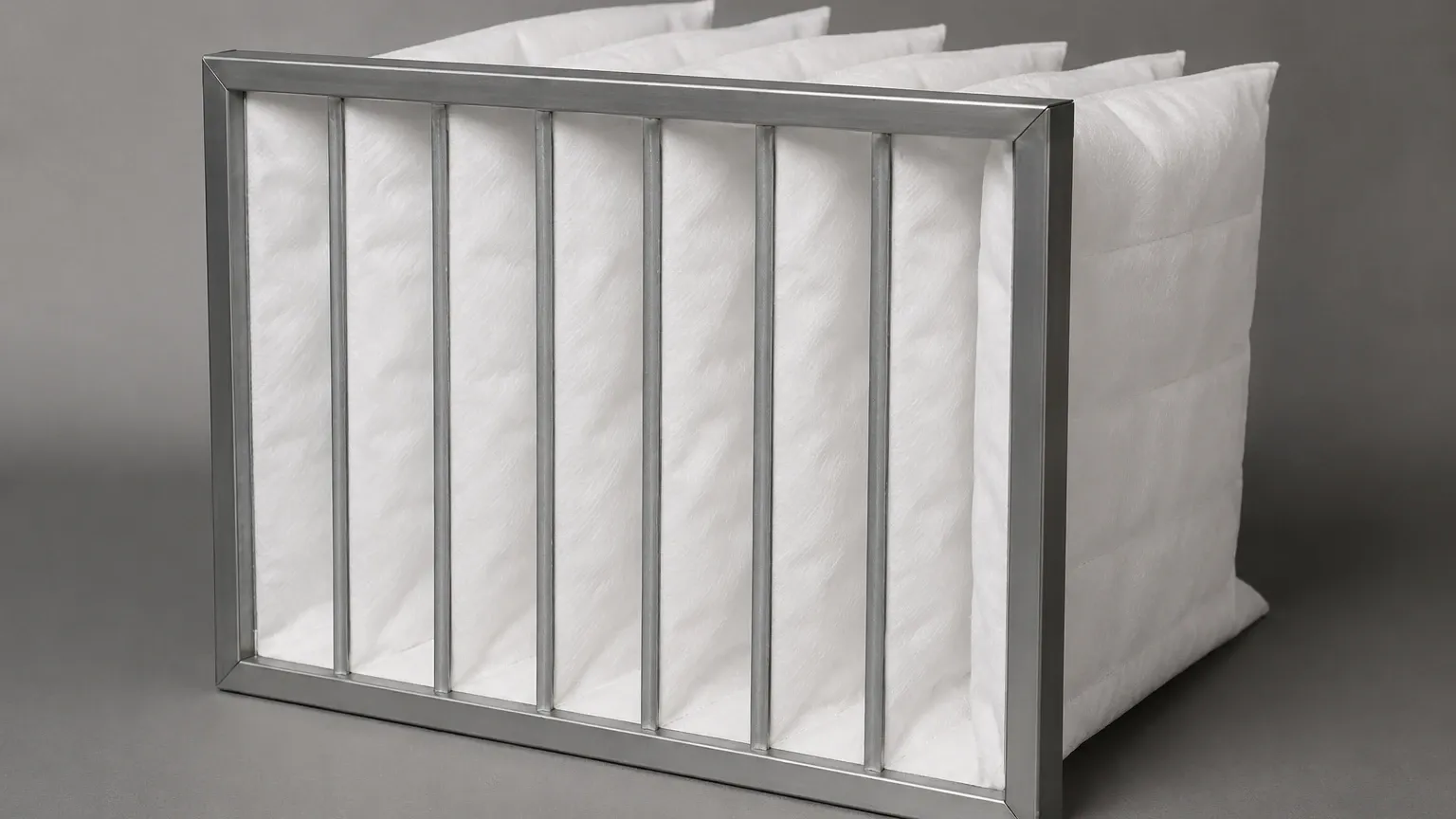
In high-pressure industrial filtration, the geometry of a filter component is as critical as the material from which it is constructed. The 8 pocket filter represents a specialized configuration within the broader category of Filter Discs & Packs, designed to maximize effective filtration area (EFA) within a constrained cylindrical or housing volume. For engineers managing polymer extrusion, chemical processing, or high-viscosity fluid systems, understanding the mechanical and hydraulic advantages of the 8-pocket design is essential for optimizing throughput and extending the lifecycle of filtration equipment.
Unlike standard flat filter discs, an 8 pocket filter utilizes a pleated or segmented arrangement—often referred to as a leaf or pocket design—to increase the surface area available for particle capture. This configuration is particularly prevalent in the production of synthetic fibers, resins, and specialized plastics, where high contaminant loads and high pressures necessitate a robust, high-capacity filtration solution.
Understanding the 8 Pocket Filter Configuration
The "8 pocket" designation typically refers to the number of individual filtration segments or "leaves" arranged around a central core or within a circular frame. This radial distribution is engineered to balance two competing requirements: the need for maximum surface area and the need for structural stability under high differential pressure.
In a standard flat pack, the filtration area is limited to the diameter of the housing. By folding or segmenting the media into eight distinct pockets, the surface area can be increased by a factor of 2.5 to 4 times compared to a flat disc of the same diameter. This increase in EFA directly correlates to a lower flux (flow per unit area), which reduces the pressure drop across the media and allows for a higher dirt-holding capacity. For technical professionals, this means longer run times between filter changes and a reduced risk of media deformation or "breakthrough" where contaminants are forced through the mesh due to excessive pressure.
Material Engineering and Layering Strategies
The performance of an 8 pocket filter is heavily dependent on the selection of stainless steel wire mesh and the layering strategy employed during manufacturing. Because these filters often operate in environments involving temperatures exceeding 300°C and pressures reaching several hundred bar, material integrity is paramount.
Stainless Steel Alloys
Kaifil typically utilizes Grade 304, 316, or 316L stainless steel. Grade 316L is frequently preferred in chemical and pharmaceutical applications due to its lower carbon content and superior resistance to intergranular corrosion. In highly aggressive environments involving acidic or alkaline solutions, specialized alloys like Hastelloy or Monel may be used to ensure the structural longevity of the pockets.
Multi-Layer Mesh Construction
A high-performance 8 pocket filter is rarely a single layer of mesh. Instead, it is a composite structure consisting of:
1. The Filtration Layer: A fine stainless steel wire mesh (often Dutch weave or Twilled Dutch weave) that defines the micron rating of the filter.
2. The Support Layer: A coarser mesh placed on both sides of the filtration layer to provide mechanical strength and prevent the fine mesh from collapsing under pressure.
3. The Drainage Layer: A very coarse mesh or perforated metal sheet that ensures fluid can flow freely out of the pocket and into the central collection tube.
These layers are often sintered together—a process of diffusion bonding—to create a monolithic structure that eliminates wire migration and ensures consistent pore size even under extreme mechanical stress.
Performance Advantages in High-Viscosity Applications
The primary driver for selecting an 8 pocket filter over other configurations is its performance in high-viscosity applications, such as the filtration of molten polymers (PET, PA, PP) or heavy hydraulic oils. In these systems, the fluid's resistance to flow creates a significant pressure drop.
Reduced Flow Velocity
By distributing the flow across eight pockets, the local velocity of the fluid as it passes through the mesh is significantly reduced. This is critical because high-velocity flow can cause "shear thinning" or mechanical degradation of sensitive polymer chains. Furthermore, lower velocity allows for more efficient depth filtration, as smaller particles are more likely to be trapped within the mesh interstices rather than being swept through by the current.
Thermal Stability
In polymer spinning and extrusion, maintaining a uniform temperature profile is vital. The 8-pocket design, with its radial symmetry, promotes more uniform heat distribution across the filter assembly. This prevents "cold spots" where the polymer might increase in viscosity, leading to uneven flow and potential blockages.
Critical Selection Parameters for Engineers
When specifying an 8 pocket filter for an industrial system, several technical parameters must be confirmed to ensure compatibility and performance. Engineers should evaluate the following:
Micron Rating and Efficiency
It is important to distinguish between nominal and absolute micron ratings. For critical applications like fiber spinning, an absolute rating is required to ensure that no particles above a specific size pass through the filter. The 8-pocket configuration allows for the use of finer meshes without the prohibitive pressure drops associated with flat Filter Discs & Packs.
Differential Pressure (Delta P) Limits
Every filter has a maximum allowable differential pressure before structural failure occurs. In an 8-pocket design, the strength of the center hub and the integrity of the pocket welds are the primary factors. Engineers must calculate the expected clean pressure drop and set clear limits for when the filter must be replaced or cleaned.
Effective Filtration Area (EFA)
While the 8-pocket design increases area, the actual EFA depends on the depth of the pockets and the thickness of the mesh composite. A thicker composite provides better support but may reduce the number of pleats or pockets that can fit within a specific diameter, potentially negating the area gains.
Customization and OEM Integration
As a manufacturer specializing in custom solutions, Kaifil recognizes that no two industrial processes are identical. The 8 pocket filter is highly customizable to meet specific OEM requirements.
Edge Binding and Sealing
The edges of the pockets must be securely sealed to prevent bypass. Common methods include spot welding, continuous seam welding, or the use of aluminum or stainless steel binding frames. In high-pressure applications, the pockets are often welded to a heavy-duty center core to ensure that the assembly remains rigid even as the pressure differential increases.
Hub and Fitting Options
The interface between the filter pack and the housing is a common point of failure. Custom hubs can be engineered with specific thread patterns, flange types, or gasket seats (using materials like copper, aluminum, or specialized polymers) to ensure a leak-proof seal.
Operational Maintenance and Lifecycle Management
The total cost of ownership for an 8 pocket filter is determined by its durability and cleanability. Because these are precision-engineered metal components, they are often designed to be cleaned and reused rather than treated as disposables.
Cleaning Protocols
For filters used in polymer processing, cleaning usually involves pyrolysis (burning off the polymer in an oxygen-free environment), followed by ultrasonic cleaning in a chemical bath. The 8-pocket design, while efficient for filtration, requires thorough cleaning to ensure that contaminants are removed from the deep crevices of the pockets. Verified cleaning cycles can restore the filter to near-original pressure drop levels.
Monitoring and Replacement
Continuous monitoring of the pressure differential is the most effective way to manage the filter lifecycle. A sudden drop in pressure may indicate a media rupture (bypass), while a rapid increase suggests that the filter has reached its dirt-holding capacity. Regular inspection of the mesh for signs of fraying or mechanical fatigue is recommended, especially after multiple cleaning cycles.
Conclusion: Why Choose the 8 Pocket Design?
The 8 pocket filter is an engineered solution for demanding industrial environments where space is at a premium and filtration performance cannot be compromised. By providing a significant increase in surface area, these filters enable higher flow rates, lower pressure drops, and longer service intervals. Whether utilized in the chemical, pharmaceutical, or polymer industries, the 8-pocket configuration—when manufactured with the precision and material quality of Kaifil’s Filter Discs & Packs—delivers the reliability required for continuous, high-stakes manufacturing processes.
For engineering teams, the selection of an 8 pocket filter should be a collaborative process with the manufacturer to ensure that the mesh selection, layering, and structural reinforcements are perfectly aligned with the specific viscosity, temperature, and contaminant profile of the application. This technical alignment not only optimizes filtration efficiency but also contributes to the overall stability and cost-effectiveness of the production line.
