


Disc Filter 3 Inch
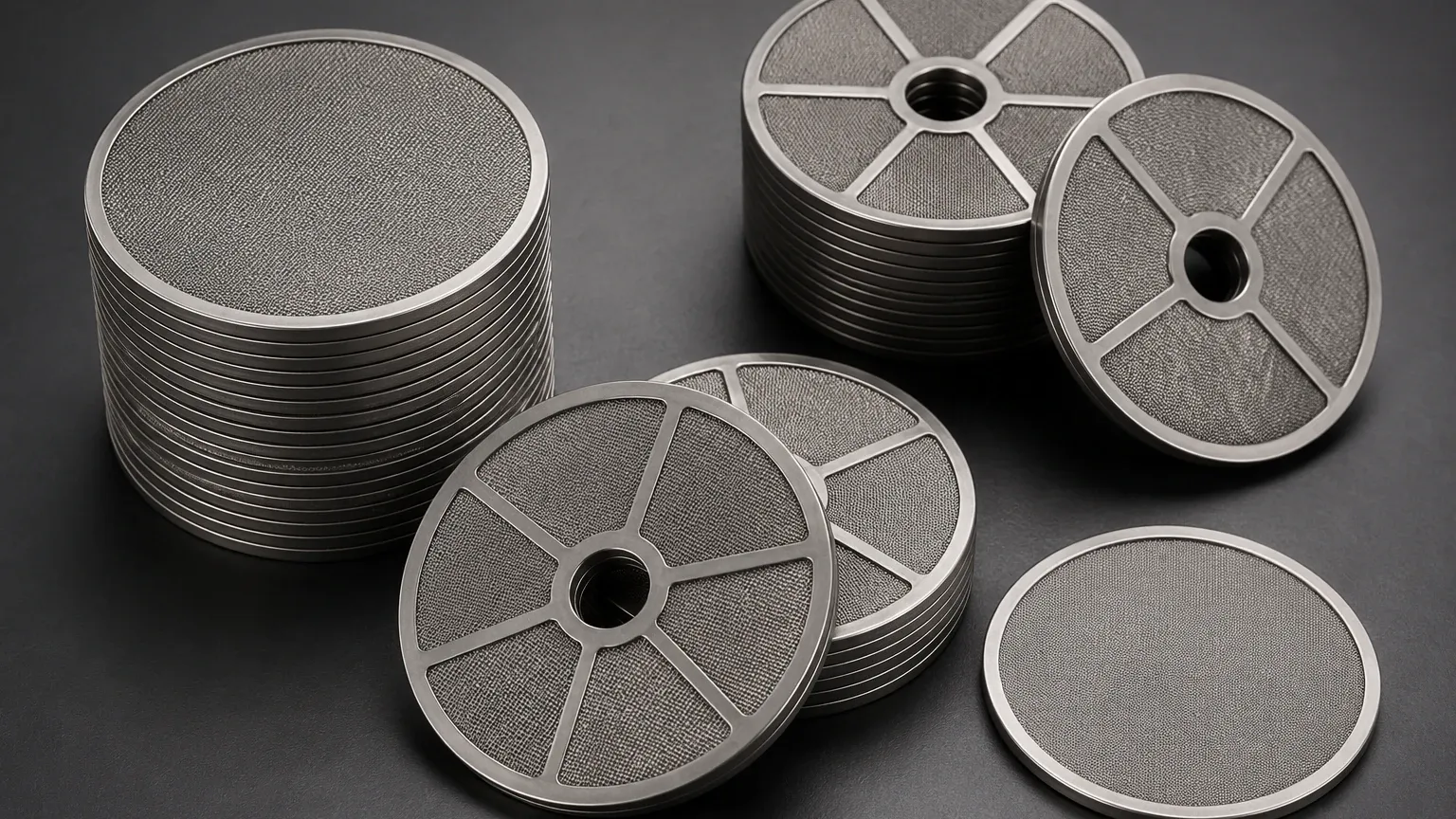
In industrial filtration, precision and reliability are the primary drivers of operational efficiency. The disc filter 3 inch is a standard yet critical component used across diverse sectors, ranging from polymer extrusion and chemical processing to hydraulic systems and water treatment. These components, often categorized under Filter Discs & Packs, are engineered to provide high-strength, heat-resistant, and corrosion-resistant filtration in demanding environments.
Selecting the correct 3-inch disc filter requires a deep understanding of metallurgy, weave patterns, and mechanical construction. This guide examines the technical specifications, engineering considerations, and application-specific requirements that procurement teams and engineers must evaluate to optimize their filtration processes.
Technical Specifications and Material Selection
The performance of a disc filter 3 inch is fundamentally determined by the material from which it is manufactured. In most industrial settings, stainless steel is the material of choice due to its mechanical properties and resistance to environmental degradation.
Stainless Steel Grades
1. SS 304: This is the most common grade used for general-purpose filtration. It offers excellent cost-effectiveness and good corrosion resistance for standard applications in food processing or water treatment where extreme chemical exposure is not a factor.
2. SS 316 and 316L: For more aggressive environments, such as chemical processing or pharmaceutical manufacturing, SS 316 is preferred. The addition of molybdenum enhances resistance to pitting and crevice corrosion, particularly in chloride-rich environments. The "L" variant (low carbon) is essential for components that require welding, as it prevents carbide precipitation.
3. Specialty Alloys: In high-temperature or highly corrosive niche applications, materials like Monel, Inconel, or Hastelloy may be utilized for 3-inch discs, though stainless steel remains the industry standard for the vast majority of use cases.
Mesh Count and Wire Diameter
The mesh count—the number of openings per linear inch—directly impacts the filtration accuracy. A higher mesh count results in a finer micron rating but may increase the pressure drop across the filter. Engineers must balance the need for fine particle retention with the requirement for adequate flow rates. The wire diameter also plays a role in the structural integrity of the disc; thicker wires provide more durability but reduce the open area of the mesh.
Understanding Weave Patterns
The geometry of the wire mesh determines how the disc filter 3 inch interacts with the fluid or gas stream. Different weave patterns offer varying levels of strength, flow capacity, and filtration depth.
Plain Weave
Plain weave is the most straightforward construction, where each warp wire crosses over and under each shute wire. This provides a uniform opening and is ideal for high-flow applications where the pressure differential is relatively low. It is easy to clean and offers predictable performance for surface filtration.
Twill Weave
In a twill weave, each shute wire passes over and under two warp wires. This allows for a heavier wire diameter to be used for a given mesh count, resulting in a stronger mesh. Twill weaves are often used when the 3-inch disc must withstand higher mechanical loads without deforming.
Dutch Weave (Plain and Twill)
Dutch weaves utilize different diameters for warp and shute wires. This creates a dense, triangular opening that provides superior filtration at very fine micron levels. Dutch weave discs are characterized by high mechanical strength and are often used in high-pressure applications like hydraulic systems or polymer melt filtration. Because the openings are not straight-through, they provide a degree of depth filtration compared to plain weaves.
Construction Types: Single Layer vs. Multi-Layer Packs
A disc filter 3 inch can be supplied as a single mesh layer or as part of a complex multi-layer assembly. The choice depends on the pressure of the system and the level of filtration required.
Single Layer Discs
Single-layer discs are typically used in low-pressure applications or as a primary pre-filter. They are cost-effective and easy to replace. However, they may lack the structural rigidity required for high-viscosity fluids or high-pressure differentials.
Multi-Layer Spot-Welded Packs
To increase strength and filtration efficiency, multiple layers of mesh are stacked and spot-welded together. A common configuration includes a fine filtration layer sandwiched between coarser support layers. This prevents the fine mesh from migrating or deforming under pressure. These Filter Discs & Packs are essential in plastic extrusion where the "melt" exerts significant force on the screen.
Rim-Bound Discs
For applications requiring maximum edge stability and ease of handling, 3-inch discs can be bound with a metal rim (usually aluminum, stainless steel, or copper). The rim ensures that all layers remain perfectly aligned and provides a better seal within the filter housing, preventing bypass—a critical failure point in precision filtration.
Performance Metrics: Micron Rating and Pressure Drop
When specifying a disc filter 3 inch, engineers focus on two primary performance indicators: the micron rating and the differential pressure (Delta P).
Nominal vs. Absolute Micron Rating
* Nominal Rating: Refers to the ability of the filter to retain a major percentage (usually 60% to 90%) of particles of a specific size. It is a general guideline for performance.
* Absolute Rating: Refers to the diameter of the largest hard spherical particle that will pass through the filter under specified test conditions. For critical pharmaceutical or hydraulic applications, absolute ratings are often required to ensure system integrity.
Managing Pressure Drop
Every filter introduces resistance to flow. As the disc filter 3 inch captures contaminants, the pressure drop across the media increases. If the initial pressure drop is too high, it reduces the effective service life of the filter before it reaches the terminal pressure drop (the point at which it must be cleaned or replaced). Optimizing the open area of the mesh and selecting the appropriate layer configuration are key to maintaining a manageable Delta P.
Key Industrial Applications
The versatility of the 3-inch diameter makes it a staple in several high-stakes industrial processes.
Polymer and Plastic Extrusion
In the extrusion process, molten plastic is forced through a series of filters (often called screen packs) to remove impurities that could cause defects in the final product. A disc filter 3 inch is a common size for smaller extrusion lines. The discs must withstand temperatures exceeding 300°C and pressures that can reach several thousand PSI.
Chemical and Petrochemical Processing
Stainless steel discs are used to protect downstream equipment from particulate matter and to recover valuable catalysts. Their resistance to a wide range of pH levels and solvents makes them indispensable in continuous chemical production.
Hydraulic and Lubrication Systems
Precision machinery relies on clean oil to prevent wear on valves and actuators. 3-inch disc filters are often used in inline housings to capture metallic wear particles and environmental contaminants, ensuring the longevity of the hydraulic circuit.
Food and Beverage Filtration
In this sector, the focus is on hygiene and material safety. SS 316L discs are used to filter syrups, oils, and beverages. The smooth surface of the stainless steel mesh allows for effective cleaning and sterilization, complying with stringent food safety standards.
Selection Criteria for Engineering and Procurement
To ensure the selected disc filter 3 inch meets the application requirements, the following factors should be confirmed with the manufacturer:
1. Operating Temperature: Will the filter be exposed to cryogenic temperatures or extreme heat? This dictates the choice of alloy and binding material.
2. Chemical Compatibility: Does the fluid contain acids, bases, or chlorides that could lead to stress corrosion cracking or pitting?
3. Flow Rate and Viscosity: High-viscosity fluids (like polymers) require stronger support layers and larger open areas to prevent excessive pressure buildup.
4. Contaminant Type: Is the particulate matter hard and abrasive, or soft and deformable? This influences the choice between surface filtration (plain weave) and depth-loading (Dutch weave or multi-layer packs).
5. Cleaning vs. Disposal: Is the process designed for the filters to be cleaned (via ultrasonic bath or burnout) and reused, or are they intended to be disposable? Stainless steel discs offer excellent reusability, which can lower the total cost of ownership over time.
Quality Control and Manufacturing Standards
As a specialized manufacturer, Kaifil emphasizes precision in the production of Filter Discs & Packs. The manufacturing process involves several critical steps to ensure the final 3-inch disc performs as expected:
* Precision Cutting: Using advanced die-cutting or laser-cutting technology ensures that the diameter of the disc is accurate to within microns, preventing bypass in the filter housing.
* Ultrasonic Cleaning: Post-production cleaning is essential to remove any residual oils, metal shavings, or atmospheric dust from the mesh, particularly for pharmaceutical and food-grade applications.
* Flatness Control: For multi-layer packs, maintaining flatness is vital for proper installation and sealing.
* Material Traceability: Providing material test reports (MTRs) ensures that the stainless steel grade meets the specified international standards (ASTM, DIN, etc.).
Conclusion
The disc filter 3 inch is more than just a piece of wire mesh; it is an engineered component designed to protect expensive equipment and ensure product purity. By understanding the nuances of material grades, weave patterns, and multi-layer construction, engineers can select a filtration solution that balances performance with durability. Whether used in a high-pressure polymer extruder or a delicate food processing line, the right 3-inch disc filter is a fundamental building block of industrial process control. For those seeking customized or OEM solutions, evaluating the specific mechanical and chemical demands of the application remains the most effective path toward optimizing filtration efficiency and reducing long-term operational costs.
