


Disc Filter Cleaner
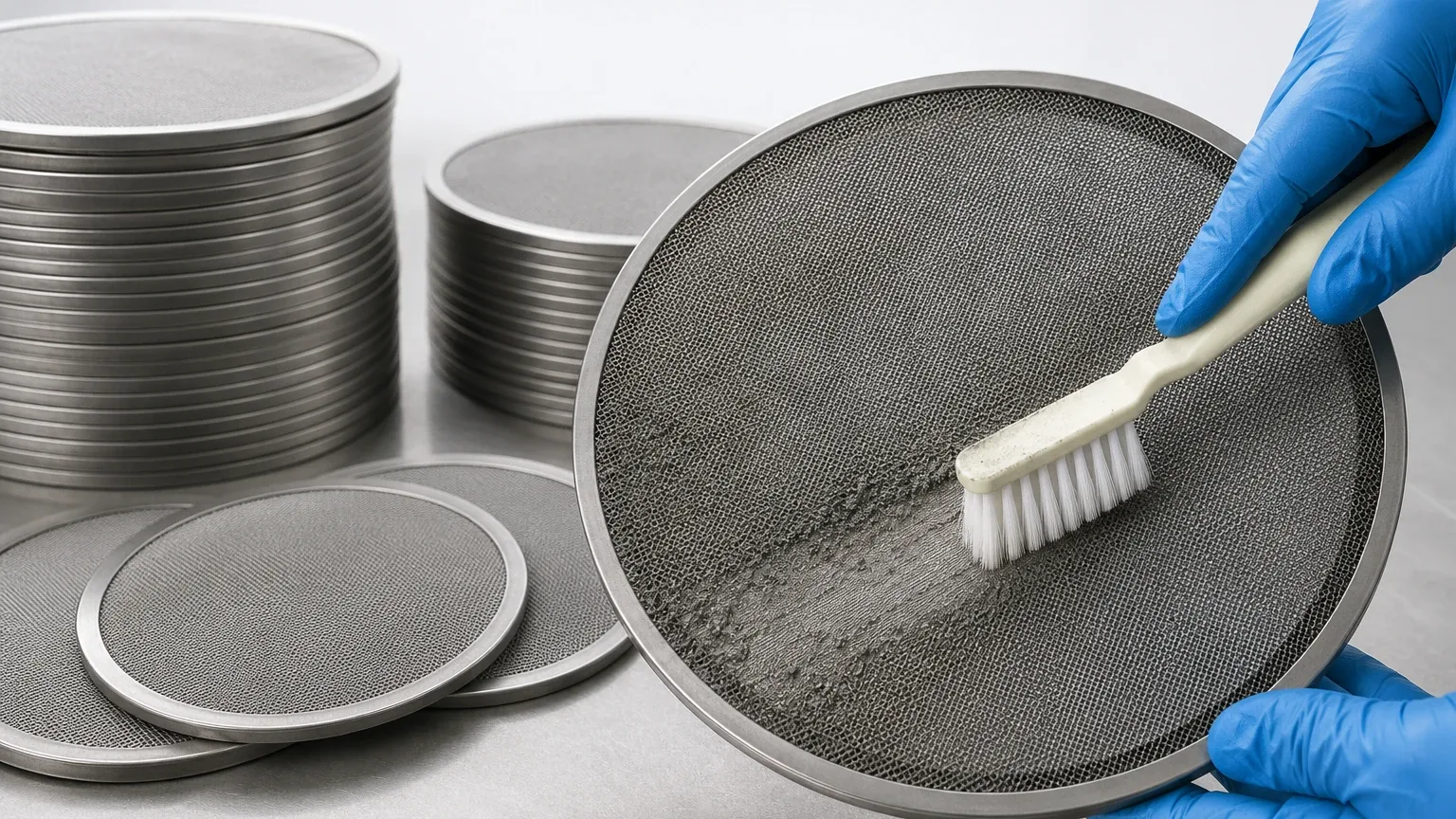
In high-precision industrial filtration, the longevity and performance of filtration media are critical factors in operational efficiency. For industries utilizing stainless steel Filter Discs & Packs, the ability to restore flow rates and remove accumulated contaminants through effective cleaning is a primary engineering consideration. A disc filter cleaner is not merely a single tool but a category of processes and equipment designed to remove particulates from the intricate layers of wire mesh or sintered metal without compromising the structural integrity of the filter.
Maintaining these components requires a technical understanding of the contaminant characteristics, the filter material's chemical resistance, and the mechanical limits of the mesh. This guide explores the engineering principles behind disc filter cleaning, the various methods employed in industrial settings, and how to evaluate when a filter disc should be cleaned or replaced.
The Mechanics of Contamination in Filter Discs
Before selecting a disc filter cleaner method, engineers must analyze how the filter has become fouled. Stainless steel filter discs typically operate through surface filtration or shallow depth filtration. In surface filtration, particles larger than the mesh opening are trapped on the upstream side. In depth filtration—often found in multilayer sintered packs—particles may become lodged within the complex internal pore structure.
As contaminants accumulate, the effective open area of the filter decreases, leading to an increase in differential pressure (ΔP). If the pressure exceeds the design limits, the mesh may undergo mechanical deformation or "blinding," where particles are forced so deeply into the weave that they cannot be removed. Understanding the nature of the foulant—whether it is organic, inorganic, crystalline, or gelatinous—is the first step in determining the appropriate cleaning protocol.
Industrial Methods for Cleaning Filter Discs & Packs
There are several established methods for cleaning stainless steel filter components. The choice depends on the level of filtration precision and the type of material being filtered.
1. Ultrasonic Cleaning
Ultrasonic cleaning is widely regarded as the most effective method for precision wire mesh. This process uses high-frequency sound waves (typically 20 kHz to 40 kHz) to create cavitation bubbles in a cleaning solvent. When these bubbles implode near the surface of the filter, they generate high-energy micro-jets that dislodge particles from the smallest openings of the mesh.
For complex Filter Discs & Packs that feature multiple layers or fine Dutch weave patterns, ultrasonic cleaning can reach internal areas that manual scrubbing or pressurized air cannot. It is essential to monitor the frequency and duration, as excessive ultrasonic energy can occasionally cause fatigue in extremely fine wires.
2. Chemical Cleaning and Solvent Soaking
Chemical cleaning involves the use of acids, alkalis, or specialized surfactants to dissolve or break down contaminants.
* Caustic Soaking: Often used for organic materials, fats, and oils.
* Acid Pickling: Used to remove mineral scales or oxidation. However, the choice of acid must be compatible with the stainless steel grade (e.g., 304 vs. 316L) to prevent pitting or intergranular corrosion.
* Solvent Degreasing: Effective for hydrocarbon-based contaminants.
After any chemical treatment, a thorough neutralization and deionized water rinse are mandatory to ensure no residual chemicals interfere with the subsequent production cycle.
3. Thermal Cleaning (Burn-off)
In applications involving polymers, resins, or heavy oils, thermal cleaning may be necessary. The filter discs are placed in a vacuum furnace or a fluidized bed at controlled temperatures. The heat carbonizes or vaporizes the organic material, leaving behind a fine ash that can then be removed via ultrasonic cleaning or high-pressure air. This method must be carefully controlled to stay below the annealing temperature of the stainless steel to prevent softening of the wire mesh.
4. Backwashing and Back-flushing
In many automated systems, a disc filter cleaner mechanism is integrated into the housing. Backwashing involves reversing the flow of the filtrate (or a secondary cleaning fluid) through the filter at high velocity. This is most effective for surface-loaded contaminants in coarser mesh applications. While convenient, backwashing rarely restores a filter to 100% of its original clean pressure drop and is usually a temporary measure between deep-cleaning cycles.
Engineering Considerations for Cleanability
When specifying Filter Discs & Packs, engineers must consider the "cleanability" of the design. A filter that is difficult to clean will have a higher Total Cost of Ownership (TCO) due to frequent replacements and downtime.
Material Selection
Stainless steel 316L is the industry standard for reusable filters due to its superior corrosion resistance, especially when exposed to the aggressive chemicals used in cleaning. If the process involves high-temperature thermal cleaning, the alloy's thermal stability must be verified to ensure the pore size remains consistent after multiple cycles.
Structural Integrity
Filter discs can be produced as single layers or multi-layer sintered packs. Sintered packs offer higher mechanical strength, which allows them to withstand the high pressures of back-flushing or the intense vibrations of ultrasonic cleaning without the layers separating. Welded edges are generally preferred over bound edges for cleaning, as they eliminate crevices where cleaning agents or contaminants could remain trapped.
Pore Size and Geometry
The geometry of the weave (e.g., Plain, Twilled, or Dutch weave) affects how easily particles are released. Square mesh is generally the easiest to clean, while complex Dutch weaves provide finer filtration but require more intensive cleaning methods like ultrasonics to ensure full restoration of the flow path.
Evaluating Cleaning Effectiveness
An essential part of the disc filter cleaner process is post-cleaning verification. Simply looking at a filter is insufficient to determine if it is truly clean. Industrial facilities typically use the following metrics:
1. Pressure Drop Testing: The most common method. The cleaned filter is tested under standard flow conditions; if the ΔP is significantly higher than a new filter, residual contamination remains.
2. Bubble Point Test: This test checks the integrity of the filter and ensures that the cleaning process has not damaged the mesh or enlarged the pores. It involves immersing the disc in a fluid and measuring the air pressure required to produce a continuous stream of bubbles.
3. Weight Verification: By weighing the filter before and after cleaning, technicians can quantify the mass of the removed contaminants.
4. Microscopic Inspection: For critical applications in the pharmaceutical or semiconductor industries, scanning electron microscopy (SEM) or high-powered optical microscopes are used to inspect the mesh for microscopic residue or wire thinning.
Risks of Improper Cleaning
Using an incorrect disc filter cleaner approach can lead to premature failure of the filtration system. Common risks include:
* Mechanical Damage: High-pressure spray wands used too close to the mesh can distort the weave, creating "bypass" routes for contaminants.
* Corrosion: Inadequate rinsing of acidic cleaning agents can lead to localized pitting, especially in the heat-affected zones near welds.
* Cross-Contamination: If a filter is not cleaned to a validated standard, residual material from a previous batch can contaminate the current production run, which is a major concern in food and beverage or pharmaceutical processing.
When to Replace Instead of Clean
Despite the durability of stainless steel, every filter disc has a finite service life. Cleaning should be discontinued and the filter replaced if any of the following are observed:
* Permanent Blinding: When the clean pressure drop exceeds 120-150% of the original specification despite multiple cleaning attempts.
* Structural Fatigue: Visible fraying of the wires, cracking of the sinter bonds, or deformation of the disc shape.
* Loss of Filtration Accuracy: If the bubble point test indicates that the micron rating has shifted outside of the required tolerance.
Conclusion
Effective maintenance of industrial filtration systems relies on a disciplined approach to cleaning. By selecting the right Filter Discs & Packs and matching them with a compatible disc filter cleaner methodology, manufacturers can significantly extend the life of their components and maintain consistent product quality. Whether through ultrasonic cavitation, chemical dissolution, or thermal oxidation, the goal remains the same: restoring the precision of the metal mesh while protecting the mechanical investment. Engineers should work closely with manufacturers to define cleaning protocols that align with the specific alloy and construction of their filtration media.
