


Disc Filter Meaning
In the context of industrial filtration, understanding the precise disc filter meaning requires looking beyond a simple dictionary definition. For engineers and procurement professionals, a disc filter represents a specific geometry of filtration media—typically circular—designed to be integrated into machinery for the removal of particulate matter from liquid or gaseous streams. While the term is sometimes used in irrigation to describe plastic stacked discs, in heavy industry, it almost exclusively refers to precision-engineered metal components, often categorized as Filter Discs & Packs.
These components are fundamental in processes where high pressure, extreme temperatures, or corrosive environments render synthetic media obsolete. This guide explores the technical specifications, material considerations, and engineering logic behind the selection and application of industrial metal filter discs.
Technical Definition and Core Functionality
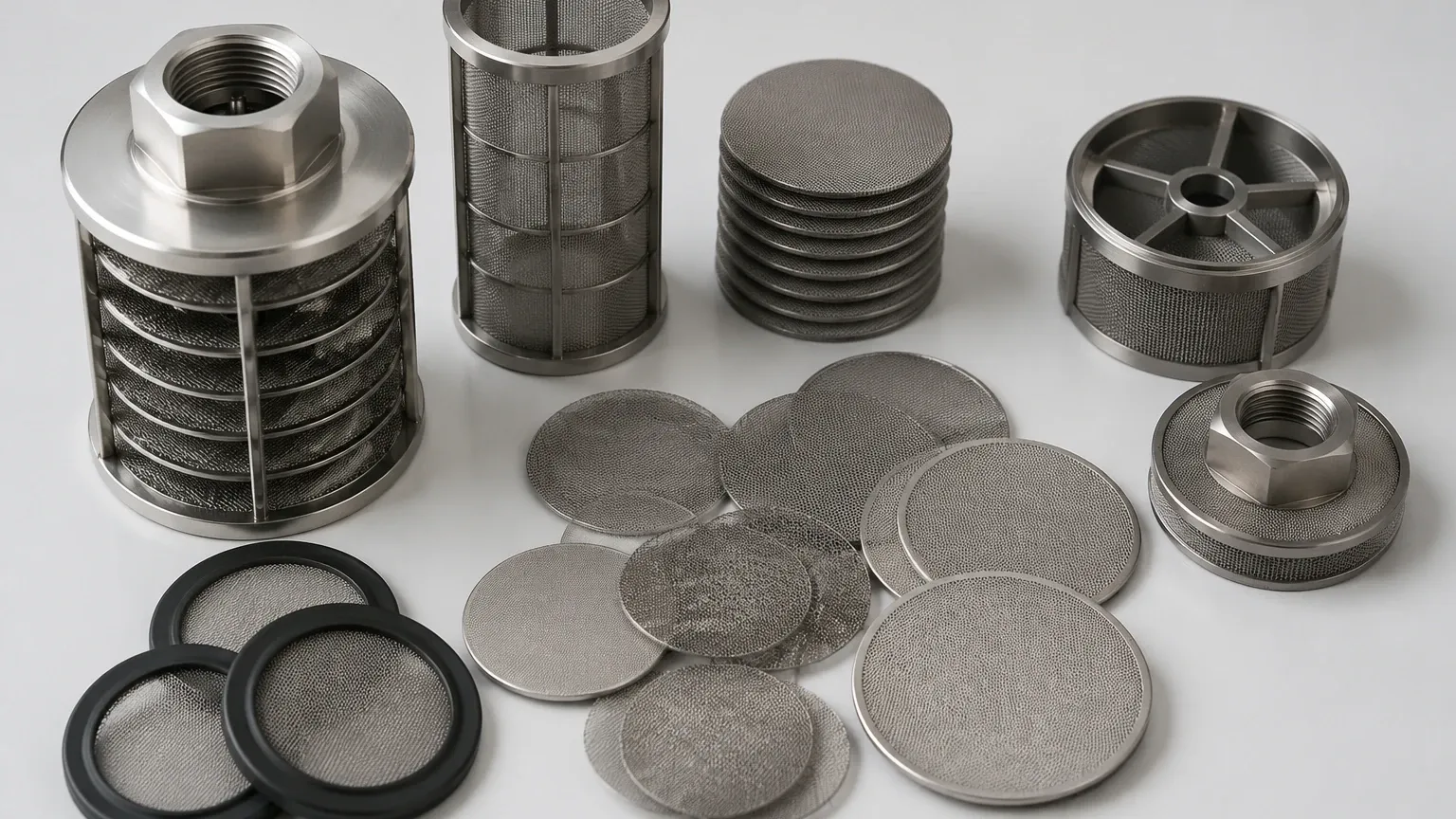
The primary disc filter meaning in industrial manufacturing refers to a flat, thin filtration element made from metallic wire mesh, sintered metal fibers, or perforated plates. These elements are designed to provide a specific surface area for filtration within a compact footprint. Unlike cylindrical filters, which often utilize depth filtration, disc filters are frequently employed for surface filtration or as part of a multi-stage filtration "pack."
A "filter pack" occurs when multiple layers of different mesh counts are combined. This configuration is engineered to provide graduated filtration, where coarser layers provide structural support and pre-filtration, while the finer internal layers achieve the target micron rating. This layering prevents the fine mesh from collapsing under high differential pressure and extends the service life of the component by distributing the particulate load.
Material Science in Disc Filtration
Material selection is the most critical factor in defining the performance and lifespan of a disc filter. Since these components are often exposed to aggressive chemicals or high-thermal loads, stainless steel is the industry standard.
Stainless Steel Alloys
* Grade 304: The most common stainless steel used for general-purpose filtration. It offers good corrosion resistance and is cost-effective for applications involving water, mild chemicals, and food products.
* Grade 316/316L: Contains molybdenum, which significantly enhances resistance to chlorides and acids. 316L (low carbon) is preferred for welded components to prevent carbide precipitation and ensure maximum corrosion resistance in pharmaceutical and chemical processing.
* Specialty Alloys: For extreme environments, materials like Hastelloy, Monel, or Inconel may be used. These are typically reserved for high-temperature applications or highly acidic environments where standard stainless steel would fail prematurely.
Media Types
1. Woven Wire Mesh: This is the most versatile media. The "meaning" of the filter is often defined by its weave type (Plain, Twill, or Dutch weave), which determines the pore size and mechanical strength.
2. Sintered Metal Mesh: Multiple layers of wire mesh are bonded together through a high-temperature vacuum sintering process. This creates a monolithic structure that is incredibly rigid and maintains precise pore geometry even under extreme pressure.
3. Sintered Metal Fiber (Felt): Non-woven stainless steel fibers are sintered to create a depth-filtration medium. This offers higher porosity and lower pressure drop compared to woven mesh.
Engineering Parameters: Micron Ratings and Weave Types
When evaluating a disc filter, engineers must look at the micron rating, which defines the size of the smallest particle the filter can reliably intercept. However, the "disc filter meaning" in a technical spec sheet is often qualified by two terms: nominal and absolute.
* Nominal Micron Rating: Indicates the filter's ability to retain the majority of particles of a specified size (e.g., 90% or 95%). This is common in less critical applications.
* Absolute Micron Rating: Refers to the diameter of the largest hard spherical particle that will pass through the filter under specific test conditions. In high-precision industries like polymer extrusion or aerospace hydraulics, absolute ratings are mandatory.
The Role of Weave Geometry
The geometry of the weave influences the flow characteristics. A Plain Dutch Weave provides a dense, strong mesh with relatively small openings, ideal for high-pressure filtration. A Twilled Dutch Weave allows for even finer filtration (down to 1-2 microns) by overlapping wires in a way that creates a tortuous path for the fluid, enhancing particle capture without significantly increasing the pressure drop.
Structural Variations: Single Layer vs. Multi-Layer Packs
The complexity of a filter disc depends on the application's mechanical demands.
Single Layer Discs
These are simple, cost-effective solutions used in low-pressure systems or as a final safety screen (last-chance filters). They are often used in gas filtration or simple liquid strainers where the flow rate is consistent and the particulate load is minimal.
Multi-Layer Filter Packs
In demanding environments like plastic recycling or chemical synthesis, a single layer of fine mesh would tear under the pressure. Here, Filter Discs & Packs are engineered as a composite. A typical five-layer pack might include:
1. Protective Layer: A coarse mesh to protect the inner layers during handling.
2. Filter Layer: The fine mesh that determines the micron rating.
3. Drainage Layer: A medium mesh that helps distribute the fluid flow.
4. Support Layer (x2): Heavy-duty mesh layers that provide the structural rigidity needed to withstand high differential pressures.
These layers are often spot-welded at the perimeter or bound by a metal rim (frame) to ensure they remain a single, cohesive unit during installation and operation.
Customization and Rimming Options
Industrial applications rarely use "off-the-shelf" sizes. Customization is a core part of the disc filter meaning in a B2B context. Manufacturers like Kaifil specialize in tailoring the physical dimensions and structural reinforcement to the specific housing of the client's machinery.
Edging and Rimming
To prevent fraying and ensure a leak-proof seal within the filter housing, discs are often finished with a metal rim. Common rim materials include:
* Aluminum: Lightweight and cost-effective, suitable for many standard industrial applications.
* Stainless Steel: Best for high-temperature or high-purity applications where material consistency is required.
* Copper/Brass: Often used in specific hydraulic or oil-based systems where a softer metal provides a better gasket-like seal.
Shape Variations
While circular discs are the standard, many systems require specialized shapes, including ovals, rectangles, or "kidney" shapes. Precision laser cutting or die-stamping ensures that these custom shapes maintain the integrity of the wire mesh edges, preventing loose wires from migrating downstream into the filtered fluid.
Key Applications Across Industries
The versatility of metal filter discs makes them indispensable across several high-stakes sectors:
* Polymer and Fiber Extrusion: In the production of plastics and synthetic fibers, molten polymer is forced through filter packs at extremely high pressures. The discs remove "gels" and un-melted particles that would otherwise cause breaks in the fiber or defects in the plastic film.
* Chemical Processing: Used for catalyst recovery and the filtration of aggressive solvents. The corrosion resistance of 316L stainless steel is paramount here.
* Food and Beverage: Stainless steel discs are used for straining oils, juices, and syrups. The material must be food-grade and easy to clean (CIP – Clean In Place) to meet hygiene standards.
* Hydraulics and Aerospace: These systems require "last-chance" filters to protect sensitive valves and actuators from metallic wear particles. The discs must be able to withstand high-frequency pressure pulsations.
* Pharmaceuticals: Precision discs are used in the filtration of active pharmaceutical ingredients (APIs), where batch purity and the absence of media migration are critical.
Evaluating Performance: Pressure Drop and Dirt Holding Capacity
For an engineer, the "meaning" of a high-quality filter disc is found in its efficiency curves. Two metrics are vital:
1. Clean Pressure Drop (ΔP): The resistance the filter offers to the fluid flow when it is clean. A lower initial pressure drop is preferred as it provides more "headroom" for the filter to load with contaminants before it needs cleaning or replacement.
2. Dirt Holding Capacity (DHC): This refers to the total amount of contaminant the filter can retain before the differential pressure reaches a terminal limit. Higher DHC means longer intervals between maintenance cycles, directly impacting the total cost of ownership.
By selecting the right weave and layering strategy, manufacturers can optimize the balance between filtration fineness and DHC.
Maintenance, Cleaning, and Replacement Cycles
Unlike disposable synthetic filters, stainless steel filter discs are often cleanable and reusable, which is a significant factor in their long-term value proposition.
Cleaning Methods
* Ultrasonic Cleaning: Uses high-frequency sound waves in a chemical bath to dislodge particles from deep within the mesh pores.
* Burn-off (Pyrolysis): For polymer applications, the discs are placed in an oven to carbonize the plastic, which is then removed via ultrasonic cleaning or high-pressure water jets.
* Backwashing: In some automated systems, the flow is momentarily reversed to flush contaminants off the surface of the disc.
When to Replace
Despite their durability, metal discs eventually experience fatigue or permanent clogging (blinding). If the pressure drop remains high even after a thorough cleaning cycle, or if there is any visible deformation or broken wires in the mesh, the disc must be replaced to prevent bypass or downstream contamination.
Conclusion: Selecting the Right Filter Disc
Understanding the disc filter meaning involves recognizing that these are not mere commodities but engineered components critical to the reliability of industrial processes. When sourcing Filter Discs & Packs, technical teams should confirm the exact chemical environment, operating temperature, maximum differential pressure, and the specific nature of the contaminants involved.
Working with a specialized manufacturer like Kaifil allows for the development of customized filtration solutions that go beyond standard specifications. Whether it is selecting the optimal weave for a specific micron rating or engineering a multi-layer sintered pack for extreme pressure, the right disc filter is defined by its ability to protect downstream equipment and ensure the purity of the final product.
