


Disc Filter Press
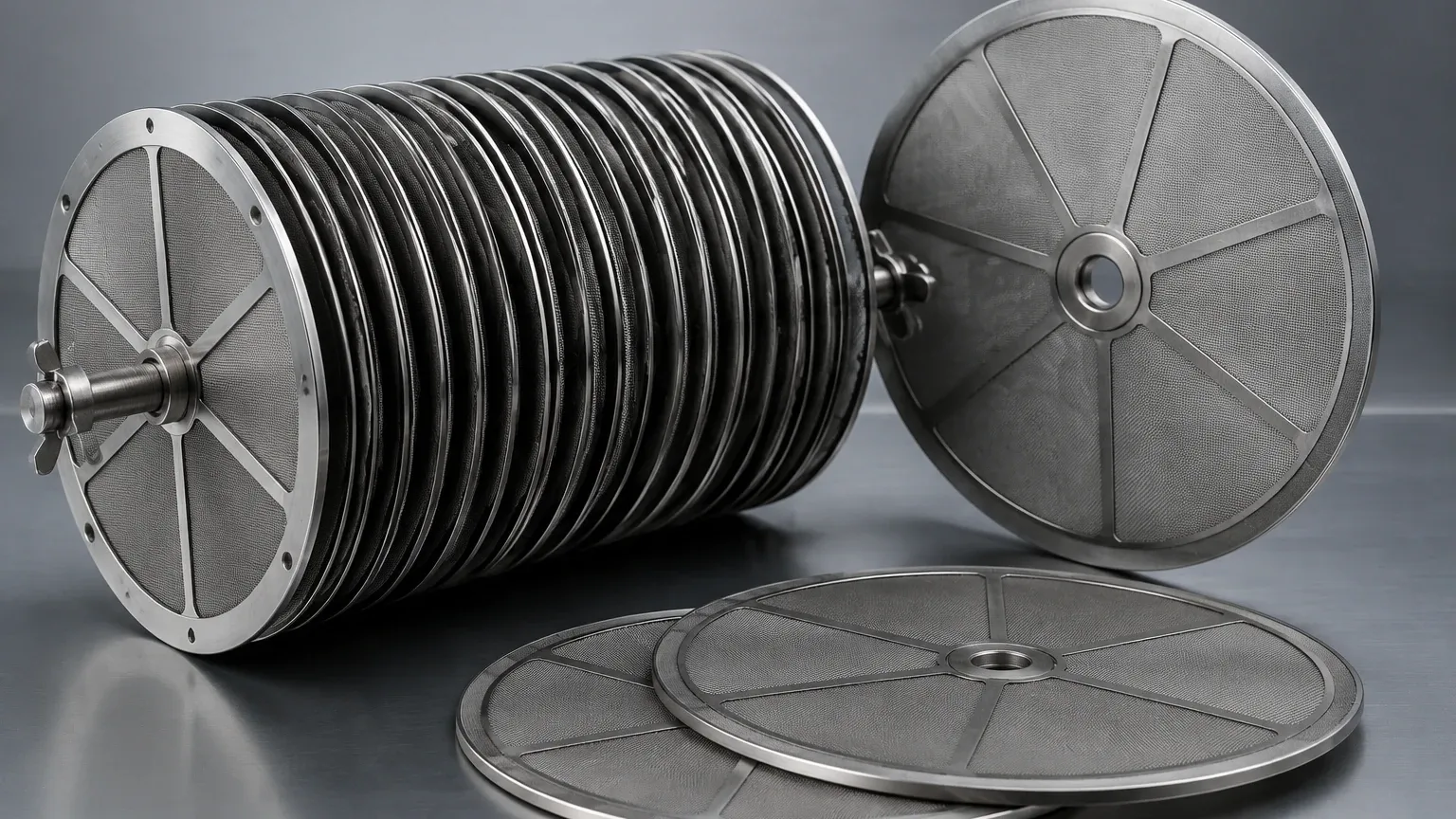
In the landscape of industrial solid-liquid separation, the disc filter press stands as a critical piece of equipment for high-volume dewatering and slurry processing. Designed to handle significant solids loads while maintaining a relatively small footprint, these systems are ubiquitous in mining, chemical processing, and large-scale wastewater treatment. However, the mechanical efficiency of a disc filter press is fundamentally limited by the quality and specification of its internal media. For engineers and procurement specialists, understanding the interplay between the machine's mechanical operation and the technical performance of Filter Discs & Packs is essential for optimizing throughput and minimizing downtime.
Understanding the Engineering Principles of the Disc Filter Press
A disc filter press operates on the principle of continuous vacuum or pressure filtration. Unlike a plate and frame filter press, which operates in batches, a disc filter utilizes a series of rotating circular discs mounted on a central horizontal shaft. Each disc is divided into multiple independent segments or sectors. As the shaft rotates, these sectors pass through a slurry trough, where a vacuum is applied internally.
This vacuum draws the liquid (filtrate) through the filter media, leaving the solid particles to accumulate on the surface of the disc, forming what is known as a "filter cake." As the disc continues to rotate out of the slurry, the vacuum remains active to further dewater the cake. Finally, a brief pulse of compressed air or a mechanical scraper removes the dried cake before the sector re-enters the slurry to begin the cycle again. The efficiency of this cycle depends on the precise permeability and structural integrity of the filter media used within each sector.
The Critical Role of Filter Discs & Packs in System Efficiency
The choice of filtration media is the most significant factor in determining the success of a disc filter press application. While the machine provides the mechanical motion and pressure differential, the Filter Discs & Packs provide the actual separation barrier. In demanding industrial environments, stainless steel wire mesh has largely superseded traditional fabric cloths due to its superior mechanical strength and resistance to chemical degradation.
Filter packs for disc filters are often multi-layered components. A typical high-performance pack might include:
* A Surface Layer: A fine stainless steel wire mesh that determines the filtration accuracy (micron rating).
* Support Layers: Coarser mesh layers that provide structural rigidity and prevent the fine mesh from collapsing under vacuum or pressure.
* Drainage Layers: Optimized mesh structures that facilitate the rapid flow of filtrate toward the central shaft, reducing internal resistance.
By utilizing specialized metal filter packs, engineers can achieve consistent pore sizes that are not subject to the stretching or warping common in polymer-based media. This stability ensures that the filtration characteristics remain constant throughout the service life of the component.
Material Selection and Technical Specifications
Material compatibility is a primary engineering consideration when specifying components for a disc filter press. Industrial slurries can range from highly acidic chemical mixtures to abrasive mineral tailings. Consequently, the alloy used for the filter discs must be selected based on the specific chemistry of the process fluid.
1. 304/304L Stainless Steel: The standard choice for general industrial applications where basic corrosion resistance is required.
2. 316/316L Stainless Steel: Preferred for pharmaceutical, food and beverage, and chemical applications due to its increased resistance to chlorides and pitting.
3. 904L and Duplex Alloys: Reserved for highly aggressive environments, such as seawater processing or concentrated acid filtration, where standard stainless steels might fail prematurely.
Beyond metallurgy, the weave type of the wire mesh significantly impacts performance. Plain weaves offer high flow rates and easy cleaning, while Dutch weaves (including Reverse Dutch) provide higher mechanical strength and the ability to capture much finer particles. For a disc filter press, the weave must be balanced between "cake release" properties—the ease with which the solids drop off the disc—and "blinding resistance."
Performance Evaluation: Filtration Accuracy and Flow Rates
When evaluating Filter Discs & Packs for a disc filter press, engineers must focus on two primary metrics: absolute micron rating and permeability.
Filtration Accuracy
Filtration accuracy is defined by the size of the smallest particle the mesh can reliably retain. In a disc filter press, the initial layer of solids (the "pre-coat") often performs the majority of the fine filtration. However, the mesh itself must be fine enough to support the formation of this cake without allowing excessive "fines" to pass into the filtrate during the start of the cycle. Standard industrial disc filters typically operate in the range of 10 to 200 microns, depending on the particle size distribution of the slurry.
Flow Rates and Pressure Drop
The permeability of the filter pack determines how much liquid can pass through the media at a given pressure differential ($\\Delta P$). A common mistake is selecting a mesh that is too fine, which leads to high internal resistance, reduced throughput, and increased energy consumption by the vacuum pumps. Engineering the pack with a high-porosity drainage layer helps maintain high flow rates even as the cake thickness increases during the rotation cycle.
Common Operational Risks and Mitigation Strategies
Operating a disc filter press involves managing several technical risks that can compromise production targets.
* Media Blinding: This occurs when particles become lodged within the pores of the mesh, permanently reducing flow. In stainless steel packs, this is mitigated through precise wire geometry and regular backwashing or ultrasonic cleaning.
* Mechanical Fatigue: The constant cycling between vacuum and air-blow stages creates mechanical stress on the filter sectors. If the filter pack is not properly tensioned or if the spot welding is insufficient, the mesh can crack or delaminate. High-quality manufacturing ensures that the edges of the packs are reinforced and the layers are securely bonded.
* Bypass and Leaks: If the filter discs do not seat perfectly against the sector frames, unfiltered slurry can bypass the media. Custom-engineered packs with precision-cut dimensions and integrated gaskets or reinforced borders are necessary to ensure a hermetic seal.
Customization for OEM and Specialized Industrial Applications
No two disc filter press applications are identical. Variations in slurry viscosity, solids concentration, and temperature require customized filtration solutions. Professional manufacturers like Kaifil specialize in developing bespoke Filter Discs & Packs that match the exact mechanical specifications of various OEM equipment brands.
Customization options often include:
* Variable Layer Configurations: Adjusting the number and type of mesh layers to balance strength and flow.
* Specialized Edging: Using U-shaped metal binding or specialized welding to ensure the pack fits perfectly into the sector frame without gaps.
* Surface Treatments: Applying coatings or polishing to improve cake release for sticky or cohesive materials.
For engineers, working with a manufacturer that understands the nuances of wire mesh behavior allows for the optimization of the disc filter press beyond the standard factory settings.
Maintenance, Cleaning, and Replacement Cycles
The total cost of ownership (TCO) of a disc filter press is heavily influenced by the lifespan of the filter media. While stainless steel discs have a higher initial cost than cloth, their durability often results in a lower TCO over time.
Maintenance protocols should include:
* Regular Inspection: Checking for signs of mesh wear, particularly near the discharge scrapers.
* In-Situ Cleaning: Utilizing high-pressure spray bars to remove residual solids between cycles.
* Deep Cleaning: Periodically removing the sectors for ultrasonic cleaning or chemical pickling to restore original permeability if blinding occurs.
Knowing when to replace a filter pack is a matter of monitoring the filtrate quality and the pressure drop. A sudden increase in filtrate turbidity suggests a breach in the mesh, while a sustained drop in throughput despite cleaning indicates permanent blinding.
Pre-Purchase Technical Requirements: A Guide for Engineers
Before procuring new or replacement Filter Discs & Packs for a disc filter press, technical teams should confirm the following data points to ensure compatibility and performance:
1. Dimensional Accuracy: Provide detailed drawings of the sector frame, including the inner and outer radii and the thickness of the mounting area.
2. Slurry Characteristics: Define the pH, temperature, and particle size distribution. This dictates the material (e.g., 316L vs. 904L) and the micron rating.
3. Operating Pressure: Specify the maximum vacuum or positive pressure the system will exert on the media.
4. Cake Release Method: Indicate whether the system uses air-blow, scrapers, or water jets, as this influences the choice of surface mesh weave.
5. Filtrate Requirements: Define the maximum allowable solids concentration in the filtrate to determine the necessary filtration efficiency.
By focusing on these factual engineering boundaries, purchasing teams can secure filtration components that not only fit their disc filter press but also enhance the overall reliability and efficiency of their industrial process.
