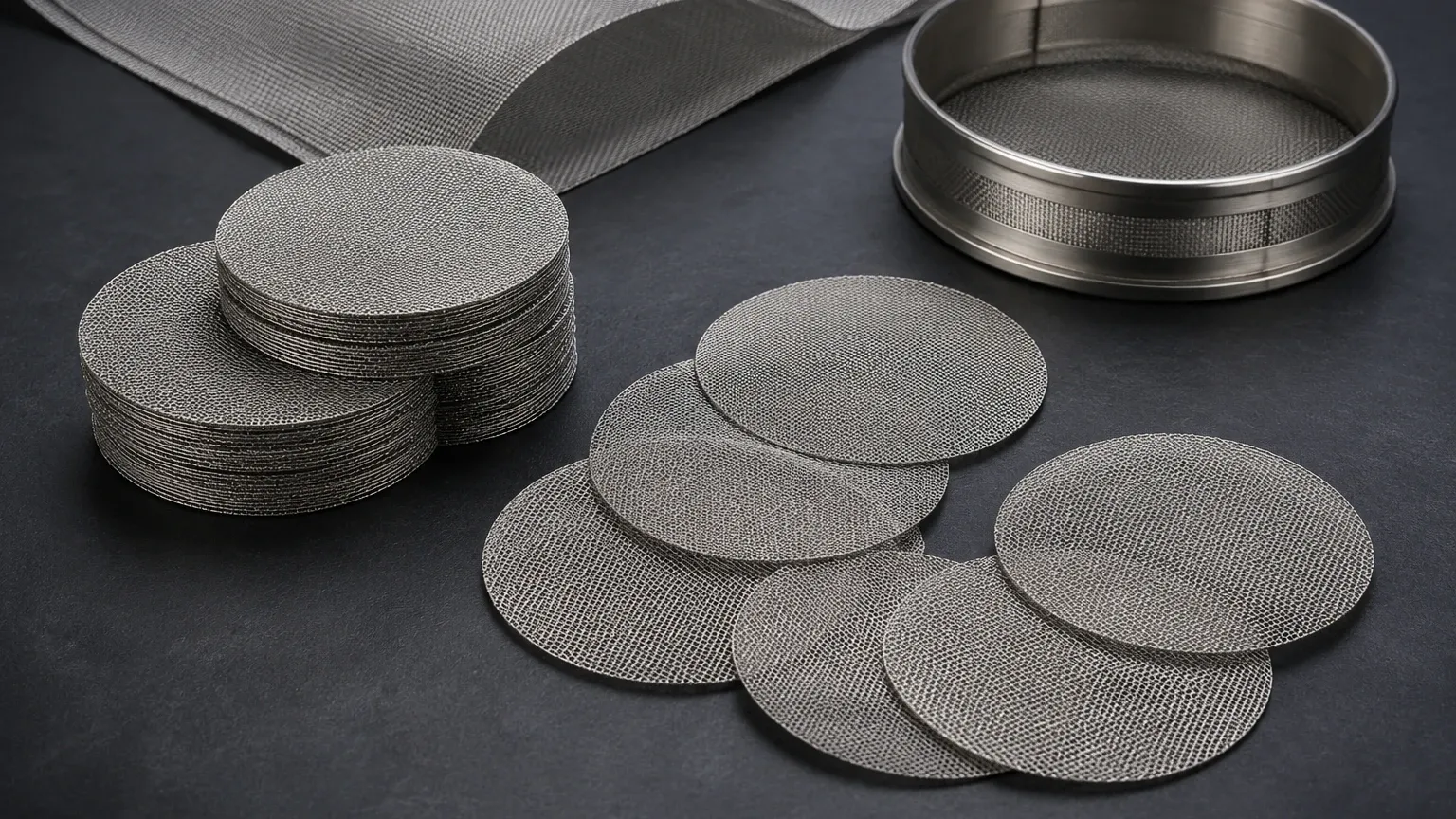
Filter 2 Pack
In industrial filtration, the term "filter 2 pack" often refers to specialized multi-layer configurations or standardized replacement sets designed for high-precision machinery. For engineers and procurement specialists, selecting the correct Filter Discs & Packs involves more than just matching dimensions; it requires a deep understanding of fluid dynamics, material compatibility, and the mechanical stresses of the specific application. Whether used in plastic extrusion, chemical processing, or hydraulic systems, these components are critical to maintaining product purity and protecting downstream equipment.
Understanding the Structure of Industrial Filter Discs & Packs
Industrial filter packs are rarely single sheets of wire cloth. Instead, they are engineered assemblies composed of multiple layers of stainless steel wire mesh. A typical "pack" or multi-layer disc is designed to provide both fine filtration and structural integrity.
Layer Composition and Function
The efficiency of a filter pack is determined by the synergy between its layers. In a multi-layer configuration, the layers usually serve distinct purposes:
1. Filtration Layer: This is the core component, often a fine Dutch weave or square weave mesh, which determines the micron rating. It is responsible for capturing particles of a specific size.
2. Support Layer: Because fine filtration mesh is often delicate, it is backed by a coarser, stronger mesh. This prevents the filtration layer from deforming or tearing under high pressure.
3. Drainage Layer: In complex assemblies, a third layer may be added to facilitate the even distribution of fluid across the entire surface area, reducing localized pressure build-up.
Bonding Methods
To ensure these layers function as a single unit, manufacturers like Kaifil utilize various bonding techniques. Spot welding is common for simple packs, ensuring the layers stay aligned during installation. For more demanding applications, edge binding—using aluminum, stainless steel, or copper rims—is employed to prevent bypass leakage and provide a clean, finished edge that fits precisely into the machine's filter recessed area.
Engineering Considerations for Multi-Layer Filter Configurations
When specifying a filter 2 pack or multi-stage disc system, engineers must calculate the balance between filtration fineness and flow resistance. A common mistake in procurement is choosing a mesh that is too fine for the pump capacity, leading to excessive pressure drops and premature failure.
Pressure Drop and Flow Rate
Every filter introduces a resistance to flow, known as the pressure drop (ΔP). As the filter captures contaminants, this resistance increases. A well-engineered filter pack utilizes a graduated density approach—where coarser layers catch larger particles before they reach the fine filtration layer. This "depth filtration" effect significantly extends the service life of the pack compared to a single-layer disc.
Micron Rating: Absolute vs. Nominal
It is essential to distinguish between nominal and absolute micron ratings. A nominal rating indicates the filter's ability to retain the majority of particles of a certain size, whereas an absolute rating (often achieved through high-precision stainless steel mesh) guarantees the retention of all particles above a specific dimension. For critical applications like pharmaceutical processing or fine chemical synthesis, absolute ratings are non-negotiable.
Applications of Filter 2 Pack and Multi-Stage Filtration
The utility of standardized filter packs spans across several heavy industries. The choice of a "2 pack" or dual-stage system is often driven by the need for redundancy or staged refinement of the process fluid.
Polymer and Plastic Extrusion
In the extrusion of plastics and fibers, molten polymer is forced through a "breaker plate" containing filter packs. These packs remove "gels" (unmelted polymer) and foreign contaminants. Using a dual-pack system allows for a primary coarse filter to protect a secondary fine filter, ensuring the final extruded product—such as thin films or high-tenacity yarns—is free of defects.
Chemical and Petrochemical Processing
Corrosive fluids and high temperatures require the durability of stainless steel. Filter packs in these environments are often subjected to backwashing or chemical cleaning. The mechanical strength of 304 or 316L stainless steel ensures that the filter maintains its pore geometry even after multiple cleaning cycles, providing a lower total cost of ownership than disposable alternatives.
Hydraulic and Lubrication Systems
Precision hydraulic components are sensitive to particulate matter. Multi-layer filter discs are used in high-pressure lines to ensure that wear particles from pumps or valves do not circulate through the system, which could lead to catastrophic component failure.
Material Selection and Durability in Harsh Environments
The performance of Filter Discs & Packs is heavily dependent on the metallurgy of the wire mesh. While many options exist, stainless steel remains the industry standard for its balance of cost and performance.
* Stainless Steel 304: The most common grade, offering excellent strength and basic corrosion resistance. It is suitable for food and beverage applications and general industrial use where high acidity or alkalinity is not present.
* Stainless Steel 316L: Containing molybdenum, 316L provides superior resistance to chlorides and acids. The "L" denotes low carbon content, which is crucial for components that require welding, as it prevents intergranular corrosion in the heat-affected zone.
* Specialty Alloys: For extreme environments, materials like Hastelloy or Inconel may be used, though these are typically reserved for highly specialized chemical reactors or aerospace applications.
Procurement and Maintenance: Why a Filter 2 Pack Strategy Matters
From a purchasing perspective, the concept of a "filter 2 pack" often relates to inventory management and maintenance scheduling. In many industrial settings, filters are replaced in pairs or sets to ensure balanced flow and to minimize downtime.
Inventory Management
Standardizing on multi-unit packs allows maintenance teams to have ready-to-use replacements on hand. In continuous production environments, the cost of a machine sitting idle while waiting for a single filter disc far outweighs the cost of maintaining a robust stock of filter packs.
Replacement Cycles and Monitoring
Monitoring the pressure differential across the filter pack is the most reliable way to determine when a replacement is needed. Automated systems can trigger an alarm when the ΔP reaches a pre-set limit. However, in many manual operations, the "2 pack" strategy involves replacing both the primary and secondary filters simultaneously to reset the system's baseline pressure, ensuring predictable performance for the next production run.
Customization Options for Precision Filtration
No two industrial processes are identical, which is why customization is a hallmark of professional filtration manufacturing. When ordering filter packs, technical teams should confirm several variables with the manufacturer:
1. Shape and Dimensions: While circular discs are standard, many machines require rectangular, oval, or kidney-shaped packs. Precision laser cutting ensures these shapes fit perfectly without gaps.
2. Mesh Weave Patterns: Depending on the fluid viscosity, one might choose a Plain Square Weave for high flow or a Twilled Dutch Weave for ultra-fine filtration (down to 5 microns or less).
3. Layer Sequencing: The order of the layers can be customized to handle specific contaminant loads. For example, a "sandwich" construction with fine mesh between two layers of coarse mesh provides maximum protection against mechanical damage from both sides.
Conclusion: Selecting the Right Filtration Partner
Achieving optimal filtration performance requires more than just buying a commodity product. It requires a partnership with a manufacturer that understands the engineering nuances of wire mesh and the rigors of industrial applications.
When evaluating Filter Discs & Packs, engineers should look for suppliers like Kaifil that offer comprehensive customization, from material selection to specialized edge binding. By focusing on the technical specifications—such as micron rating, material grade, and structural design—purchasing teams can ensure they are acquiring a filter 2 pack solution that not only protects their equipment but also optimizes their overall production efficiency.
Before finalizing a purchase, always confirm the operating temperature, maximum pressure, and chemical composition of the process fluid. This data allows the manufacturer to recommend the most durable and cost-effective filter configuration for your specific needs, ensuring long-term reliability in even the most demanding industrial environments.