


Filter Disc Technology
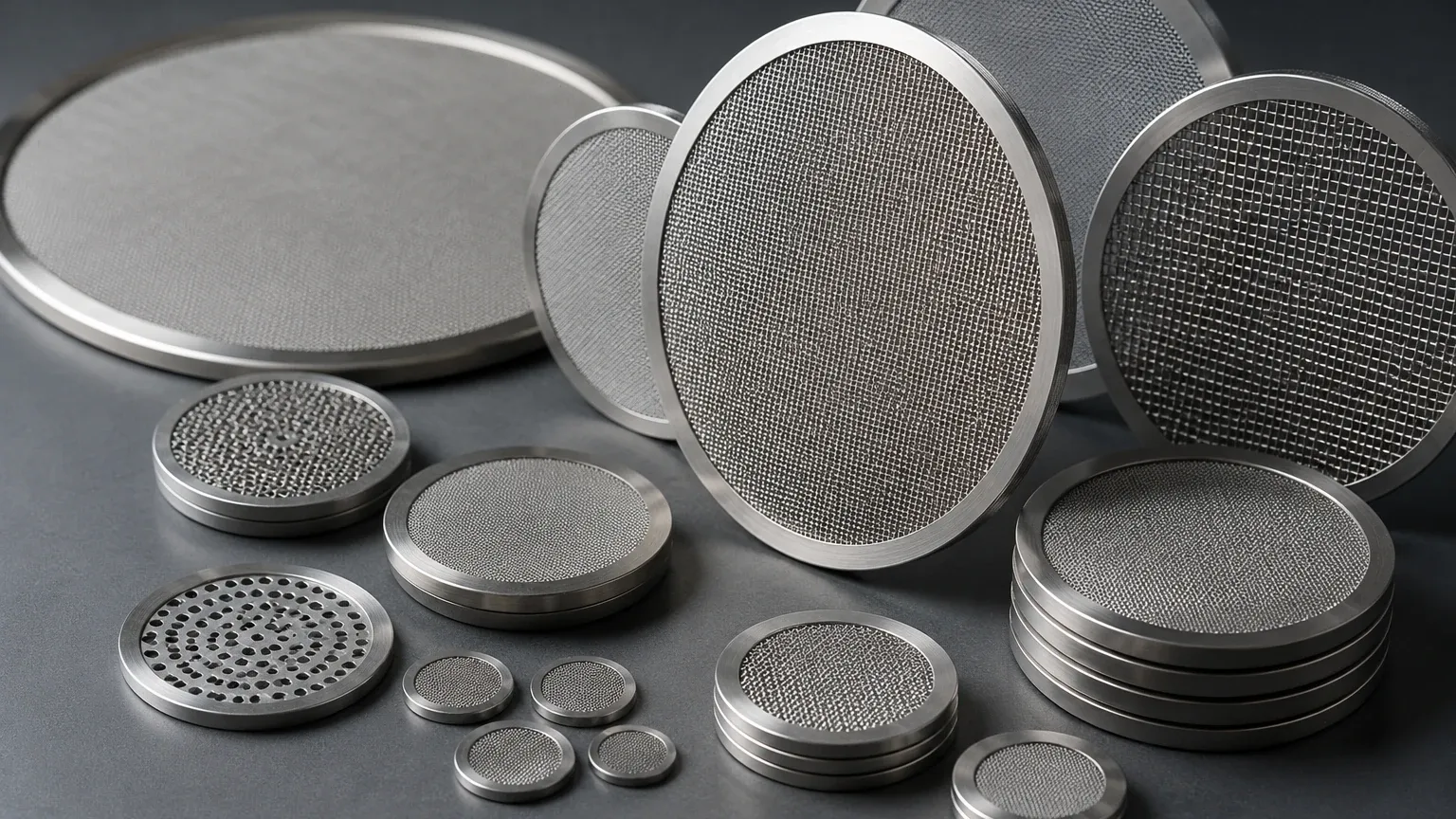
In the landscape of industrial separation, filter disc technology represents a critical intersection of material science and mechanical engineering. These components, often appearing as simple circular meshes, are engineered to provide precise particulate control under extreme conditions of temperature, pressure, and chemical exposure. For engineers and procurement teams in the chemical processing, pharmaceutical, and polymer industries, understanding the nuances of Filter Discs & Packs is essential for optimizing system uptime and ensuring product purity.
As industrial processes become more demanding, the reliance on advanced filter disc technology has grown. These components are no longer viewed as mere consumables but as integral parts of the process stream that influence flow dynamics, pressure stability, and the overall efficiency of the filtration system.
The Fundamentals of Filter Disc Construction
At its core, filter disc technology relies on the manipulation of metallic wires to create a controlled pore structure. The most common material used is stainless steel, specifically grades 304, 316, and 316L, due to their inherent resistance to oxidation and corrosion. However, the performance of a filter disc is determined less by the alloy alone and more by the architecture of the weave and the assembly method.
Wire Mesh Weave Types
The geometry of the weave dictates the filtration characteristics. Engineers must choose between several primary types:
* Plain Weave: The simplest form where each warp wire crosses over and under each weft wire. This provides a high open area and low pressure drop, suitable for coarse filtration.
* Twill Weave: Each weft wire passes over and under two warp wires. This allows for a heavier wire diameter for a given mesh count, increasing the mechanical strength of the disc.
* Dutch Weave: This utilizes a larger diameter warp wire and a smaller diameter weft wire woven closely together. The result is a dense, strong mesh with small, curved openings that provide superior fine filtration and high pressure resistance.
Single-Layer vs. Multi-Layer Discs
Single-layer discs are often used in applications where the pressure differential is low and the filtration requirements are relatively coarse. However, for high-pressure environments like polymer extrusion or hydraulic systems, multi-layer packs are preferred. These packs combine different mesh counts to create a graduated filtration effect, where the outer layers provide structural support and coarse pre-filtration, while the inner layers perform the fine separation.
Advanced Sintering and Bonding Techniques
A significant advancement in filter disc technology is the use of vacuum sintering. In this process, multiple layers of wire mesh are bonded together through heat and pressure without the use of binders or adhesives. This creates a monolithic structure that maintains its pore size even under extreme mechanical stress.
Sintered filter discs offer several advantages for industrial users:
1. Structural Integrity: The wires cannot shift or migrate, ensuring consistent filtration performance over the life of the component.
2. Ease of Cleaning: Because the structure is rigid, these discs can be backwashed or ultrasonically cleaned more effectively than loose-mesh packs.
3. No Media Migration: In high-purity industries like pharmaceuticals, the risk of wire fragments entering the process stream is eliminated through the sintering process.
For applications that do not require the full rigidity of sintering, spot-welded or rimmed packs are used. Rimmed packs feature an aluminum, stainless steel, or copper border that holds the layers together and provides a reliable sealing surface for the filter housing.
Engineering Considerations for Selection
Selecting the appropriate filter disc requires a balance of several technical variables. Engineers must look beyond the micron rating to understand how the disc will behave within the specific fluid dynamics of their system.
Micron Rating and Efficiency
It is important to distinguish between nominal and absolute micron ratings. A nominal rating refers to the ability of the mesh to retain a majority of particles of a certain size, while an absolute rating indicates that 99.9% of particles above that size will be captured. In critical applications, such as the protection of high-pressure nozzles or sensitive valves, absolute ratings are mandatory.
Pressure Drop (ΔP)
The pressure drop across a filter disc is a function of the mesh’s open area, the fluid's viscosity, and the flow velocity. A common engineering mistake is selecting a mesh that is too fine for the application, leading to a high initial pressure drop and a shortened service life. Filter disc technology allows for the optimization of wire diameter and weave density to achieve the required filtration fineness while maintaining a manageable ΔP.
Chemical and Thermal Compatibility
While stainless steel is the standard, certain environments require specialized alloys. For instance, in highly acidic or saline environments, Hastelloy or Monel may be necessary. Furthermore, the thermal expansion coefficients of the filter material must be matched with the housing to prevent bypass leakage at high operating temperatures.
Applications Across Key Industries
Filter disc technology is ubiquitous in modern manufacturing, but its implementation varies significantly depending on the sector.
Polymer and Fiber Extrusion
In the production of plastics and synthetic fibers, filter discs are used in "screen changers" to remove contaminants from the molten polymer. These discs must withstand pressures exceeding 5,000 PSI and temperatures up to 300°C. The use of multi-layer sintered packs is common here to prevent the mesh from deforming under the high viscosity of the melt.
Pharmaceutical and Biotechnology
In these sectors, the primary concern is purity and the prevention of cross-contamination. Filter discs are used in chromatography columns, dryers, and reactors. The smooth surface of a high-quality stainless steel disc allows for complete sterilization and prevents the accumulation of biological films.
Chemical Processing
Chemical plants utilize filter discs for catalyst recovery and the removal of impurities from corrosive liquids. The durability of stainless steel wire mesh ensures that the filters can withstand aggressive cleaning cycles, including the use of strong solvents or high-pressure steam.
Food and Beverage
Filtration in the food industry requires materials that are FDA-compliant and easy to sanitize. Filter discs are used in the processing of edible oils, beverages, and syrups to ensure clarity and remove any particulate matter introduced during the raw material handling phase.
Customization and OEM Capabilities
One of the strengths of modern filter disc technology is the ability to customize components to fit specific machinery. Kaifil specializes in providing tailored solutions that meet unique engineering specifications. Customization options include:
* Shape and Geometry: While circular discs are standard, technology now allows for the production of oval, kidney-shaped, or rectangular packs to fit proprietary equipment designs.
* Edge Treatments: Depending on the sealing requirements, discs can be supplied with spot-welded edges, hemmed edges, or specialized metal gaskets.
* Layer Configuration: Engineers can specify the exact sequence of mesh layers to achieve a specific dirt-holding capacity or flow rate.
By working closely with a manufacturer that understands the nuances of wire mesh behavior, purchasing teams can reduce the total cost of ownership. A well-designed filter disc may have a higher initial cost but will offer a longer service life and lower maintenance requirements, ultimately proving more cost-effective.
Maintenance and Replacement Cycles
Determining when to replace a filter disc is a critical aspect of process management. In most industrial systems, the replacement cycle is dictated by the pressure drop. As the mesh becomes loaded with contaminants, the ΔP increases. Once it reaches a predetermined threshold, the disc must be cleaned or replaced to prevent system failure or media breakthrough.
For reusable stainless steel discs, cleaning protocols often include:
* Ultrasonic Cleaning: Using high-frequency sound waves in a solvent bath to dislodge particles from deep within the mesh.
* Burn-off (Pyrolysis): Heating the disc in a controlled environment to carbonize organic contaminants, followed by ultrasonic cleaning to remove the ash.
* Chemical Cleaning: Using acids or alkalis to dissolve specific types of scaling or deposits.
However, it is important to note that repeated cleaning can eventually fatigue the wire mesh, especially in high-pressure applications. Regular inspection for wire thinning or mesh distortion is necessary to ensure the continued integrity of the filtration process.
Conclusion: The Importance of Precision in Filtration
Filter disc technology is a fundamental pillar of modern industrial processing. Whether it is ensuring the clarity of a pharmaceutical product or protecting downstream equipment from damage, the performance of these components is non-negotiable. By understanding the technical specifications of wire mesh, the benefits of sintering, and the importance of application-specific design, engineers can make informed decisions that enhance the reliability and efficiency of their operations.
As industries move toward more automated and continuous production models, the demand for high-performance, durable filtration solutions will only increase. Investing in precision-engineered Filter Discs & Packs is not just a procurement choice; it is a commitment to process excellence and product quality.
