


Filter House Packages
In industrial filtration, the term "filter house packages" refers to the integrated assembly of a containment vessel (the housing) and the precision internal media designed to remove contaminants from fluid or gas streams. For engineers and procurement teams in sectors such as chemical processing, pharmaceuticals, and hydraulic systems, selecting a filter house package is not merely a matter of purchasing a container; it is a critical engineering decision that impacts system uptime, product purity, and long-term operational costs.
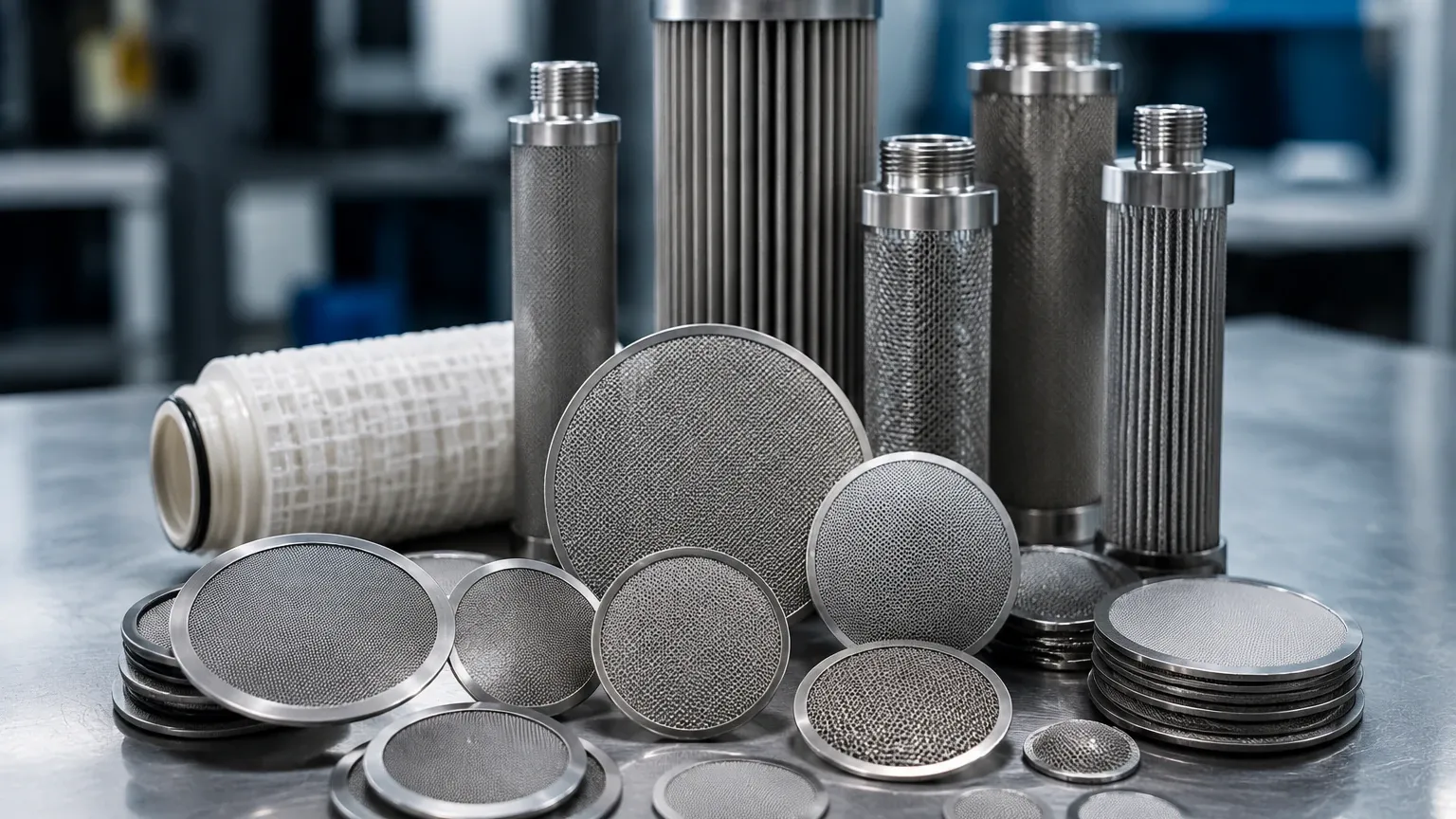
A well-engineered package ensures that the internal filter elements—most notably Filter Discs & Packs—are perfectly aligned with the flow dynamics and chemical requirements of the application. This guide examines the technical nuances of these packages, providing the factual foundation necessary for informed industrial selection.
Technical Components of Filter House Packages
An industrial filter house package is generally composed of three primary elements: the pressure vessel (housing), the internal support structures, and the filtration media. The housing must be designed to withstand the maximum operating pressure of the system, often adhering to standards such as ASME Section VIII for pressure vessels.
However, the performance of the package is ultimately dictated by the internal components. In high-precision applications, stainless steel is the material of choice due to its thermal stability and corrosion resistance. The internal assembly often utilizes multilayered mesh structures or sintered metal components to achieve specific micron ratings. When evaluating filter house packages, engineers must confirm that the internal geometry minimizes "dead zones" where fluid can stagnate, as this can lead to bacterial growth in food applications or chemical degradation in processing plants.
Material Engineering: SS304 vs. SS316L
The choice of alloy within a filter house package is a fundamental engineering consideration. While SS304 is suitable for many general industrial water treatments and hydraulic applications, SS316L is typically required for environments involving high salinity, acidic chemicals, or pharmaceutical-grade purity.
SS316L contains molybdenum, which significantly enhances its resistance to pitting and crevice corrosion in chloride-rich environments. Furthermore, for applications involving high temperatures—such as steam filtration or polymer melt processing—the structural integrity of the filter house package must be verified against thermal expansion coefficients. Using high-quality stainless steel ensures that the filter elements do not shed fibers or metallic particles into the downstream flow, a risk often associated with lower-grade or non-metallic alternatives.
The Role of Precision Filter Discs & Packs
At the heart of many complex filter house packages are Filter Discs & Packs. These components are responsible for the actual separation process. Unlike simple single-layer screens, industrial filter packs often utilize a combination of different mesh counts to create a graduated filtration effect.
Multilayer Construction
In a typical multilayer pack, the layers are arranged to optimize both dirt-holding capacity and structural strength:
1. Filtration Layer: The primary layer with the target micron rating (e.g., 5μm, 20μm).
2. Support Layers: Coarser mesh layers that provide mechanical rigidity to the filtration layer, preventing it from collapsing under high differential pressure.
3. Drainage Layers: These ensure that the fluid flows evenly across the entire surface area of the disc, preventing localized blinding.
Sintering and Welding Processes
For high-pressure filter house packages, these discs are often sintered. Sintering involves heating the multilayer mesh in a vacuum furnace to bond the contact points of the wires without melting them. This creates a robust, monolithic structure that maintains its pore size even under extreme mechanical stress. The edges of these packs are frequently encapsulated with a stainless steel rim or aluminum binding to ensure a leak-proof seal within the housing.
Engineering Considerations for Flow and Pressure
When integrating filter house packages into a production line, engineers must calculate the clean pressure drop ($ΔP$) and the terminal pressure drop. The clean pressure drop is the resistance offered by the filter when it is new. A package that starts with a high $ΔP$ will have a shorter service life before reaching the terminal pressure drop, which is the point at which the filter must be cleaned or replaced.
Key factors influencing flow dynamics include:
* Effective Filtration Area (EFA): Increasing the EFA within the same housing volume—often through pleated designs or multiple stacked discs—reduces the flux (flow per unit area), thereby extending the time between maintenance cycles.
* Viscosity Adjustments: In hydraulic or polymer applications, fluid viscosity significantly impacts pressure drop. Filter house packages must be sized according to the highest expected viscosity (usually at start-up temperatures).
* Vessel Entry/Exit Geometry: The port sizes of the housing should match the pipeline diameter to prevent turbulence, which can cause mechanical vibration and premature wear of the internal filter packs.
Evaluation Criteria for Industrial Procurement
Selecting a supplier for filter house packages requires a technical audit of their manufacturing capabilities. Because these packages are often custom-engineered for specific OEM requirements, off-the-shelf solutions rarely suffice for specialized chemical or pharmaceutical processes.
Customization Capabilities
Buyers should evaluate whether the manufacturer can customize the following:
* Micron Ratings: Precision ranges from 1 micron to several hundred microns.
* Gasket and Seal Compatibility: Ensuring that O-rings (Viton, EPDM, PTFE) are compatible with the process fluid.
* Surface Finish: For food and beverage or pharmaceutical applications, the internal surfaces of the housing and the filter media may require electropolishing to achieve a specific Ra (roughness average) value.
Quality Control Standards
Reliable filter house packages must undergo rigorous testing. This includes bubble point testing to verify the integrity of the pore size, pressure decay testing for the housing, and material traceability (MTRs) to ensure the stainless steel meets the specified grade standards. For engineers, receiving a product with documented filtration efficiency (Beta ratios) is essential for process validation.
Common Risks and Mitigation Strategies
Failure to properly specify a filter house package can lead to several industrial risks. One common issue is "bypass," where the process fluid leaks around the edges of the filter element rather than passing through the media. This is often caused by poor rim construction on the filter discs or improper seating within the housing. Specifying precision-welded or sintered rims can mitigate this risk.
Another risk is media migration. In low-quality filter packages, fragments of the wire mesh or bonding agents can break off and contaminate the downstream product. Using high-strength stainless steel mesh and avoiding adhesive-based construction in favor of welding or sintering ensures that the filter remains intact throughout its lifecycle.
Finally, differential pressure spikes can cause the internal elements to deform. Engineers should ensure that the filter house package includes a safety margin, where the collapse pressure of the internal Filter Discs & Packs is significantly higher than the maximum pressure the system's pump can deliver.
Maintenance and Total Cost of Ownership
While the initial purchase price of a filter house package is a factor, the Total Cost of Ownership (TCO) is driven by maintenance and replacement frequency. Stainless steel filter elements offer a significant advantage in TCO because they are often cleanable and reusable.
Methods such as ultrasonic cleaning, backwashing, or chemical cleaning can restore the flow characteristics of stainless steel mesh, whereas disposable synthetic filters must be replaced and discarded. When calculating TCO, procurement teams should factor in the cost of downtime, the labor required for filter changes, and the environmental impact of waste disposal. A robustly designed stainless steel package, while higher in initial cost, typically provides a lower cost-per-liter of filtered product over the life of the system.
Conclusion: Confirming Technical Requirements
Before finalizing a specification for filter house packages, engineers should confirm the following data points with their manufacturer:
1. Operating Parameters: Maximum temperature, maximum pressure, and expected flow rate.
2. Fluid Characteristics: Chemical composition, viscosity, and the nature of the contaminants (hard vs. soft particles).
3. Regulatory Compliance: Requirements for FDA, 3A, or specific industry certifications.
4. Interface Details: Connection types (flanged, NPT, Tri-clamp) and physical space constraints for installation.
By focusing on these factual boundaries and prioritizing the quality of internal components like precision wire mesh and sintered packs, industrial operations can achieve reliable, high-performance filtration that protects downstream equipment and ensures product consistency.
