


Filter Pack Sand Sizes
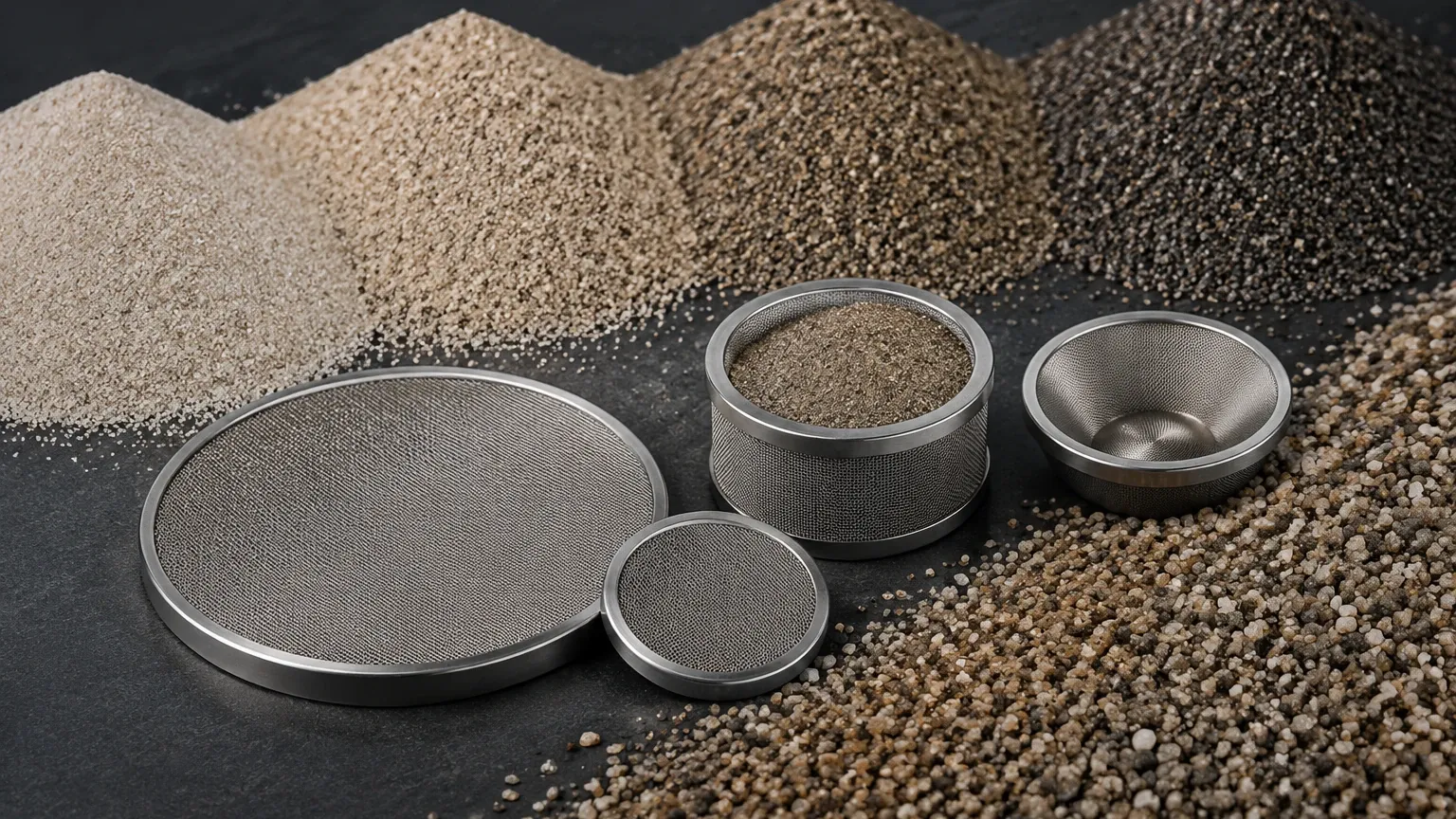
In industrial filtration and well completion, the selection of filter pack sand sizes is a critical engineering decision that directly impacts the efficiency, longevity, and mechanical integrity of the entire system. Whether applied in water treatment, chemical processing, or oil and gas extraction, a filter pack serves as a secondary barrier that stabilizes the surrounding formation and prevents the migration of fine particles into the production stream. However, the sand pack does not operate in isolation; it must be precisely matched with mechanical filtration components, such as Filter Discs & Packs, to ensure that the filter media itself remains contained and the fluid flow remains unobstructed.
Understanding the technical nuances of sand gradation, uniformity, and the interface between granular media and stainless steel mesh is essential for engineers tasked with designing high-performance filtration systems. This guide explores the engineering principles behind sand sizing and the critical role of precision metal components in managing these systems.
Understanding Filter Pack Sand Sizes and Gradation
Filter pack sand is not a generic commodity; it is a highly engineered material characterized by specific grain sizes and shapes. The term "filter pack sand sizes" refers to the distribution of particle diameters within a given volume of sand. This distribution is typically determined through sieve analysis, where sand is passed through a series of standardized US Sieve meshes.
The US Sieve System
In the industrial sector, sand is often categorized by two numbers, such as 20/40 or 12/20. These numbers represent the sieve sizes that the sand passes through and is retained on. For example, 20/40 sand passes through a No. 20 sieve (0.84 mm) and is retained on a No. 40 sieve (0.42 mm). This means the bulk of the particles fall within the 0.42 mm to 0.84 mm range.
Commonly used filter pack sand sizes include:
- 16/30 Mesh: Typically used for coarser formations where higher permeability is required.
- 20/40 Mesh: A standard size for many water well and industrial applications, offering a balance between filtration and flow.
- 40/60 Mesh: Used for finer formations where high-precision particle retention is necessary.
Uniformity Coefficient (UC)
Beyond the absolute size, the uniformity of the sand is paramount. The Uniformity Coefficient is a ratio calculated as D60/D10, where D60 is the grain diameter at which 60% of the particles are finer, and D10 is the diameter at which 10% are finer. For an effective filter pack, a UC of less than 2.5 is generally preferred. A lower UC indicates that the sand grains are of a similar size, which maximizes porosity and ensures predictable hydraulic conductivity.
The Mechanics of Particle Retention and Permeability
The primary function of selecting specific filter pack sand sizes is to create a "filter cake" or a stable interface that allows fluid to pass while trapping solids. This process relies on two competing physical properties: permeability and retention.
Permeability Requirements
If the sand size is too small, the pore spaces between the grains are constricted, leading to a high pressure drop across the filter. In industrial systems, an excessive pressure drop increases energy consumption and can lead to premature pump failure or system fatigue. Engineers must calculate the expected flow rate and ensure the sand pack provides sufficient hydraulic conductivity to meet system demands.
Retention and Bridging
Conversely, if the sand size is too large, it will fail to stop the migration of formation fines. The goal is to achieve "bridging," where the larger grains of the filter pack support the smaller grains of the formation, creating a stable, porous structure. If bridging is not achieved, fines will migrate through the sand pack and eventually reach the internal Filter Discs & Packs, potentially causing plugging or erosion of the stainless steel mesh.
Interfacing Sand Packs with Stainless Steel Filter Discs & Packs
A common misconception in filtration design is that the sand pack does all the work. In reality, the sand pack is the first stage of a multi-stage system. The sand itself must be held in place by a mechanical support, often a stainless steel screen or a specialized filter pack assembly.
Matching Mesh Opening to Sand Size
The aperture of the stainless steel mesh in the filter assembly must be sized relative to the sand. A common engineering rule of thumb is that the mesh opening should be small enough to retain 90% to 100% of the filter pack sand. For instance, if using a 20/40 sand pack (where the smallest grains are approximately 0.42 mm), the supporting Filter Discs & Packs should have a micron rating or mesh opening slightly smaller than 0.42 mm (approx. 400 microns) to prevent "sand production"—the leakage of filter media into the effluent.
Multi-Layer Sintered Mesh Designs
In high-pressure or high-flow industrial applications, a single layer of wire mesh may not provide sufficient structural integrity. Engineers often specify multi-layer sintered filter packs. These components combine a fine filtration layer (matched to the sand size) with coarser support and drainage layers. Sintering bonds the layers together at the molecular level, ensuring that the mesh openings do not distort under the weight or pressure of the sand pack.
Engineering Considerations: Material Selection and Durability
When dealing with filter pack sand sizes, the physical environment of the application dictates the material requirements for the accompanying metal filters. While the sand is typically silica or ceramic, the housing and support discs are usually metallic.
1. Corrosion Resistance: In chemical processing or saltwater applications, 304 or 316L stainless steel is the standard. For more aggressive environments involving high chlorides or acidic pH levels, specialty alloys like Hastelloy or 904L may be required to prevent pitting and crevice corrosion at the interface of the sand and the metal.
2. Mechanical Strength: The weight of a sand column can be significant. Filter discs must be engineered to withstand the compressive loads without buckling. This is particularly important in deep-well applications or large-scale industrial pressure vessels.
3. Abrasion Resistance: Sand is inherently abrasive. As fluid moves through the pack, individual grains can shift, causing wear on the metal mesh. High-quality stainless steel wire mesh provides the necessary hardness to resist this erosion over long operational cycles.
Common Risks of Improper Sand and Filter Sizing
Failure to correctly align filter pack sand sizes with the mechanical filter components leads to several operational risks that can significantly increase the total cost of ownership.
Sand Production
If the mechanical filter mesh is too coarse for the selected sand, the sand will bypass the filter. This not only contaminates the product but also causes severe abrasive wear on downstream equipment like valves, meters, and pumps. Sand production is one of the leading causes of mechanical failure in fluid handling systems.
Rapid Plugging (Blinding)
If the sand is too fine for the formation, or if the filter disc is too fine for the sand, the system will experience rapid blinding. This results in a sharp increase in differential pressure, necessitating frequent backwashing or manual cleaning. In many industrial processes, downtime for filter maintenance is more costly than the filtration components themselves.
Formation Collapse
In well applications, an incorrectly sized filter pack can lead to the collapse of the surrounding formation. If the sand cannot support the formation pressure or if too many fines are allowed to migrate, voids can form, eventually leading to structural failure of the wellbore or the filtration vessel.
Technical Evaluation and Selection Criteria
Before finalizing a design involving filter pack sand sizes, engineers should confirm the following technical parameters:
- Formation Sieve Analysis: Obtain a complete grain-size distribution of the material to be filtered.
- Fluid Velocity: Determine the flux rate (flow per unit area) to ensure the sand pack and the Filter Discs & Packs can handle the volume without excessive turbulence.
- Chemical Compatibility: Verify that both the sand (silica vs. ceramic) and the stainless steel grade are compatible with the process fluid and any cleaning agents used.
- Differential Pressure Limits: Establish the maximum allowable pressure drop before the system requires maintenance or backwashing.
Conclusion
Selecting the correct filter pack sand sizes is a foundational step in designing an efficient industrial filtration system. However, the effectiveness of the sand pack is entirely dependent on the precision and durability of the mechanical components that support it. By integrating high-quality stainless steel Filter Discs & Packs that are accurately matched to the sand gradation, engineers can ensure a stable, high-permeability system that protects downstream equipment and optimizes production.
At Kaifil, we specialize in manufacturing custom stainless steel filtration solutions designed to meet the rigorous demands of industrial applications. Our expertise in wire mesh and sintered metal components allows us to provide the precise mechanical barriers needed to complement any filter pack design, ensuring long-term reliability and performance in the field.
