


Filter Power Pack
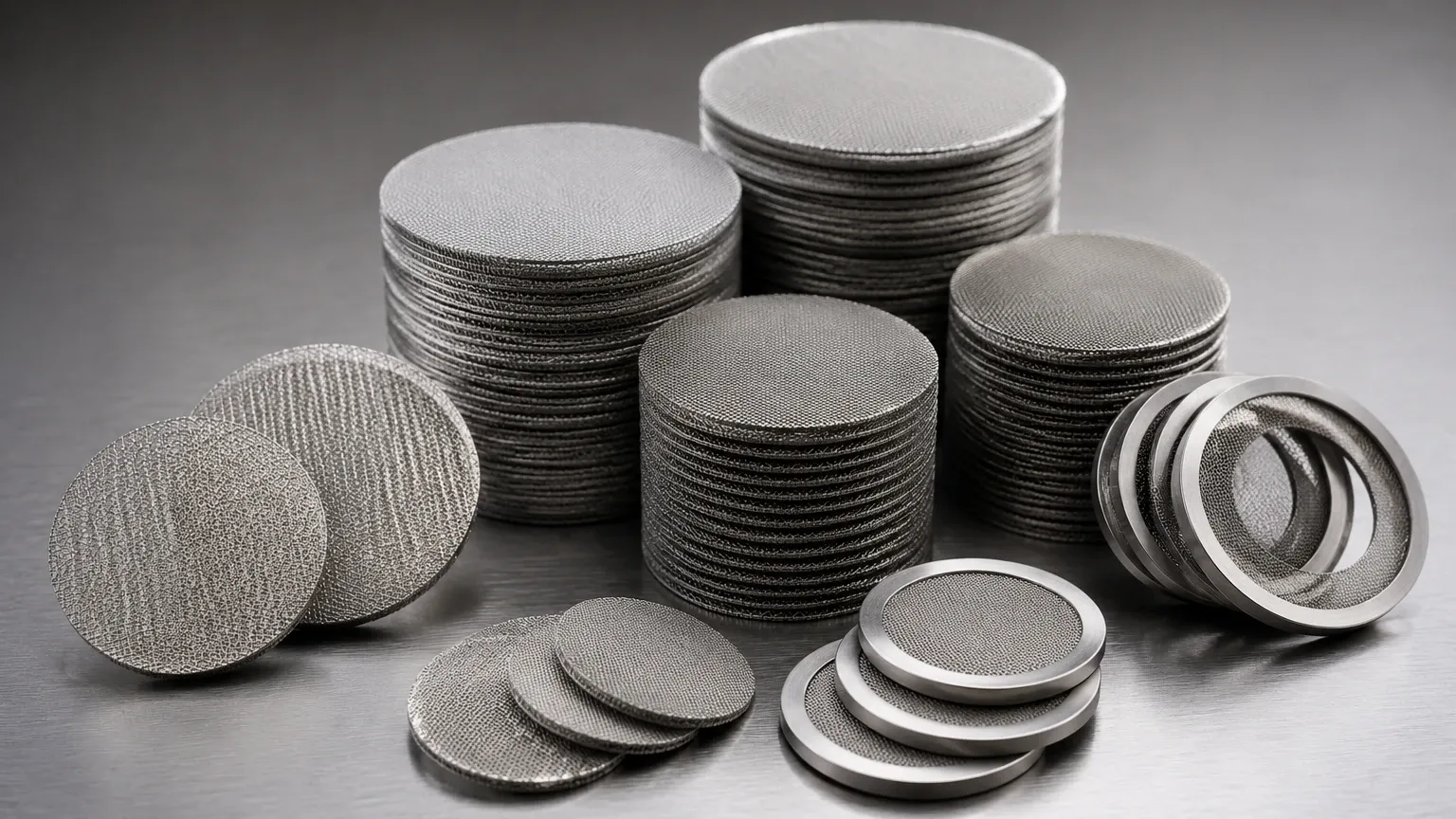
In high-pressure industrial environments, the efficiency of fluid systems depends heavily on the integrity of filtration components. A filter power pack—a specialized assembly of multi-layered Filter Discs & Packs—serves as a critical defense mechanism against particulate contamination. These assemblies are engineered to withstand significant differential pressures while maintaining precise micron ratings, making them indispensable in sectors ranging from polymer extrusion to hydraulic power generation.
For engineers and procurement professionals, understanding the technical nuances of these filter packs is essential for optimizing system uptime and ensuring product purity. This guide examines the engineering principles, material considerations, and selection criteria for high-performance filter power packs.
Understanding the Role of Filter Power Packs in Industrial Systems
The term "filter power pack" typically refers to a robust, multi-layer filtration assembly designed for high-intensity applications. Unlike single-layer screens, these packs utilize a graduated density approach, layering different mesh counts to achieve specific performance goals. In hydraulic systems, they protect sensitive valves and actuators from wear-inducing debris. In the chemical and polymer industries, they ensure that melt streams are free of carbonized particles or foreign contaminants before reaching the die.
Because these components often operate under extreme mechanical stress, their construction must prioritize structural rigidity. A failure in the filter pack—such as wire migration or media breakthrough—can lead to catastrophic downstream equipment damage or costly production rejects. Therefore, the "power" in these packs refers not just to their application in power units, but to their ability to maintain filtration accuracy under high flow rates and pressures.
Engineering and Construction of Multi-Layer Filter Assemblies
The performance of a filter power pack is dictated by its internal architecture. Most high-quality packs are constructed from stainless steel wire mesh, specifically grades 304, 316, or 316L, due to their excellent corrosion resistance and thermal stability.
Layering Strategies
A standard filter power pack consists of several functional layers:
1. The Filtration Layer: This is the core mesh that determines the micron rating. It is often a fine Dutch weave or a high-density square weave.
2. The Support Layers: Coarser mesh layers are placed on either side of the filtration layer. These provide the necessary mechanical strength to prevent the fine mesh from collapsing or deforming under pressure.
3. The Drainage Layers: In thicker packs, additional layers facilitate the even distribution of fluid across the entire surface area, reducing localized pressure spikes.
Binding and Rimming
To ensure the layers remain aligned and to prevent bypass, filter packs are usually bound at the edges. Common methods include:
* Spot Welding: Multiple layers are fused at specific points. This is cost-effective but may leave edges exposed.
* Aluminum or Stainless Steel Rimming: The edges are encased in a metal rim. This provides a superior seal within the filter housing and prevents any loose wires from entering the fluid stream. For high-temperature applications, stainless steel rims are preferred over aluminum to match the thermal expansion coefficients of the mesh.
Key Performance Indicators for Filter Power Packs
When evaluating a filter power pack for a specific application, engineers must look beyond the nominal micron rating. Several factors determine the total cost of ownership and operational efficiency.
1. Micron Rating and Filtration Efficiency
Filtration accuracy is defined by the size of the particles the mesh can reliably intercept. It is important to distinguish between "nominal" and "absolute" ratings. In critical industrial processes, absolute ratings are often required to ensure that 99.9% of particles above a certain size are captured. The choice of weave—such as Plain, Twill, or Dutch—significantly impacts this efficiency.
2. Pressure Drop (Delta P)
The initial pressure drop across a clean filter pack influences the energy consumption of the pump or extruder. A well-engineered pack maximizes the open area of the mesh to allow high flow rates while maintaining the required filtration level. As the pack accumulates debris, the pressure drop increases; understanding the "terminal pressure drop" (the point at which the pack must be replaced or cleaned) is vital for system design.
3. Dirt-Holding Capacity
This refers to the amount of contaminant a filter can retain before the pressure drop becomes unacceptable. Multi-layer packs generally offer superior dirt-holding capacity compared to single-layer discs because the coarser outer layers trap larger particles, preventing the fine inner layer from blinding prematurely.
Applications in High-Pressure Environments
Filter power packs are utilized wherever fluid purity and mechanical durability are non-negotiable.
Polymer and Fiber Extrusion
In the plastics industry, these packs are often referred to as screen packs. They are placed in the breaker plate of an extruder to remove impurities from the molten polymer. The filter power pack must withstand temperatures exceeding 300°C and pressures that can reach several thousand PSI. Precision is paramount here, as even microscopic contaminants can cause breaks in synthetic fibers or surface defects in extruded films.
Hydraulic Power Units (HPUs)
Hydraulic systems rely on clean oil to transmit power. Contamination is the leading cause of hydraulic component failure. Filter packs used in HPUs must be compatible with various hydraulic fluids (mineral oils, water glycols, or synthetic esters) and must resist the fatigue caused by rapid pressure fluctuations.
Chemical and Pharmaceutical Processing
In these sectors, the chemical compatibility of the filter media is the primary concern. Stainless steel 316L is the standard due to its resistance to pitting and crevice corrosion. These packs are often used in catalyst recovery, solvent filtration, and the production of active pharmaceutical ingredients (APIs), where batch-to-batch consistency is required.
Selection and Specification Guidelines for Engineers
Selecting the wrong filter power pack can lead to frequent downtime or product contamination. To specify the correct component, engineers should confirm the following parameters with the manufacturer:
* Fluid Characteristics: What is the viscosity, temperature, and chemical composition of the fluid? High-viscosity fluids require more robust support layers.
* Contaminant Profile: What is the nature of the solids being removed? Are they hard, abrasive particles or soft, deformable gels? This determines the necessary weave type.
* Flow Velocity: Higher velocities increase the risk of media migration and require more secure edge binding.
* Housing Dimensions: Precise tolerances are required for the outer diameter (OD) and thickness to ensure a bypass-free fit within the filter housing.
For specialized requirements, customized Filter Discs & Packs allow for the optimization of layer counts and material grades to meet specific ISO or industry-standard cleanliness levels.
Maintenance, Cleaning, and Replacement Protocols
In many industrial applications, filter power packs are considered consumables. However, depending on the material and the nature of the contaminant, some packs can be cleaned and reused.
Cleaning Methods
* Ultrasonic Cleaning: High-frequency sound waves create cavitation bubbles that dislodge particles from deep within the mesh layers.
* Burn-off (Pyrolysis): For polymer applications, packs can be heated in a controlled environment to carbonize and remove organic residues. This must be done carefully to avoid annealing the stainless steel and reducing its strength.
* Chemical Solvent Cleaning: Used when contaminants can be dissolved without damaging the filter media.
Replacement Indicators
The most reliable indicator for replacement is the differential pressure gauge. Modern industrial systems often incorporate automated sensors that trigger an alarm when the pressure drop reaches a pre-set limit. Relying on a fixed time schedule for replacement can be risky, as a sudden spike in fluid contamination can blind a filter pack much faster than expected.
Customization and OEM Solutions for Specialized Filtration
Standard off-the-shelf filter discs often fail to meet the rigorous demands of specialized machinery. This is where OEM (Original Equipment Manufacturer) capabilities become essential. Customization allows for the engineering of filter power packs that are tailored to the exact mechanical and chemical environment of the application.
Customization options include:
* Sintered Mesh Layers: For applications requiring extreme rigidity, the mesh layers can be sintered (diffusion-bonded) together. This creates a monolithic structure that cannot delaminate or shift under pressure.
* Specialty Alloys: While 304 and 316 are standard, applications involving highly corrosive acids or extreme temperatures may require Hastelloy, Monel, or Inconel mesh.
* Variable Geometries: Beyond simple circular discs, packs can be manufactured in oval, rectangular, or ring shapes to fit proprietary housing designs.
By working closely with a manufacturer that understands the complexities of wire mesh filtration, engineering teams can develop a filter power pack that balances initial cost with long-term performance reliability. Whether the goal is to protect a high-value hydraulic pump or to ensure the clarity of a food-grade oil, the right filtration assembly is a fundamental component of industrial success.
