


Ground Coffee in Filter Packs
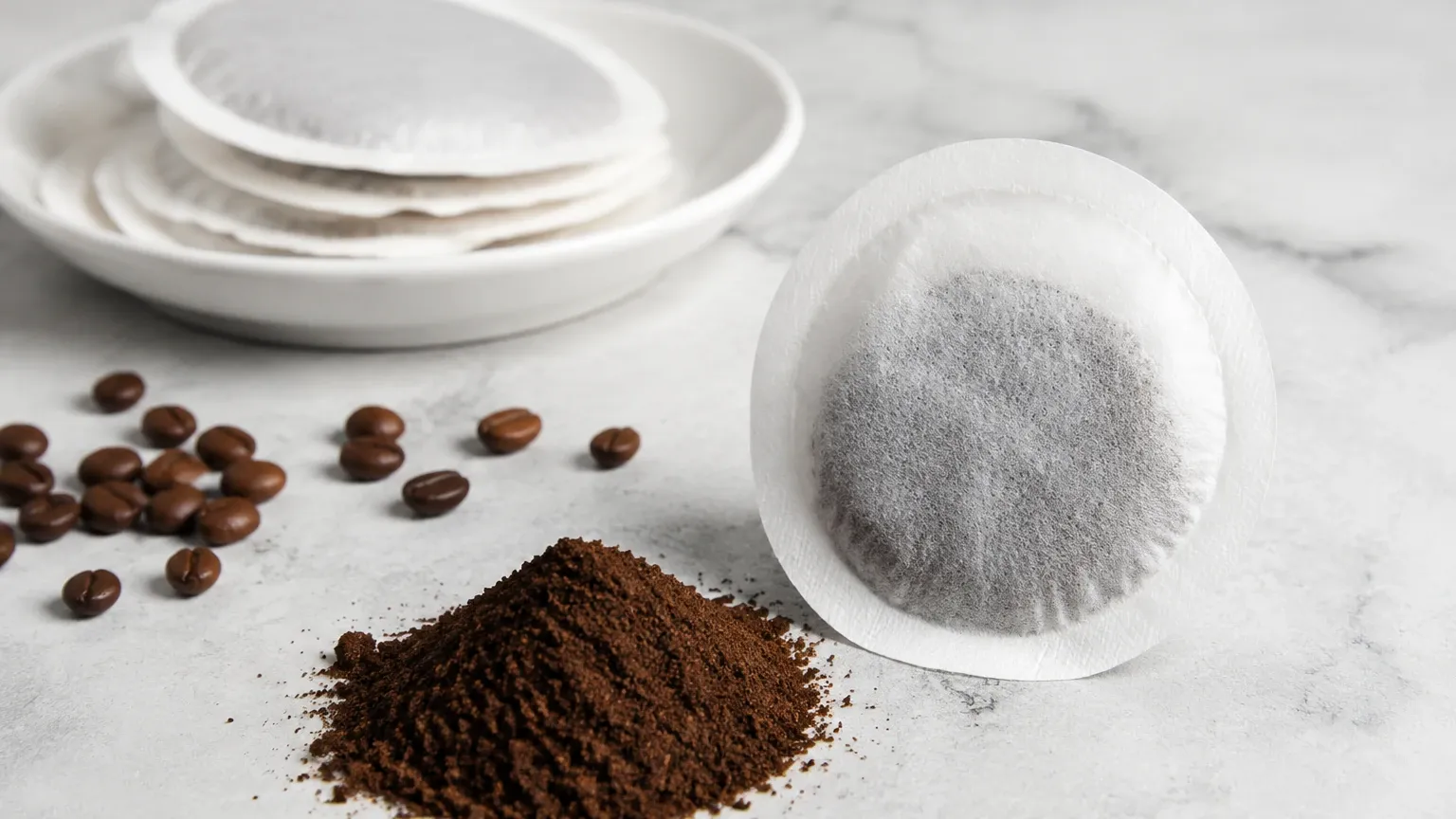
In the industrial food and beverage sector, the production and packaging of ground coffee in filter packs represent a significant segment of the portion-control market. While consumers often focus on the convenience of these products, engineers and production managers must address the complex filtration challenges involved in their manufacture and large-scale extraction. Achieving the perfect balance between flow rate, sediment control, and structural integrity requires a deep understanding of the metallic filtration components used in the machinery that processes these coffee products.
Industrial filtration for coffee processing is not merely about separation; it is about precision engineering. Whether the application involves the automated filling of individual packs or the high-volume brewing of coffee in commercial settings, the performance of Filter Discs & Packs is critical to maintaining product consistency and equipment uptime.
The Role of Stainless Steel Filtration in Coffee Processing
The transition from traditional paper filtration to permanent stainless steel components in industrial coffee equipment is driven by the need for durability and precision. When processing ground coffee in filter packs, the machinery must handle fine particles that can easily clog inferior materials. Stainless steel wire mesh, often formed into multi-layer filter packs, provides a level of mechanical strength that paper or plastic cannot match.
In high-speed packaging lines, filter discs are integrated into the dosing and sealing heads. These components ensure that the ground coffee is distributed evenly and that no stray particulates interfere with the heat-sealing process of the filter paper or non-woven fabric. Furthermore, in commercial brewing systems designed to accept these packs, stainless steel support discs provide the necessary backpressure to ensure even extraction, preventing the "channeling" effect that can ruin the flavor profile of the beverage.
Engineering Considerations for Filter Discs & Packs
Selecting the appropriate filtration media for coffee applications involves several technical variables. Engineers must evaluate the specific grind size of the coffee and the desired flow characteristics of the extraction equipment.
Micron Rating and Mesh Weave
Coffee fines—extremely small particles generated during the grinding process—can range from 10 to 100 microns. If the filtration media is too coarse, these fines pass into the final cup, resulting in a muddy texture. If it is too fine, the filter will blind (clog) rapidly, increasing differential pressure and potentially damaging the system. For industrial coffee applications, plain square weaves or Dutch weaves are commonly utilized. Dutch weaves, in particular, offer higher mechanical strength and finer filtration ratings, making them ideal for high-pressure extraction environments.
Structural Integrity and Layering
Single-layer mesh discs are often insufficient for industrial loads. Multi-layer sintered or bonded filter packs combine different mesh counts to achieve specific goals. A typical configuration might include:
* A Fine Filtration Layer: To capture the target particle size.
* A Support Layer: A coarser mesh that provides rigidity to the fine layer.
* A Drainage Layer: To facilitate the rapid exit of the filtered liquid.
This layered approach ensures that the filter disc remains flat and functional even under the thermal expansion and mechanical stress typical of continuous brewing cycles.
Material Selection: Why Stainless Steel 316L is Essential
Coffee is naturally acidic, with a pH typically ranging between 4.85 and 5.10. Over time, this acidity can cause pitting and corrosion in lower-grade metals. For the production of ground coffee in filter packs, the industry standard is Stainless Steel 316L.
Corrosion Resistance
The addition of molybdenum in 316L stainless steel significantly enhances its resistance to organic acids and chlorides. This is vital not only for the longevity of the filter itself but also for maintaining the purity of the coffee. Corroded filters can impart metallic off-flavors to the beverage, a risk that is unacceptable in professional food processing.
Thermal Stability
Coffee extraction typically occurs at temperatures between 90°C and 96°C (194°F to 205°F). Stainless steel maintains its structural properties at these temperatures, unlike many polymer-based filters that may soften or leach chemicals. This thermal stability ensures that the pore size of the filter remains constant, providing predictable performance across thousands of cycles.
Customization and OEM Integration
No two industrial coffee systems are identical. The machinery used to package ground coffee in filter packs often requires bespoke filtration components designed to fit specific housing dimensions and sealing mechanisms. Customization options for Filter Discs & Packs allow engineers to optimize the filter for their specific equipment.
Edge Treatment and Framing
To prevent fraying and to ensure a bypass-free seal, filter discs can be finished with various edge treatments. These include:
* Spot Welding: Securing multiple layers together at the perimeter.
* Aluminum or Stainless Steel Binding: Encasing the edge in a metal U-profile to provide a robust sealing surface.
* Sintered Edges: Fusing the mesh wires together through heat and pressure for a completely smooth, fiber-free finish.
Geometry and Dimensions
While circular discs are standard, many automated packaging lines require specialized shapes, such as ovals, rectangles, or ring-shaped filters with center holes for mounting bolts. Precision laser cutting and die-stamping ensure that these components meet tight tolerances, which is essential for maintaining the airtight seals required in vacuum-packing coffee.
Maintenance, Cleaning, and Total Cost of Ownership
One of the primary advantages of utilizing stainless steel filter packs in the production of ground coffee in filter packs is the reduction in long-term operational costs. While the initial investment is higher than disposable alternatives, the durability and cleanability of metal mesh provide a superior return on investment (ROI).
Cleaning-in-Place (CIP) Compatibility
In industrial food environments, hygiene is paramount. Stainless steel filters are compatible with standard CIP procedures, including high-pressure hot water washes and alkaline cleaning agents. Unlike disposable media, these filters do not shed fibers and can be sterilized repeatedly without degradation.
Ultrasonic Cleaning
For deep cleaning, especially when coffee oils (lipids) have built up within the mesh pores, ultrasonic cleaning is highly effective. This process uses high-frequency sound waves to create cavitation bubbles that dislodge trapped particles and oils, restoring the filter to its original flow specifications. This capability significantly extends the replacement cycle, often allowing a single filter pack to remain in service for years.
Evaluating Filtration Performance in Coffee Systems
When specifying filters for a coffee processing line, engineers should focus on several key performance indicators (KPIs) to ensure the system operates at peak efficiency:
1. Differential Pressure (ΔP): Monitoring the pressure drop across the filter helps identify when cleaning is required. A well-designed filter pack will have a low initial ΔP to maximize pump efficiency.
2. Flow Uniformity: In extraction, the water must pass through the ground coffee evenly. Any warping or deformation of the filter disc will lead to uneven extraction and a lower-quality final product.
3. Mechanical Fatigue: In automated systems where filters are subjected to repetitive mechanical clamping, the fatigue resistance of the mesh and the edge binding is critical to prevent premature failure.
By focusing on these technical aspects, purchasing teams and engineers can move beyond generic components and select filtration solutions that are specifically engineered for the rigors of coffee production. Whether the goal is to improve the packaging of ground coffee in filter packs or to enhance the reliability of commercial brewing equipment, the choice of filtration media is the foundation of a successful operation.
Kaifil provides the technical expertise and manufacturing precision required to develop these high-performance components. By working closely with global customers, we ensure that every filter disc and pack meets the exact requirements of the application, from material grade to filtration accuracy.
