


J Filters
In the landscape of industrial filtration, precision and durability are the primary metrics for operational success. J filters represent a specialized category of filtration components designed to handle high-pressure, high-temperature, and high-viscosity fluids. Often utilized in the polymer, chemical, and hydraulic industries, these filters are essential for removing contaminants that could otherwise compromise product quality or damage downstream equipment.
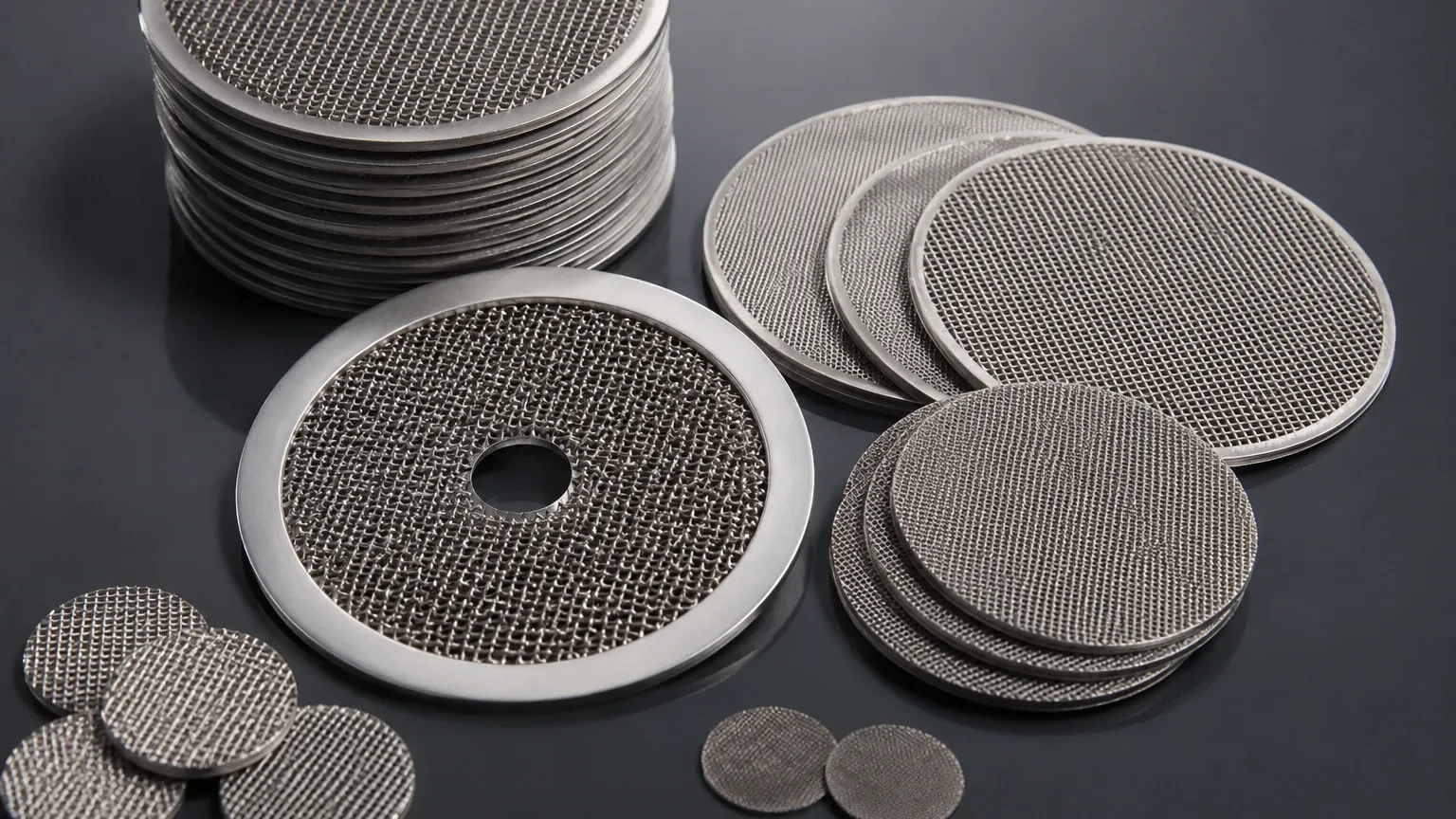
At the core of these systems are Filter Discs & Packs, which provide the necessary surface area and structural integrity to withstand rigorous processing conditions. Understanding the engineering nuances of j filters—from material selection to mesh configuration—is critical for engineers and procurement teams looking to optimize their filtration performance and reduce total cost of ownership.
Engineering Characteristics of J Filters
J filters are engineered to perform where standard filtration solutions might fail. Their design typically focuses on three main pillars: mechanical strength, filtration accuracy, and chemical resistance.
Material Selection
Most industrial j filters are constructed from high-grade stainless steel, such as AISI 304 or 316L. Stainless steel 316L is particularly favored in chemical and pharmaceutical applications due to its superior resistance to corrosion and pitting. In environments involving extreme temperatures, specialized alloys like Inconel or Hastelloy may be employed to ensure the filter does not lose its structural properties under thermal stress.
Structural Design
The structure of a j filter often involves multiple layers of wire mesh. These layers are not simply stacked; they are engineered to provide a gradient filtration effect. The outer layers usually consist of a coarser mesh that provides mechanical support and acts as a pre-filter for larger particulates. The inner layers feature a finer weave that determines the actual micron rating of the component. This multilayer approach prevents the fine mesh from deforming under high differential pressure (ΔP).
Filtration Precision
Filtration precision in j filters is measured in microns (μm). Depending on the application—whether it is the fine filtration of polymer melts or the protection of hydraulic valves—the micron rating can range from 2μm to over 200μm. Achieving this precision requires high-quality wire cloth with consistent aperture sizes, ensuring that the flow remains uniform across the entire surface of the filter.
The Role of Filter Discs & Packs in J Filter Assemblies
While the term "j filters" may refer to the complete assembly or a specific housing style, the functional heart of the system is the filter pack. These Filter Discs & Packs are the consumable or cleanable elements that perform the actual separation task.
Weave Styles and Their Impact
The choice of weave style significantly influences the performance of the filter pack.
- Plain Weave: Offers high flow rates and is easy to clean, suitable for general-purpose filtration.
- Dutch Weave: Provides a much tighter mesh and higher strength, ideal for high-pressure applications where fine particle retention is critical.
- Twill Weave: Allows for a heavier wire diameter in a given mesh count, increasing the overall durability of the pack.
Sintered vs. Non-Sintered Packs
For the most demanding j filter applications, sintered wire mesh is often the preferred choice. Sintering is a process where multiple layers of mesh are bonded together using heat and pressure without the use of binders. This creates a monolithic structure that will not migrate or fray, even under extreme mechanical stress. Non-sintered packs, which may be spot-welded or framed with an aluminum or stainless steel rim, are cost-effective solutions for applications with lower pressure requirements.
Key Applications for J Filters
J filters are versatile components found in several critical industrial sectors. Their ability to maintain integrity under stress makes them indispensable in the following areas:
Polymer and Plastic Extrusion
In the production of films, fibers, and resins, j filters are used to remove "gels" and un-melted particulates from the polymer melt. Any impurity in the melt can lead to breaks in the fiber or defects in the film. The filters must withstand pressures often exceeding 200 bar and temperatures above 300°C.
Chemical and Petrochemical Processing
Corrosive fluids and high-temperature catalysts require filtration media that will not degrade chemically. J filters, often configured as multi-layered packs, provide the necessary resistance to aggressive solvents and acids while maintaining precise flow control.
Hydraulic and Lubrication Systems
Precision hydraulic systems in aerospace or heavy machinery rely on j filters to protect sensitive valves and actuators. Even microscopic metallic particles can cause catastrophic failure in these systems. Here, the focus is on high dirt-holding capacity and low initial pressure drop to ensure system efficiency.
Selection Criteria for Industrial J Filters
Selecting the right j filter component is not merely a matter of matching dimensions. Engineers must consider several technical variables to ensure the filter performs as expected throughout its service life.
Pressure Drop (ΔP) Considerations
The initial pressure drop across a clean filter is a vital metric. A high initial ΔP reduces the available operating window before the filter reaches its terminal pressure and requires replacement or cleaning. Factors affecting ΔP include the mesh weave, the total open area of the filter, and the viscosity of the fluid.
Dirt-Holding Capacity
Dirt-holding capacity refers to the amount of contaminant a filter can retain before the pressure drop reaches a critical level. Multilayer Filter Discs & Packs generally offer higher dirt-holding capacity than single-layer discs because the coarser outer layers trap larger particles, preventing the fine inner layer from blinding prematurely.
Chemical and Thermal Compatibility
It is essential to verify that all materials used in the filter—including the mesh, the frame, and any bonding agents—are compatible with the process fluid and operating temperature. For instance, an aluminum-rimmed filter pack might be unsuitable for a highly alkaline chemical process where a fully welded stainless steel construction would be required.
Maintenance and Replacement Cycles
In industrial environments, the total cost of filtration is heavily influenced by the frequency of maintenance and the longevity of the filter elements. J filters are often designed to be cleaned and reused, depending on the nature of the contaminant.
Monitoring Performance
The primary method for determining when a j filter needs attention is monitoring the differential pressure across the filter housing. A sudden spike in ΔP usually indicates a surge in contaminants or a failure in the upstream process, while a gradual increase is expected as the filter reaches the end of its cycle.
Cleaning Processes
Stainless steel j filters can often be cleaned using ultrasonic baths, chemical cleaning, or burnout ovens (for polymer applications). However, the cleaning process must be carefully controlled to avoid damaging the fine wire mesh. After multiple cleaning cycles, the structural integrity of the mesh may diminish, necessitating a full replacement of the filter pack.
Risks of Delayed Replacement
Operating a j filter beyond its recommended terminal pressure can lead to "media migration" or mesh rupture. If the mesh fails, contaminants will bypass the filter entirely, potentially causing significant damage to downstream machinery or resulting in an entire batch of product being scrapped.
Customization Options for J Filter Components
Every industrial process has unique requirements, and off-the-shelf filtration products often fall short of optimal performance. Customization is a key strength of professional manufacturers like Kaifil, who provide tailored solutions for complex filtration challenges.
Dimensional Precision
J filters must fit perfectly within their housings to prevent bypass. Custom manufacturing allows for precise outer diameters (OD), inner diameters (ID), and thicknesses. This includes specialized shapes beyond simple circles, such as oval, rectangular, or kidney-shaped packs.
Edge Treatments
The edges of filter packs can be treated in various ways to suit the application. Bound edges (using a metal rim) provide additional rigidity and make the packs easier to handle. Welded edges ensure that no loose wires can escape the assembly, which is critical in food and pharmaceutical applications.
Layer Configuration
Engineers can specify the exact sequence of mesh layers to balance filtration fineness, flow rate, and mechanical strength. By adjusting the mesh count and wire diameter of each layer, a j filter can be optimized for a specific fluid viscosity and contaminant profile.
Conclusion
J filters are a cornerstone of high-performance industrial filtration. By utilizing advanced Filter Discs & Packs, these components ensure that critical processes in the polymer, chemical, and hydraulic sectors remain efficient and reliable. When selecting j filters, it is imperative to look beyond the initial purchase price and evaluate the technical specifications—such as material grade, weave style, and structural design—that contribute to long-term durability and performance. Working with an experienced manufacturer like Kaifil allows for the development of customized filtration solutions that meet the exact needs of demanding industrial environments, ensuring consistent product quality and protected equipment.
