


Mason Jar Filter Discs
In industrial laboratory environments, small-scale chemical processing, and specialized agricultural sectors such as mycology, the requirement for precise atmospheric control and contaminant exclusion is paramount. Mason jar filter discs serve as a critical component in these settings, providing a reliable interface for gas exchange while maintaining a sterile barrier. While the vessel itself—the mason jar—is a standardized glass container, the filtration component must meet rigorous industrial standards to ensure process integrity and repeatability.
As a specialized manufacturer of stainless steel filtration solutions, Kaifil produces high-performance Filter Discs & Packs designed to replace disposable or lower-grade synthetic filters. Understanding the engineering behind these discs is essential for technical professionals who require durable, autoclavable, and chemically resistant filtration media for their operations.
Understanding Mason Jar Filter Discs in Industrial Applications
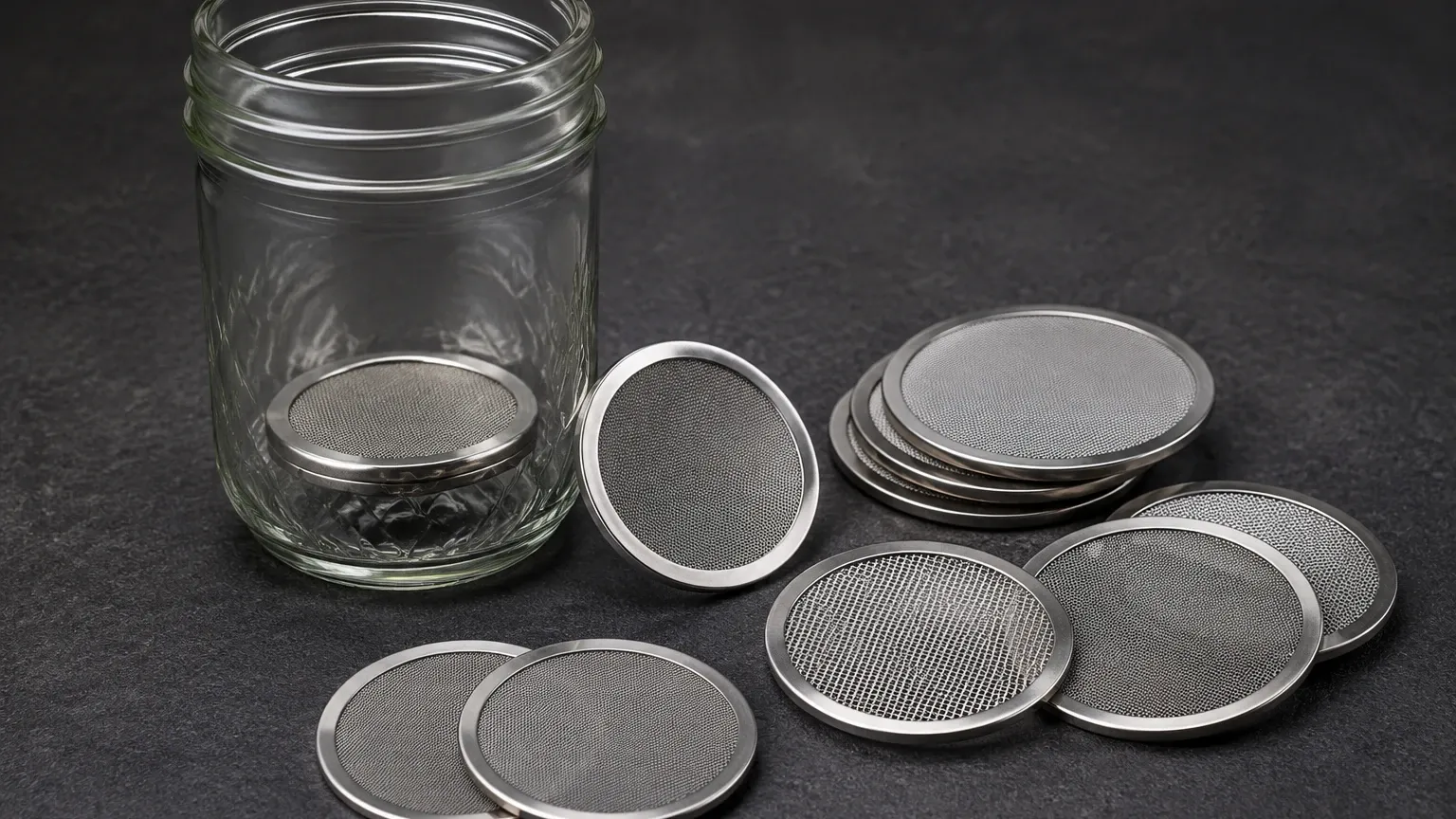
The term "mason jar filter discs" refers to circular filtration media sized specifically to fit the mouth of standard (70mm) or wide-mouth (86mm) canning jars. In a B2B context, these are not merely household accessories but are precision-engineered components used in research and development, pilot-scale fermentation, and specialized cultivation.
Traditional synthetic filters, such as those made from PTFE or cellulose, often present challenges regarding long-term durability and waste. In contrast, stainless steel filter discs offer a permanent solution that can withstand repeated sterilization cycles without degradation. These discs are typically integrated into the lid assembly of the jar, acting as a breathable membrane that allows for aerobic respiration or pressure equalization while blocking the ingress of airborne contaminants like mold spores, bacteria, and dust.
Material Selection: Why Stainless Steel Mesh is the Standard
For industrial and laboratory use, the choice of material for filter discs is dictated by the environment in which they will operate. Stainless steel is the preferred medium due to its unique combination of mechanical strength and chemical inertness.
Corrosion Resistance (Grade 304 vs. 316)
Most industrial filter discs are manufactured from Grade 304 or Grade 316 stainless steel.
- Grade 304: Offers excellent resistance to atmospheric corrosion and is suitable for most general-purpose laboratory applications and food-grade processes.
- Grade 316: Contains molybdenum, providing superior resistance to chlorides and acids. This is the preferred choice for pharmaceutical applications or processes involving saline solutions and corrosive chemicals.
High-Temperature Stability
A primary requirement for mason jar filter discs in biological applications is the ability to undergo sterilization via autoclaving. Standard autoclave cycles reach temperatures of 121°C (250°F) at high pressure. Stainless steel maintains its structural integrity and filtration accuracy at these temperatures, unlike many polymer-based filters that may warp, shrink, or lose their pore structure over time.
Engineering Considerations for Filter Discs & Packs
When specifying Filter Discs & Packs for industrial use, engineers must consider the weave type and the resulting filtration characteristics. The performance of a mason jar filter disc is defined by its micron rating and its ability to facilitate gas exchange (breathability).
Weave Types and Micron Ratings
The filtration efficiency is determined by the wire diameter and the density of the weave. Common weave types include:
- Plain Weave: The most common industrial weave, where each warp wire crosses alternately over and under each shute wire. It provides high flow rates and is ideal for coarse filtration and gas exchange.
- Dutch Weave: This weave uses larger diameter warp wires and smaller shute wires, resulting in a much denser mesh. Dutch weave is used when high-pressure resistance and fine micron ratings (down to 5-10 microns) are required.
For mycology and sterile lab work, a disc must typically block particles larger than 0.3 to 0.5 microns to prevent contamination. However, because stainless steel mesh is a depth or surface filter rather than a membrane, achieving sub-micron ratings often requires multi-layer "packs" or specialized sintered mesh structures.
Multi-Layer Filter Packs
In demanding applications, a single layer of mesh may not provide the necessary balance of airflow and filtration efficiency. Multi-layer Filter Discs & Packs involve bonding several layers of mesh together. This can include a fine filtration layer protected by coarser support layers on either side. This construction increases the mechanical strength of the disc and prevents the fine mesh from deforming under pressure differentials.
Performance Metrics: Airflow and Gas Exchange
In aerobic fermentation and mycelium cultivation, the primary function of mason jar filter discs is to allow the exchange of Oxygen (O2) and Carbon Dioxide (CO2). If the filtration media is too restrictive, the biological process will stall due to CO2 buildup. Conversely, if the mesh is too open, the risk of contamination increases.
Differential Pressure (ΔP)
Engineers measure the resistance to flow as differential pressure. A high-quality filter disc should provide a low ΔP to ensure natural gas exchange occurs via diffusion. In systems where jars are connected to an active air supply, the disc must be able to handle the specific CFM (Cubic Feet per Minute) requirements without creating excessive backpressure that could compromise the seal of the jar lid.
Hydrophobic vs. Hydrophilic Properties
While stainless steel is naturally hydrophilic, the fine geometry of the mesh can exhibit hydrophobic-like behavior toward large water droplets due to surface tension. This is beneficial in laboratory settings where condensation (often called "sweating") occurs inside the jar. A properly designed stainless steel filter disc will allow gas to pass while resisting the passage of liquid water, which can otherwise act as a bridge for contaminants.
Maintenance and Sterilization Protocols
One of the most significant advantages of using stainless steel mason jar filter discs in a B2B or industrial setting is their longevity. To maintain optimal performance, a strict maintenance and sterilization protocol should be followed.
1. Cleaning: After use, discs should be cleaned to remove any organic residue or dust buildup. Ultrasonic cleaning is the most effective method for stainless steel mesh, as it uses high-frequency sound waves to dislodge particles trapped deep within the weave.
2. Chemical Compatibility: Stainless steel discs can be cleaned with a variety of solvents and detergents. However, care must be taken to avoid concentrated chlorine-based bleaches on Grade 304 steel, as this can lead to pitting corrosion.
3. Sterilization: The discs are fully compatible with dry heat sterilization and steam autoclaving. Unlike synthetic filters, there is no limit to the number of times a stainless steel disc can be autoclaved, provided it is kept free of physical damage.
4. Inspection: Periodically, discs should be inspected for "blinding" (permanent clogging) or physical tears in the mesh. Even a microscopic breach in the weave can lead to a 100% failure rate in sterile processes.
Sourcing and Customization for B2B Requirements
For purchasing teams and engineers, sourcing mason jar filter discs involves more than just finding the correct diameter. Industrial applications often require specific performance characteristics that off-the-shelf products cannot meet.
Custom Micron Ratings and Diameters
While 70mm and 86mm are the standard sizes for mason jars, industrial equipment may require variations. Kaifil provides customized Filter Discs & Packs in a wide range of diameters, from a few millimeters to several hundred millimeters. Furthermore, the micron rating can be tailored to the specific contaminant profile of the operating environment.
Edge Finishing and Binding
To ensure a proper seal and to prevent the sharp edges of the wire mesh from fraying or causing injury, filter discs can be finished with various edge treatments. This includes:
- Spot Welding: Securing the layers of a multi-layer pack.
- Rim Binding: Enclosing the edge of the disc in a metal U-section or foil. This provides a smooth surface for gaskets to seat against, ensuring a vacuum-tight or pressure-tight seal on the mason jar.
- Sintering: Bonding the wires at their contact points through heat and pressure, creating a rigid, non-fraying disc that maintains its pore size even under extreme mechanical stress.
Total Cost of Ownership (TCO)
When evaluating the cost of stainless steel filter discs versus disposable synthetic alternatives, B2B buyers must consider the Total Cost of Ownership. While the initial capital expenditure for stainless steel is higher, the elimination of recurring purchase costs, reduced waste disposal, and the reliability of a permanent component result in a lower TCO over the project's lifecycle.
Conclusion
Mason jar filter discs represent a specialized intersection of traditional container standards and advanced filtration technology. For industries relying on sterile gas exchange and durable processing components, transitioning to high-grade stainless steel Filter Discs & Packs is a strategic move toward process optimization. By focusing on material grade, weave precision, and proper maintenance, technical professionals can ensure their small-scale filtration processes remain consistent, sterile, and cost-effective. Kaifil remains committed to delivering these precision components, supporting global industries with engineered solutions that meet the most demanding filtration requirements.
