


Ptfe Filter Discs
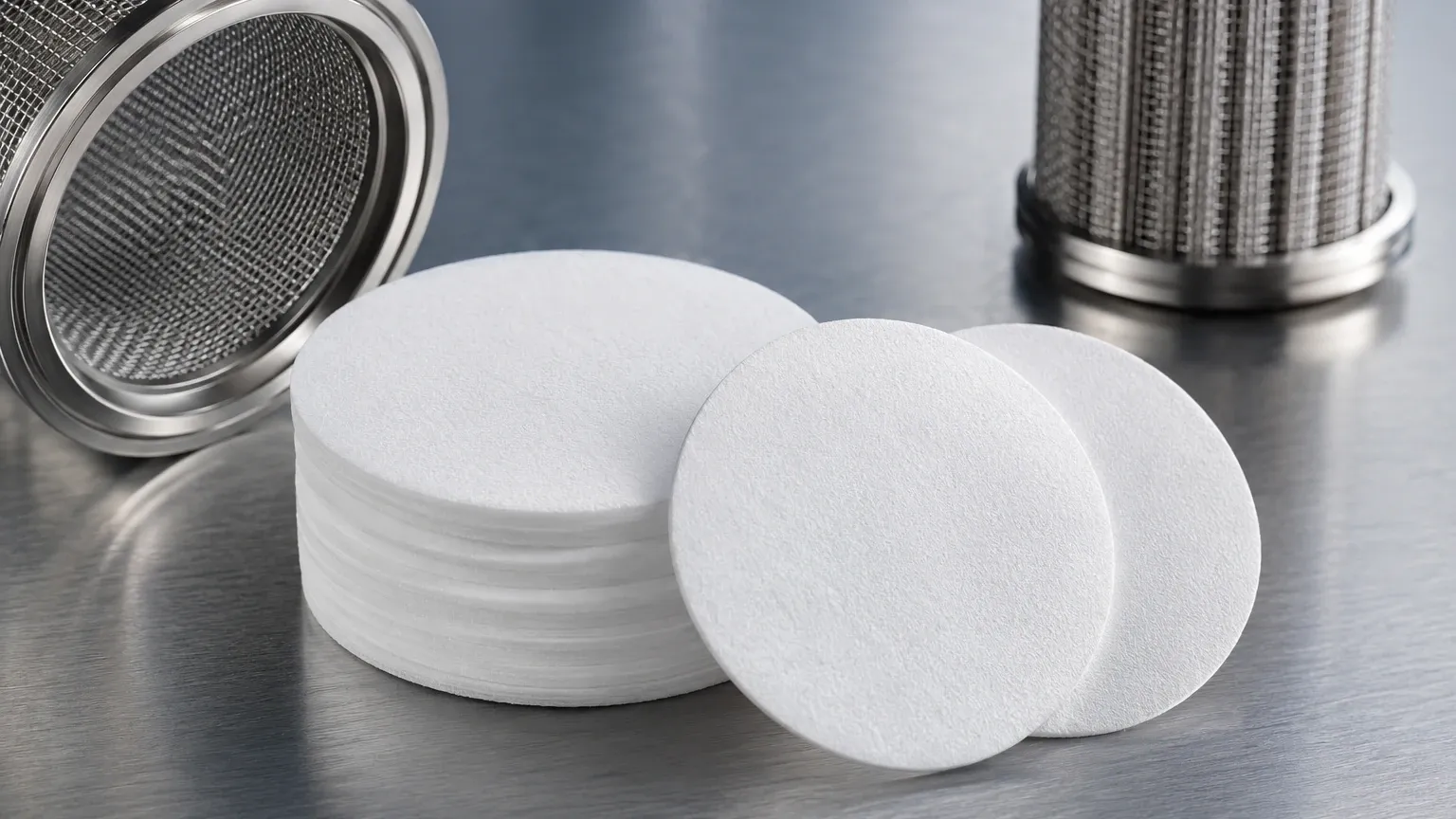
In the landscape of industrial separation technology, selecting the appropriate media for aggressive chemical environments or high-purity applications is a critical engineering decision. Among the various options available, ptfe filter discs have emerged as a standard for processes requiring exceptional chemical resistance, thermal stability, and precise filtration performance. Polytetrafluoroethylene (PTFE) is a synthetic fluoropolymer of tetrafluoroethylene that offers unique physical and chemical properties, making it indispensable in sectors ranging from pharmaceutical manufacturing to semiconductor processing.
For engineers and procurement specialists, understanding the technical nuances of these components is essential. While many filtration systems rely on metal mesh, the integration of specialized polymers into Filter Discs & Packs allows for a higher degree of versatility in handling corrosive fluids and gases. This guide examines the technical characteristics, selection criteria, and industrial applications of PTFE-based filtration media.
Technical Characteristics of PTFE Media
The performance of ptfe filter discs is rooted in the molecular structure of the polymer. The strong carbon-fluorine bonds provide a level of inertness that few other materials can match. When evaluating these discs for industrial use, several core properties must be considered.
Chemical Compatibility
PTFE is virtually inert to almost all industrial chemicals, solvents, and corrosive agents. It maintains its integrity in the presence of strong acids (such as sulfuric or hydrochloric acid), aggressive bases, and highly reactive organic solvents. This makes it the primary choice for filtration in chemical synthesis and laboratory environments where the fluid composition might degrade standard elastomers or lower-grade stainless steels.
Thermal Stability
Industrial processes often operate at extreme temperatures. PTFE components can typically withstand continuous service temperatures ranging from -200°C to +260°C (-328°F to +500°F). Unlike many other plastics that soften or off-gas at elevated temperatures, PTFE retains its mechanical properties and does not leach contaminants into the process stream.
Surface Energy and Hydrophobicity
Naturally, PTFE is highly hydrophobic. This means it resists wetting by water and is an excellent choice for gas venting or moisture separation. In gas filtration, ptfe filter discs allow air or process gases to pass through while blocking aqueous liquid droplets. For liquid filtration involving aqueous solutions, the material can be chemically modified to become hydrophilic, allowing water-based fluids to flow through the pores at lower pressures.
Construction and Form Factors
PTFE filtration media are not monolithic; they are engineered in various forms to suit specific mechanical and filtration requirements. The construction of the disc determines its flow rate, particle retention, and durability.
Expanded PTFE (ePTFE)
Expanded PTFE is created by stretching the polymer under specific conditions to create a microporous structure. This structure consists of nodes interconnected by fibrils, resulting in a membrane with high porosity (often up to 80% or higher). ePTFE membranes provide high flow rates and extremely fine filtration, often down to sub-micron levels. Because the membrane is thin and mechanically delicate, it is frequently laminated to a support layer, such as a non-woven polyester or polypropylene fabric, or integrated into multi-layer metal Filter Discs & Packs for structural reinforcement.
Sintered PTFE
Sintered PTFE discs are produced by compressing PTFE powder and heating it below its melting point. This process creates a porous, rigid structure that is much thicker than a membrane. Sintered discs offer excellent depth filtration and are robust enough to be used without extensive external support in low-pressure applications. They are often used in sparging, aeration, and heavy-duty gas filtration.
Mesh-Reinforced Discs
In high-pressure hydraulic or process systems, the soft nature of PTFE can lead to media migration or deformation. To counter this, ptfe filter discs are often sandwiched between layers of stainless steel wire mesh. This hybrid construction combines the chemical precision of the polymer with the mechanical strength of the metal. The outer mesh layers protect the PTFE from abrasion and prevent the disc from collapsing under differential pressure.
Engineering Selection Criteria
When specifying ptfe filter discs for a project, engineers must look beyond simple dimensions. The following parameters are critical for ensuring system efficiency and longevity.
Micron Rating and Pore Size Distribution
Filtration efficiency is defined by the pore size. For gas filtration, ratings often range from 0.01 μm to 1 μm. For liquid applications, ratings typically span from 0.1 μm to 10 μm. It is important to distinguish between "nominal" and "absolute" ratings. An absolute rating indicates that 99.9% of particles of a specific size will be retained, which is standard for critical pharmaceutical or semiconductor applications.
Differential Pressure (ΔP)
The resistance to flow offered by the filter disc is known as the pressure drop. A high initial pressure drop can indicate that the pore size is too restrictive for the required flow rate, leading to increased energy consumption and shorter service life. Engineers must calculate the expected ΔP based on fluid viscosity, flow velocity, and the effective filtration area (EFA) of the disc.
Water Entry Pressure (WEP) and Bubble Point
For hydrophobic ptfe filter discs used in venting, the Water Entry Pressure is the minimum pressure required to force water through the pores. This is a vital safety metric in tank venting. Similarly, the Bubble Point test is used to verify the integrity of the disc; it measures the pressure required to force air through a liquid-saturated membrane, confirming that no pores are larger than the specified rating.
Integration into Industrial Systems
The successful implementation of PTFE media requires careful consideration of the housing and sealing mechanisms. Even the highest quality filter disc will fail if the peripheral components are not compatible with the process conditions.
Sealing and Gasketing
PTFE has a low coefficient of friction and a tendency to "creep" or flow under constant pressure (cold flow). When installing ptfe filter discs into a housing, the sealing surfaces must be designed to accommodate this. Often, the disc itself acts as a gasket, but in high-pressure Filter Discs & Packs, edge-welding or aluminum/stainless steel rims are used to provide a positive seal and prevent bypass.
Housing Compatibility
While the PTFE disc is chemically inert, the housing must also withstand the process fluid. In aggressive chemical processing, housings are typically constructed from 316L stainless steel, Hastelloy, or are lined with fluoropolymers like PFA. Ensuring that the disc diameter and thickness align perfectly with the housing seat is essential to prevent mechanical bypass.
Key Applications for PTFE Filter Discs
Due to their high performance, these discs are found in various critical industrial sectors:
1. Pharmaceutical and Biotech: Used for sterile venting of fermentation tanks, filtration of aggressive solvents used in API (Active Pharmaceutical Ingredient) synthesis, and clarifying high-purity chemicals. PTFE's compliance with USP Class VI standards is often a requirement here.
2. Chemical Processing: Filtration of hot acids, bases, and organic solvents. The discs are used in both laboratory-scale Buchner funnels and large-scale industrial inline filters.
3. Food and Beverage: Specifically used in applications where steam sterilization is frequent. PTFE can withstand repeated SIP (Sterilization-in-Place) cycles without degrading, unlike many other plastic filters. It is also used for nitrogen or CO2 filtration in bottling lines.
4. Semiconductor Manufacturing: The production of microchips requires ultra-pure water and chemicals. PTFE discs remove sub-micron particulates from photoresists and etching acids, where even trace amounts of metallic ions or particles could ruin a wafer.
5. Environmental Monitoring: Used in air sampling and stack gas analysis. The hydrophobic nature of the discs ensures that moisture in the air does not clog the filter, allowing for accurate particulate matter (PM) measurement.
Maintenance, Cleaning, and Replacement
In an industrial B2B context, the total cost of ownership (TCO) is as important as the initial purchase price. PTFE filter discs are often considered consumable items, but their lifespan can be extended through proper management.
Monitoring Fouling
System operators should monitor the differential pressure across the filter pack. A steady increase in ΔP indicates the accumulation of particulates (fouling). Once the pressure reaches a predetermined terminal threshold, the disc must be cleaned or replaced to prevent media rupture or pump strain.
Cleaning Protocols
While many PTFE membranes are disposable, thicker sintered discs or mesh-reinforced Filter Discs & Packs may be cleanable. Because PTFE is chemically resistant, it can be cleaned using aggressive solvents or acids that would destroy other filters. Ultrasonic cleaning is also effective for removing embedded particles from the porous structure. However, the integrity of the pore structure must be re-verified after cleaning via a bubble point test.
Replacement Considerations
When replacing ptfe filter discs, it is vital to source components that match the original specifications exactly. Variations in thickness or pore distribution can significantly alter the flow dynamics of the system. Procurement teams should work closely with manufacturers to ensure that the material certifications (e.g., FDA, REACH, RoHS) are documented and consistent.
Conclusion
PTFE filter discs represent a pinnacle of material science in industrial filtration. Their ability to operate in environments that would compromise metal or standard polymer filters makes them a critical component for modern manufacturing. By understanding the distinctions between ePTFE and sintered structures, and by properly integrating these media into robust Filter Discs & Packs, engineers can achieve high-efficiency separation with minimal risk of contamination or mechanical failure.
When selecting a supplier, technical expertise in both the polymer properties and the mechanical assembly of the filter pack is paramount. A well-engineered filtration solution not only protects downstream equipment but also ensures the purity and consistency of the final product, ultimately reducing downtime and optimizing the total cost of the industrial process.
