


Pulsar Stainless Steel Filter Discs
In the landscape of industrial filtration, the demand for precision, durability, and chemical resistance has led to the widespread adoption of stainless steel wire mesh components. Among these, pulsar stainless steel filter discs represent a specialized category of filtration media designed to withstand rigorous operational environments while maintaining strict particle retention standards. For engineers and procurement specialists, selecting the appropriate Filter Discs & Packs is a critical decision that impacts system efficiency, maintenance intervals, and the total cost of ownership.
Industrial filtration is rarely a one-size-fits-all application. Whether the process involves polymer extrusion, chemical processing, or hydraulic fluid management, the mechanical integrity of the filter disc determines the purity of the final output. This article examines the technical specifications, material considerations, and engineering criteria essential for integrating pulsar stainless steel filter discs into high-performance industrial systems.
The Role of Filter Discs & Packs in Industrial Systems
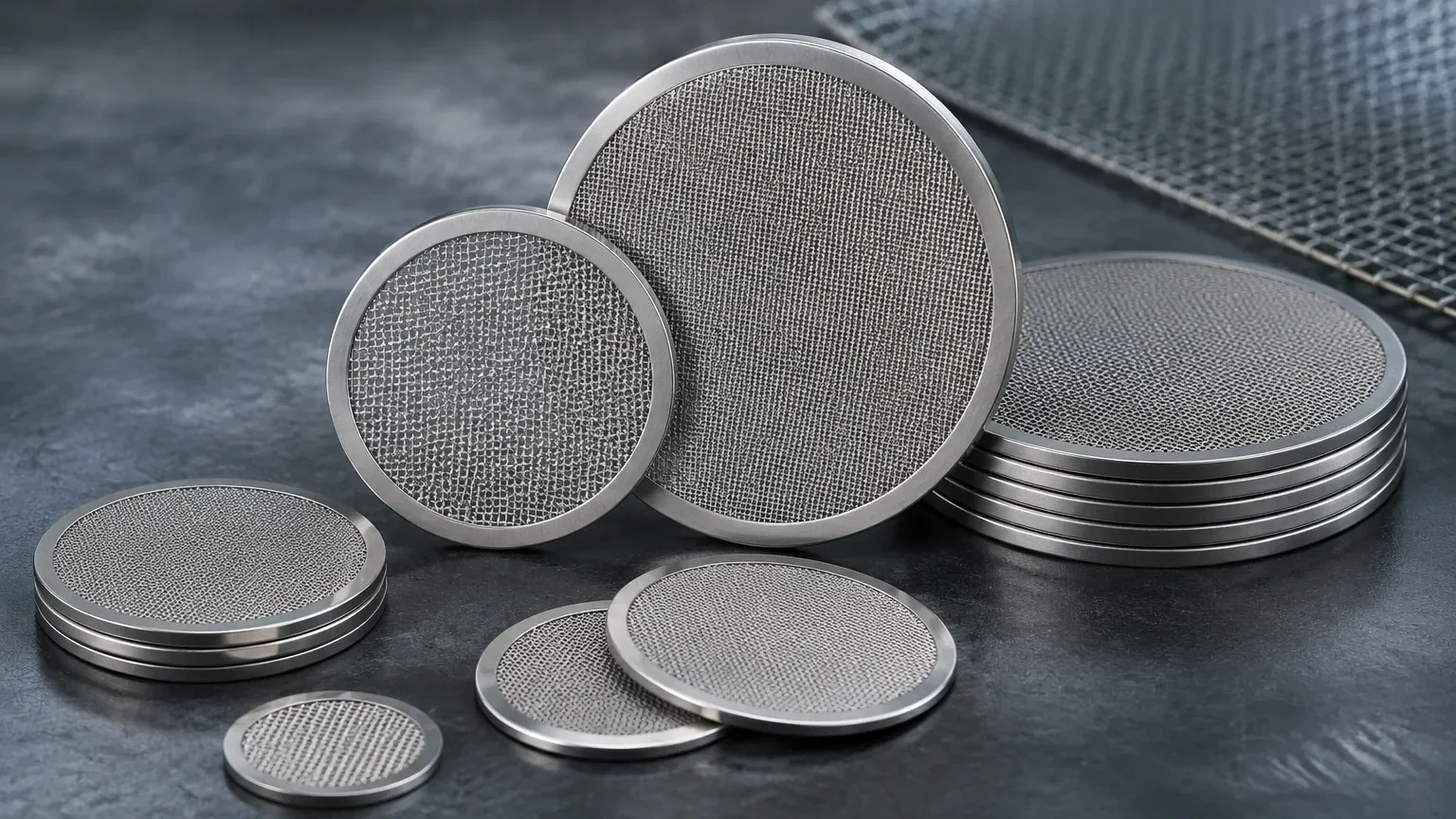
Filter discs are essentially thin, circular, or shaped components made from one or more layers of wire mesh. Their primary function is to remove solid contaminants from liquid or gaseous streams. In many B2B applications, these discs are used in "packs"—a series of stacked discs often held together by a metal rim or spot welding.
The utility of Filter Discs & Packs spans several critical functions:
* Particle Retention: Precision-woven mesh allows for the capture of particles down to the micron level, ensuring that downstream equipment is protected from abrasion and clogging.
* Flow Regulation: By providing a consistent pore structure, these discs help stabilize flow rates and manage pressure drops across the filtration stage.
* Mechanical Support: In multi-layer configurations, coarser mesh layers provide structural support to finer, more delicate filtration layers, allowing the assembly to withstand high differential pressures.
For industries such as plastic and rubber recycling, chemical fiber production, and oil refining, the reliability of these components is non-negotiable. A failure in a single filter disc can lead to system-wide contamination and costly downtime.
Technical Characteristics of Pulsar Stainless Steel Filter Discs
When discussing pulsar stainless steel filter discs, the focus shifts toward high-frequency performance and structural resilience. These discs are often utilized in environments where the filtration media is subjected to rapid pressure changes or high-velocity fluid streams.
Precision Micron Ratings
The effectiveness of a pulsar disc is defined by its micron rating, which can range from as high as 500 microns down to 1 micron or less. Engineers must distinguish between nominal and absolute filtration. Pulsar-grade discs typically aim for high absolute ratings, ensuring that 99% or more of particles above the specified size are captured. This is achieved through advanced weaving techniques that maintain consistent aperture sizes throughout the mesh surface.
Structural Stability
Unlike standard wire cloth, pulsar stainless steel filter discs are often engineered with reinforced edges. This rimming—typically using aluminum, stainless steel, or copper—serves two purposes: it prevents the fraying of the wire mesh at the edges and provides a clean sealing surface for the filter housing. This prevents "bypass," where unfiltered fluid escapes around the edges of the disc.
Fatigue Resistance
In applications involving pulsed flow or intermittent pressure, the wire mesh is subject to cyclic loading. High-quality stainless steel alloys used in pulsar discs are selected for their fatigue resistance, ensuring that the individual wires do not work-harden and snap under repeated stress. This is vital for maintaining the integrity of the filtration barrier over long operational cycles.
Material Selection and Chemical Compatibility
The choice of material is perhaps the most significant factor in the longevity of Filter Discs & Packs. While various metals can be used, stainless steel remains the industry standard due to its unique combination of mechanical strength and corrosion resistance.
Stainless Steel 304 vs. 316L
* Grade 304: This is the most common stainless steel used for general-purpose filtration. It offers excellent strength and good corrosion resistance for water-based applications and mild chemicals. However, it is susceptible to chloride-induced pitting.
* Grade 316/316L: For more demanding environments, Grade 316 includes molybdenum, which significantly enhances resistance to chlorides and acidic environments. The "L" variant (low carbon) is preferred for welded filter packs, as it minimizes carbide precipitation during the welding process, preserving the alloy's corrosion resistance.
Specialized Alloys
In extreme cases, such as highly corrosive chemical processing or high-temperature aerospace applications, pulsar stainless steel filter discs may be manufactured from 904L, Inconel, or Monel. These materials provide the necessary stability in environments where standard stainless steels would degrade rapidly.
Structural Variations: Single Layer vs. Multi-Layer Packs
The engineering of Filter Discs & Packs often involves complex layering to balance filtration fineness with mechanical strength.
Single-Layer Discs
Single-layer discs are typically used in low-pressure applications or as pre-filters. They are cost-effective and easy to clean, but they lack the structural rigidity required for high-pressure extrusion or hydraulic systems.
Multi-Layer Sintered or Welded Packs
To achieve high-precision filtration under pressure, multiple layers of mesh are combined. A typical three-layer pack might consist of:
1. A Fine Filtration Layer: The middle layer that defines the micron rating.
2. Support Layers: Coarser mesh layers on either side that protect the fine mesh from mechanical deformation and help distribute the fluid flow evenly.
In some pulsar stainless steel filter discs, these layers are sintered—a process where the mesh layers are heated in a vacuum furnace until the contact points fuse together. This creates a monolithic structure that is incredibly strong, permanent, and resistant to media migration (the shedding of wires into the filtrate).
Selection Criteria for Engineering Teams
When specifying Filter Discs & Packs for a new project or as replacement components, engineers should evaluate the following parameters:
1. Operating Pressure and Differential Pressure (ΔP): What is the maximum pressure the disc will encounter? A high ΔP requires a thicker pack or a sintered construction to prevent the mesh from "ballooning" or bursting.
2. Temperature Range: Stainless steel can generally handle temperatures up to 800°F (427°C) depending on the alloy. For higher temperatures, thermal expansion and oxidation resistance must be considered.
3. Fluid Viscosity: Highly viscous fluids, such as molten polymers, require discs with a high open area percentage to maintain flow without requiring excessive pump pressure.
4. Cleaning Requirements: Is the disc intended to be disposable or reusable? Sintered pulsar stainless steel filter discs are often chosen for their ability to be cleaned via ultrasonic baths or chemical backwashing, extending their service life.
Customization and OEM Solutions
Standard sizes for filter discs exist, but many industrial machines require custom geometries. Customization options for pulsar stainless steel filter discs include:
* Non-Circular Shapes: Rectangular, oval, or kidney-shaped discs for specialized machinery.
* Variable Rimming: Different rim materials and thicknesses to ensure a perfect fit in legacy equipment.
* Specific Weave Patterns: Choosing between Plain Weave, Twill Weave, or Dutch Weave to optimize the balance between flow rate and particle retention.
Working with a manufacturer that offers comprehensive OEM services allows engineering teams to fine-tune the filtration component to the exact needs of their application, rather than compromising with off-the-shelf parts.
Operational Longevity and Maintenance
The total cost of ownership for Filter Discs & Packs is not just the purchase price, but the combined cost of replacement, labor, and energy consumption. High-quality pulsar stainless steel filter discs offer several advantages in this regard:
* Reduced Frequency of Replacement: Durable materials and robust construction mean fewer shutdowns for filter changes.
* Energy Efficiency: A well-designed disc maintains a low pressure drop for a longer period, reducing the energy required by pumps and extruders.
* Recoverability: Because stainless steel is physically and chemically resilient, many filter packs can be cleaned and returned to service multiple times. In a high-volume production environment, the ability to reuse filters provides significant long-term savings.
Conclusion
Selecting the right pulsar stainless steel filter discs requires a deep understanding of the interplay between material science, fluid dynamics, and mechanical engineering. By focusing on high-grade alloys, precision weaving, and robust structural designs, industrial operators can ensure their processes remain efficient and their equipment remains protected. Whether for critical chemical separations or heavy-duty industrial extrusion, the right Filter Discs & Packs serve as the frontline of quality control. When evaluating suppliers, engineers should look for manufacturing expertise that includes material traceability, precision customization, and a clear understanding of the demanding environments in which these components must perform.
