


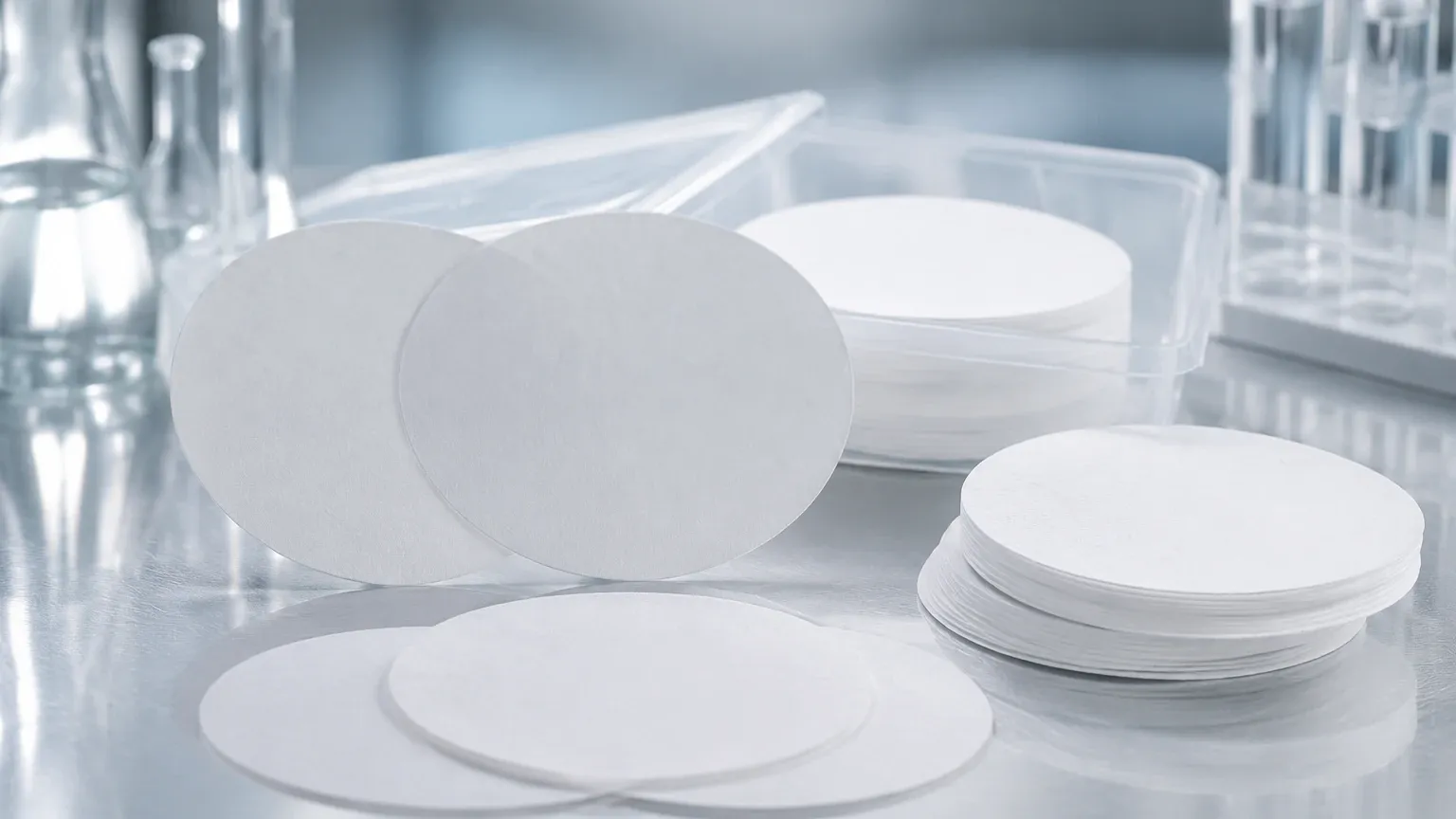
Whatman Filter Discs
In laboratory and industrial filtration, the selection of the correct filter media is a critical decision that impacts the accuracy of analytical results and the efficiency of production processes. For many engineers and lab technicians, the term "Whatman filter discs" is synonymous with high-quality qualitative and quantitative paper filtration. However, as applications scale from the laboratory bench to industrial processing, the requirements for durability, chemical resistance, and pressure tolerance often necessitate a transition from traditional cellulose or glass fiber media to robust metal filtration solutions.
Understanding the technical specifications of Whatman filter discs and how they relate to industrial Filter Discs & Packs is essential for optimizing filtration performance. This guide explores the engineering considerations, material properties, and selection criteria for filter discs across various demanding environments.
Understanding Whatman Filter Discs: Laboratory Standards
Whatman filter discs are primarily categorized by their material composition, which dictates their application range. The most common materials include cellulose, glass fiber, and various membranes like PTFE or nylon. Each is designed with specific pore sizes and flow characteristics to meet standardized testing protocols.
Qualitative and Quantitative Cellulose Discs
Cellulose-based Whatman filter discs are the standard for general laboratory filtration. Qualitative grades (such as Grade 1 through Grade 6) are used for rapid filtration and clarifying liquids. Quantitative grades, often referred to as "ashless" filters, are used in gravimetric analysis where the filter is ignited, leaving negligible residue. While excellent for low-pressure, ambient-temperature aqueous solutions, cellulose has significant limitations regarding mechanical strength and chemical degradation in aggressive solvents.
Glass Microfiber Discs
For applications requiring higher thermal stability or finer particle retention, glass microfiber discs (such as Grade GF/A or GF/C) are employed. These discs can withstand temperatures up to 500°C and offer high loading capacity. They are frequently used in water quality analysis and air pollution monitoring. However, like cellulose, they are fragile and typically intended for single-use applications.
Transitioning from Laboratory to Industrial Filtration
While Whatman filter discs serve the initial stages of research and development, industrial-scale operations often face conditions that paper or glass fiber cannot survive. This is where stainless steel filter discs and packs become the engineering standard. When a process moves from a small-scale trial to a continuous production line—such as in polymer extrusion, chemical processing, or pharmaceutical manufacturing—the filtration media must evolve.
Limitations of Disposable Media
Engineers must consider the following factors when evaluating whether to move beyond traditional disposable discs:
* Pressure Differential: Paper and glass fiber discs have low burst strengths. In industrial hydraulic or high-viscosity systems, the pressure drop (ΔP) across the media can quickly lead to structural failure.
* Chemical Compatibility: Strong acids, bases, and organic solvents can dissolve or swell cellulose fibers, leading to media migration and downstream contamination.
* Temperature Extremes: Standard lab filters are limited to a narrow temperature range. Industrial processes often operate at several hundred degrees Celsius, requiring metallic alloys.
* Lifecycle Costs: In high-volume production, the cost of frequent filter changes and the associated downtime often outweighs the initial investment in reusable stainless steel components.
Engineering Specifications for Filter Discs & Packs
When specifying Filter Discs & Packs for industrial use, several technical parameters must be defined to ensure the component meets the application's rigorous demands. Unlike standard lab discs, industrial metal filters are engineered for specific mechanical and hydraulic properties.
Micron Rating and Pore Geometry
In the world of metal filtration, micron ratings are categorized as either "nominal" or "absolute." A nominal rating indicates the ability of the filter to retain the majority of particles of a certain size, while an absolute rating represents the largest spherical particle that can pass through the mesh. For precision applications, such as pharmaceutical API filtration, absolute ratings are critical. The geometry of the pore—whether achieved through plain weave, twill weave, or Dutch weave—also affects the flow rate and the "cake" formation on the surface of the disc.
Material Selection (Alloys)
Stainless steel is the most common material for industrial filter discs due to its balance of cost and performance.
* Type 304: Suitable for general-purpose applications with moderate corrosion resistance.
* Type 316L: The industry standard for pharmaceutical and food-grade applications, offering superior resistance to chlorides and organic acids.
* Hastelloy and Inconel: Reserved for extreme environments involving high-temperature oxidation or highly corrosive chemical vapors where even 316L might fail.
Structural Reinforcement
Single-layer discs are often insufficient for high-pressure environments. Industrial "packs" consist of multiple layers of wire mesh, often including a fine filtration layer protected by coarser support layers. These layers may be spot-welded or bound by a metallic rim (aluminum, copper, or stainless steel) to prevent edge leakage and provide structural rigidity during installation into housings or extruder screen changers.
Comparative Performance: Lab vs. Industrial Discs
To assist engineers in the selection process, it is helpful to compare the performance characteristics of Whatman filter discs with stainless steel alternatives across key metrics.
| Feature | Whatman Cellulose/Glass | Stainless Steel Filter Discs |
| :— | :— | :— |
| Reusability | Single-use (Disposable) | Reusable (Cleanable via ultrasonic/chemical) |
| Max Temperature | ~120°C (Cellulose) / 500°C (Glass) | Up to 800°C+ (depending on alloy) |
| Mechanical Strength | Low; requires external support | High; self-supporting or reinforced |
| Filtration Accuracy | High (Sub-micron available) | High (Down to 1-2 microns) |
| Chemical Resistance | Limited to specific pH ranges | Excellent across most solvents/chemicals |
Application Scenarios for Industrial Filter Discs
Understanding where these components are deployed helps technical teams identify the right solution for their specific workflow.
Polymer and Plastic Extrusion
In the production of plastics, molten polymers are forced through "screen packs" at extremely high pressures. These packs, often consisting of multiple layers of stainless steel mesh, remove impurities and un-melted gels. The structural integrity of the disc is paramount here; any deformation could lead to a "blow-by," where unfiltered material bypasses the media.
Chemical and Petrochemical Processing
Industrial filtration in the chemical sector often involves high-temperature catalysts or aggressive reagents. Stainless steel Filter Discs & Packs provide the necessary surface area and durability to handle continuous flow without the risk of media migration, which is a common failure mode for fiber-based filters in turbulent flows.
Pharmaceutical and Food Production
In these sectors, cleanability and material certification are non-negotiable. Stainless steel discs are preferred because they can be sterilized (SIP/CIP) and do not shed fibers into the product stream. For engineers accustomed to using Whatman filter discs in the lab for initial clarification, transitioning to 316L stainless steel discs for production ensures consistency in filtration grade while meeting regulatory hygiene standards.
Customization and Selection Criteria
When purchasing industrial filtration components, a "one size fits all" approach rarely succeeds. Engineers should confirm several factors before finalizing a design:
1. Flow Direction: Is the filtration occurring from the outside-in or inside-out? This determines the placement of support layers in a multi-stage pack.
2. Sealing Requirements: Does the disc require a rim? Rimming prevents the fraying of wire mesh and ensures a tight seal against the filter housing, preventing bypass.
3. Cleaning Protocols: Will the filter be cleaned using backwashing, ultrasonic baths, or burnout ovens? The method of cleaning may influence the choice of mesh weave and assembly method (e.g., sintering vs. welding).
4. Total Cost of Ownership (TCO): While a stainless steel disc has a higher upfront cost than a box of Whatman filter discs, the TCO over a year of operation is often lower due to reduced replacement frequency and lower waste disposal costs.
The Role of Sintered Metal Discs
For the most demanding applications, sintered metal discs offer a level of performance that exceeds both paper and standard wire mesh. Sintering involves bonding multiple layers of mesh (or metal powder) using heat and pressure without melting the material. This creates a porous structure that is incredibly strong and has a fixed pore geometry. For engineers who require the precision of laboratory Whatman filter discs but the strength of a solid metal plate, sintered discs are the optimal choice. They provide absolute filtration ratings and can withstand extreme pressure differentials without any risk of pore enlargement.
Conclusion: Making the Right Choice
The choice between laboratory-grade Whatman filter discs and industrial-grade Filter Discs & Packs depends entirely on the operational environment. For analytical chemistry, standardized testing, and small-scale clarification, the versatility and disposability of Whatman products are unmatched. However, for industrial processes where reliability, durability, and long-term cost-efficiency are the primary drivers, stainless steel and alloy-based filtration components are essential.
Engineers should work closely with manufacturers to define the exact micron requirements, chemical exposures, and mechanical stresses of their application. By bridging the gap between laboratory precision and industrial strength, technical teams can ensure that their filtration systems perform optimally, protecting downstream equipment and maintaining product purity throughout the entire production lifecycle.
