


X Files Discs
In the landscape of industrial filtration, precision is the primary metric by which performance is measured. High-performance filtration components, often referred to in technical specifications as specialized series or x files discs, represent the critical interface between raw material processing and high-purity output. For engineers and procurement specialists in the chemical, pharmaceutical, and polymer industries, selecting the correct Filter Discs & Packs is not merely a purchasing decision but a fundamental engineering requirement to ensure system longevity and product consistency.
Industrial filtration demands a balance of mechanical strength, chemical resistance, and precise aperture control. Whether utilized in plastic extrusion, oil refining, or food processing, the structural integrity of a filter disc determines the efficiency of the entire production line. This guide explores the technical nuances of these components, focusing on material science, manufacturing techniques, and the operational variables that define high-quality filtration solutions.
Understanding the Engineering Behind Filter Discs & Packs
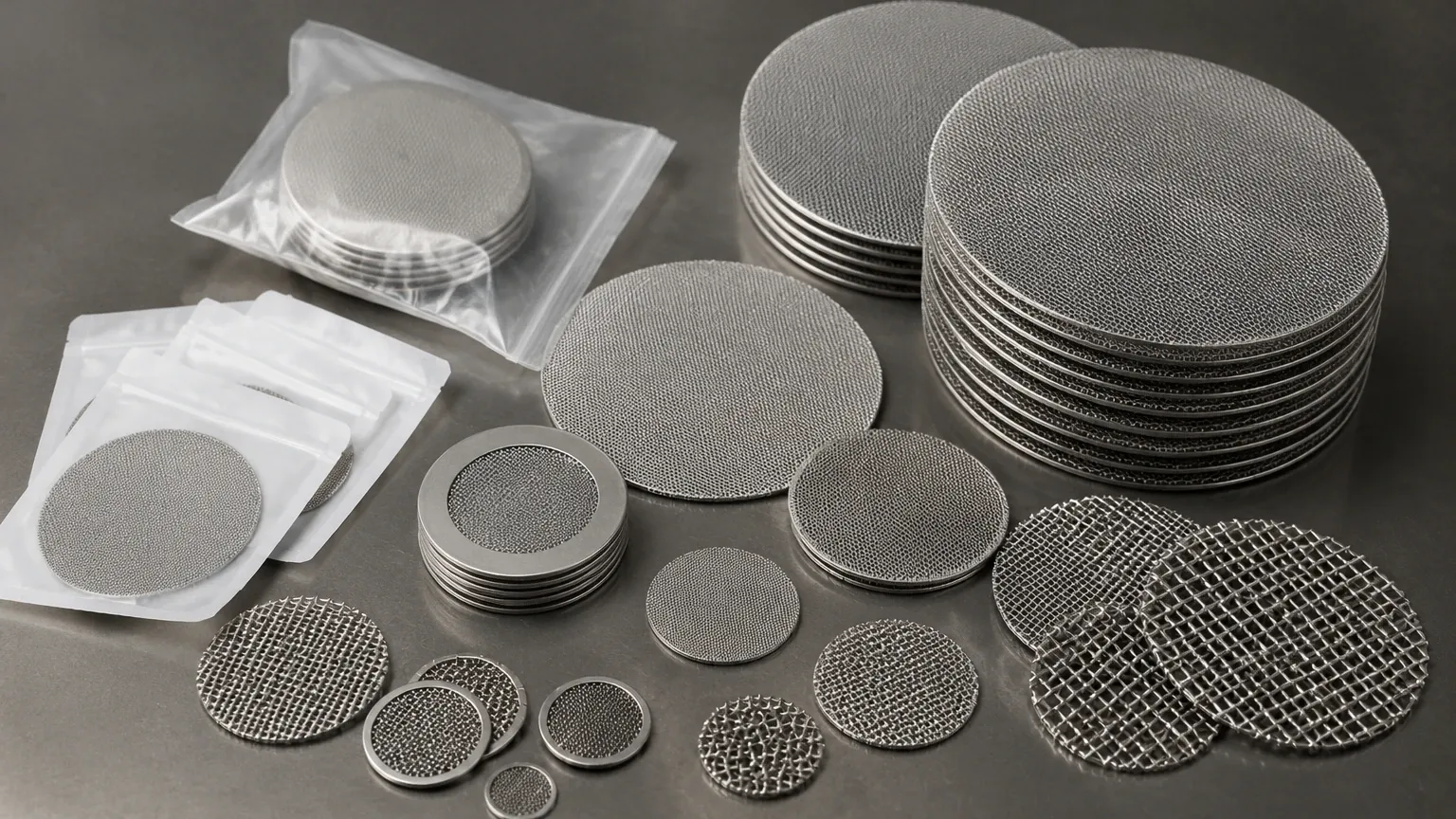
Filter discs are essentially precision-cut segments of wire mesh, often layered and bonded to provide multi-stage filtration. The term x files discs often appears in technical documentation to denote specific, high-specification configurations designed for complex machinery where standard off-the-shelf solutions fail to meet pressure or temperature requirements.
Single-Layer vs. Multi-Layer Construction
Single-layer discs are typically used in low-pressure applications or as a secondary safety mesh. However, most industrial applications require multi-layer packs. These packs are engineered by stacking different mesh counts. A typical configuration includes a fine filtration layer sandwiched between coarser support layers. The support layers provide the necessary mechanical strength to withstand high differential pressures without deforming the fine mesh that performs the actual particle separation.
Bonding and Edging Techniques
To ensure that the layers remain aligned and to prevent bypass—where unfiltered fluid escapes around the edges—various bonding techniques are employed. Spot welding is common for simple packs, while aluminum, copper, or stainless steel rims (binding) are used for high-pressure environments. Rimming not only secures the layers but also provides a gasket-like seal when the disc is seated within the filter housing, ensuring that 100% of the media passes through the filtration surface.
Material Selection and Compatibility for Industrial Filtration
The choice of material is perhaps the most critical factor in the performance of x files discs. In industrial environments, filters are subjected to corrosive chemicals, extreme temperatures, and high mechanical stress. Stainless steel remains the industry standard due to its versatility and durability.
Stainless Steel 304
SS304 is the most common grade used for general industrial filtration. It offers excellent resistance to atmospheric corrosion and is suitable for most food-grade applications. However, in environments containing chlorides or high acidity, it may be prone to pitting.
Stainless Steel 316 and 316L
For more demanding applications, such as pharmaceutical processing or marine environments, SS316 is preferred. The addition of molybdenum enhances its resistance to chloride-induced corrosion. SS316L, the low-carbon version, is specifically used when welding is required, as it prevents carbide precipitation that can lead to intergranular corrosion. For engineers designing systems for aggressive chemical reactors, specifying 316L for their filter discs is a standard safety and longevity protocol.
Specialized Alloys
In extreme cases involving high-temperature oxidation or highly acidic media, alloys such as Monel, Inconel, or Hastelloy may be utilized. While more costly, these materials prevent premature failure in environments where standard stainless steel would degrade within hours.
Technical Specifications: Micron Ratings and Mesh Weaves
When evaluating x files discs, understanding the relationship between the weave type and the micron rating is essential. The micron rating defines the size of the particles the mesh is capable of trapping, but the weave pattern determines how the fluid flows through the media.
Plain Weave and Twill Weave
Plain weave is the simplest pattern, where each warp wire crosses over and under each weft wire. It provides a consistent aperture size and is ideal for straightforward liquid filtration. Twill weave allows for a heavier wire diameter in a given mesh count, as each wire passes over and under two wires. This results in a stronger mesh suitable for higher load applications.
Dutch Weave (Plain and Twill)
Dutch weaves use a larger diameter warp wire and a smaller diameter weft wire, woven closely together. This creates a "tortuous path" for the fluid, providing excellent filtration density. Twill Dutch weaves are capable of achieving the finest filtration levels, often down to 5-10 microns, making them the preferred choice for high-precision x files discs used in hydraulic systems and fine chemical processing.
Absolute vs. Nominal Filtration
Engineers must distinguish between nominal and absolute micron ratings. A nominal rating indicates the ability of the filter to retain a majority of particles of a specific size, whereas an absolute rating indicates that 99.9% of particles above that size will be captured. For critical applications, absolute-rated filter packs are mandatory to prevent downstream contamination.
Customization Options for Specialized Applications
No two industrial processes are identical, which is why customization is a core component of high-quality filtration supply. Standard circular discs are common, but many systems require unique geometries to fit specialized housings.
Shape and Geometry
Beyond standard circles, filter packs can be manufactured in oval, rectangular, or ring shapes (kidney-shaped discs are common in certain polymer extrusion machines). Precision laser cutting or die-stamping ensures that these custom shapes maintain strict dimensional tolerances, which is vital for maintaining a leak-proof seal.
Layer Configuration
Customization also extends to the "recipe" of the pack. An engineer might specify a five-layer pack consisting of a 20-mesh support, a 100-mesh buffer, a 400-mesh filtration layer, another 100-mesh buffer, and a final 20-mesh support. This symmetrical design prevents the pack from being installed backward and provides maximum structural support against pressure surges in either direction.
OEM Integration
For equipment manufacturers, sourcing OEM-spec filtration components is vital. Custom x files discs can be designed to integrate directly into proprietary machinery, ensuring that end-users receive consistent performance and that the machinery operates within its designed parameters.
Operational Considerations: Flow Rate, Pressure Drop, and Durability
The efficiency of a filtration system is often limited by the pressure drop ($ΔP$) across the filter media. As particles accumulate on the surface of the filter discs, the resistance to flow increases, leading to higher energy consumption and potential system strain.
Managing Pressure Drop
High-quality filter packs are designed to maximize the open area of the mesh while maintaining the required filtration accuracy. By selecting the optimal weave and wire diameter, manufacturers can minimize the initial pressure drop, thereby extending the time the filter can remain in service before reaching its terminal pressure limit.
Mechanical Strength and Burst Pressure
In high-viscosity applications, such as plastic melt filtration, the filter discs are subjected to immense pressure. If the mesh is not properly supported or if the wire tensile strength is insufficient, the mesh can "blind" (clog prematurely) or even burst. Using sintered mesh or multi-layered reinforced packs ensures that the filtration surface remains intact even under several hundred bars of pressure.
Maintenance and Replacement Cycles for Optimized Performance
To maintain the integrity of an industrial process, a proactive maintenance schedule for filtration components is necessary. Relying on a "run to failure" model often results in contaminated product or damage to expensive downstream equipment like pumps and valves.
Identifying the Replacement Trigger
Most modern systems utilize differential pressure sensors to monitor the state of the filter. Once the $ΔP$ reaches a predetermined threshold, the x files discs should be cleaned or replaced. In some industries, such as food and beverage, replacement cycles may also be dictated by hygiene protocols and the risk of bacterial growth within the captured debris.
Cleaning vs. Disposal
One of the primary advantages of stainless steel filter discs is their cleanability. Depending on the contaminant, discs can be cleaned using ultrasonic baths, chemical solvents, or high-temperature burnout (for polymers). However, it is important to note that repeated cleaning can eventually fatigue the wire mesh. After a certain number of cycles, the structural integrity of the weave may be compromised, necessitating a full replacement to ensure continued filtration accuracy.
Conclusion: Selecting the Right Filtration Partner
Selecting the appropriate filtration components requires a deep understanding of the specific application's variables—temperature, pressure, chemical composition, and particle size distribution. High-performance x files discs and multi-layer packs are the unsung heroes of industrial consistency, providing the necessary barrier against contamination.
When sourcing these components, it is essential to work with a manufacturer that understands the technical rigors of your industry. Quality assurance, material traceability, and the ability to provide customized engineering solutions are the hallmarks of a reliable filtration partner. By investing in high-specification Filter Discs & Packs, companies can reduce downtime, lower their total cost of ownership, and ensure that their final products meet the highest standards of purity and quality.
For engineers looking to optimize their systems, the focus should always remain on the technical details: the micron rating, the alloy grade, and the structural design of the pack. These factors, more than any other, will determine the success of the filtration process in demanding industrial environments.
