


Baghouse Dust Collection System
In industrial environments, maintaining air quality and managing particulate matter is a critical engineering requirement. A baghouse dust collection system serves as a primary solution for high-volume filtration, designed to remove dust and other impurities from air or gas released from industrial processes. These systems are essential for regulatory compliance, personnel safety, and the protection of downstream equipment. For engineers and procurement specialists, selecting the right configuration requires a deep understanding of filtration mechanics, material science, and operational parameters.
While traditional baghouses utilize fabric filters, demanding applications in chemical processing, pharmaceuticals, and high-temperature industrial sectors often require more robust solutions. This is where precision-engineered components, such as stainless steel wire mesh and custom filter cartridges, become vital. Understanding the intersection of system design and component durability is the first step toward optimizing industrial air filtration.
Understanding the Mechanics of a Baghouse Dust Collection System
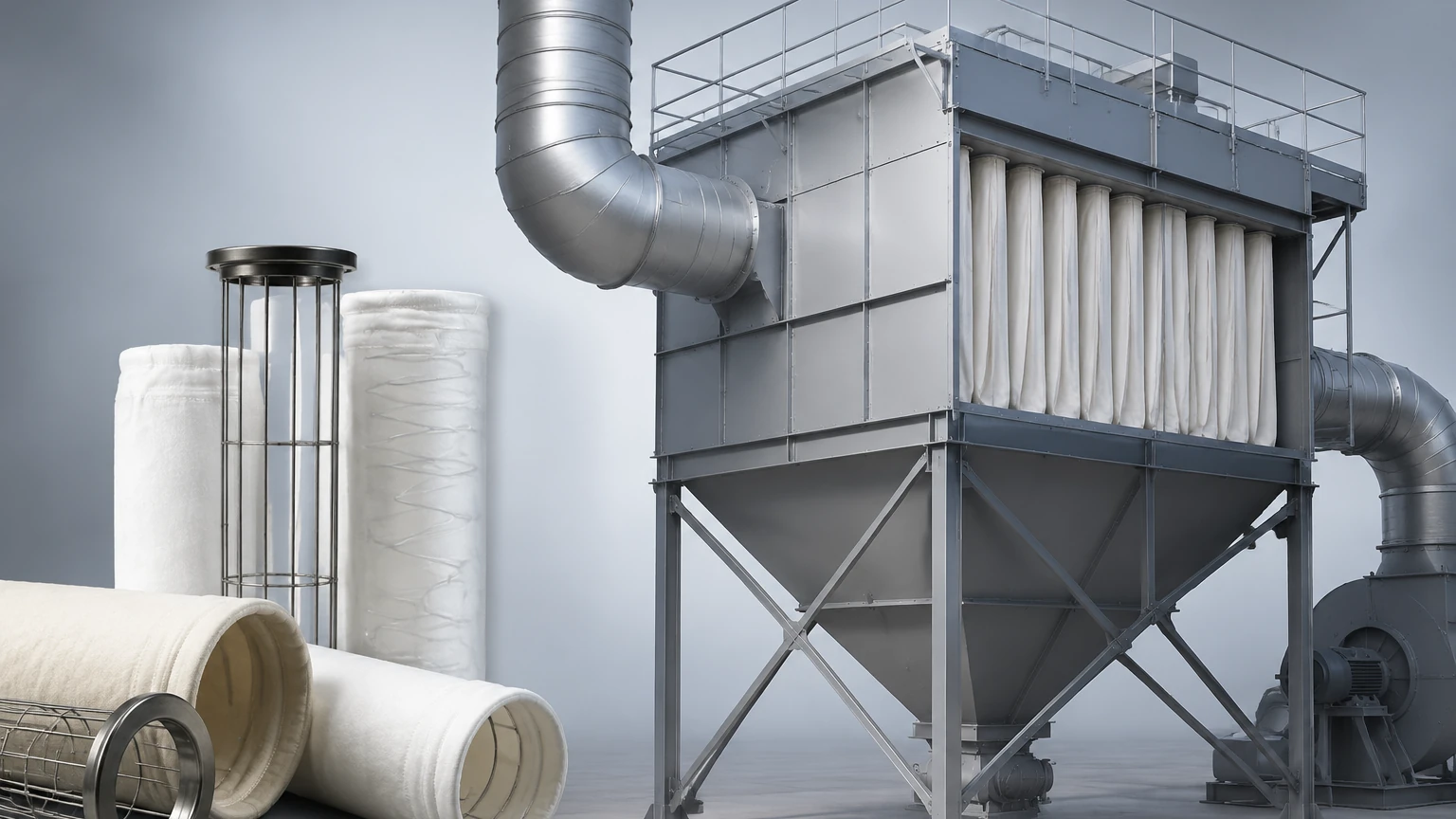
A baghouse dust collection system operates on the principle of surface or depth filtration. Dust-laden gas enters the baghouse through an inlet and is directed into a housing containing a series of long, cylindrical bags or pleated cartridges. As the gas passes through the filter media, the particulate matter is trapped on the surface or within the fibers of the media, while the cleaned gas exits through the outlet.
Over time, a layer of dust, known as a "dust cake," builds up on the filter surface. While this cake initially increases the filtration efficiency by acting as an additional filter layer, it also increases the resistance to airflow, measured as differential pressure. To maintain system performance, the bags must be cleaned periodically to remove the excess dust, which falls into a hopper for collection and disposal.
From an engineering perspective, the efficiency of this process depends on the velocity of the air, the characteristics of the dust (such as particle size, shape, and abrasiveness), and the mechanical integrity of the filter supports. In high-stress environments, the use of stainless steel internal components and specialized wire mesh filters ensures that the system can withstand chemical corrosion and thermal cycling without compromising structural integrity.
Critical Engineering Parameters: Air-to-Cloth Ratio and Pressure Drop
When specifying a baghouse dust collection system, two of the most significant metrics are the air-to-cloth (ATC) ratio and the differential pressure. These parameters dictate the size of the unit, the energy consumption, and the expected lifespan of the filter media.
Air-to-Cloth Ratio
The air-to-cloth ratio, also known as the filtration velocity, is the ratio of the volume of air entering the baghouse (in cubic feet per minute, CFM) to the total square footage of the filter media. A lower ATC ratio generally results in higher filtration efficiency and longer filter life because the air passes through the media at a slower speed, reducing the force with which particles impact the fibers. Conversely, a high ATC ratio allows for a smaller, less expensive baghouse but increases the risk of particles becoming deeply embedded in the media (blinding), which shortens the replacement cycle.
Differential Pressure (Delta P)
Differential pressure is the difference in pressure between the dirty side and the clean side of the filter media. It is the primary indicator of how hard the system's fan must work to pull air through the filters. A stable differential pressure indicates a well-balanced system where the cleaning cycle effectively matches the dust loading rate. If the pressure drop remains consistently high, it often signals that the filter media is blinded or that the cleaning mechanism is failing. Monitoring this metric is essential for predictive maintenance and minimizing energy costs.
Material Selection: When to Specify Stainless Steel Filtration Media
Standard fabric bags made of polyester, aramid, or polypropylene are suitable for many general industrial applications. However, in aggressive environments, these materials may fail prematurely due to chemical degradation, extreme temperatures, or mechanical abrasion. In such cases, engineers turn to stainless steel filtration solutions.
Stainless steel wire mesh and sintered metal fiber media offer several advantages in a baghouse dust collection system:
1. Thermal Resistance: While synthetic fabrics may melt or degrade at temperatures exceeding 400°F, stainless steel components can operate reliably in environments reaching up to 1000°F or higher, depending on the alloy.
2. Chemical Compatibility: In chemical processing and pharmaceutical applications, the presence of acids, bases, or solvents can quickly destroy standard filter bags. Stainless steel (304, 316L, or specialized alloys) provides superior resistance to corrosion.
3. Mechanical Strength: In high-pressure systems or applications involving abrasive dust, the rigidity of metal filter elements prevents the deformation and tearing that often plague fabric bags.
4. Cleanability: Metal filters can often be cleaned more aggressively and more frequently than fabric, extending the total service life of the component and reducing the total cost of ownership.
For those seeking specialized metal filtration components to integrate into their systems, reviewing the Main Page of a professional manufacturer like Kaifil provides insights into the customization options available for industrial-grade stainless steel filters.
Cleaning Mechanisms: Pulse-Jet vs. Mechanical Shaking
The method used to clean the filter media is a defining characteristic of a baghouse dust collection system. The choice of cleaning mechanism impacts the type of filter media required and the continuousness of the operation.
Pulse-Jet Cleaning
The pulse-jet baghouse is the most common design in modern industrial settings. It uses a high-pressure blast of compressed air to shock the filter bag, causing it to expand rapidly and shed the dust cake. This process happens while the system remains online, allowing for continuous operation. Because the cleaning action is intense, pulse-jet systems require filter media with high mechanical strength and often utilize internal cages to support the bags. Stainless steel cages are frequently specified to prevent rust from contaminating the clean air stream.
Shaker and Reverse-Air Systems
Shaker baghouses use mechanical arms to vibrate the bags, dislodging the dust. Reverse-air systems use a fan to blow clean air in the opposite direction of the normal flow. Both of these methods typically require the compartment being cleaned to be taken offline. While these methods are gentler on the filter media, they require a larger footprint to accommodate the offline sections and are less efficient for high-load applications.
Common Operational Challenges and Troubleshooting
Operating a baghouse dust collection system involves managing several variables that can lead to system failure if not properly monitored. Engineers should be aware of the following risks:
* Blinding: This occurs when fine particles become trapped within the pores of the filter media, rather than on the surface. Blinding is often caused by moisture in the air stream, which turns dust into a sticky paste. Selecting a hydrophobic or oleophobic coating, or switching to a precision-woven wire mesh, can mitigate this issue.
* Abrasion: If the inlet design allows dust to strike the filter media directly at high velocities, the bags will wear out prematurely. Baffles and diffusers are used to redirect airflow, but using more durable material like stainless steel for the first line of defense can also extend system life.
* Hopper Bridging: If dust is not evacuated from the collection hopper quickly enough, it can build up and "bridge," blocking the outlet. This can lead to dust backing up into the baghouse housing, causing massive system failure.
Before purchasing or upgrading a system, it is vital to confirm the specific particle size distribution and the chemical composition of the dust. This data allows for the selection of a micron rating and material that balances filtration efficiency with operational longevity.
Customization and OEM Integration for Specialized Applications
Industrial filtration is rarely a one-size-fits-all solution. Many baghouse dust collection systems require customized components to meet unique spatial constraints or specific performance requirements. OEM manufacturers like Kaifil specialize in developing custom stainless steel filter cartridges and wire mesh components that fit into existing baghouse architectures.
Customization options often include:
* Variable Micron Ratings: Tailoring the mesh density to capture specific particle sizes while maintaining optimal flow rates.
* Specialized End Caps: Engineering the connection points (flanges, threads, or bayonet mounts) to ensure a leak-proof seal within the baghouse housing.
* Reinforced Structures: Adding internal or external support layers to wire mesh filters to handle extreme pressure differentials.
By working with a manufacturer that understands the nuances of metal filtration, engineering teams can design systems that are more compact and durable than standard off-the-shelf units.
Total Cost of Ownership (TCO) Considerations
When evaluating a baghouse dust collection system, the initial purchase price is only one component of the total cost. Engineers must also account for:
1. Energy Consumption: A system with a high pressure drop requires more fan power, leading to higher utility bills.
2. Compressed Air Usage: In pulse-jet systems, the cost of generating high-pressure air for cleaning can be significant.
3. Maintenance Labor: The time required to change out hundreds of filter bags can lead to significant downtime. Systems utilizing long-lasting stainless steel filters may have a higher upfront cost but significantly lower labor costs over a five-year period.
4. Disposal Costs: Spent filter bags, especially those contaminated with hazardous materials, can be expensive to dispose of. Durable, cleanable metal filters reduce the volume of waste generated.
Conclusion
A baghouse dust collection system is a cornerstone of industrial environmental control. Whether the goal is to recover valuable product from a gas stream or to ensure compliance with emission standards, the success of the system relies on the precise selection of filter media and an understanding of the mechanical forces at play. For applications where standard fabric filters fall short—due to heat, chemicals, or pressure—stainless steel filtration components offer a reliable, high-performance alternative.
For technical professionals and purchasing teams looking to optimize their filtration processes, it is essential to partner with experts who can provide both the engineering guidance and the high-quality components necessary for demanding industrial environments. To explore specific product capabilities and technical support for custom filtration needs, visit the Main Page for detailed specifications and application guidance.
