


Castrol on Direct Liquid Cooling Pg 25
As data centers and high-performance computing (HPC) environments push the boundaries of power density, traditional air cooling is increasingly viewed as an insufficient solution. The transition toward liquid cooling—specifically direct liquid cooling (DLC) and immersion cooling—has become a necessity for managing the thermal loads of next-generation GPUs and CPUs. Technical documentation, such as the insights provided by castrol on direct liquid cooling pg 25, emphasizes that the success of these systems depends not only on the thermal properties of the fluid but also on the rigorous maintenance of fluid cleanliness and system integrity.
For engineers and facility managers, understanding the intersection of fluid chemistry and mechanical filtration is critical. Contamination within a cooling loop can lead to catastrophic hardware failure, reduced heat transfer efficiency, and increased pumping costs. As a specialist in stainless steel filtration, Kaifil provides the precision components required to meet the stringent cleanliness standards demanded by modern dielectric and water-glycol cooling systems.
The Evolution of Thermal Management in High-Density Computing
The shift from air to liquid is driven by the physics of heat transfer. Liquids have a significantly higher heat capacity and thermal conductivity than air. In a direct-to-chip configuration, coolant is circulated through cold plates attached directly to the heat-generating components. In immersion cooling, the entire server is submerged in a dielectric fluid.
In both scenarios, the fluid is the lifeblood of the system. However, as highlighted in technical discussions regarding castrol on direct liquid cooling pg 25, the longevity of the cooling system is tied to the "health" of the fluid. This involves monitoring for chemical degradation, moisture ingress, and, most importantly, particulate accumulation. Even microscopic debris can settle in the microchannels of a cold plate, creating hotspots that can throttle performance or cause permanent component damage.
Analyzing Fluid Cleanliness Standards in Direct Liquid Cooling
When evaluating the requirements for liquid cooling loops, engineers often refer to ISO 4406 or NAS 1638 cleanliness codes. These standards quantify the number and size of particles present in a fluid sample. In the context of DLC, maintaining a low particle count is essential for several reasons:
1. Microchannel Protection: Modern cold plates utilize fins and channels measured in microns. Particles larger than the channel width can cause immediate blockages, while smaller particles can accumulate over time through a process known as silting.
2. Pump Longevity: Abrasive particles can cause wear on pump seals and impellers, leading to leaks or mechanical failure.
3. Dielectric Stability: In immersion systems, the presence of conductive metallic particles can compromise the dielectric strength of the fluid, potentially leading to electrical arcing.
Technical literature, including the data found in castrol on direct liquid cooling pg 25, suggests that proactive fluid management is a core component of the "circular economy" for data centers. By utilizing high-efficiency filtration, operators can extend the life of expensive dielectric fluids, reducing the total environmental impact and operational expenditure.
Technical Requirements for Filtration in Immersion Systems
Immersion cooling presents unique challenges for filtration. Unlike traditional hydraulic systems, the fluids used—whether synthetic hydrocarbons or fluorinated liquids—have specific viscosities and chemical profiles that must be respected.
Particle Retention and Micron Ratings
In these applications, nominal filtration is rarely sufficient. Engineers typically specify absolute-rated filters to ensure that 99.9% of particles above a certain size are captured. For most DLC applications, filtration levels ranging from 5 to 25 microns are standard, though some high-precision systems may require sub-micron filtration.
Flow Rate and Pressure Drop
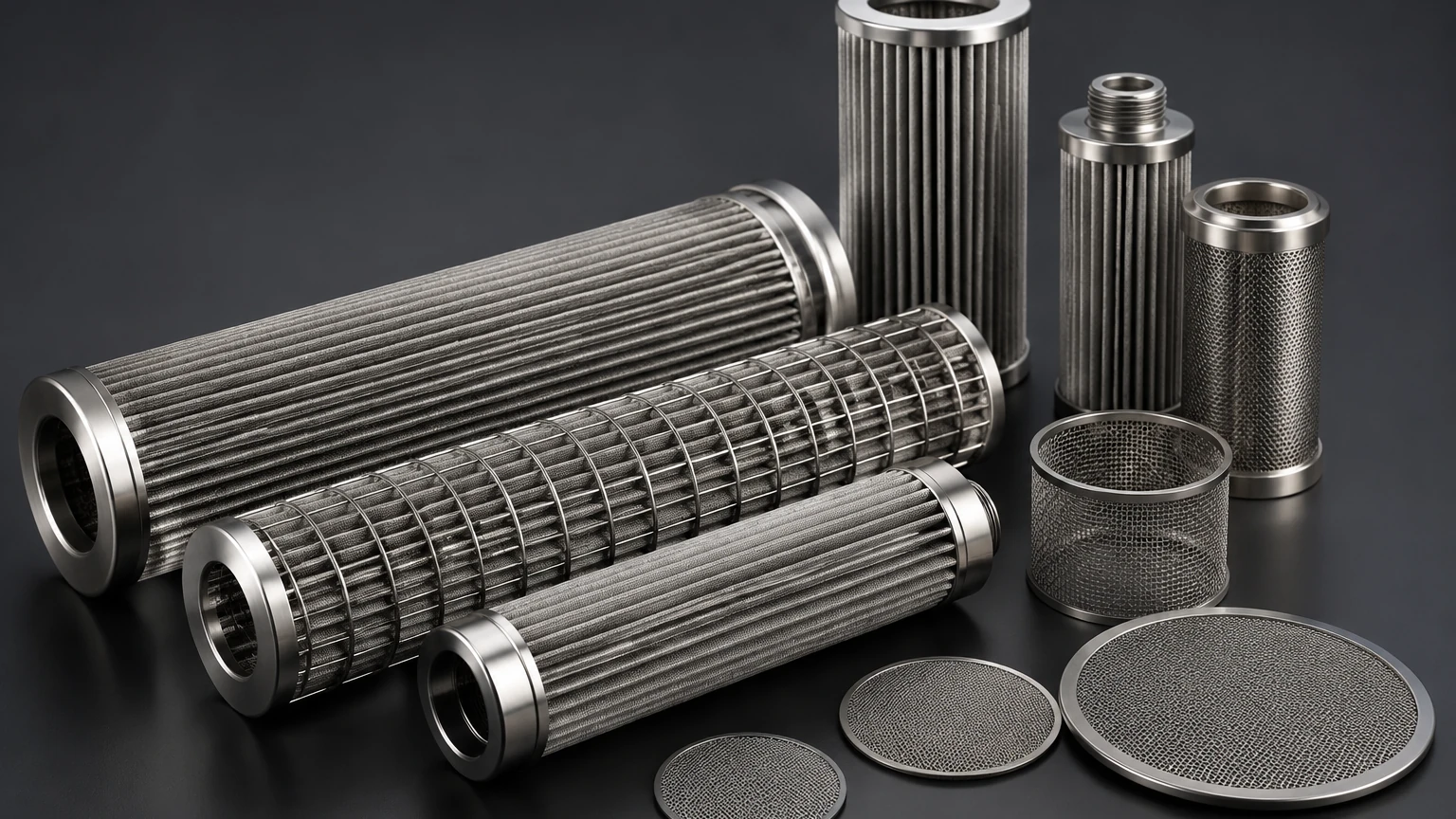
A critical engineering trade-off in cooling loops is the balance between filtration efficiency and pressure drop (Delta P). High-efficiency filters naturally create more resistance to flow. If the pressure drop is too high, the pump must work harder, consuming more energy and potentially reducing the overall flow rate below the level required for adequate cooling. Kaifil addresses this by designing Main Page solutions that utilize pleated stainless steel wire mesh, which maximizes the surface area and minimizes resistance while maintaining strict micron control.
Material Compatibility and the Role of Stainless Steel
Material compatibility is a recurring theme in the technical guidance of castrol on direct liquid cooling pg 25. Many standard industrial filters use polymer-based media or adhesives that can leach chemicals into the cooling fluid. This leaching can alter the fluid's thermal properties or cause the filter media to break down over time.
Stainless steel (specifically 304 and 316L grades) is the preferred material for DLC filtration components for several reasons:
* Chemical Inertness: Stainless steel does not react with dielectric fluids or water-glycol mixtures, ensuring the fluid remains pure.
* No Media Migration: Unlike fiberglass or paper filters, stainless steel wire mesh does not shed fibers into the system.
* Temperature Resistance: While cooling loops generally operate at moderate temperatures, stainless steel can easily handle thermal spikes without losing structural integrity.
* Cleanability: Stainless steel filter cartridges are often cleanable and reusable, aligning with the sustainability goals of modern data centers.
Engineering Considerations for Filter Selection and Sizing
When selecting a filter for a direct liquid cooling system, engineers must look beyond the micron rating. Several factors influence the total performance of the filtration assembly:
Dirt Holding Capacity
The dirt holding capacity (DHC) determines how much contaminant a filter can hold before the pressure drop reaches a critical level. In a closed-loop system, the initial "clean-up" phase often captures the most debris (leftover from manufacturing and assembly). A filter with high DHC reduces the frequency of maintenance intervals.
Housing Design
The filter housing must be designed for ease of access. In a data center environment, downtime is costly. Quick-change housing designs allow technicians to replace or clean filter elements without draining the entire loop. Furthermore, the housing must be compatible with the system's operating pressure, which, while usually lower than industrial hydraulics, still requires robust sealing to prevent leaks near sensitive electronics.
Integration with Sensors
Modern DLC systems are highly instrumented. Filtration units should be equipped with differential pressure sensors that provide real-time data to the Building Management System (BMS). This allows for predictive maintenance, where filters are serviced based on actual condition rather than a fixed schedule.
Managing the Total Cost of Ownership in Cooling Loops
While the initial cost of high-quality stainless steel filtration is higher than disposable alternatives, the Total Cost of Ownership (TCO) is significantly lower. The insights from castrol on direct liquid cooling pg 25 regarding fluid longevity highlight that the fluid itself is a major investment. Protecting that investment through superior filtration is a sound financial strategy.
1. Reduced Fluid Replacement: By removing contaminants that accelerate fluid breakdown, the interval between fluid changes can be doubled or tripled.
2. Energy Efficiency: Maintaining a low pressure drop across the filter ensures the cooling system operates at peak electrical efficiency (PUE).
3. Hardware Protection: The cost of a single GPU failure far outweighs the cost of a premium filtration system.
Kaifil works closely with OEM partners to develop customized filtration solutions that fit the specific spatial and performance constraints of rack-mounted cooling units and CDU (Coolant Distribution Unit) modules.
Common Risks in Liquid Cooling Filtration
Failure to implement a proper filtration strategy can lead to several common industrial risks:
* Galvanic Corrosion: If metallic particles are allowed to circulate, they can settle on dissimilar metals within the loop, leading to localized corrosion and eventual leaks.
* Biofouling: In water-based systems, particulate matter can provide a surface for microbial growth. While biocides are used, mechanical filtration is the first line of defense in removing the organic matter that fuels growth.
* Flow Maldistribution: If a cold plate becomes partially clogged, the coolant will take the path of least resistance. This leaves certain areas of the chip under-cooled, leading to thermal throttling and reduced computational throughput.
Conclusion: Ensuring Long-Term System Reliability
The transition to direct liquid cooling is a pivotal moment for the digital infrastructure industry. As highlighted by the technical standards in castrol on direct liquid cooling pg 25, the success of these deployments hinges on meticulous fluid management. Filtration is not merely an accessory; it is a critical safety component that ensures the stability, efficiency, and longevity of the entire thermal management chain.
By selecting precision-engineered stainless steel filters, engineers can mitigate the risks of contamination and optimize the performance of their cooling loops. Kaifil’s expertise in custom filtration solutions provides the reliability needed for these demanding environments, ensuring that as computing power grows, the systems cooling them remain clean and efficient. For those looking to optimize their filtration strategy, it is essential to Review product options and application support to find the right balance of micron rating, flow capacity, and material compatibility for your specific application.
