


Drum Screen
In the landscape of industrial liquid-solid separation, the drum screen—also known as a rotary screen or trommel screen—serves as a primary mechanical filtration component. Designed to handle high-volume flow while maintaining consistent separation efficiency, these systems are critical in protecting downstream equipment and ensuring process fluid quality. For engineers and procurement professionals, understanding the technical nuances of drum screen construction, material selection, and operational parameters is essential for optimizing plant performance and reducing long-term maintenance costs.
As a specialized manufacturer of stainless steel filtration solutions, Kaifil provides the precision-engineered components required to make these systems effective. To explore the full range of custom filtration capabilities, visit the Main Page for detailed product specifications.
Understanding Drum Screen Technology in Industrial Filtration
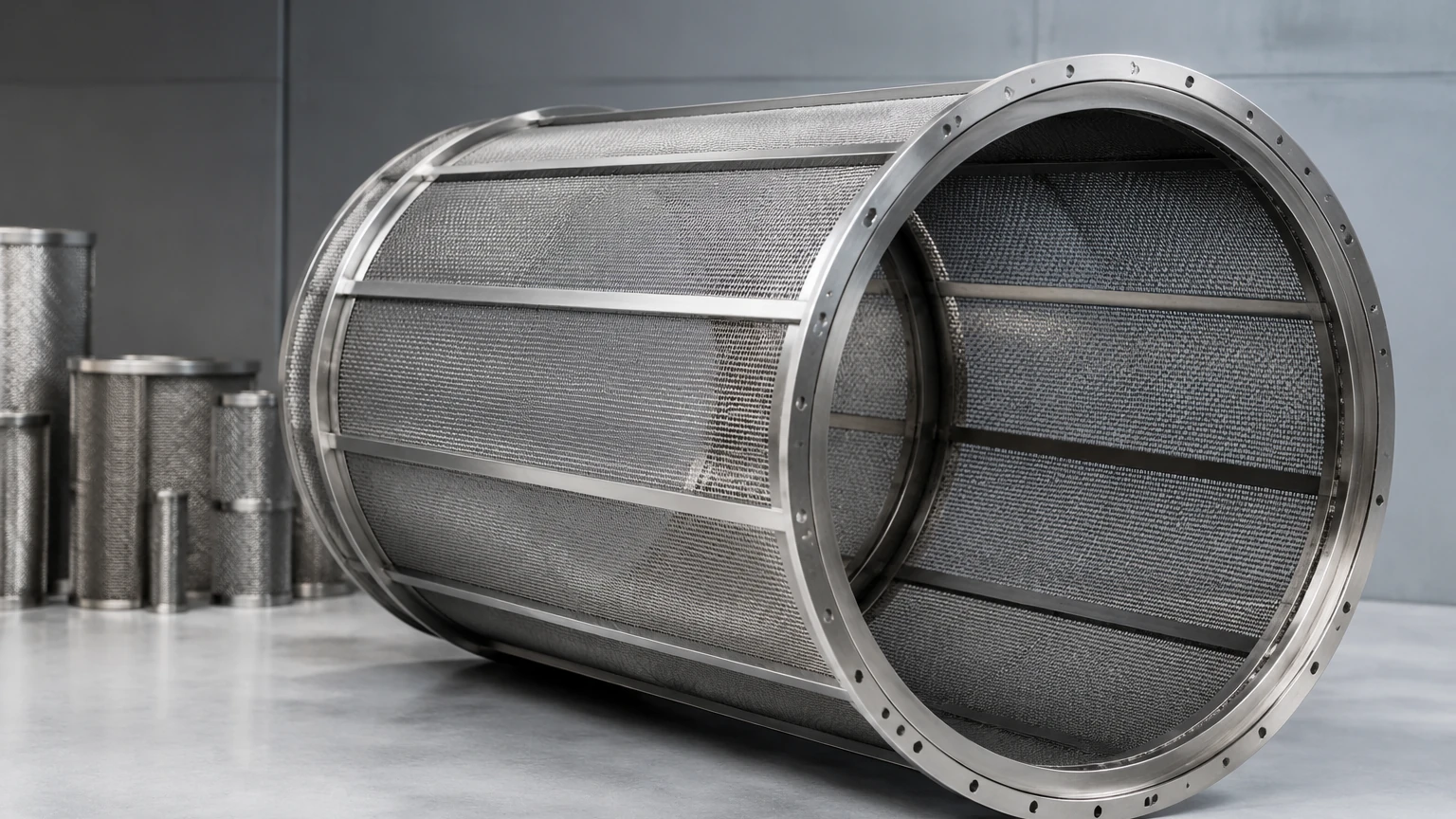
A drum screen operates on a relatively simple but highly effective mechanical principle: a rotating cylindrical drum, covered with a screening medium (such as wedge wire or woven wire mesh), filters out solids as liquid passes through the screen surface. The rotation of the drum, often assisted by internal baffles or external spray bars, ensures that the screen surface is continuously cleaned, preventing the blinding or clogging that often plagues static filtration systems.
There are two primary configurations for drum screens used in industrial settings:
1. Internal Feed Drum Screens: The influent enters the interior of the rotating drum. As the drum rotates, the liquid passes through the screen while the solids are captured on the internal surface. These solids are then conveyed by the rotation (and often an internal screw or flighting) toward a discharge point at the end of the drum.
2. External Feed Drum Screens: The liquid is distributed over the exterior surface of the rotating drum. The filtrate passes through the mesh into the center of the drum and is collected in a basin, while the solids remain on the outer surface and are scraped off by a doctor blade or washed off by a spray system.
Each configuration offers specific advantages depending on the solids loading, particle size distribution, and the desired dryness of the recovered solids.
Key Components and Engineering Considerations
The efficiency of a drum screen is not merely a function of its size, but of the engineering precision of its individual components. When specifying a drum screen for a new installation or a retrofit, several technical factors must be evaluated.
The Screening Medium
The heart of the drum screen is the filter medium itself. Depending on the application, this may consist of:
* Wedge Wire (V-Wire): Known for its non-clogging characteristics and high structural strength. The V-shaped profile of the wire ensures that any particle small enough to pass through the initial gap will continue through without getting stuck.
* Woven Wire Mesh: Ideal for finer filtration requirements. Woven mesh provides a high percentage of open area, which maximizes flow rates for a given footprint.
* Perforated Plate: Used for heavy-duty applications where high impact or abrasive solids are present. While it offers lower open area than mesh, it provides superior mechanical durability.
Structural Integrity and Alignment
Because drum screens are rotating equipment, mechanical balance and alignment are critical. A drum that is out of round or improperly balanced will experience premature bearing failure and uneven wear on the screen medium. Engineers must ensure that the support frame and drive system are designed to handle the hydraulic load and the weight of the captured solids during peak flow periods.
Material Selection: The Role of Stainless Steel and Precision Mesh
Material compatibility is a primary concern in industrial filtration, particularly in the chemical processing and wastewater sectors. Most high-performance drum screens utilize stainless steel for both the screening medium and the structural cage.
Corrosion Resistance
Standard 304 stainless steel is often sufficient for general water treatment applications. However, in environments involving chlorides, high temperatures, or acidic process fluids (such as in the pharmaceutical or food industries), 316L stainless steel is the industry standard. 316L offers superior resistance to pitting and crevice corrosion, which is vital for maintaining the integrity of the fine wire mesh used in precision filtration.
Durability and Surface Finish
The surface finish of the drum screen components also impacts performance. A smooth, electropolished surface can reduce the adhesion of organic solids, making the self-cleaning mechanism more effective and reducing the frequency of deep-cleaning cycles. This is particularly important in the food and beverage industry, where hygiene and Clean-in-Place (CIP) capabilities are mandatory.
Operational Performance: Flow Rates and Filtration Accuracy
When selecting a drum screen, engineers must balance the micron rating (filtration accuracy) with the required hydraulic capacity.
Calculating Flow Capacity
The flow capacity of a drum screen is influenced by several variables:
* Effective Screen Area: This is the total surface area minus the area blocked by structural supports.
* Open Area Percentage: A higher open area allows for higher flow rates but may compromise the mechanical strength of the mesh.
* Drum Rotation Speed: Increasing the RPM can improve solids removal but may also lead to "carry-over," where liquid is trapped with the solids instead of passing through the screen.
* Viscosity and Temperature: The physical properties of the fluid significantly impact how easily it passes through a fine mesh.
Filtration Accuracy (Micron Rating)
Drum screens can be configured for a wide range of separation tasks, from coarse screening (5mm or larger) to fine filtration (20 microns). For applications requiring high precision, such as protecting membrane bioreactors (MBR) or fine spray nozzles, the consistency of the mesh opening is paramount. Any deviation in the wire spacing can allow oversized particles to pass, potentially damaging downstream equipment.
Applications Across Diverse Industrial Sectors
The versatility of the drum screen makes it a staple in various industrial workflows.
* Wastewater Treatment: Used as a headworks screen to remove rags, plastics, and organic debris that could clog pumps and aerators.
* Food and Beverage Processing: Essential for wash water recovery in vegetable processing, removing skins and seeds, and clarifying juices.
* Pulp and Paper: Used for fiber recovery and white water filtration, helping mills close their water loops and reduce fresh water consumption.
* Chemical and Pharmaceutical: Provides reliable separation of catalysts or crystalline products from mother liquors under controlled conditions.
* Hydraulic Systems: In large-scale cooling water intakes, drum screens prevent aquatic life and debris from entering heat exchangers and cooling towers.
Selection Criteria for Engineers and Purchasing Teams
Before finalizing a purchase or specifying a custom drum screen component, technical teams should confirm several key data points to ensure the solution is fit for purpose.
1. Solids Loading: What is the average and peak concentration of solids (TSS)? High solids loading may require a larger drum or a more aggressive cleaning system.
2. Particle Characteristics: Are the solids abrasive, fibrous, or greasy? This dictates whether wedge wire or woven mesh is more appropriate.
3. Chemical Environment: What is the pH range and temperature of the fluid? This determines the grade of stainless steel required.
4. Footprint Constraints: In retrofit applications, the physical space available may limit the diameter or length of the drum, requiring a more efficient mesh design to maintain flow rates.
5. Total Cost of Ownership (TCO): Beyond the initial purchase price, consider the cost of replacement screens, energy consumption of the drive motor, and the volume of wash water required for the cleaning system.
By focusing on these technical boundaries, purchasing teams can avoid the common pitfall of selecting a system based solely on price, only to face high operational costs due to frequent mesh failures or inefficient separation.
Maintenance Strategies and Component Longevity
Even the most robust drum screen requires a structured maintenance program to ensure longevity. The most common failure point in these systems is the screening medium itself, which can suffer from mechanical fatigue or localized damage from heavy debris.
Inspection Protocols
Regular inspections should focus on the integrity of the mesh-to-frame bonds. In custom-manufactured drums, the method of attachment (such as welding or mechanical clamping) must be checked for signs of stress corrosion cracking. Additionally, the spray nozzles used for self-cleaning must be monitored for clogging; a partially blocked spray bar will lead to uneven cleaning, which causes the drum to become unbalanced.
Replacement Cycles
The lifespan of a stainless steel filter screen varies significantly by application. In non-abrasive water treatment, a high-quality screen may last several years. In abrasive mining or chemical applications, the screen may need replacement every 6 to 12 months. Working with a dedicated manufacturer like Kaifil allows for the production of custom-sized replacement cartridges and mesh panels that meet or exceed OEM specifications, ensuring that the system returns to peak efficiency quickly after a maintenance interval.
Conclusion
The drum screen remains a cornerstone of efficient industrial filtration due to its ability to provide continuous, self-cleaning separation in demanding environments. By prioritizing material quality, precise engineering of the mesh, and a clear understanding of hydraulic requirements, engineers can implement filtration solutions that protect their infrastructure and optimize their processes. For organizations seeking high-performance stainless steel components and customized filtration engineering, exploring the resources available on the Main Page is a critical step in the technical procurement process.
