


Hydraulic Filter Element
In industrial hydraulic systems, the hydraulic filter element is the primary line of defense against particulate contamination. These components are engineered to remove metal shavings, silica, elastomers, and other debris from hydraulic fluids, which would otherwise lead to component wear, valve stiction, and catastrophic system failure. For engineers and maintenance professionals, selecting the correct hydraulic filter element requires a deep understanding of fluid dynamics, material science, and the specific operational demands of the machinery involved.
As a specialized manufacturer, Kaifil provides precision-engineered stainless steel filtration solutions designed to meet the rigorous standards of modern industrial applications. By focusing on durability and filtration accuracy, Kaifil supports global industries in maintaining system integrity through high-performance components. For more information on our full range of capabilities, visit our Main Page.
Technical Fundamentals of Hydraulic Filtration
The performance of a hydraulic filter element is defined by its ability to capture particles while maintaining a manageable pressure drop. To evaluate an element, engineers typically look at three core metrics: filtration rating (micron size), efficiency (Beta ratio), and dirt-holding capacity.
Micron Rating and Beta Ratio
The micron rating indicates the size of particles the filter is designed to capture. However, a simple micron rating is often insufficient for industrial specifications. Instead, the Beta Ratio ($β$) is used to describe filtration efficiency. The Beta Ratio is calculated by dividing the number of particles upstream of the filter by the number of particles downstream for a specific size. For example, a $β_{10} = 200$ rating means that for every 200 particles of 10 microns entering the filter, only one passes through, representing 99.5% efficiency.
ISO 4406 Cleanliness Standards
Hydraulic systems are often governed by ISO 4406 codes, which represent the number of particles in three size categories: >4 μ m, >6 μ m, and >14 μ m. The hydraulic filter element must be selected to achieve the specific ISO code required by the most sensitive component in the system, such as a high-pressure piston pump or a servo valve.
Material Selection: Stainless Steel vs. Synthetic Media
The choice of filter media is perhaps the most critical decision in the design of a hydraulic filter element. While disposable glass fiber and paper media are common, stainless steel wire mesh offers distinct advantages in specific industrial environments.
Stainless Steel Wire Mesh
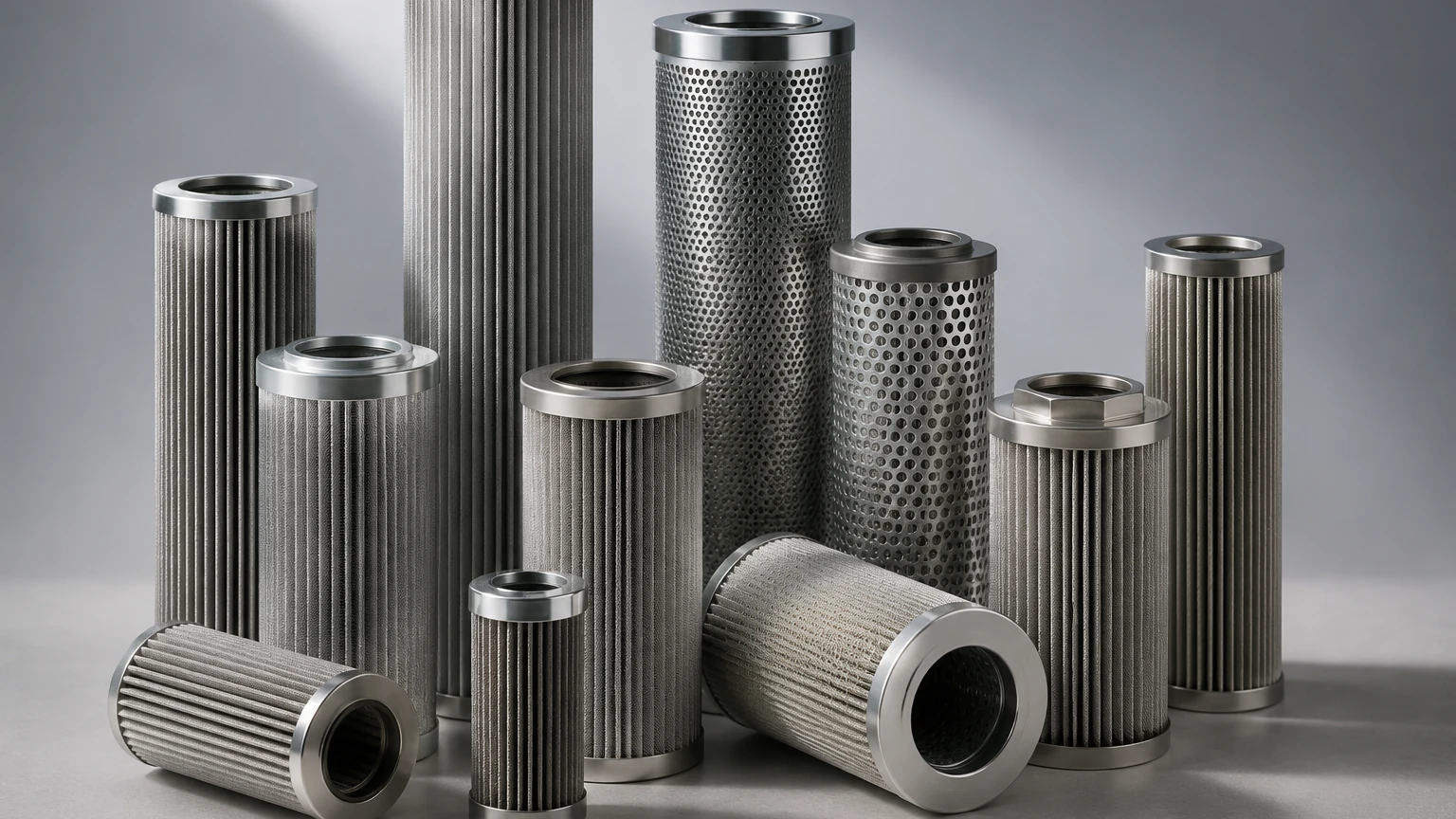
Stainless steel elements are preferred in applications involving high temperatures, aggressive chemical fluids, or where the filter must be cleaned and reused. Kaifil specializes in weaving and fabricating these metallic elements to provide high structural integrity. Unlike synthetic fibers, stainless steel mesh does not suffer from media migration—a phenomenon where bits of the filter material itself break off and enter the downstream flow.
Microglass and Cellulose
Microglass (borosilicate) media provides excellent dirt-holding capacity and high Beta ratios but is typically non-cleanable. Cellulose (paper) is an economical choice for low-pressure, non-critical applications but lacks the durability required for high-cycle hydraulic systems. For engineers managing systems with high fluid compatibility requirements, the inert nature of stainless steel often makes it the superior technical choice.
Engineering Considerations: Pressure Drop and Flow Fatigue
Every hydraulic filter element introduces a restriction to the flow, known as pressure drop ($ΔP$). An optimized element balances high filtration efficiency with low resistance to minimize energy loss and prevent the system from entering bypass mode prematurely.
Clean Pressure Drop
The initial pressure drop of a clean filter element depends on the media's permeability, the fluid's viscosity, and the flow rate. As the element captures contaminants, the $ΔP$ increases. If the pressure drop exceeds the setting of the system's bypass valve, the fluid will circumvent the filter entirely, allowing contaminated oil to reach sensitive downstream components.
Flow Fatigue and Structural Integrity
Hydraulic systems often experience rapid fluctuations in flow and pressure. This creates mechanical stress on the filter media. A high-quality hydraulic filter element must be designed to withstand flow fatigue without pleat collapse or media rupture. Stainless steel elements, with their rigid structures and reinforced support layers, offer exceptional resistance to these dynamic forces compared to standard synthetic alternatives.
Customization and OEM Integration
Standard off-the-shelf filters do not always meet the unique spatial or performance constraints of specialized industrial machinery. Customization is often necessary to ensure the hydraulic filter element integrates seamlessly into an existing housing or meets a specific chemical resistance profile.
Tailored Dimensions and End Caps
Engineers can specify exact lengths, diameters, and end cap configurations (such as threaded, O-ring, or flat gasket seals) to fit proprietary housings. Kaifil works closely with OEM partners to develop customized filtration components that align with specific equipment footprints. This includes selecting appropriate sealing materials, such as Viton or EPDM, to ensure compatibility with various hydraulic fluids, including fire-resistant phosphate esters.
Specialized Pleat Geometry
The surface area of a filter element is directly related to its service life. By optimizing the pleat count and depth, manufacturers can maximize the effective filtration area within a confined volume. This engineering precision reduces the frequency of maintenance intervals and lowers the total cost of ownership for the end-user. Detailed technical specifications for customized solutions can be reviewed on our Main Page.
Maintenance and Longevity of Metal Mesh Elements
One of the primary benefits of utilizing a stainless steel hydraulic filter element is its cleanability. In many industrial processes, the ability to recover and reuse a filter element provides significant long-term cost savings and reduces environmental waste.
Cleaning Procedures
Stainless steel mesh elements can be cleaned using ultrasonic baths, chemical solvents, or back-flushing techniques, depending on the nature of the contaminant. It is essential to follow manufacturer-recommended cleaning protocols to ensure that the pore structure of the mesh is not damaged during the process. After cleaning, elements should be inspected for integrity, often via a bubble point test, to verify that they still meet their original filtration rating.
Monitoring Element Health
Differential pressure indicators are the most reliable way to monitor the status of a hydraulic filter element. These devices alert maintenance teams when the element is reaching its dirt-holding capacity. Replacing or cleaning the element at the right time prevents the system from running in bypass and ensures that the fluid remains within the target ISO cleanliness level.
Selecting the Right Supplier for Industrial Hydraulic Filters
When sourcing a hydraulic filter element, purchasing teams must look beyond the initial price and consider the manufacturer's technical expertise and quality control processes. A failure in a $50 filter element can lead to the failure of a $50,000 hydraulic pump.
Quality Assurance and Certification
A reliable supplier should provide documentation regarding the materials used and the performance testing conducted. This includes verification of the stainless steel grade (typically 304 or 316L) and adherence to ISO standards for filter testing. Precision in the manufacturing process ensures that the pore size is consistent across the entire surface of the element, preventing "leaks" of oversized particles.
Technical Support and Application Knowledge
Industrial filtration is rarely a one-size-fits-all solution. A supplier like Kaifil acts as a technical partner, helping engineers navigate the complexities of fluid compatibility, viscosity changes at different temperatures, and the specific challenges of various industries, from chemical processing to heavy industrial power units. By leveraging manufacturing expertise and engineering knowledge, Kaifil helps organizations achieve optimized filtration performance and extended equipment life.
For engineers looking to specify new components or replace existing elements with high-durability stainless steel alternatives, understanding these technical boundaries is the first step toward a more reliable hydraulic system. Explore our specialized filtration products and engineering support at our Main Page.
