


Oil Coalescing
In industrial fluid management, the separation of immiscible liquids—specifically the removal of oil from water or air—is a critical process for operational efficiency, equipment longevity, and environmental compliance. Oil coalescing is the technical process by which small droplets of a dispersed phase (oil) are induced to merge into larger droplets, eventually forming a continuous phase that can be easily separated from the carrier fluid (water or gas) through gravity or mechanical means.
For engineers and procurement professionals, understanding the mechanics of oil coalescing is essential when specifying filtration systems. Whether the application involves treating industrial wastewater, maintaining hydraulic fluid purity, or ensuring clean compressed air, the choice of coalescing media and the design of the filter housing significantly impact the system's total cost of ownership and performance. As a manufacturer of precision stainless steel filtration components, Kaifil provides the technical hardware necessary to facilitate efficient coalescing in demanding industrial environments.
The Fundamental Principles of Oil Coalescing
The physics of oil coalescing relies on the interaction between fluid dynamics and material science. In a typical oil-in-water emulsion, oil droplets may be as small as a few microns. These droplets are often stable due to surface tension and electrical charges, preventing them from naturally merging. To achieve separation, these droplets must be brought into contact with one another.
The Three Stages of Coalescence
1. Capture: As the contaminated fluid passes through a porous medium, such as a stainless steel wire mesh or a multi-layered filter cartridge, the dispersed oil droplets come into contact with the fibers or wires of the media. This occurs through three primary mechanisms: direct interception, inertial impaction, and Brownian diffusion.
2. Merging (Coalescence): Once captured on the surface of the media, the oil droplets begin to accumulate. As more droplets are trapped, they merge with existing droplets to form larger masses. The surface energy of the filter media plays a vital role here; oleophilic (oil-attracting) surfaces encourage the oil to spread and join together.
3. Release and Separation: Once the coalesced droplets reach a sufficient size, the drag forces of the flowing fluid exceed the adhesive forces holding the oil to the media. The large droplets are then released. Because of the density difference between oil and the carrier fluid, these larger droplets either rise to the surface (in liquid-liquid separation) or fall to a collection sump (in gas-liquid separation).
From an engineering perspective, the efficiency of this process is governed by Stokes' Law, which relates the settling (or rising) velocity of a droplet to its size and the viscosity of the surrounding fluid. By increasing the droplet size through coalescing, the separation velocity increases exponentially, allowing for smaller separator vessels and faster processing times.
Engineering Considerations for Coalescing Media Selection
Selecting the appropriate media for oil coalescing requires a balance between filtration fineness, flow rate, and chemical compatibility. While synthetic materials are common in some applications, stainless steel remains the preferred choice for high-temperature, high-pressure, or chemically aggressive industrial processes.
Material Compatibility and Durability
Industrial environments often involve fluids with extreme pH levels or high temperatures that would degrade polymer-based filters. Stainless steel (typically grades 304 or 316L) offers superior resistance to corrosion and thermal stress. In chemical processing or steam-assisted oil recovery, the structural integrity of the coalescing element is paramount to prevent media migration, which could contaminate downstream processes.
Surface Tension and Media Structure
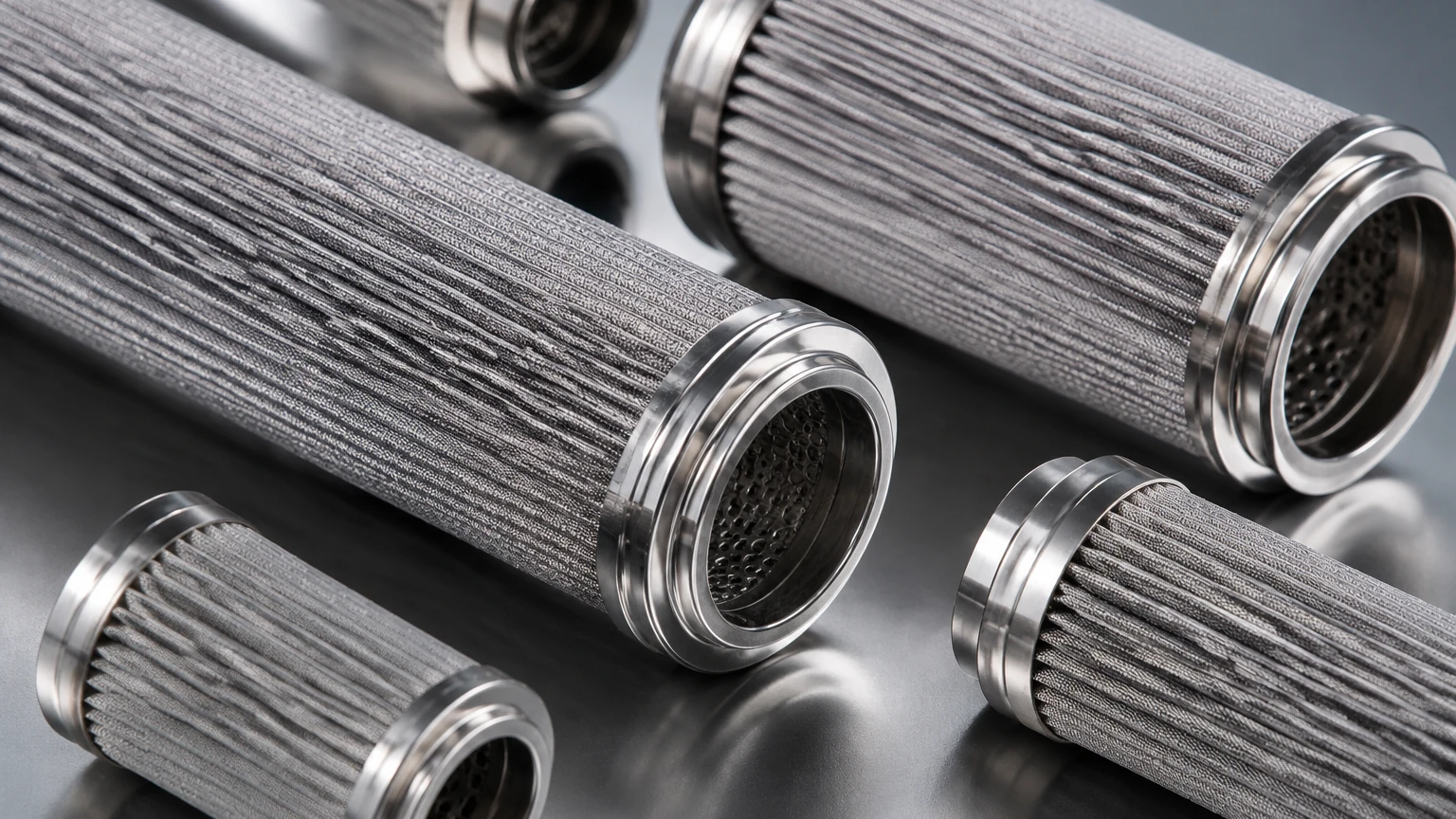
The structure of the media—whether it is a pleated wire mesh, a sintered metal fiber felt, or a multi-layered cartridge—determines the available surface area for droplet capture. Sintered metal fibers provide a high-porosity structure that maximizes capture points while maintaining a low pressure drop. Engineers must evaluate the surface tension of the fluids involved; in some cases, specialized coatings or surface treatments are applied to the stainless steel to enhance its oleophilic or hydrophobic properties, thereby optimizing the coalescing effect.
Applications of Oil Coalescing in Industrial Sectors
Oil coalescing technology is ubiquitous across various sectors, each with unique technical requirements for separation efficiency and flow capacity.
Compressed Air and Gas Systems
In compressed air systems, oil aerosols from compressor lubrication can contaminate pneumatic tools, sensitive instruments, and end products. Coalescing filters are used to remove these sub-micron oil mists. The air passes through the media from the inside out, causing the oil to collect on the outer surface and drip into a bowl for drainage. High-quality stainless steel supports are often used to ensure the filter element does not collapse under the high differential pressures common in these systems.
Produced Water and Wastewater Treatment
In the oil and gas industry, "produced water" contains significant amounts of dispersed hydrocarbons. To meet environmental discharge regulations, this water must be treated. Oil coalescing units using stainless steel mesh packs or corrugated plates provide a robust solution for removing free and dispersed oil. The durability of metal media allows for aggressive cleaning protocols, which are often necessary when dealing with heavy crude or paraffin-rich fluids.
Hydraulic and Lubrication Systems
Water contamination in hydraulic oil can lead to component corrosion, fluid oxidation, and reduced lubricity. While vacuum dehydration is one method for water removal, coalescing is often used to remove free water from hydraulic reservoirs. By circulating the oil through a coalescing station, water droplets are merged and settled out, maintaining the fluid within the required ISO cleanliness codes.
Evaluating Performance: Efficiency vs. Pressure Drop
A primary challenge in designing an oil coalescing system is the trade-off between separation efficiency and pressure drop ($\\Delta P$). A denser media with smaller pores will capture smaller droplets more effectively but will also restrict flow, leading to higher energy consumption and more frequent maintenance.
Micron Ratings and Saturation
Engineers must specify the micron rating based on the expected droplet size distribution of the influent. It is important to note that coalescing filters operate differently than standard particulate filters. As the coalescing media becomes saturated with oil, the pressure drop will stabilize. A sudden increase in $\\Delta P$ usually indicates particulate fouling rather than oil saturation. Therefore, pre-filtration is often recommended to remove solid contaminants before they reach the coalescing stage, extending the service life of the more expensive coalescing element.
Flow Velocity Limits
Coalescing is a velocity-sensitive process. If the fluid velocity through the media is too high, the shear forces may break apart the coalescing droplets before they can grow large enough to separate, a phenomenon known as "re-entrainment." System designers must ensure that the filter housing is sized correctly to maintain laminar flow conditions within the media, typically keeping face velocities within specific ranges determined by the fluid's viscosity and density.
Maintenance and Total Cost of Ownership (TCO)
While the initial capital expenditure for stainless steel coalescing components may be higher than for disposable synthetic options, the long-term TCO is often lower in industrial B2B contexts.
1. Cleanability: Stainless steel filters can be cleaned using ultrasonic baths, chemical solvents, or backwashing, allowing them to be reused multiple times. This reduces the waste disposal costs associated with contaminated disposable filters.
2. Reliability: Metal media does not suffer from the brittle failure or chemical breakdown seen in plastics, reducing the risk of unplanned downtime.
3. Customization: Industrial processes rarely fit a "one size fits all" model. Custom-engineered filtration components allow for optimized performance tailored to specific flow rates and fluid characteristics.
Before moving forward with a filtration project, technical teams should confirm the fluid's chemical composition, operating temperature, maximum allowable pressure drop, and the specific target for oil concentration in the effluent. For comprehensive details on custom filtration components and engineering support, professionals can visit the Main Page to explore technical specifications and manufacturing capabilities.
Conclusion
Oil coalescing is a sophisticated separation technology that requires a deep understanding of both fluid mechanics and material science. By leveraging high-performance stainless steel media, industrial operations can achieve high-efficiency separation even in the most demanding environments. Whether the goal is protecting downstream equipment, recycling process fluids, or meeting environmental standards, the selection of the right coalescing hardware is a critical step in engineering a reliable system. Kaifil remains a dedicated partner in providing the precision-engineered stainless steel components that drive these essential industrial processes, ensuring that engineers have access to durable, high-performance solutions for their specific filtration challenges.
