


Thermosiphon Reboiler
In the landscape of industrial distillation and chemical processing, the thermosiphon reboiler stands as a cornerstone technology for heat transfer. Unlike forced-circulation systems that rely on mechanical pumps, a thermosiphon reboiler utilizes the natural physics of density differences to circulate process fluids. For engineers and plant managers, understanding the mechanics, design constraints, and maintenance requirements of these systems is essential for optimizing column performance and minimizing operational downtime.
At the heart of a successful reboiler operation is the management of fluid purity and the prevention of fouling. As a manufacturer specializing in precision stainless steel filtration, Kaifil recognizes that the efficiency of a thermosiphon reboiler is inextricably linked to the quality of the media passing through its heat exchanger tubes. This guide explores the technical nuances of thermosiphon reboilers and the critical role of filtration in maintaining their long-term viability.
Principles of Natural Circulation in Reboilers
The fundamental operation of a thermosiphon reboiler depends on the "thermosiphon effect." This process begins when a liquid from the bottom of a distillation column enters the reboiler. As heat is applied—typically via steam or another hot process fluid on the shell side—the liquid inside the tubes begins to boil.
As the liquid vaporizes, it forms a two-phase mixture of liquid and vapor. This mixture has a significantly lower density than the cold, single-phase liquid in the column’s downcomer. This density gradient creates a hydrostatic pressure imbalance, which acts as the driving force for circulation. The lighter, boiling mixture rises back into the distillation column, while the denser liquid from the column base continuously flows into the reboiler to replace it.
Because this system eliminates the need for a pump, it offers several advantages, including lower capital costs, reduced power consumption, and fewer moving parts that require maintenance. However, the reliance on natural circulation means the system is highly sensitive to pressure drops and hydraulic resistance.
Vertical vs. Horizontal Thermosiphon Configurations
Engineers must choose between vertical and horizontal configurations based on space constraints, fluid properties, and fouling tendencies.
Vertical Thermosiphon Reboilers
Vertical units are the most common in the industry. In this setup, the process fluid typically flows through the tubes (tube-side boiling), while the heating medium resides in the shell.
- Advantages: They require minimal floor space and generally exhibit higher heat transfer coefficients due to the high-velocity upward flow.
- Disadvantages: They require a specific elevation relative to the column to maintain the necessary hydrostatic head. Maintenance can be more complex as the entire tube bundle often needs to be pulled vertically.
Horizontal Thermosiphon Reboilers
In a horizontal configuration, boiling usually occurs on the shell side.
- Advantages: These units are easier to access for cleaning and maintenance. They are often preferred when dealing with high-pressure fluids or when the distillation column height is limited.
- Disadvantages: They occupy a larger footprint and may be more susceptible to vapor-binding if the piping is not designed correctly to allow for vapor escape.
Critical Engineering Considerations: Boiling Regimes and Stability
Designing a thermosiphon reboiler requires a deep understanding of boiling heat transfer. The system must operate within the nucleate boiling regime to maximize efficiency. If the heat flux becomes too high, the system may reach the "critical heat flux" or the Leidenfrost point, where a continuous film of vapor covers the tube surface. This "film boiling" drastically reduces heat transfer rates and can lead to localized overheating and equipment damage.
Stability is another major concern. Thermosiphon loops are prone to various types of flow instabilities, such as density wave oscillations or pressure drop oscillations. These instabilities can cause surging in the distillation column, leading to poor separation efficiency and mechanical stress on the heat exchanger. Engineers must carefully calculate the "driving head" and ensure that the pressure drop across the inlet piping, the reboiler itself, and the return piping is balanced to maintain steady-state flow.
The Impact of Fouling on Reboiler Performance
Fouling is perhaps the greatest challenge in the operation of a thermosiphon reboiler. Fouling refers to the accumulation of unwanted material on the heat transfer surfaces. In reboilers, this often takes the form of:
- Coking: In high-temperature hydrocarbon processing, organic materials can break down and form hard carbon deposits.
- Scaling: Mineral deposits from hard water or chemical precipitates.
- Particulate Accumulation: Silt, sand, or corrosion products (rust) carried from other parts of the process loop.
As a layer of fouling builds up, it acts as an insulator, increasing the thermal resistance and requiring higher steam temperatures to maintain the same heat duty. This not only wastes energy but also accelerates further fouling. Furthermore, fouling increases the internal pressure drop. In a natural circulation system, even a slight increase in resistance can significantly reduce the circulation rate, eventually leading to a complete stall of the thermosiphon effect.
The Role of Stainless Steel Filtration in Reboiler Protection
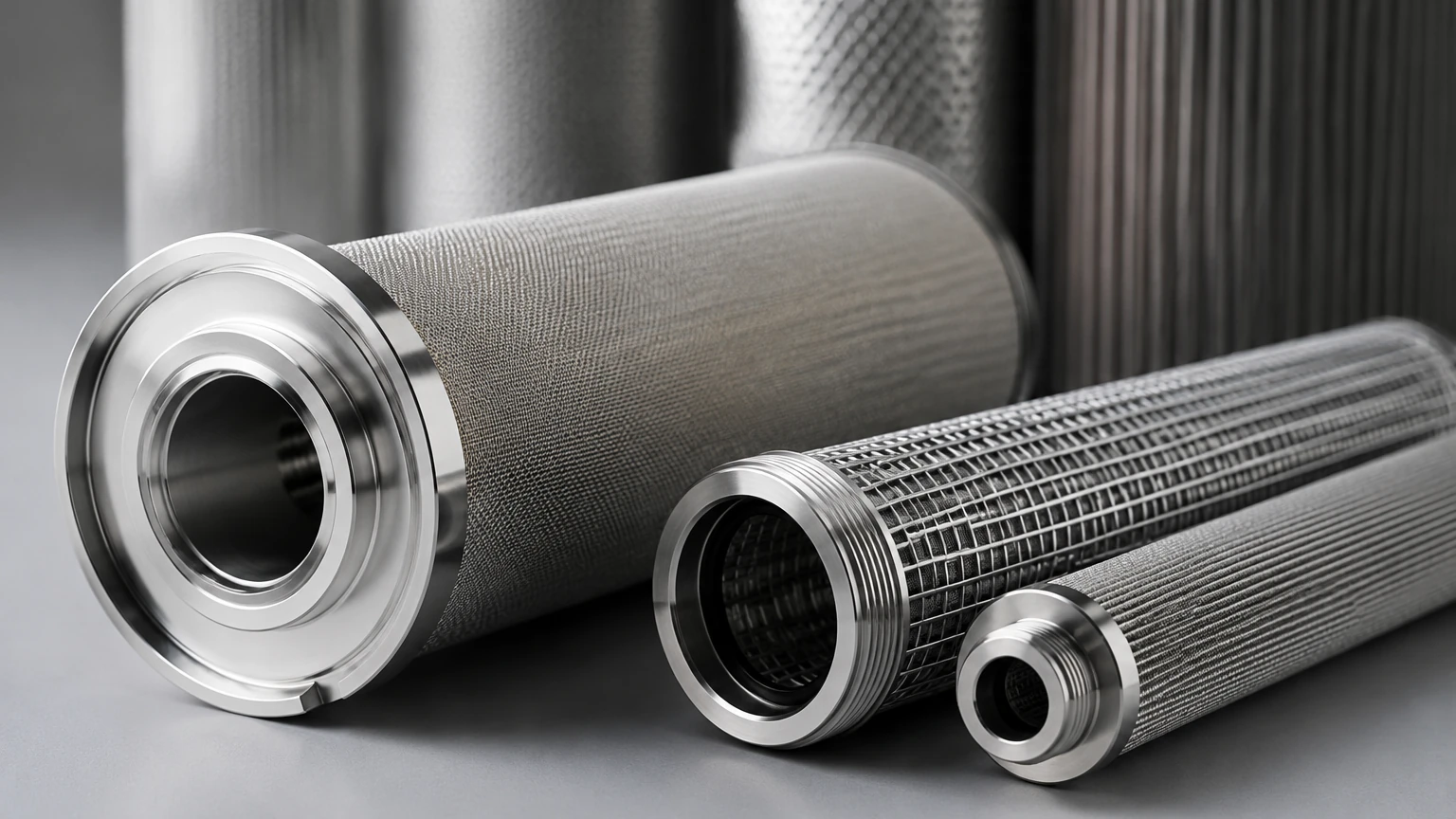
To mitigate fouling and ensure consistent heat transfer, industrial filtration is a non-negotiable component of the system design. High-performance stainless steel filters are strategically placed upstream of the reboiler to remove suspended solids that would otherwise settle in the heat exchanger tubes.
Why Stainless Steel?
In the demanding environments of chemical plants and refineries, plastic or fabric filters often fail due to high temperatures and corrosive fluids. Stainless steel (specifically grades 304 and 316L) offers:
- Temperature Resistance: Capable of withstanding the high operating temperatures typical of reboiler feeds.
- Chemical Compatibility: Resistant to a wide range of solvents, acids, and hydrocarbons.
- Durability: Unlike disposable cartridges, stainless steel wire mesh filters can be cleaned and reused, providing a lower total cost of ownership.
Filter Selection for Thermosiphon Systems
When selecting filtration components for a reboiler loop, engineers should consider the following:
1. Micron Rating: The filter must be fine enough to capture particles that could initiate fouling, but not so fine that it creates an excessive pressure drop that hampers the natural circulation.
2. Flow Capacity: The filter housing and element must be sized to handle the full circulation flow without significant restriction.
3. Customization: Every distillation process is unique. Custom-engineered filter cartridges or pleated wire mesh elements allow for optimized surface area within a compact footprint.
For more information on specialized filtration components for industrial systems, you can visit our Main Page to review product options and application support.
Maintenance and Replacement Cycles
While thermosiphon reboilers are designed for longevity, they are not "set and forget" systems. Regular monitoring of the temperature approach (the difference between the heating medium and the process fluid) and the pressure drop across the unit is vital.
A sudden decrease in the circulation rate often indicates that the reboiler tubes or the upstream filters are becoming restricted. By implementing a scheduled cleaning cycle for the stainless steel filter elements, operators can extend the intervals between major reboiler shutdowns. In many cases, cleaning a filter takes hours, whereas mechanically cleaning a reboiler bundle can take days and require a full plant turnaround.
Total Cost Considerations for Purchasing Teams
When evaluating a thermosiphon reboiler project, purchasing teams should look beyond the initial capital expenditure (CAPEX). The total cost of ownership (TCO) is heavily influenced by:
- Energy Efficiency: A clean, well-filtered reboiler uses less steam.
- Downtime: Every day of unscheduled maintenance represents lost production revenue.
- Consumables: Investing in cleanable stainless steel filtration components reduces the ongoing cost of replacing disposable filter bags or cartridges.
By prioritizing high-quality materials and robust engineering at the outset, companies can ensure that their distillation columns operate at peak efficiency for decades.
Conclusion
The thermosiphon reboiler remains a preferred choice for industrial heat transfer due to its simplicity and efficiency. However, its reliance on the delicate balance of natural circulation makes it sensitive to hydraulic resistance and fouling. Integrating precision filtration solutions, such as those manufactured by Kaifil, is a critical step in protecting these assets. By ensuring the process fluid is free of damaging particulates, engineers can maintain the integrity of the heat transfer surfaces, stabilize the boiling process, and achieve the reliable performance required in modern industrial applications.
