


Used Pressure Leaf Filters
In industrial liquid-solid separation, pressure leaf filters are a cornerstone technology for high-volume filtration across the chemical, food and beverage, and pharmaceutical sectors. For many engineering and procurement teams, the decision to source used pressure leaf filters is often driven by the dual pressures of budget constraints and urgent lead times. While the secondary market offers significant cost advantages, integrating a used unit into a modern production line requires a rigorous technical evaluation of the vessel’s structural integrity and the precision of its internal filtration components.
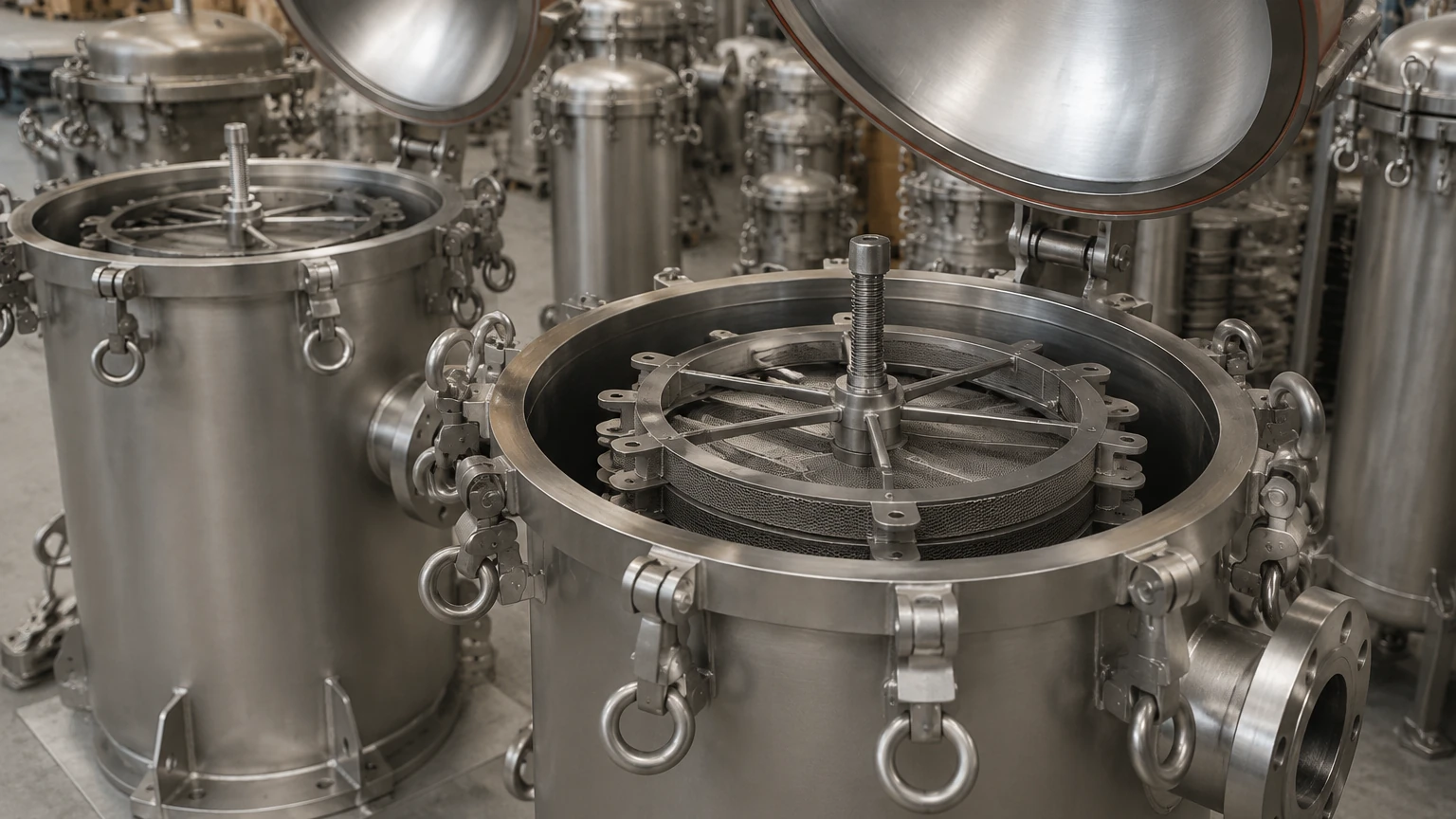
Pressure leaf filters operate by forcing a slurry under pressure through a series of internal leaves, each consisting of multiple layers of stainless steel wire mesh. Whether the system is a vertical pressure leaf filter (VPLF) for smaller footprints or a horizontal pressure leaf filter (HPLF) for larger capacities, the efficiency of the system depends entirely on the condition of these internal elements. When evaluating used equipment, the focus must shift from the external price tag to the internal engineering specifications and the potential need for customized replacement components to ensure the system meets specific process requirements.
The Role of Pressure Leaf Filters in Industrial Processing
Pressure leaf filters are preferred in industries where high clarity is required and where the solids (filter cake) must be recovered in either a dry or sluiced form. Common applications include the filtration of edible oils, sulfur, brine, and various chemical catalysts. The system’s design allows for a large filtration area within a relatively small pressure vessel, making it more efficient than traditional plate and frame presses in terms of floor space and labor.
In a typical cycle, the vessel is filled with a slurry, and a pre-coat (often diatomaceous earth or perlite) is applied to the leaves. The pressure differential drives the liquid through the mesh while the solids are retained on the surface. Because the process involves high pressures—often ranging from 3 to 6 bar—and potentially corrosive fluids, the mechanical condition of used pressure leaf filters is paramount. A failure in the vessel or the internal manifold can lead to significant downtime and safety hazards.
Evaluating the Viability of Used Pressure Leaf Filters
When an organization considers purchasing used pressure leaf filters, the primary motivation is usually the reduction of capital expenditure (CAPEX). A used unit can cost 40% to 60% less than a new one. Furthermore, while a new custom-engineered filter might have a lead time of 20 to 30 weeks, a used unit can often be delivered and refurbished within a fraction of that time.
However, the "as-is" condition of used equipment carries inherent risks. Engineers must determine if the previous application of the filter is compatible with the new intended use. For instance, a filter used in the edible oil industry may have different seal materials and mesh specifications than one required for a corrosive chemical process. The technical audit of a used unit should focus on three main areas: the pressure vessel, the leaf-pack assembly, and the discharge mechanism.
Technical Inspection: Vessel Integrity and Pressure Ratings
The pressure vessel is the most critical structural component of the system. Because these units are subject to cyclic pressure loading, they are prone to metal fatigue over decades of use. When inspecting used pressure leaf filters, the following engineering factors must be verified:
1. ASME/PED Certification: Ensure the vessel carries a valid nameplate and documentation (such as U1 forms in the US). This confirms the original design pressure and temperature ratings.
2. Corrosion and Erosion: Internal surfaces should be inspected for pitting or thinning, especially near the weld seams. If the filter was used with acidic or abrasive slurries, the wall thickness may have been compromised.
3. Seal and Gasket Surfaces: The main closure—whether it is a quick-opening bolt circle or a hydraulic swing-out door—must have pristine sealing surfaces. Any warping or deep scratches can prevent the vessel from holding pressure, leading to leaks.
4. Manifold Condition: The internal manifold that collects the filtrate from each leaf must be checked for alignment and blockages. A misaligned manifold will cause the leaves to sit improperly, leading to bypass and poor filtration quality.
The Internal Core: Assessing and Replacing Filter Leaves
The most common point of failure in used pressure leaf filters is the filter leaves themselves. These are precision-engineered components typically consisting of five or seven layers of stainless steel wire mesh. The outer "filter cloth" layer is usually a fine Dutch weave, while the inner layers provide drainage and structural support.
In the secondary market, leaves are often found in a state of disrepair. Common issues include:
* Blinding: Residual solids from the previous process may be permanently lodged in the mesh, reducing flow rates.
* Mechanical Damage: Tearing of the outer mesh or warping of the stainless steel frames due to improper cake discharge or over-pressurization.
* Incompatible Micron Ratings: The mesh on the used leaves may not match the particle size distribution of the new application.
Because the leaves are the "engine" of the filter, many engineers choose to purchase the used vessel but invest in a completely new set of custom-manufactured leaves. This approach combines the cost savings of used heavy machinery with the reliability of new, high-precision filtration media. For organizations looking to optimize their filtration performance with high-quality stainless steel components, visiting the Main Page of a specialist manufacturer like Kaifil provides insights into the customization options available for wire mesh filters and cartridges.
Operational Risks and Mitigation Strategies
Beyond the physical hardware, there are operational risks associated with used pressure leaf filters that must be mitigated during the procurement process. One major concern is cross-contamination. If a filter was previously used in a chemical plant and is now intended for food-grade oil processing, the cleaning requirements are extreme. Traces of previous chemicals can linger in the manifold or the dead spaces of the leaf frames.
Another risk is the availability of spare parts. Older models from manufacturers that have gone out of business or merged can be difficult to maintain. Before finalizing a purchase, the engineering team should verify that standard components—such as O-rings, vibrator motors for dry discharge, or sluice nozzles for wet discharge—are still available or can be retrofitted with modern equivalents.
To mitigate these risks, it is advisable to perform a "dye penetrant test" on the leaves and a hydrostatic test on the vessel before the unit is put into service. This ensures that there are no hairline cracks in the welds or the mesh frames that could expand under operational stress.
Engineering Checklist Before Purchasing Used Filtration Equipment
Before taking the next step in acquiring used pressure leaf filters, technical professionals should confirm the following details to avoid costly integration errors:
* Material Compatibility: Confirm that the stainless steel grade (304, 316, or 316L) of the vessel and leaves is suitable for the chemistry of the new process fluid.
* Filtration Area Calculation: Ensure the total square footage of the leaf pack is sufficient for the required flow rate and solids loading. A used unit might be cheaper, but if it is undersized, it will become a permanent bottleneck in the production line.
* Discharge Type: Determine if the unit is designed for dry cake discharge (using a pneumatic vibrator) or wet cake discharge (using an internal oscillating sluice header). Converting a unit from one to the other is technically complex and often cost-prohibitive.
* Automation Integration: Most used filters come with manual or obsolete control systems. Factor in the cost of new PLC-based controls, automated valves, and pressure sensors to bring the unit up to modern safety and efficiency standards.
Customization and Refurbishment
One of the most effective ways to utilize used pressure leaf filters is to treat the vessel as a shell and customize the internals. This is where the expertise of a professional manufacturer becomes invaluable. Custom-designed stainless steel filter leaves can be engineered to fit the existing manifold of a used unit while providing the exact filtration accuracy required for the new application.
By selecting specific wire mesh weaves and reinforcement structures, engineers can improve the cake release properties and extend the service life of the leaves. This hybrid approach—combining a used pressure vessel with new, high-performance internals—often results in the best total cost of ownership. It provides the structural reliability of a heavy-duty vessel with the precision of modern filtration technology.
Conclusion
Sourcing used pressure leaf filters is a strategic move for many industrial operations, offering a path to rapid capacity expansion and significant cost savings. However, the success of this strategy hinges on a deep understanding of filtration engineering and a thorough inspection of the equipment's mechanical and metallurgical condition.
While the vessel provides the containment, the internal stainless steel leaves provide the performance. Ensuring that these components are in peak condition—or replacing them with new, precision-engineered alternatives—is the key to achieving efficient, durable, and cost-effective filtration. For those seeking technical support or high-quality replacement components for industrial filtration systems, reviewing professional manufacturing capabilities at https://www.kaifil.com/ is a critical step in the refurbishment process. By focusing on factual boundaries and engineering rigor, procurement teams can turn a used asset into a high-performing component of their industrial infrastructure.
