


V Bank Filters
In the landscape of industrial filtration, achieving a balance between high airflow capacity and high-efficiency particle capture is a constant engineering challenge. V bank filters, often referred to as rigid cell filters or multi-V filters, represent a sophisticated solution to this problem. By utilizing a unique pleated geometry arranged in a series of V-shaped banks, these filters significantly increase the effective surface area of the filtration media without expanding the physical footprint of the filter frame.
For engineers and procurement professionals in sectors such as chemical processing, pharmaceuticals, and food production, understanding the technical nuances of v bank filters is essential for optimizing system performance and managing long-term operational costs. As a specialist in custom stainless steel filtration solutions, Kaifil provides the engineering expertise required to integrate high-performance filtration components into demanding industrial environments. To explore specific configurations, you can visit the Main Page for a comprehensive overview of available filtration technologies.
The Engineering Principles of V Bank Design
The primary advantage of the V bank configuration lies in its aerodynamic efficiency and surface area maximization. Standard flat-panel filters are limited by their face area; once the surface is saturated with particulates, the pressure drop increases rapidly, necessitating a replacement. In contrast, v bank filters utilize multiple "mini-pleat" packs assembled into a V-shape within a rigid header frame.
Surface Area and Face Velocity
By angling the filter media in a V-pattern, the total square footage of the media can be up to ten times greater than the face area of the filter frame. This increased surface area allows for a lower "media velocity" (the speed at which air or gas passes through the actual filter material) even when the "face velocity" (the speed at which air enters the filter frame) remains high. Lower media velocity results in higher filtration efficiency and a significantly lower initial pressure drop.
Pressure Drop and Energy Consumption
In industrial HVAC and process air systems, the energy required to move air through filters is a major operational expense. The V bank design reduces resistance to airflow. Because the pressure drop remains low for a longer duration compared to standard pleated filters, the system's fans do not need to work as hard, leading to measurable energy savings over the filter's lifecycle.
Material Selection and Structural Integrity
Industrial applications often involve harsh conditions, including high temperatures, humidity, and exposure to corrosive chemicals. Therefore, the choice of materials for both the media and the frame of v bank filters is a critical engineering decision.
Media Options
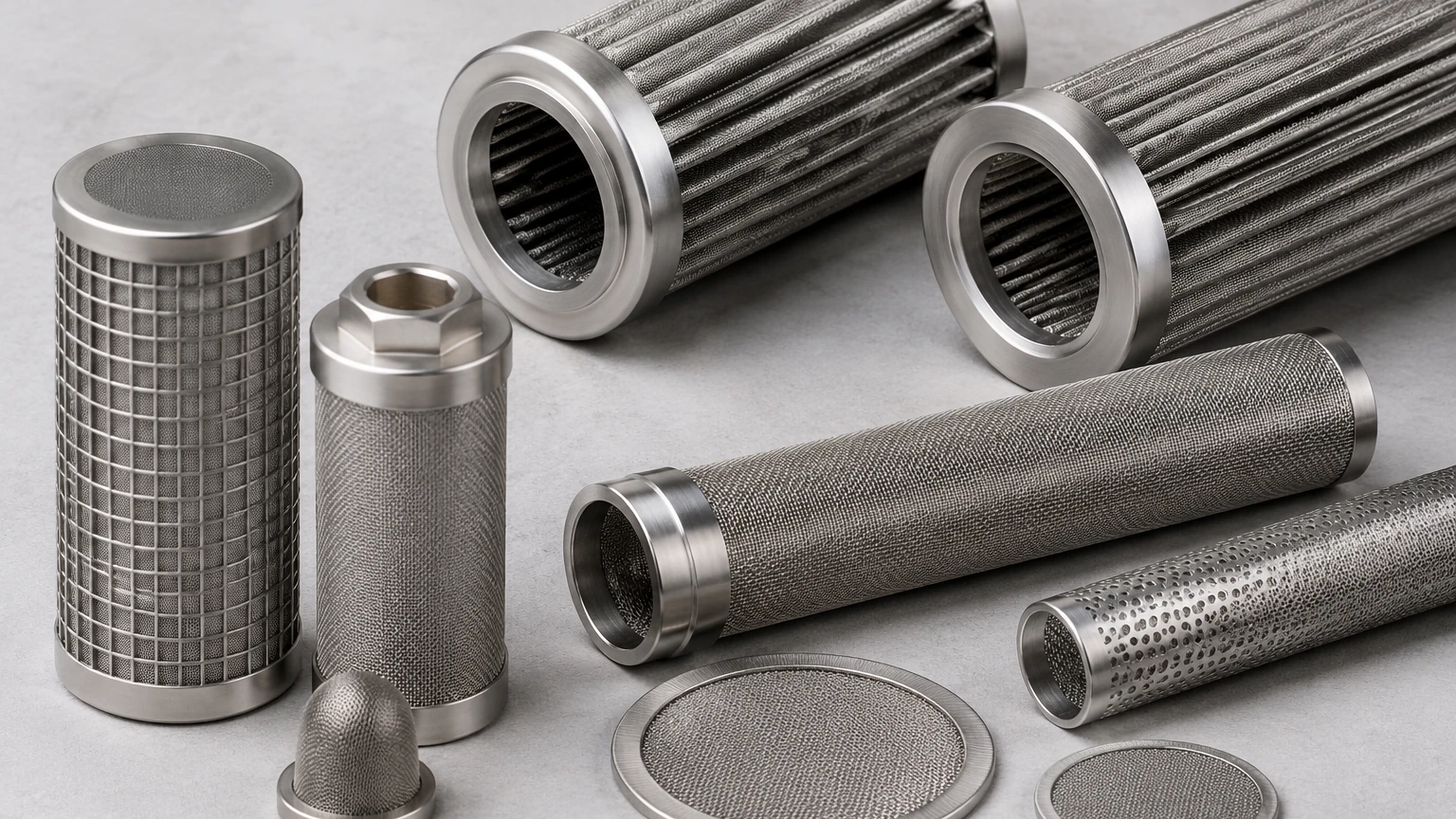
While many commercial V bank filters use glass fiber or synthetic media, heavy-duty industrial versions may incorporate specialized materials. In specific high-temperature or high-pressure applications, stainless steel wire mesh or sintered metal fibers may be utilized within a V-bank structure to provide mechanical strength and chemical resistance that organic fibers cannot match.
Frame Construction
Reliability in industrial filtration depends heavily on the integrity of the filter frame. Common materials include:
* High-Impact Plastic (ABS): Lightweight and corrosion-resistant, suitable for standard cleanroom and pharmaceutical applications.
* Galvanized Steel: Provides higher structural rigidity for high-velocity systems.
* Stainless Steel: The gold standard for food and beverage or chemical processing environments where hygiene and resistance to oxidation are paramount.
Kaifil specializes in the manufacturing of precision metal components that support these rigid structures, ensuring that the filter remains bypass-free even under fluctuating pressure loads.
Key Performance Metrics for Industrial Evaluation
When selecting v bank filters for a technical facility, engineers must look beyond the initial purchase price and evaluate performance based on several key metrics:
1. Dust Holding Capacity (DHC)
DHC refers to the total amount of contaminant a filter can retain before reaching its maximum allowable pressure drop (final resistance). V bank filters typically offer a much higher DHC than standard filters, which translates directly to longer service intervals and reduced labor costs for filter changes.
2. MERV and HEPA Ratings
Filtration efficiency is categorized by MERV (Minimum Efficiency Reporting Value) ratings or, for ultra-fine particle capture, HEPA (High-Efficiency Particulate Air) standards. Industrial V bank filters are commonly available in MERV 11 through MERV 16, and even HEPA grades (E10 to H14). The choice depends on the sensitivity of the downstream process, such as protecting turbine blades or maintaining sterile air in a pharmaceutical filling line.
3. Burst Pressure
In industrial settings, sudden pressure surges can occur. A high-quality V bank filter must have a high burst pressure rating to ensure that the media does not rupture or collapse into the ductwork, which could cause catastrophic downstream contamination.
Applications Across Critical Industries
The versatility of v bank filters makes them a staple in environments where air purity is non-negotiable.
Chemical and Petrochemical Processing
In these environments, air intake systems for large compressors and engines require high-volume filtration. V bank filters effectively remove fine particulates that could cause abrasive wear on internal components, while their rigid construction withstands the vibrations and pressure fluctuations common in heavy industry.
Food and Beverage Production
Contamination control is vital for product shelf life and consumer safety. V bank filters are used in air handling units (AHUs) to remove airborne mold spores and bacteria. When constructed with stainless steel frames and food-grade sealants, these filters meet the stringent hygiene requirements of the industry.
Pharmaceuticals and Biotechnology
Cleanrooms require multi-stage filtration. V bank filters often serve as the final pre-filter or the primary filter in the AHU, protecting the expensive terminal HEPA filters from premature loading. Their high efficiency ensures that the air entering the cleanroom meets ISO standards for particulate counts.
Installation, Sealing, and Maintenance Considerations
Even the highest quality filter will fail if it is not installed and maintained correctly. For v bank filters, the sealing mechanism is the most frequent point of failure.
Gasket vs. Gel Seals
* Gasket Seals: Most v bank filters use a closed-cell neoprene or EPDM gasket. It is essential to ensure that the filter housing provides enough compression to create an airtight seal.
* Gel Seals: In high-end pharmaceutical applications, a liquid gel seal may be used to provide a leak-proof connection between the filter and the housing frame.
Monitoring and Replacement Cycles
Engineers should always install differential pressure gauges (such as manometers) across the filter bank. Filters should be replaced based on the manufacturer’s recommended final resistance, not on a fixed calendar schedule. Replacing filters too early wastes money and media, while replacing them too late risks bypass, increased energy costs, and potential system failure.
Customization and OEM Solutions
Every industrial facility has unique constraints, from non-standard duct sizes to specific chemical compatibility requirements. Off-the-shelf solutions often require expensive modifications to the existing infrastructure. This is where custom manufacturing becomes a strategic advantage.
Kaifil provides tailored filtration solutions, including custom-dimensioned stainless steel frames and specialized wire mesh inserts for V-bank configurations. By working closely with OEM partners and plant engineers, Kaifil ensures that the filtration components are optimized for the specific flow rates and contaminant profiles of the application.
When evaluating a supplier for industrial filtration, it is important to confirm:
* Material Traceability: Essential for pharmaceutical and food-grade applications.
* Testing Standards: Ensure filters are tested according to EN 1822 or ASHRAE 52.2.
* Structural Customization: The ability to modify header thickness, frame material, and pleat density.
For more information on how custom metal filtration components can enhance your system's reliability, visit the Main Page to review product options and application support. Selecting the right v bank filters is not just a procurement task; it is a critical engineering decision that impacts the efficiency, safety, and longevity of the entire industrial process.
