


What Are Casings Made of
In the field of industrial filtration, the casing—often referred to as the filter housing—serves as the primary pressure vessel that contains the filter element and directs the flow of the process fluid. For engineers and procurement specialists, understanding what are casings made of is not merely a matter of material identification; it is a critical step in ensuring system safety, chemical compatibility, and long-term operational efficiency. The choice of material impacts the housing’s ability to withstand internal pressures, resist corrosive environments, and meet stringent sanitary requirements.
At Kaifil, we specialize in custom stainless steel filtration solutions, where the casing material is selected based on rigorous engineering standards. This guide explores the various materials used in industrial filter casings, their technical properties, and the factors that dictate their selection in demanding industrial environments.
The Importance of Material Selection in Industrial Filter Casings
The filter casing is the outermost layer of the filtration system. It must provide a leak-proof seal and maintain structural integrity under high-pressure conditions. When determining what are casings made of, engineers must consider the "Total Cost of Ownership" (TCO). While a lower-cost material might seem attractive initially, premature failure due to corrosion or mechanical stress can lead to expensive downtime and potential safety hazards.
Material selection is governed by the chemical nature of the fluid, the operating temperature, the maximum allowable working pressure (MAWP), and industry-specific regulations such as the ASME Boiler and Pressure Vessel Code or the European Pressure Equipment Directive (PED). For specialized applications, Kaifil provides technical support to ensure that the casing material aligns perfectly with the internal Main Page filter elements and the overall system requirements.
Stainless Steel: The Benchmark for Industrial Filtration Casings
Stainless steel is the most prevalent material for industrial filter casings due to its excellent mechanical properties and inherent resistance to oxidation. However, "stainless steel" is a broad category, and the specific grade chosen significantly affects performance.
Grade 304 and 304L Stainless Steel
Grade 304 is the standard "18/8" stainless steel. It is widely used for water treatment, hydraulic oils, and general industrial applications where corrosive conditions are mild. It offers good strength and ease of fabrication. The "L" variant (304L) has lower carbon content, which minimizes carbide precipitation during welding, ensuring the integrity of the casing joints in high-stress environments.
Grade 316 and 316L Stainless Steel
For more demanding applications, Grade 316 is the preferred choice. The addition of molybdenum (2-3%) provides significantly better resistance to chlorides and localized corrosion (pitting). In industries such as chemical processing, pharmaceuticals, and food and beverage, 316L is the industry standard for casings. Its low carbon content is essential for maintaining corrosion resistance in the heat-affected zones of the welds, which is a common failure point in pressurized filter housings.
Specialized Alloys for Extreme Environments
In some industrial sectors, even high-grade stainless steel is insufficient. When considering what are casings made of for highly aggressive media, specialized alloys become necessary.
Hastelloy and Nickel-Based Alloys
Hastelloy (such as C-22 or C-276) is utilized for casings that must handle highly acidic environments, wet chlorine gas, or strong oxidizing salts. These alloys provide exceptional resistance to stress corrosion cracking and pitting. While the material cost is higher, the extended service life in aggressive chemical plants justifies the investment.
Duplex and Super Duplex Stainless Steels
Duplex stainless steels have a mixed microstructure of austenite and ferrite. This provides roughly twice the yield strength of standard austenitic stainless steels (like 316L) and superior resistance to chloride stress corrosion. These are frequently used in desalination plants and offshore oil and gas applications where the casing is exposed to seawater and high mechanical loads.
Carbon Steel and Protective Coatings
While stainless steel is the focus for many high-purity applications, carbon steel remains a viable option for large-scale industrial water filtration and non-corrosive hydrocarbon processing. Carbon steel casings are cost-effective for large diameters and high-pressure ratings.
However, because carbon steel is susceptible to rust, these casings are often treated with internal and external coatings. Common options include:
* Epoxy Coatings: Provide a barrier against moisture and mild chemicals.
* PTFE/Teflon Lining: Used when the casing must handle aggressive chemicals but the structural strength of steel is required at a lower cost than solid Hastelloy.
* Galvanization: A zinc coating used primarily for external protection in outdoor or humid environments.
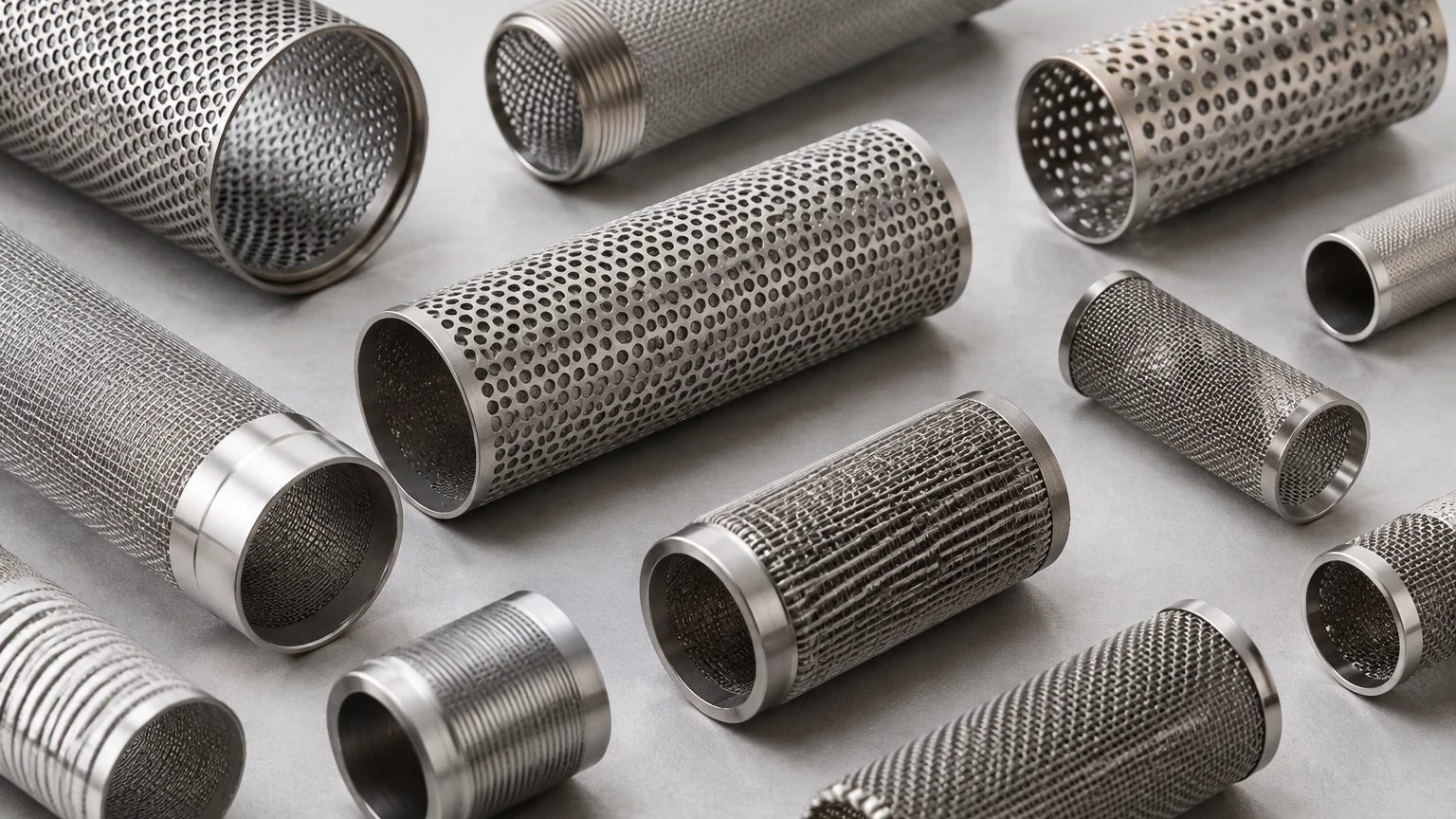
Engineering Factors Influencing Material Choice
When engineers evaluate what are casings made of, they must cross-reference the material properties with the specific parameters of the filtration process.
Chemical Compatibility
The most critical factor is the compatibility between the casing material and the process fluid. For example, a casing made of 304 stainless steel will quickly degrade if used to filter hot brine or concentrated sulfuric acid. Engineers often consult chemical resistance charts to ensure that the casing material, the O-rings (seals), and the internal filter mesh will not react with the media.
Pressure and Temperature Ratings
As temperature increases, the allowable stress for metal decreases. A casing rated for 20 bar at room temperature may only be safe for 15 bar at 200°C. Stainless steel maintains its toughness at cryogenic temperatures and its strength at elevated temperatures better than many plastics or lower-grade steels. The wall thickness of the casing is calculated based on these variables to ensure compliance with safety factors.
Surface Finish and Cleanability
In the pharmaceutical and food industries, what the casing is made of is only half the story; how it is finished is equally important. Casings in these sectors often require a specific surface roughness (measured in Ra). Mechanical polishing or electropolishing is used to remove surface irregularities where bacteria or contaminants could lodge. A casing made of 316L stainless steel with an electropolished finish (Ra < 0.4 µm) is the gold standard for hygienic applications.
Manufacturing and Quality Standards for Filter Casings
The reliability of a filter casing depends on the manufacturing process. At Kaifil, we ensure that every custom casing meets rigorous quality benchmarks.
1. Welding Integrity: For stainless steel casings, TIG (Tungsten Inert Gas) welding is typically used to provide clean, high-strength seams. Post-weld treatment, such as pickling and passivation, is necessary to restore the protective chromium oxide layer that gives stainless steel its corrosion resistance.
2. Sealing Mechanisms: The casing must accommodate reliable sealing interfaces, such as V-band clamps for low-pressure applications or bolted flange covers for high-pressure systems. The material of the casing must be compatible with the gasket materials (EPDM, Viton, PTFE) to prevent galvanic corrosion at the interface.
3. Testing and Certification: Industrial casings should undergo hydrostatic testing, where the housing is pressurized to 1.3 or 1.5 times its design pressure to verify structural integrity. Non-destructive testing (NDT), such as X-ray or dye penetrant inspection of welds, provides additional assurance for critical applications.
Conclusion: Selecting the Right Casing for Your Application
Understanding what are casings made of is the first step in designing a filtration system that is both safe and cost-effective. Whether your application requires the standard durability of 316L stainless steel, the extreme resistance of Hastelloy, or the cost-efficiency of coated carbon steel, the material must be chosen with a deep understanding of the process environment.
For engineers looking to optimize their filtration performance, it is essential to work with a manufacturer that understands the nuances of material science and precision engineering. Kaifil provides comprehensive OEM and customized filtration solutions, ensuring that every component—from the internal wire mesh to the external casing—is engineered for maximum reliability.
To explore our full range of custom stainless steel filter cartridges and precision metal components, or to consult with our engineering team on your specific material requirements, please visit our Main Page for detailed product specifications and application support. By selecting the correct materials and design today, you ensure the longevity and safety of your industrial processes for years to come.
