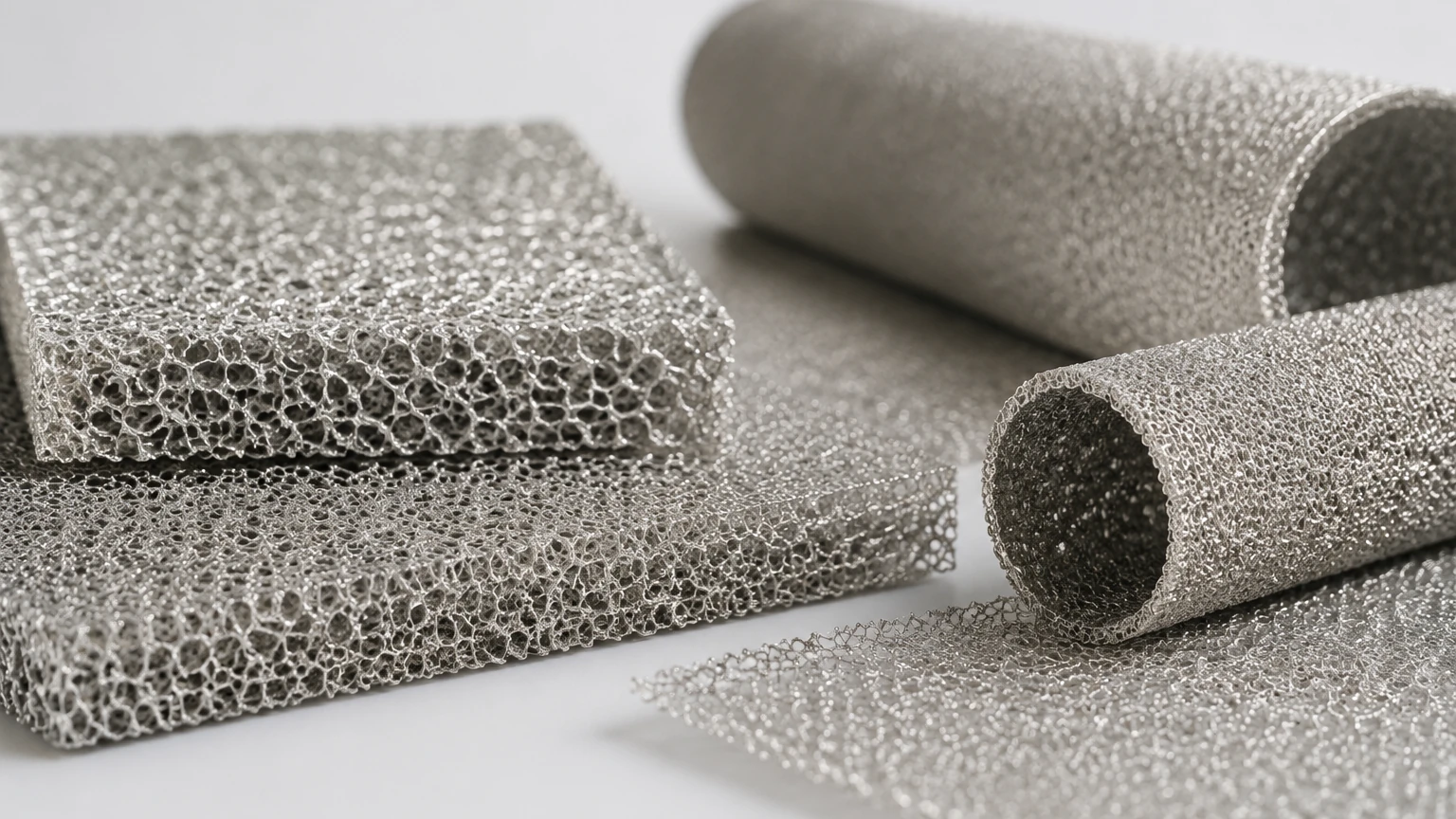
What Is Reticulated Foam
In the landscape of industrial filtration and material science, reticulated foam stands as a critical component for fluid management, air purification, and acoustic insulation. For engineers and procurement specialists, understanding the technical nuances of this material is essential for optimizing system performance and ensuring long-term reliability. While many industrial applications eventually transition to high-durability solutions like stainless steel wire mesh, reticulated foam remains a foundational material in various pre-filtration and specialized processing stages.
Defining Reticulated Foam: The Open-Cell Architecture
To answer the question "what is reticulated foam," one must first distinguish it from standard open-cell foam. While both materials possess interconnected pores, standard open-cell foam typically retains thin membranes or "windows" between the skeletal strands of the polymer. Reticulated foam, however, undergoes a specific manufacturing process that removes these membranes, leaving behind only the dodecahedron-like skeletal structure.
This results in a material that is highly porous, often consisting of 90% to 98% void space. The absence of cell membranes allows for exceptionally high permeability, meaning fluids and gases can pass through the structure with minimal resistance. In an industrial context, this translates to a low pressure drop—a critical metric for energy efficiency in HVAC systems, hydraulic circuits, and chemical processing lines.
The Manufacturing Process: Thermal and Chemical Reticulation
The transformation of standard polyurethane foam into reticulated foam is achieved through two primary industrial methods: thermal reticulation and chemical reticulation.
Thermal Reticulation (Zapping)
Thermal reticulation, often referred to as "zapping," involves placing the foam blocks into a vacuum pressure vessel. The vessel is filled with an explosive gas mixture, typically hydrogen and oxygen. Upon ignition, a controlled flash flame sweeps through the foam. Because the thin cell membranes have a high surface-area-to-mass ratio compared to the thicker skeletal struts, the flame melts the membranes instantly without damaging the primary structure. This process is highly efficient and creates a very clean, consistent open-pore structure.
Chemical Reticulation (Quenching)
Chemical reticulation involves passing the foam through a caustic bath (usually a heated sodium hydroxide solution). The chemical reaction selectively dissolves the thin cell membranes. While this method is effective, it requires rigorous washing and neutralizing to ensure no chemical residue remains within the foam structure. Chemical reticulation is often preferred for specific polymer types that might not react predictably to thermal shocks.
Key Technical Metrics: Understanding PPI and Porosity
When specifying reticulated foam for industrial use, the most critical measurement is Pores Per Inch (PPI). This metric defines the coarseness or fineness of the foam and directly impacts its filtration efficiency and flow resistance.
* Low PPI (10–30): These foams have large pores and are typically used for coarse filtration, such as pre-filters for large debris or as substrates for ceramic coatings in foundry applications.
* Medium PPI (45–70): Often found in air filtration and acoustic damping, providing a balance between surface area for particle capture and airflow.
* High PPI (80–110+): These are fine-pored foams used for high-efficiency filtration and specialized medical applications. However, they exhibit a significantly higher pressure drop and are more prone to clogging.
Engineers must also consider the "tortuosity" of the path within the foam. Unlike a flat perforated plate, reticulated foam forces the fluid to change direction constantly as it navigates the skeletal structure. This increases the probability of particles coming into contact with the foam struts through mechanical impingement and interception.
Material Variations: Polyester vs. Polyether
Most industrial reticulated foams are based on polyurethane, but they are further categorized into polyester and polyether types, each suited for different environmental exposures.
1. Polyester Reticulated Foam: This variant offers superior resistance to hydrocarbons, oils, and fuels. It is the standard choice for automotive filtration and mechanical applications where contact with lubricants is expected. However, polyester foam is susceptible to hydrolysis—it will degrade if exposed to high humidity and heat over long periods.
2. Polyether Reticulated Foam: Polyether-based foams are highly resistant to moisture and microbial growth. This makes them the preferred choice for water treatment, outdoor equipment, and medical devices. While they are more stable in wet environments, they generally offer lower resistance to oils compared to polyester versions.
Industrial Applications and Performance Expectations
Reticulated foam is utilized across a broad spectrum of industries due to its versatility and cost-effectiveness in low-to-medium temperature environments.
* Air and Gas Filtration: Used in HVAC systems, small engine air cleaners, and electronic cabinet cooling. The high void volume allows for high dust-holding capacity.
* Fluid Management: In fuel tanks, reticulated foam acts as an anti-slosh and explosion-suppressant material. Its high surface area also makes it an excellent medium for biological filtration in water treatment systems.
* Acoustic Damping: The open-cell structure dissipates sound energy by converting it into low-grade heat as the sound waves vibrate the foam struts.
* Ceramic Foam Precursors: In the metal casting industry, reticulated foam is coated with ceramic slurry and fired. The foam burns away, leaving a ceramic replica used to filter molten metal at extreme temperatures.
Reticulated Foam vs. Stainless Steel Filtration
For many engineers, the choice between reticulated foam and metal-based filtration, such as those found on the Main Page of specialized manufacturers, depends on the operating environment and the required lifecycle of the component.
Temperature and Chemical Resistance:
Reticulated foam is generally limited to operating temperatures below 120°C (248°F). In contrast, stainless steel wire mesh and sintered metal filters can withstand temperatures exceeding 500°C and offer near-universal chemical compatibility. In aggressive chemical processing or high-pressure steam applications, metal filtration is the only viable option.
Durability and Cleaning:
Reticulated foam is often treated as a semi-disposable or limited-use material. While some foams can be washed, they eventually lose structural integrity. Stainless steel filters are designed for long-term service, capable of undergoing rigorous ultrasonic cleaning, backwashing, and chemical sterilization without degrading the filtration rating.
Precision and Uniformity:
While reticulated foam provides excellent depth filtration, stainless steel wire mesh offers more precise control over pore size and distribution. For applications requiring absolute filtration ratings (where 99.9% of particles above a certain micron size must be captured), precision-engineered metal components are typically preferred over the stochastic pore structure of foam.
Selection Criteria: What Engineers Should Confirm
Before selecting reticulated foam for an industrial system, several factors must be verified to avoid premature failure or system inefficiency:
1. Chemical Compatibility: Will the foam be exposed to alcohols, strong acids, or petroleum-based solvents? Selecting between polyether and polyester is the first step in ensuring longevity.
2. Pressure Drop Requirements: Calculate the maximum allowable pressure drop across the filter at the peak flow rate. Higher PPI foams will increase this drop significantly as they load with contaminants.
3. Environmental Exposure: Will the material be exposed to UV light or ozone? Standard polyurethanes can become brittle and crumble under prolonged UV exposure unless specific stabilizers are added.
4. Total Cost of Ownership (TCO): While reticulated foam has a lower initial purchase price than stainless steel, the cost of frequent replacements, labor for maintenance, and the risk of material shedding into the downstream flow must be factored into the TCO.
Maintenance and Replacement Cycles
The effective life of reticulated foam is determined by its "terminal pressure drop." As particles accumulate on the skeletal struts, the open area decreases, and the resistance to flow increases. In many industrial air systems, a manometer is used to monitor this pressure differential. Once the differential reaches a pre-set limit, the foam must be replaced or cleaned.
In liquid applications, monitoring for "breakthrough" is essential. Unlike metal mesh, which maintains a rigid pore structure, foam can compress under high pressure. This compression can lead to "channeling," where the fluid finds a path of least resistance, effectively bypassing the filtration media and allowing contaminants to pass through.
Conclusion
Reticulated foam is a highly engineered material that provides unique advantages in permeability and surface area. It serves as an excellent solution for coarse filtration, acoustic damping, and specialized fluid management. However, for demanding industrial environments involving high temperatures, high pressures, or the need for absolute precision, engineers often turn to the robust performance of stainless steel filtration solutions.
By understanding the manufacturing processes, material limitations, and performance metrics like PPI, technical professionals can make informed decisions that balance initial cost with operational reliability. For those seeking advanced, durable filtration components tailored to specific industrial challenges, exploring the capabilities of professional manufacturers is the next logical step in system optimization. To learn more about high-performance metal filtration options, visit the Main Page for detailed technical specifications and application support.