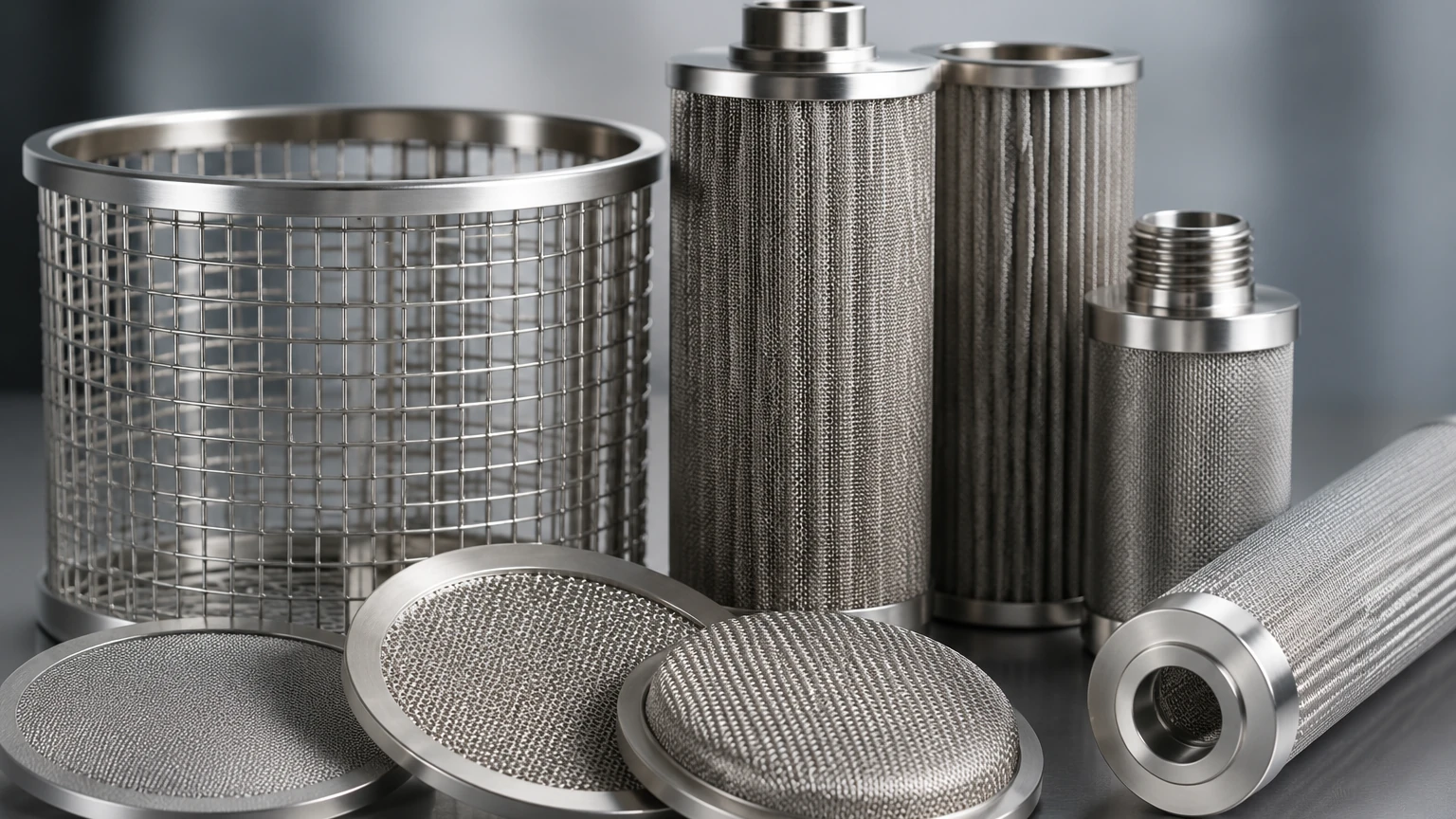
Wound Filter
In the landscape of industrial liquid processing, the wound filter remains one of the most widely utilized depth filtration technologies. Often referred to as a string-wound filter, this component is engineered to remove suspended solids and particulate matter from a variety of fluid streams. Its design—characterized by a central core wrapped in a specific pattern of yarn—provides a unique gradient density that allows for effective particle capture throughout the depth of the filter media. For engineers and procurement teams, understanding the technical nuances of the wound filter is essential for optimizing filtration efficiency and managing the total cost of ownership in industrial systems.
Understanding the Mechanics of the Wound Filter
The fundamental principle of a wound filter is depth filtration. Unlike surface filters, such as certain types of wire mesh or pleated membranes that trap particles on a single plane, a wound filter captures contaminants within the entire thickness of the yarn structure.
The manufacturing process involves winding yarn around a perforated center core in a precise, helical pattern. This winding technique creates diamond-shaped openings. By adjusting the tension and the pattern during the winding process, manufacturers can create a "tapered" filtration effect. In a high-quality wound filter, the outer layers are wound more loosely, while the inner layers near the core are wound more tightly.
This gradient density ensures that larger particles are trapped near the surface, while finer particles penetrate deeper into the media before being captured. This mechanism prevents the surface from blinding prematurely, which significantly extends the service life of the filter compared to non-gradient depth filters. For technical professionals, this translates to fewer change-outs and more consistent flow rates over time.
Material Selection for Industrial Wound Filters
Selecting the correct material for both the yarn and the core is the most critical step in ensuring chemical compatibility and thermal stability. Industrial applications vary significantly, and a mismatch in materials can lead to filter failure, fiber migration, or fluid contamination.
Yarn Media Options
1. Polypropylene (PP): This is the most common material due to its broad chemical resistance and low cost. It is ideal for water, alkalis, salts, and many acids. However, it is generally limited to operating temperatures below 140°F (60°C).
2. Cotton: Often used for filtering oils, fuels, and solvents. When treated to meet FDA standards, cotton is suitable for food and beverage applications. It can withstand higher temperatures than polypropylene, typically up to 250°F (121°C).
3. Glass Fiber: Reserved for high-temperature applications and aggressive chemicals where synthetic fibers would degrade. Glass fiber wound filters can operate in environments exceeding 750°F (400°C) when paired with a compatible metal core.
4. Polyester: Provides better temperature resistance than polypropylene and is often used in applications involving synthetic oils and specific chemical solvents.
Core Material Options
The core provides the structural integrity necessary to withstand the differential pressure across the filter.
* Polypropylene Cores: Economical and chemically compatible with most aqueous solutions.
* Stainless Steel Cores (304 or 316): Used for high-temperature applications or when high structural strength is required to prevent core collapse during pressure spikes. As a specialist in stainless steel filtration, Kaifil recognizes that the core's durability is often the limiting factor in high-pressure industrial environments.
* Tin-Plated Steel: A cost-effective alternative for non-corrosive, high-temperature applications like oil filtration.
Technical Performance: Micron Ratings and Dirt Holding Capacity
When evaluating a wound filter, engineers must distinguish between nominal and absolute micron ratings. Most wound filters are rated nominally, meaning they are designed to trap a high percentage (typically 60% to 85%) of particles at a specific micron size.
The Importance of Dirt Holding Capacity
One of the primary advantages of the wound filter is its high dirt holding capacity. Because the filtration occurs through the depth of the media, the filter can accumulate a significant mass of contaminants before the differential pressure reaches its terminal limit. This makes them an excellent choice for pre-filtration stages, protecting more expensive downstream components like reverse osmosis (RO) membranes or precision Main Page components.
However, a common technical challenge with lower-quality wound filters is "unloading." This occurs when the yarn shifts under pressure, allowing previously trapped particles to bypass the filter. Specifying a filter with a high-quality, precision-wound pattern and a rigid core is the primary method to mitigate this risk.
Engineering Considerations: Pressure Drop and Flow Rates
System design requires a careful calculation of the initial pressure drop ($ΔP$). A wound filter introduces resistance into the fluid stream. The total pressure drop is a combination of the housing resistance and the clean filter resistance.
Factors affecting $ΔP$ include:
* Fluid Viscosity: Higher viscosity fluids require lower flow rates per cartridge to maintain an acceptable pressure drop.
* Micron Rating: Finer filters (e.g., 1-micron) create higher resistance than coarser filters (e.g., 50-micron).
* Flow Velocity: Exceeding the recommended flow rate for a specific cartridge size can lead to premature clogging and potential structural damage to the filter media.
As a general engineering rule, it is often more cost-effective to install a larger housing with more cartridges to achieve a lower initial $ΔP$. This reduces the frequency of maintenance and ensures that the system can handle fluctuations in contaminant loading without immediate shutdown.
Application-Specific Selection Criteria
To ensure the selected wound filter meets the demands of a specific industrial process, technical teams should confirm the following parameters before procurement:
1. Chemical Compatibility: Review the Material Safety Data Sheet (MSDS) of the fluid to ensure neither the yarn nor the core will react or leach extractables. This is especially critical in pharmaceutical and food-grade applications.
2. Temperature Requirements: Confirm both the steady-state and peak temperatures of the process. If temperatures exceed 140°F, polypropylene should be replaced with cotton or glass fiber on a metal core.
3. Fiber Migration: In high-purity processes, fiber migration (where small strands of the yarn break off and enter the filtrate) can be an issue. In such cases, a "singed" or "glazed" wound filter or a transition to a stainless steel mesh filter may be required.
4. Regulatory Compliance: For applications involving potable water or food products, ensure the materials are FDA-compliant or NSF-certified.
Transitioning from Disposable Wound Filters to Stainless Steel Solutions
While the wound filter is an excellent disposable solution for many applications, certain industrial environments demand more robust, cleanable alternatives. Wound filters are typically discarded once they reach a differential pressure of 25-30 psi. In high-volume operations, the cost of replacement cartridges and the labor for change-outs can be substantial.
In scenarios involving extreme temperatures, high-pressure differentials, or aggressive solvents that degrade synthetic fibers, engineers often transition to stainless steel filtration components. Unlike wound filters, stainless steel wire mesh or sintered metal cartridges can be cleaned and reused, providing a lower total cost of ownership over the long term.
Kaifil specializes in these high-performance alternatives, offering custom stainless steel filtration solutions that bridge the gap where disposable depth filters reach their technical limits. For systems requiring precision accuracy and durability in demanding environments, reviewing advanced metal filtration options on the Main Page can provide insights into optimizing system longevity.
Maintenance and Replacement Cycles
Effective management of wound filters relies on monitoring the differential pressure. Most industrial systems are equipped with gauges before and after the filter housing. A clean wound filter typically shows a $ΔP$ of 2-5 psi.
As the filter accumulates debris, the $ΔP$ will rise. It is standard practice to replace the cartridges when the pressure drop reaches 15-20 psi above the initial clean pressure. Waiting until the pressure drop is higher can result in:
* Reduced Flow Rates: Impeding production efficiency.
* Media Compression: Reducing the effective filtration area and potentially causing particle bypass.
* Pump Strain: Increasing energy consumption and wear on the system's pumps.
Conclusion
The wound filter remains a staple of industrial filtration due to its versatility, high dirt-holding capacity, and cost-effectiveness as a pre-filtration tool. By carefully selecting yarn and core materials and adhering to engineering best practices regarding flow rates and pressure drops, technical professionals can ensure reliable performance. For applications that exceed the capabilities of standard depth filters, exploring specialized metal filtration solutions is the next logical step in achieving optimized, high-durability filtration performance.