


4 Stainless Steel Basket Strainer
In industrial fluid handling, the 4-inch pipeline represents a critical threshold where flow volumes become significant enough to require robust, high-capacity debris management. A 4 stainless steel basket strainer is a specialized filtration component designed to remove large particles, scale, and foreign matter from liquids to protect downstream equipment such as pumps, valves, and heat exchangers. Unlike simpler Y-strainers, basket strainers offer a larger dirt-holding capacity and a lower pressure drop, making them the standard choice for continuous or heavy-duty industrial processes.
For engineers and procurement professionals, selecting the right Strainers & Baskets involves more than just matching a pipe diameter. It requires a deep understanding of material science, fluid dynamics, and the specific mechanical stresses of the application environment. This guide examines the technical specifications, engineering considerations, and maintenance protocols essential for integrating 4-inch stainless steel filtration solutions into industrial systems.
Understanding the Engineering Behind 4-Inch Basket Strainers
The 4-inch nominal pipe size (NPS) is common in chemical processing, water treatment, and food production lines. At this scale, the velocity of the fluid can exert considerable force on the internal filter element. A 4 stainless steel basket strainer is typically housed in a simplex or duplex body, where the basket itself acts as the primary sacrificial barrier.
Mechanical Configuration
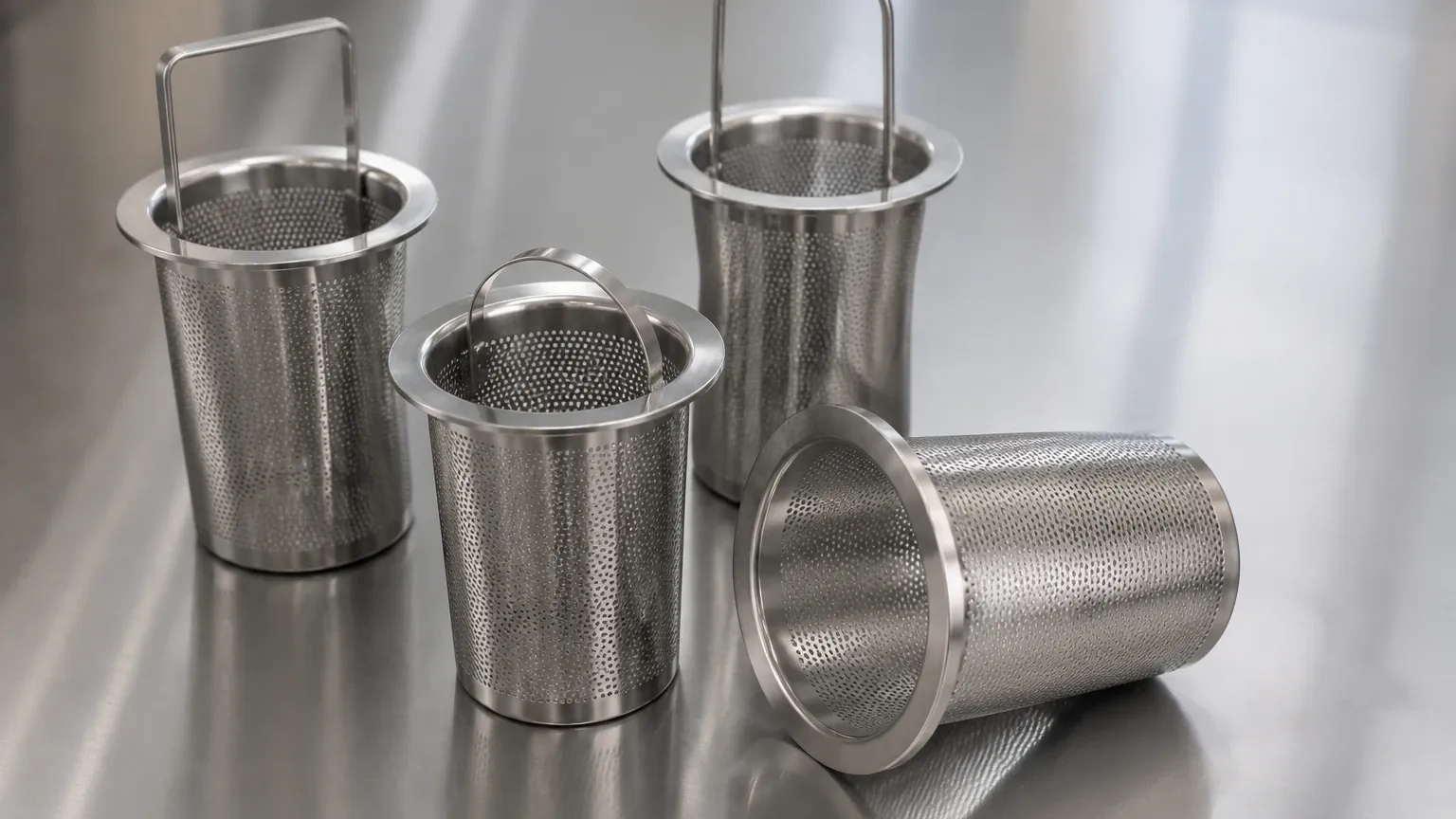
The basket is usually constructed with a perforated metal sheet that provides structural integrity, often lined with a finer wire mesh to achieve specific filtration ratings. In a 4-inch system, the "Open Area Ratio" (OAR) is a critical metric. The OAR is the relationship between the internal cross-sectional area of the pipe and the net open area of the strainer screen. For high-viscosity fluids or systems with high solids loading, an OAR of 6:1 or 8:1 is often preferred to ensure that the strainer does not become a bottleneck in the system.
Connection Types
For a 4-inch installation, the connection method is vital for leak prevention and ease of maintenance. Common options include:
* Flanged Connections: Typically conforming to ASME B16.5 Class 150 or 300 standards. These are preferred for high-pressure systems and allow for easier removal of the entire housing.
* Threaded or NPT: Less common at the 4-inch scale but used in specific low-pressure utility applications.
* Sanitary Tri-Clamp: Standard in the food, beverage, and pharmaceutical industries to ensure no crevices exist where bacteria can grow.
Material Selection: 304 vs. 316 Stainless Steel
Stainless steel is the material of choice for industrial filtration due to its mechanical strength and resistance to oxidation. However, the specific grade of steel significantly impacts the longevity and cost of the 4 stainless steel basket strainer.
Type 304 Stainless Steel
Grade 304 is the most common stainless steel used in industrial filtration. It provides excellent resistance to a wide range of atmospheric environments and many corrosive media. It is highly weldable and cost-effective for general-purpose water filtration, hydraulic oils, and mild chemical applications. However, it is susceptible to pitting and crevice corrosion in warm chloride environments.
Type 316 and 316L Stainless Steel
For more demanding environments, Type 316 stainless steel is recommended. The addition of molybdenum (2-3%) enhances its resistance to chlorides and acids. In 4-inch systems handling seawater, brine, or aggressive chemicals, 316L (the low-carbon version) is often specified to prevent intergranular corrosion after welding. For pharmaceutical and high-purity food applications, 316L is the industry standard due to its superior surface finish and chemical stability.
Performance Metrics: Flow Rate and Pressure Drop (ΔP)
One of the most frequent mistakes in filter selection is ignoring the clean pressure drop. Every 4 stainless steel basket strainer introduces a degree of resistance to the flow. Engineers must calculate the allowable pressure drop to ensure the pump head is sufficient to maintain required flow rates as the basket begins to load with debris.
Factors Influencing Pressure Drop
1. Viscosity: Higher viscosity liquids (like oils or syrups) require larger mesh openings or larger housing sizes to keep ΔP within acceptable limits.
2. Specific Gravity: Heavier fluids require more energy to move through the mesh pores.
3. Mesh Count: A finer mesh (higher mesh count) results in a higher pressure drop. For a 4-inch line, if a very fine filtration (e.g., 50 microns) is required, the basket must be designed with a larger surface area to compensate for the restricted flow.
4. Velocity: As flow velocity increases, the pressure drop increases exponentially. Keeping the velocity in a 4-inch line between 5 to 10 feet per second is generally considered best practice for efficient filtration.
Customization Options for Industrial Strainers & Baskets
Standard off-the-shelf baskets may not meet the nuances of specialized industrial processes. Customization is often necessary to optimize performance and reduce the total cost of ownership. When sourcing Strainers & Baskets, several design modifications can be implemented:
Reinforced Construction
In high-pressure or high-surge applications, standard baskets may collapse. Custom baskets can be engineered with internal or external support cages, reinforced bottoms, and heavy-duty handles to withstand the mechanical stress of being pulled from a housing filled with heavy sludge.
Magnetic Inserts
For systems where fine iron or steel particles are a concern (such as in hydraulic systems or metalworking fluid recovery), magnetic rods can be integrated into the basket. These magnets capture sub-micron ferrous particles that might otherwise pass through the wire mesh.
Specialized Linings
While the outer perforated layer provides strength, the inner liner determines the filtration accuracy. Options range from coarse 1/8" perforations for large debris to fine Dutch weave wire cloth for precision filtration down to 20 microns. Multi-layered sintered mesh is also an option for applications requiring extreme durability and the ability to withstand high-pressure backwashing.
Installation and Maintenance Best Practices
The performance of a 4 stainless steel basket strainer is heavily dependent on correct installation and a rigorous maintenance schedule. Because these units are designed to accumulate waste, they are not "set and forget" components.
Proper Orientation
Basket strainers must be installed in the correct orientation to ensure the basket can be removed vertically. There should be sufficient overhead clearance—typically at least the height of the strainer housing itself—to allow the operator to lift the 4-inch basket out for cleaning.
Monitoring Differential Pressure
The most effective way to manage maintenance is by installing pressure gauges upstream and downstream of the strainer. When the differential pressure reaches a pre-determined limit (usually 5-10 psi over the clean pressure drop), it is time to clean the basket. Waiting too long can result in "blow-through," where the pressure forces debris through the mesh, or even structural failure of the basket.
Cleaning Protocols
Stainless steel baskets are reusable, which is a major advantage over disposable cartridge filters. For a 4 stainless steel basket strainer, cleaning typically involves:
1. Isolating the unit using bypass valves.
2. Venting the pressure and draining the housing.
3. Removing the basket and using a high-pressure water jet or soft brush to remove debris.
4. For stubborn contaminants, ultrasonic cleaning or chemical soaking may be required to restore the open area of the mesh.
Industry-Specific Applications and Compliance
The 4-inch basket strainer is a versatile tool across multiple sectors, each with its own set of regulatory and technical requirements.
Chemical and Petrochemical
In these industries, the focus is on chemical compatibility and safety. 316L stainless steel is often mandatory to resist corrosion from aggressive solvents and acids. The strainers are used to protect expensive flow meters and control valves from pipe scale and welding slag.
Food and Beverage
For food-grade applications, the 4 stainless steel basket strainer must meet FDA or 3-A sanitary standards. This requires smooth, polished surfaces (often 32 Ra or better) and the absence of "dead legs" where product could stagnate and spoil. EPDM or Viton gaskets that are food-safe must be used in the housing seal.
Water Treatment and Desalination
In large-scale water treatment, 4-inch strainers serve as pre-filters for reverse osmosis (RO) membranes or as protection for UV sterilization systems. In desalination, the high chloride content of seawater necessitates the use of high-grade 316 stainless steel or even exotic alloys like Duplex stainless steel to prevent rapid corrosion.
Making an Informed Procurement Decision
When purchasing a 4 stainless steel basket strainer, the lowest initial price rarely equates to the lowest total cost. A cheaply made basket may have poor weld quality, leading to premature failure, or inaccurate mesh sizing that allows harmful contaminants to pass through.
Before finalizing a specification, engineers should confirm the following with their manufacturer:
* Actual Micron Rating: Is it nominal or absolute?
* Burst Pressure: What is the maximum differential pressure the basket can withstand before deforming?
* Material Certification: Can the supplier provide Mill Test Reports (MTRs) to verify the grade of stainless steel?
* Seal Compatibility: Is the gasket material compatible with the process fluid at operating temperatures?
By focusing on these technical details, facilities can ensure that their Strainers & Baskets provide reliable, long-term protection for their critical infrastructure. Whether it is a standard 4-inch simplex strainer or a highly customized multi-layered basket, the choice of stainless steel filtration is a fundamental investment in process stability and equipment longevity.
