


Basket Strainer Menards
In the realm of fluid handling and piping systems, the term "basket strainer" covers a wide spectrum of products ranging from residential sink components to heavy-duty industrial filtration units. Many facility managers and maintenance professionals often begin their search with retail-oriented queries like basket strainer menards when looking for immediate replacement parts or basic plumbing components. While retail outlets provide accessible solutions for domestic or light commercial applications, industrial environments demand a more rigorous engineering approach to Strainers & Baskets.
Understanding the distinction between consumer-grade hardware and industrial-spec filtration components is essential for ensuring system longevity, preventing pump damage, and maintaining process purity. This article examines the technical requirements of industrial basket strainers, comparing them to standard retail offerings and highlighting the engineering considerations necessary for high-performance applications.
Understanding the Scope: Retail vs. Industrial Basket Strainers
When searching for a basket strainer menards provides, the results typically focus on kitchen sink strainers, bar sink drains, or light-duty PVC basket strainers used in residential irrigation. These products are designed for low-pressure environments, standard water temperatures, and non-corrosive fluids. They are often mass-produced using thinner gauges of stainless steel or plastic polymers.
In contrast, industrial strainers and baskets are engineered components used in chemical processing, oil and gas, food and beverage production, and large-scale water treatment. The differences are found in several key areas:
* Pressure Ratings: Industrial baskets must withstand significant differential pressures without collapsing. Retail versions are rarely rated for high-pressure industrial lines.
* Material Integrity: While a retail strainer might use a generic "stainless steel" label, industrial applications require specific alloys like Grade 304, 316, or 316L to ensure chemical compatibility and prevent galvanic corrosion.
* Filtration Precision: Consumer products usually have a fixed, coarse perforation. Industrial solutions offer customizable micron ratings, utilizing fine wire mesh linings to capture specific particle sizes.
* Durability and Reusability: Industrial baskets are designed for repeated cleaning cycles and long-term exposure to turbulent flow, whereas consumer-grade strainers are often treated as disposable commodities.
Key Technical Specifications for Industrial Strainers & Baskets
For engineers and procurement teams, selecting a basket strainer involves more than just matching a pipe diameter. The performance of the filtration system depends on the internal geometry and the structural integrity of the basket itself.
Open Area Ratio
One of the most critical metrics in strainer design is the ratio of the open area of the basket to the cross-sectional area of the inlet pipe. A high-quality industrial basket should ideally provide an open area ratio of at least 6:1. This ensures that even as the basket begins to collect debris, the pressure drop across the unit remains within acceptable limits, preventing cavitation in downstream pumps.
Perforation and Mesh Configuration
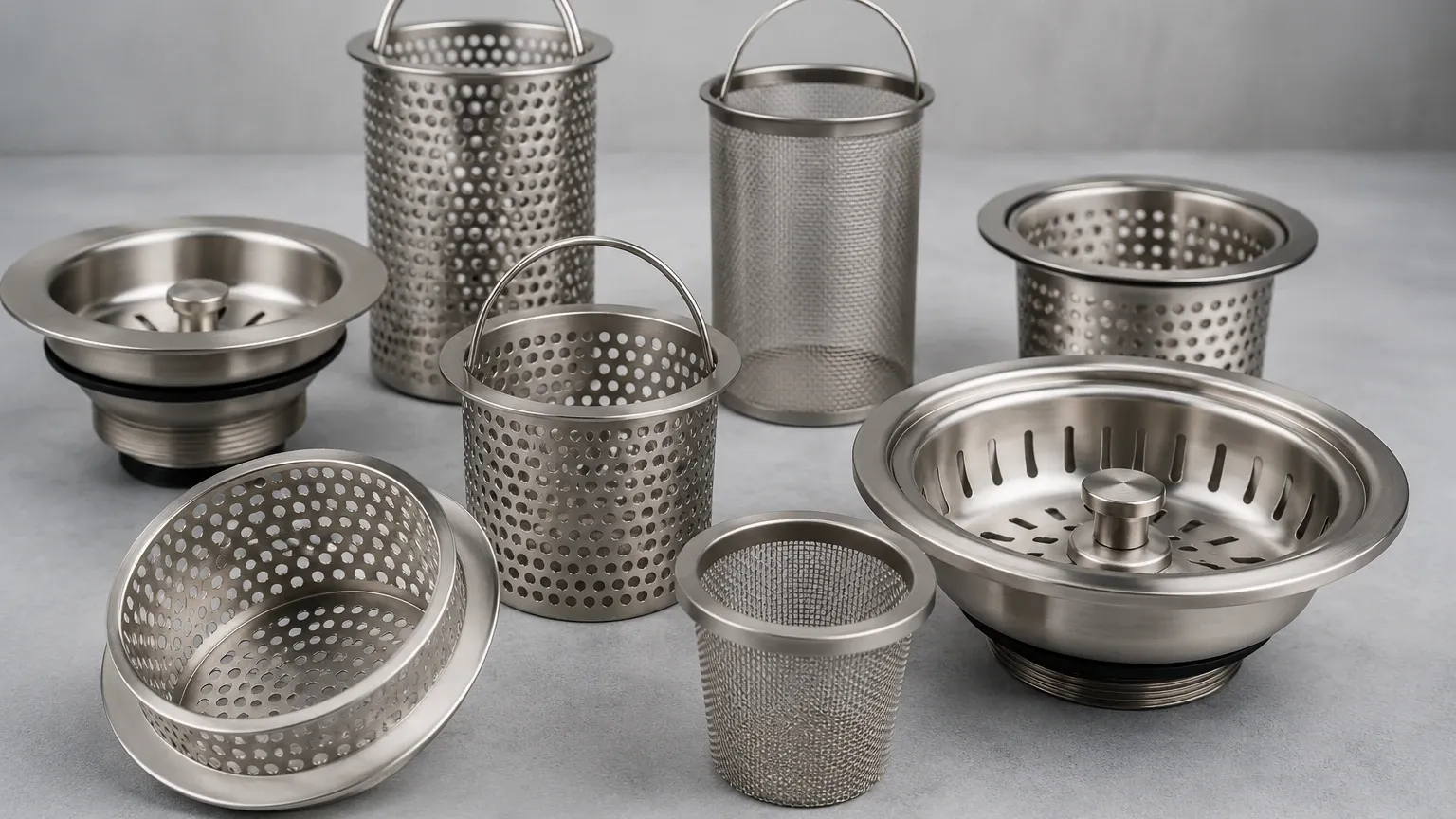
Industrial baskets often utilize a two-stage construction. The outer layer is typically a heavy-gauge perforated metal plate that provides structural strength. This is then lined with a precision-woven wire mesh to achieve the desired filtration fineness. When evaluating options beyond a standard basket strainer menards might stock, engineers must specify the mesh count or micron rating required for their specific process fluid.
Sealing Mechanisms
In industrial applications, the bypass of unfiltered fluid is unacceptable. Industrial baskets feature machined seats and precision flanges, often combined with O-rings or gaskets made of Viton, EPDM, or PTFE, to ensure a tight seal within the strainer housing. Retail-grade strainers often rely on simple gravity or friction fits, which are prone to bypassing in pressurized systems.
Material Performance: Why Stainless Steel Grades Matter
In the search for a basket strainer menards or other big-box retailers might offer, the specific grade of stainless steel is often overlooked. However, in B2B industrial contexts, material selection is a primary engineering decision.
Grade 304 Stainless Steel
This is the standard "18/8" stainless steel. It offers excellent corrosion resistance for most water-based applications and is widely used in the food and beverage industry. It is a cost-effective choice for non-acidic environments where hygiene is important but chemical aggression is low.
Grade 316 and 316L Stainless Steel
For more demanding environments, such as marine applications or chemical processing plants, Grade 316 is the industry standard. The addition of molybdenum provides superior resistance to chlorides and pitting. Grade 316L (low carbon) is preferred for welded components to prevent intergranular corrosion in the heat-affected zones. Industrial manufacturers like Kaifil specialize in these high-grade alloys to ensure that the Strainers & Baskets can withstand the rigors of harsh industrial fluids.
Evaluating Filtration Efficiency and Flow Rates
A common mistake in purchasing filtration components is over-specifying the filtration fineness. While it may seem beneficial to capture the smallest possible particles, a mesh that is too fine will lead to rapid clogging and excessive pressure drops. This increases maintenance frequency and energy costs for pumping.
When moving from a basic basket strainer menards type product to an engineered industrial solution, technical teams should perform a flow analysis. This includes:
1. Viscosity Considerations: Thicker fluids require larger perforations or specialized basket geometries to maintain flow.
2. Particulate Load: If the fluid has a high concentration of solids, a "high-capacity" basket with a deeper profile or pleated mesh may be necessary to extend the time between cleaning cycles.
3. Velocity Limits: High-velocity flows can cause vibration and fatigue in the basket mesh. Industrial designs include reinforced ribs and heavier support structures to mitigate these risks.
Customization and OEM Solutions for Industrial Applications
One of the primary limitations of retail-sourced components like a basket strainer menards offers is the lack of customization. Industrial systems often feature legacy equipment or unique housing dimensions that standard off-the-shelf parts cannot accommodate.
Custom manufacturing allows for:
* Bespoke Dimensions: Tailoring the height, diameter, and flange thickness to fit existing strainer housings exactly.
* Specialized Handle Designs: Incorporating heavy-duty lifting handles or magnetic inserts to capture ferrous particles that might otherwise pass through the mesh.
* Reinforced Structures: Adding internal or external bracing for applications involving high-pressure surges or heavy sludge loads.
* Multi-Stage Filtration: Designing baskets with multiple layers of different mesh sizes to provide graduated filtration within a single unit.
By working with a specialized manufacturer, engineers can ensure that their filtration components are optimized for their specific operational parameters rather than settling for a "one-size-fits-all" retail product.
Maintenance Protocols and Service Life
The total cost of ownership (TCO) for an industrial basket strainer is heavily influenced by its maintenance requirements. While a residential basket strainer menards sells might be replaced once it becomes unsightly or damaged, industrial baskets are designed for a long service life through proper maintenance.
Cleaning Procedures
Industrial baskets should be cleaned based on differential pressure readings. Once the pressure drop reaches a predetermined limit (usually 5-10 psi over the clean pressure drop), the basket should be removed and cleaned. Methods include high-pressure water jetting, ultrasonic cleaning, or chemical baths, depending on the nature of the contaminants and the basket material.
Inspection Points
During maintenance, technicians should inspect for:
* Mesh Integrity: Checking for tears or separation from the support basket.
* Deformation: Ensuring the basket has not been crushed or warped by pressure spikes.
* Seal Surfaces: Verifying that the seating surfaces are free of nicks or corrosion that could allow bypass.
Conclusion: Making the Right Selection
While a basket strainer menards search might be the starting point for those unfamiliar with the complexities of industrial filtration, the requirements of a professional piping system quickly outpace the capabilities of retail hardware. For engineers and purchasing managers, the focus must remain on technical specifications, material certifications, and the ability to customize components to the specific needs of the application.
Investing in high-quality, engineered Strainers & Baskets ensures that downstream equipment is protected, maintenance downtime is minimized, and the overall efficiency of the fluid system is maintained. By understanding the engineering principles behind filtration—from open area ratios to alloy selection—professionals can make informed decisions that go beyond the shelf of a local home improvement store and meet the rigorous demands of modern industry.
