


Basket Strainer Tailpiece Nut
In industrial fluid handling and filtration systems, the integrity of a connection is as critical as the filtration media itself. While the focus often remains on the micron rating or the flow capacity of Strainers & Baskets, the mechanical fasteners that secure these systems—specifically the basket strainer tailpiece nut—play a vital role in maintaining system pressure, preventing leaks, and ensuring long-term operational reliability. For engineers and procurement specialists, understanding the technical nuances of this component is essential for optimizing the performance of stainless steel filtration assemblies.
Understanding the Role of the Tailpiece Nut in Industrial Strainers
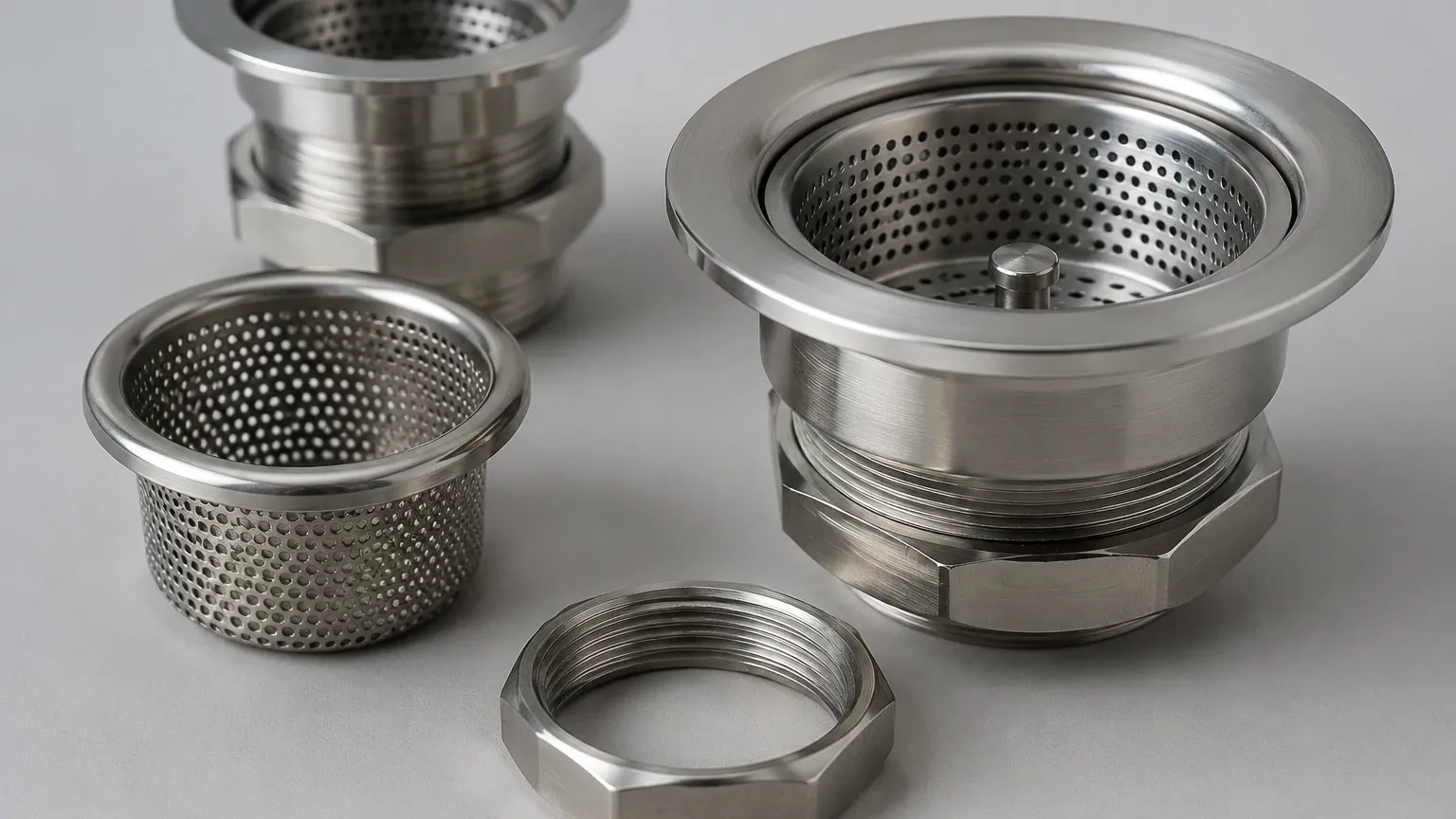
A basket strainer tailpiece nut is a specialized threaded fastener designed to secure the tailpiece—the pipe section that connects the strainer outlet to the downstream piping—to the body of the strainer. In industrial applications, this connection must withstand mechanical vibrations, thermal cycling, and potential chemical exposure.
The nut functions by applying axial force to a sealing surface, typically compressing a gasket or washer between the flange of the tailpiece and the base of the strainer body. Unlike standard plumbing fasteners, industrial-grade nuts used in high-performance filtration systems are engineered for precision. They must ensure a perfectly concentric alignment to prevent uneven gasket compression, which is a primary cause of bypass or external leakage in pressurized systems.
In the context of custom stainless steel filtration, the basket strainer tailpiece nut is often the final link in the assembly. If this component fails or is improperly specified, the entire filtration process is compromised, leading to downtime, fluid loss, or environmental hazards. Therefore, material selection and dimensional accuracy are paramount.
Material Selection and Engineering Standards
For industrial environments, the choice of material for a basket strainer tailpiece nut is rarely a matter of cost alone; it is a matter of chemical compatibility and mechanical strength. While commercial applications might utilize brass or plastic, industrial B2B sectors—such as chemical processing, pharmaceuticals, and food production—overwhelmingly require stainless steel.
Stainless Steel 304 vs. 316
Most high-quality tailpiece nuts are manufactured from Grade 304 or Grade 316 stainless steel.
* Grade 304: Offers excellent strength and general corrosion resistance. It is suitable for water treatment and general industrial applications where the fluid is non-corrosive.
* Grade 316: Contains molybdenum, which provides superior resistance to chlorides and acids. This is the standard for marine environments, pharmaceutical manufacturing, and aggressive chemical processing.
Mechanical Properties
Beyond corrosion resistance, the nut must possess sufficient tensile strength to maintain torque over time. Industrial fasteners are subject to "creep" and stress relaxation, especially in systems that operate at elevated temperatures. Using a high-grade stainless steel nut ensures that the threads do not deform under load, allowing for repeated disassembly and reassembly during maintenance cycles without the risk of galling or stripping.
Critical Dimensions and Threading for the Basket Strainer Tailpiece Nut
Precision in threading is what separates industrial filtration components from generic hardware. The basket strainer tailpiece nut must match the specific thread profile of the strainer body to ensure a secure fit.
Thread Types
The most common thread standard for these components is NPSM (National Pipe Straight Mechanical). Unlike NPT (National Pipe Tapered) threads, which seal via thread interference, NPSM threads are straight and are designed to create a mechanical join. The actual seal is created by the gasket compressed by the nut, not the threads themselves.
Engineers must confirm the thread pitch and diameter before procurement. Common industrial sizes include 1-1/2" and 2" NPSM, but custom filtration housings often require non-standard diameters or metric threading (such as ISO metric threads) depending on the regional standards of the equipment manufacturer.
Tolerance and Fit
In high-vibration environments, such as those found near hydraulic pumps or industrial mixers, the tolerance of the thread fit is crucial. A nut with too much "play" can loosen over time, even when torqued correctly. Kaifil’s manufacturing process emphasizes tight tolerances to ensure that the basket strainer tailpiece nut remains secure under operational stress, reducing the need for secondary locking mechanisms.
Sealing Integrity and Installation Best Practices
The performance of the basket strainer tailpiece nut is inextricably linked to the sealing interface. A common mistake in industrial maintenance is over-tightening the nut in an attempt to stop a leak, which can lead to gasket deformation or "mushrooming," actually increasing the risk of failure.
The Gasket Interface
Between the tailpiece and the strainer body sits a gasket, often made of PTFE, EPDM, or Viton, depending on the chemical nature of the fluid. The nut must provide uniform pressure across the entire circumference of this gasket. If the nut is cast poorly or has an uneven bearing surface, it will apply asymmetrical pressure, leading to a path of least resistance for the fluid.
Installation Torque
Engineers should follow specific torque values provided by the manufacturer. For stainless steel components, the risk of galling—a form of wear caused by adhesion between sliding surfaces—is high. To prevent this, the use of anti-seize compounds compatible with the process fluid is recommended. Proper installation ensures that the basket strainer tailpiece nut provides the necessary clamping force to maintain a leak-proof seal under the system’s maximum rated pressure.
Maintenance, Troubleshooting, and Replacement Cycles
In a B2B operational context, the total cost of ownership (TCO) of filtration components is heavily influenced by maintenance efficiency. The basket strainer tailpiece nut, while durable, is not immune to wear.
Identifying Common Issues
1. Corrosion: Even stainless steel can suffer from pitting or stress corrosion cracking in specific environments. Regular inspection should look for discoloration or surface irregularities.
2. Cross-Threading: This usually occurs during hurried maintenance. If a nut does not spin freely by hand for the first few turns, it is likely cross-threaded. Once the threads are damaged, the nut (and potentially the strainer body) must be replaced to ensure safety.
3. Vibration Loosening: In systems with high-frequency pulsations, nuts can gradually back off. Engineering teams may consider safety wiring or specialized locking washers if this is a recurring issue.
4. Gasket Compression Set: Over time, gaskets lose their elasticity. When a gasket is replaced, the nut should be inspected for any signs of thread wear or deformation from previous over-tightening.
Replacement Strategy
Rather than waiting for a failure, proactive replacement of the basket strainer tailpiece nut during major system overhauls can prevent costly emergency shutdowns. For critical filtration lines, maintaining a stock of OEM-spec nuts ensures that repairs can be conducted immediately with components that meet the original design intent.
Custom OEM Solutions for Precision Filtration Components
Many industrial applications require filtration systems that do not fit standard dimensions. Whether it is a unique housing for a pharmaceutical cleanroom or a high-pressure hydraulic strainer, the hardware must be customized to fit the application.
Kaifil specializes in the production of custom stainless steel filtration solutions, including the precision metal components required to assemble them. By controlling the manufacturing process from material selection to final machining, we ensure that every basket strainer tailpiece nut meets the rigorous demands of industrial service.
Our capabilities include:
* Custom Threading: Machining nuts to match proprietary or international thread standards.
* Material Traceability: Providing MTRs (Material Test Reports) to verify the chemical composition of the stainless steel, which is essential for compliance in the food, beverage, and medical industries.
* Specialized Coatings: Offering surface treatments or passivization to enhance corrosion resistance in extreme environments.
When designing or maintaining industrial Strainers & Baskets, the choice of fastening hardware is a technical decision that impacts the safety and efficiency of the entire facility. By selecting high-quality, precision-engineered tailpiece nuts, engineers can ensure that their filtration systems perform reliably throughout their intended service life.
Conclusion: Selecting the Right Component
Selecting a basket strainer tailpiece nut requires a balance of mechanical engineering knowledge and application-specific insight. It is not merely a piece of hardware but a critical pressure-retaining component. When evaluating options, engineers should prioritize:
* Chemical compatibility with the process media.
* Dimensional precision to ensure a proper mechanical seal.
* Material quality to prevent premature failure and ensure ease of maintenance.
By partnering with a manufacturer that understands the complexities of industrial filtration, procurement teams can secure components that offer the durability and performance required for demanding B2B applications.
