


How Do Y Strainers Work
In industrial piping systems, the presence of solid contaminants—such as scale, rust, jointing compound, and weld metal—can cause significant damage to sensitive downstream equipment. To mitigate these risks, engineers rely on mechanical filtration components designed to intercept and remove these particles. Among the most common and versatile of these components is the Y strainer. Understanding the mechanics of these devices is essential for optimizing system longevity and performance. This guide provides a technical analysis of how do y strainers work, their internal components, and the engineering considerations necessary for their effective implementation.
The Fundamental Mechanics of Y Strainers
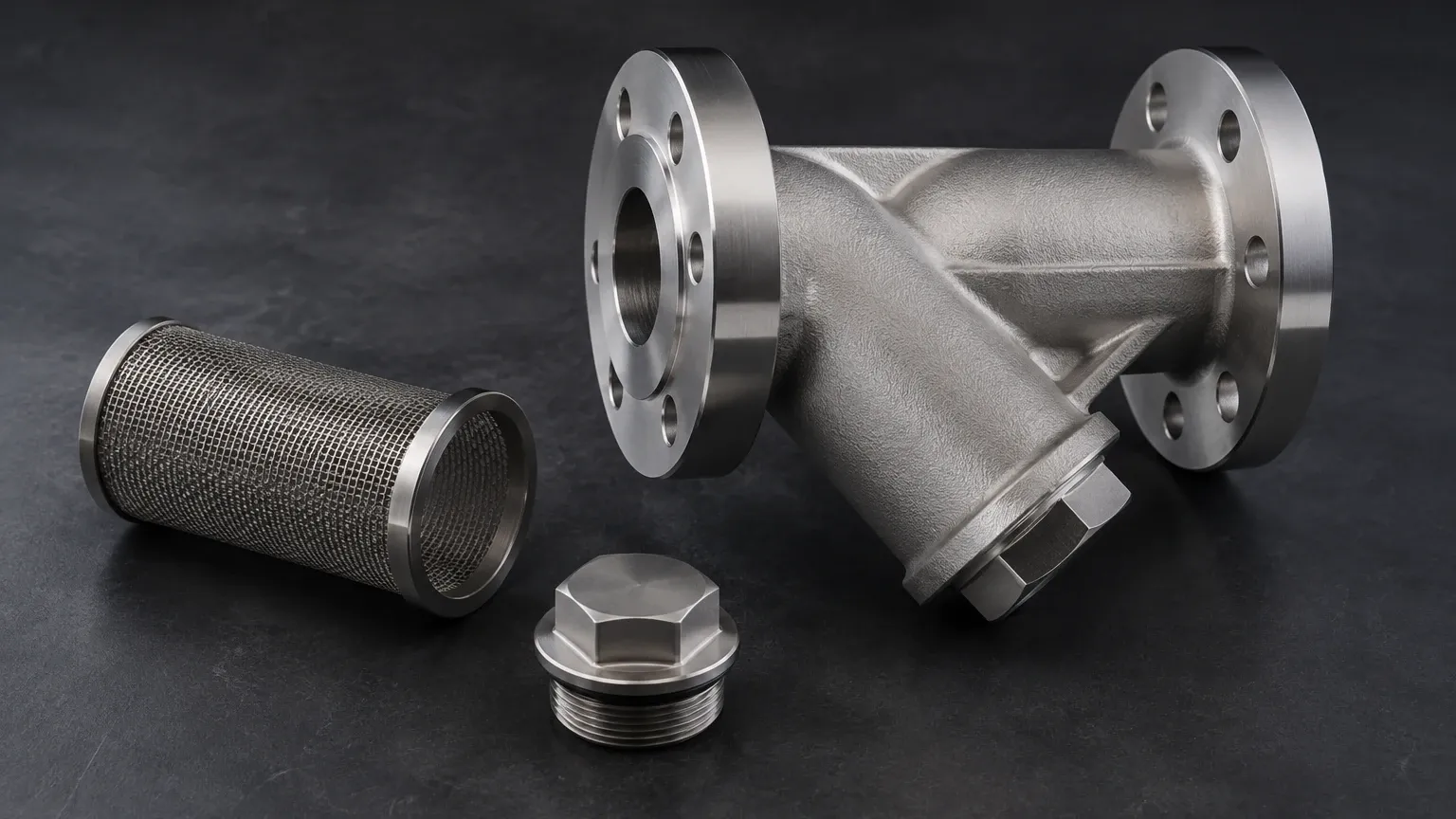
At its core, a Y strainer is a mechanical device that uses a perforated or wire mesh screen to remove solids from a flowing fluid. The name is derived from its physical shape, which resembles the letter "Y." This configuration allows the filter element to be housed in a branch that intersects the main flow path at an angle, typically 45 to 60 degrees.
To answer the question of how do y strainers work, one must look at the flow path. As fluid (liquid, gas, or steam) enters the inlet of the strainer, it is directed into the cylindrical filter element located in the "leg" of the Y. The fluid passes through the openings in the screen while the solid particles, which are larger than the screen openings, are trapped inside the cylinder. The cleaned fluid then exits through the outlet of the strainer and continues through the piping system. Because the filter element is positioned at an angle, it creates a collection pocket where debris can accumulate without immediately blocking the main flow path, though excessive buildup will eventually lead to a pressure drop.
Key Components and Materials
The efficiency and durability of a Y strainer depend heavily on its construction and the materials used. For demanding industrial environments, such as chemical processing or pharmaceutical manufacturing, material selection is a critical engineering decision.
The Strainer Body
In many high-pressure or corrosive applications, stainless steel is the preferred material for the strainer body. Stainless steel offers superior resistance to oxidation and chemical attack, ensuring that the housing itself does not contribute to contamination. The body must be rated for the specific pressure and temperature of the system, often following ASME or DIN standards.
The Filter Element (Screen)
This is the heart of the device. Filter elements are typically made from stainless steel wire mesh or perforated metal plates. The choice between mesh and perforation depends on the required filtration accuracy. Perforated plates are generally used for coarser filtration (removing larger stones or metal shards), while wire mesh can achieve much finer filtration levels, measured in microns. Manufacturers like Kaifil specialize in custom-engineered Strainers & Baskets that utilize high-grade stainless steel mesh to ensure both precision and mechanical strength under high-flow conditions.
The Cover and Gasket
The leg of the Y is sealed with a removable cover or cap. This allows maintenance teams to access the screen for cleaning or replacement. A gasket or O-ring is used to ensure a leak-proof seal between the body and the cover. In high-temperature steam applications, specialized gasket materials are required to prevent thermal degradation.
Installation and Orientation Considerations
The physical orientation of a Y strainer is vital to its function. Because these devices rely partly on gravity to help collect debris in the screen chamber, they must be installed correctly relative to the flow direction.
Horizontal Installation
In horizontal pipelines, Y strainers are usually installed with the "leg" pointing downward. This ensures that trapped debris settles in the collection pocket by gravity. If the leg were pointed upward, the debris would fall back into the main pipe whenever the flow stopped, potentially causing blockages or damaging the screen during the next startup.
Vertical Installation
Y strainers can be installed in vertical lines, but only if the flow is downward. In a downward vertical flow, the debris is naturally carried into the screen pocket. If the flow were upward, gravity would work against the strainer, causing debris to fall back toward the bottom of the pipe rather than remaining trapped in the filter element.
Pressure Drop and Filtration Efficiency
One of the most important technical metrics for engineers is the pressure drop, often referred to as Delta P (ΔP). This is the difference in fluid pressure between the inlet and the outlet of the strainer. Understanding how do y strainers work in relation to pressure drop is key to preventing system inefficiency.
When a Y strainer is clean, the pressure drop is minimal. However, as the screen traps more debris, the available surface area for fluid to pass through decreases, causing the pressure drop to increase. If the pressure drop becomes too high, it can lead to cavitation in pumps, reduced flow rates, and potential damage to the filter element itself.
Engineers must balance filtration accuracy with flow requirements. A finer mesh will trap smaller particles but will also cause a higher initial pressure drop and require more frequent cleaning. Calculating the "clean pressure drop" using the manufacturer's Cv (flow coefficient) values is a standard step in the selection process.
Maintenance and the Blow-off Connection
Unlike some other filtration systems, Y strainers are often designed for "on-line" cleaning if they are equipped with a blow-off connection. A blow-off connection is a threaded or flanged hole in the strainer cap that can be fitted with a ball valve.
When the valve is opened while the system is under pressure, the fluid flushes through the screen, carrying the accumulated debris out through the blow-off port. This process, known as "blow-down," allows for basic cleaning without stopping the process flow or dismantling the strainer. However, for a thorough cleaning—especially when sticky or fibrous materials are present—the system must be depressurized so the cover can be removed and the screen manually cleaned or replaced.
Comparing Y Strainers and Basket Strainers
While Y strainers are highly effective, they are often compared to basket strainers. The choice between the two depends on the specific application requirements.
* Pressure Handling: Y strainers are generally better suited for high-pressure applications and are frequently used in steam lines. Their compact design can withstand higher internal stresses than larger basket-style housings.
* Dirt Holding Capacity: Basket strainers typically have a larger internal volume and surface area, allowing them to hold more debris before requiring cleaning. Y strainers have a smaller collection pocket, making them more suitable for systems with lower concentrations of solids.
* Size and Space: Y strainers are more compact and can be installed in tight spaces where a large basket strainer might not fit.
For many industrial procurement teams, evaluating the total cost of ownership involves looking at both the initial purchase price and the long-term maintenance costs associated with these different types of Strainers & Baskets.
Engineering Selection Criteria
When specifying a Y strainer for an industrial project, several technical factors must be confirmed to ensure reliable performance:
1. Fluid Type: Is the medium liquid, gas, or steam? This dictates the material of the body and the mesh.
2. Operating Pressure and Temperature: The strainer must be rated for the maximum possible system conditions, not just the nominal operating points.
3. Filtration Level: What is the smallest particle size that needs to be removed to protect downstream equipment? This is usually specified in microns or mesh count.
4. Allowable Pressure Drop: What is the maximum ΔP the system can tolerate before performance is compromised?
5. Corrosion Allowance: In chemical processing, the choice between 304 and 316 stainless steel (or more exotic alloys) depends on the acidity or alkalinity of the fluid.
The Role of Customization in Industrial Filtration
Standard off-the-shelf strainers may not meet the rigorous demands of specialized industries like hydraulic systems or food processing. In these cases, custom-manufactured solutions are necessary. Customization can include specific flange types, non-standard mesh sizes, or reinforced screen structures designed to withstand high-velocity flows without collapsing.
Manufacturers like Kaifil provide OEM services that allow engineers to specify the exact dimensions and performance characteristics required for their unique applications. By focusing on high-quality stainless steel construction, these customized components provide the durability needed to minimize downtime and protect expensive industrial assets.
Conclusion
Understanding how do y strainers work is fundamental for any engineer involved in fluid handling and piping design. These devices provide a simple yet effective solution for protecting critical equipment from particulate damage. By selecting the right materials, ensuring proper orientation, and monitoring pressure drops, industrial facilities can maintain high levels of operational efficiency. Whether used in simple water treatment or complex chemical processing, the Y strainer remains a cornerstone of industrial filtration technology.
